Understanding the Life and Final Days: Ronald Reagan Date of Death
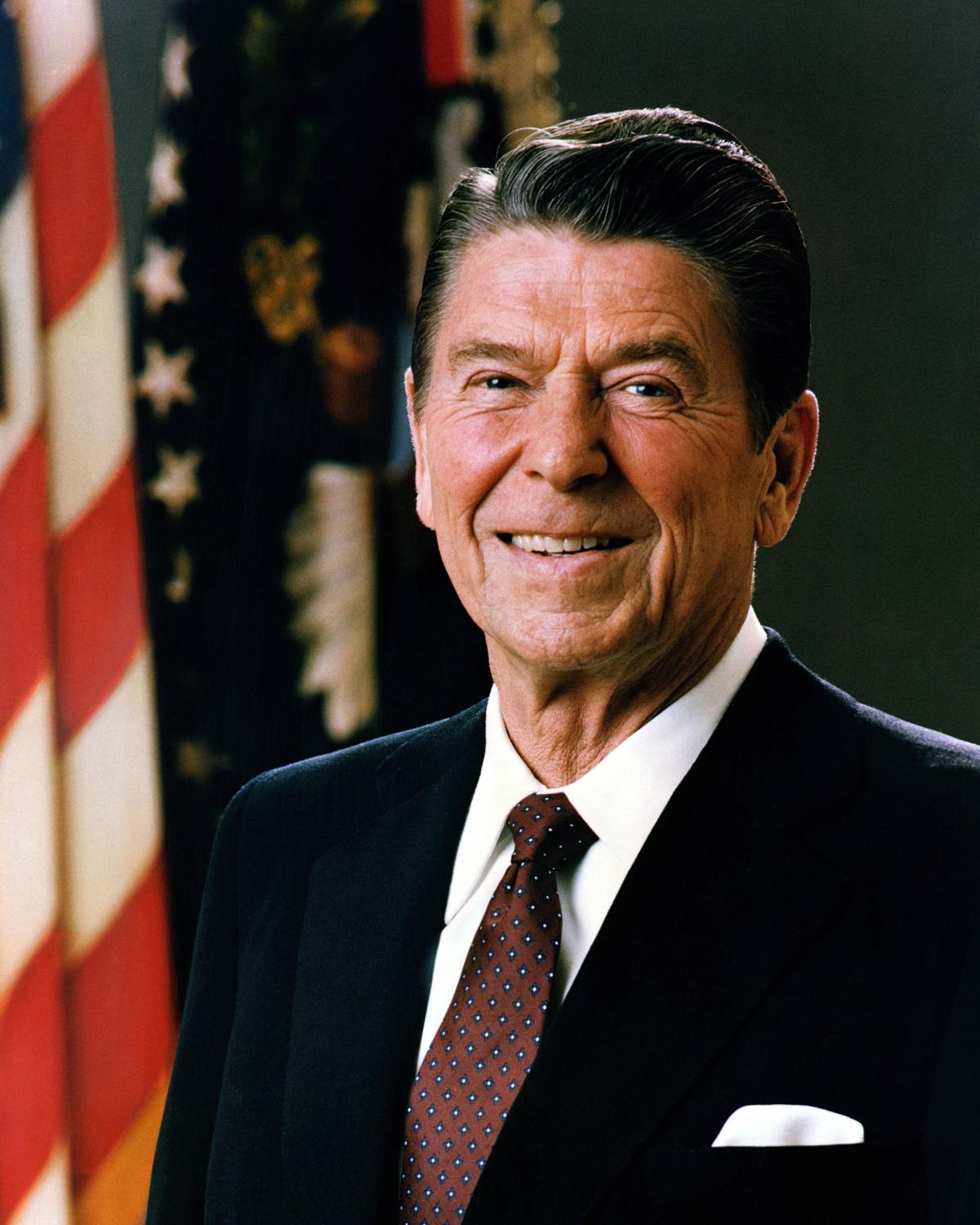
Ronald Reagan, the 40th President of the United States and former Governor of California, passed away on June 5, 2004, at the age of 93 at his home in Bel Air, Los Angeles, California. His death marked the end of a transformative era i...
Ronald Reagan, the 40th President of the United States and former Governor of California, passed away on June 5, 2004, at the age of 93 at his home in Bel Air, Los Angeles, California. His death marked the end of a transformative era in American politics and set into motion a historic state funeral that drew international leaders and millions of grieving citizens.
Contents
The Passing of the 40th President
The official announcement of Ronald Reagan’s death brought a wave of national and international mourning. After battling Alzheimer's disease for nearly a decade, the former president died at 1:04 PM Pacific Daylight Time on June 5, 2004. His wife, Nancy Reagan, and their children, Ron and Patti, were by his side when he passed away.
Reagan's health had steadily declined following his public disclosure of his Alzheimer's diagnosis in an open letter to the American people in November 1994. In that poignant letter, he wrote that he had begun "the journey that will lead me into the sunset of my life." For the next ten years, he lived a quiet, private life protected by his family and medical staff, largely shielded from public view as the progressive neurological disease eroded his cognitive faculties.
When the end came, tributes poured in from world leaders, political allies, and former adversaries alike. Leaders from across the globe praised his role in ending the Cold War, his economic policies, and his enduring optimism about the American experiment. The event triggered a meticulously pre-planned national mourning period known as Operation Able Baker, coordinating the transport of his body, the lying in state, and the state funeral.
A Chronology of Ronald Reagan's Final Years and Health Decline
Understanding the context of Ronald Reagan's death requires examining the timeline of his health, his diagnosis, and the final chapters of his public and private life. The trajectory of his later years highlights both the medical realities of Alzheimer's disease and the resilience of a man who remained a towering figure in global politics long after leaving office.
The Alzheimer's Diagnosis and Public Disclosure
In late 1993 and early 1994, tests confirmed that Ronald Reagan was in the early stages of Alzheimer's disease. Rather than keeping the diagnosis entirely private, Reagan chose to share the news with the nation in a handwritten letter dated November 5, 1994.
This disclosure was a landmark moment in public health awareness. Prior to Reagan's announcement, Alzheimer's disease carried a heavy social stigma, and discussing it openly was rare for prominent public figures. By bringing the condition into the national spotlight, Reagan and his family helped dramatically increase public awareness, research funding, and support networks for caregivers dealing with neurodegenerative disorders.
The Decade of Seclusion
Following his public letter, Reagan made very few public appearances. His last major public statement occurred in February 1994 during a tribute dinner in Washington, D.C., though he did not attend in person, sending a recorded video message instead.
Nancy Reagan took on the primary role of protecting his privacy and dignity. The couple resided in their Bel Air estate, where Ronald Reagan enjoyed taking walks when able, reading, and listening to music. As the disease advanced, he required round-the-clock nursing care. Despite the physical and mental toll of the illness, family members frequently noted that his characteristic gentle demeanor and polite manners remained intact during much of his decline.
The Final Hours
In the days leading up to June 5, 2004, Reagan's health deteriorated rapidly as pneumonia complicated his advanced Alzheimer's state. Family members gathered at his bedside. Medical updates provided by the family and physicians indicated that he slipped into a deep coma before peacefully passing away in the early afternoon.
Key Historical Milestones in Ronald Reagan's Life
To fully contextualize his legacy and the significance of his passing, it is helpful to review major chronological milestones spanning his acting career, political ascent, presidency, and retirement.
| Year / Period | Milestone Event | Description / Significance |
|---|---|---|
| 1911 | Birth | Born on February 6 in Tampico, Illinois, to John Edward "Jack" Reagan and Nelle Wilson Reagan. |
| 1932–1965 | Acting and Media Career | Starred in numerous Hollywood motion pictures and served as president of the Screen Actors Guild. |
| 1967–1975 | Governor of California | Served two terms as the 33rd Governor of California, establishing his national political footprint. |
| 1981–1989 | Presidency | Served two terms as the 40th President of the United States, championing supply-side economics and a muscular foreign policy. |
| 1994 | Alzheimer's Disclosure | Published his open letter announcing his diagnosis, raising national awareness about the disease. |
| 2004 | Date of Death | Passed away on June 5 at his home in Bel Air, California, at age 93. |
The State Funeral and Tributes
Following his death, Ronald Reagan's remains were transferred from his home to a local mortuary in Santa Monica before being moved to the Ronald Reagan Presidential Library in Simi Valley, California. The state funeral proceedings were executed according to detailed plans that Reagan himself had reviewed and approved years prior.
Lying in Repose and State
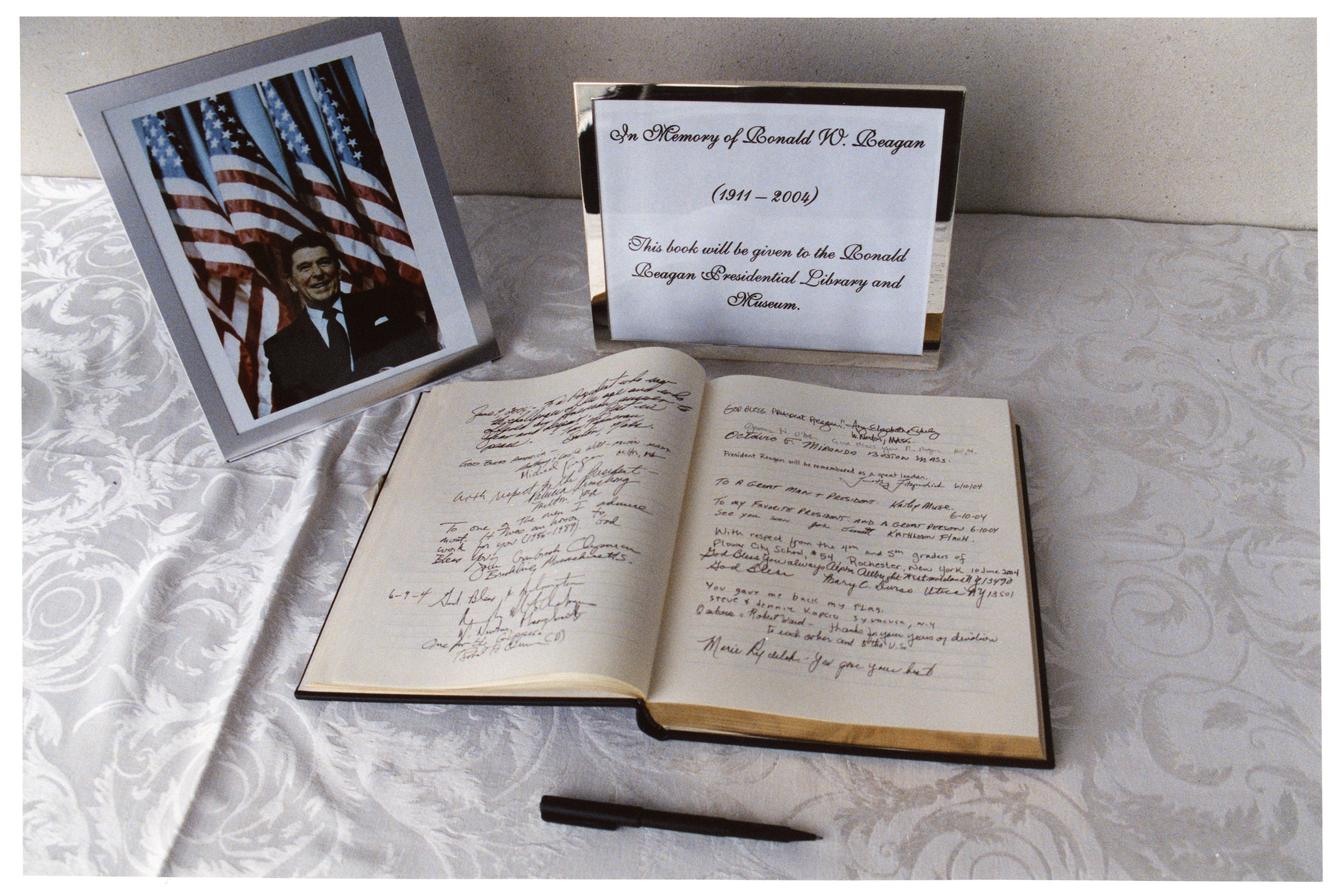
- Simi Valley: Thousands of mourners lined up at the Reagan Presidential Library to pay their respects as he lay in repose in the library's main lobby.
- Washington, D.C.: His flag-draped casket was flown to Washington, D.C., where it was placed on the Lincoln catafalque in the Rotunda of the United States Capitol. An estimated 200,000 people waited in long lines to file past the casket and honor his memory.
The National Funeral Service
On June 11, 2004, a state funeral service was held at the Washington National Cathedral. The service was attended by sitting President George W. Bush, former U.S. presidents, foreign heads of state, and international dignitaries, including Mikhail Gorbachev, Margaret Thatcher, and Prince Charles. Eulogies delivered by President George W. Bush, former Prime Minister Margaret Thatcher (via pre-recorded video due to health), and former President George H.W. Bush highlighted Reagan's role in the Cold War, his economic vision, and his personal warmth.
Following the service in Washington, his body was flown back to California, where a sunset interment service was conducted at the Reagan Presidential Library. He was buried beneath a memorial site on the library grounds, overlooking the valleys of Ventura County.
Legacy and Historical Assessment
Ronald Reagan's death prompted decades of historical reflection on his impact on domestic and foreign policy. His presidency reshaped the American political landscape, anchoring modern conservatism, promoting tax cuts and deregulation, and pursuing a defense buildup that coincided with the eventual collapse of the Soviet Union.
Historians and political scientists continue to debate the long-term economic and social effects of "Reaganomics," but his cultural impact and communicative prowess remain widely acknowledged. His ability to articulate core American ideals earned him the moniker "The Great Communicator." The enduring interest in his life, his governance, and his final years underscores his status as one of the defining political figures of the 20th century.
Frequently Asked Questions
What was the exact date of Ronald Reagan's death?
Ronald Reagan died on June 5, 2004. He passed away at his home in Bel Air, Los Angeles, California, at the age of 93.
What caused Ronald Reagan's death?
The immediate cause of death was pneumonia, which complicated the advanced stages of Alzheimer's disease. He had been diagnosed with Alzheimer's disease a decade prior, in 1994.
Where is Ronald Reagan buried?
Ronald Reagan is buried at the Ronald Reagan Presidential Library in Simi Valley, California. His gravesite is located on the library grounds, where public visitors can pay their respects.
Who attended Ronald Reagan's state funeral?
The state funeral at the Washington National Cathedral in June 2004 was attended by U.S. political leaders, members of Congress, international heads of state, foreign dignitaries such as Mikhail Gorbachev and Margaret Thatcher, and living former U.S. presidents.
When did Ronald Reagan announce he had Alzheimer's disease?
Ronald Reagan publicly announced his diagnosis in a handwritten open letter to the American people on November 5, 1994, stating that he had begun the journey into the sunset of his life.
Conclusion and Next Actions
For researchers, historians, and citizens seeking to explore Ronald Reagan's life, presidency, and final days in greater detail, primary resources and official records remain accessible. Visitors can explore the archives, exhibits, and educational programs provided by the Ronald Reagan Presidential Library and Museum in Simi Valley, California, or consult historical documents maintained by the National Archives and Records Administration.
Image Gallery