The Shares in Microsoft Company Net Worth: 2026 Valuation and Investor Analysis
In 2026, Microsoft Corporation (MSFT) maintains its position as a global leader in technology, with a market-based net worth—commonly referred to as market capitalization—fluctuating between $3.8 trillion and $4.1 trillion. This valuat...
In 2026, Microsoft Corporation (MSFT) maintains its position as a global leader in technology, with a market-based net worth—commonly referred to as market capitalization—fluctuating between $3.8 trillion and $4.1 trillion. This valuation is the product of approximately 7.43 billion shares outstanding, priced by a market that prioritizes Microsoft's dominance in cloud computing, generative AI integration, and enterprise software ecosystems.
Contents
Defining Corporate Net Worth: Market Cap vs. Shareholder Equity
When discussing the "net worth" of a publicly traded entity like Microsoft, it is essential to distinguish between two distinct financial metrics: market capitalization and book value (shareholder equity). For investors, market capitalization represents the "market price" of the entire company, while shareholder equity represents the net value of assets minus liabilities as recorded on the balance sheet.
As of 2026, Microsoft's market capitalization far exceeds its book value. This discrepancy is standard for high-growth technology firms because the market assigns a significant premium to Microsoft's intellectual property, brand recognition, and future earnings potential from artificial intelligence (AI). While the physical assets—data centers, office campuses, and inventory—are worth hundreds of billions, the "shares in Microsoft company net worth" reflect the collective belief in the company's ability to generate cash flow for decades to come.
The share price is the primary lever of this valuation. Because Microsoft has a high volume of liquidity and a massive float, even a small percentage change in the share price can result in a shift of tens of billions of dollars in the total corporate net worth.
Primary Drivers of Microsoft's 2026 Valuation
Microsoft’s valuation is not a monolithic figure; it is built upon three primary business segments that contribute varying weights to the total share value. Understanding these segments is crucial for any analysis of the company's total worth.
1. The Intelligent Cloud and Azure Dominance
The most significant contributor to Microsoft’s net worth in 2026 is the Intelligent Cloud segment. This includes Azure, server products, and enterprise services. Azure has evolved from a simple cloud storage and computing provider into the backbone of the global AI economy. By providing the specialized hardware (GPUs) and software frameworks necessary for large language models, Microsoft has secured long-term contracts with the world’s largest enterprises. The recurring revenue generated from these cloud services provides the "valuation floor" that keeps the share price resilient during market volatility.
2. Productivity and Business Processes (SaaS)
Microsoft 365, LinkedIn, and Dynamics 365 form the core of the Productivity and Business Processes segment. In 2026, the monetization of Microsoft Copilot—an AI assistant integrated across the Office suite—has become a standardized revenue stream. By moving from a seat-based licensing model to an AI-enhanced value model, Microsoft has increased its average revenue per user (ARPU), directly boosting the company’s profit margins and, consequently, its market net worth.
3. More Personal Computing and Gaming
While often overshadowed by cloud growth, the More Personal Computing segment remains a vital component of the company’s balance sheet. This includes Windows licensing, Surface hardware, and the Xbox gaming ecosystem. Following the full integration of Activision Blizzard, Microsoft’s gaming division has become a major contributor to cash flow, positioning the company as a leader in the global entertainment industry.
Financial Performance and Key Metrics (2024–2026)
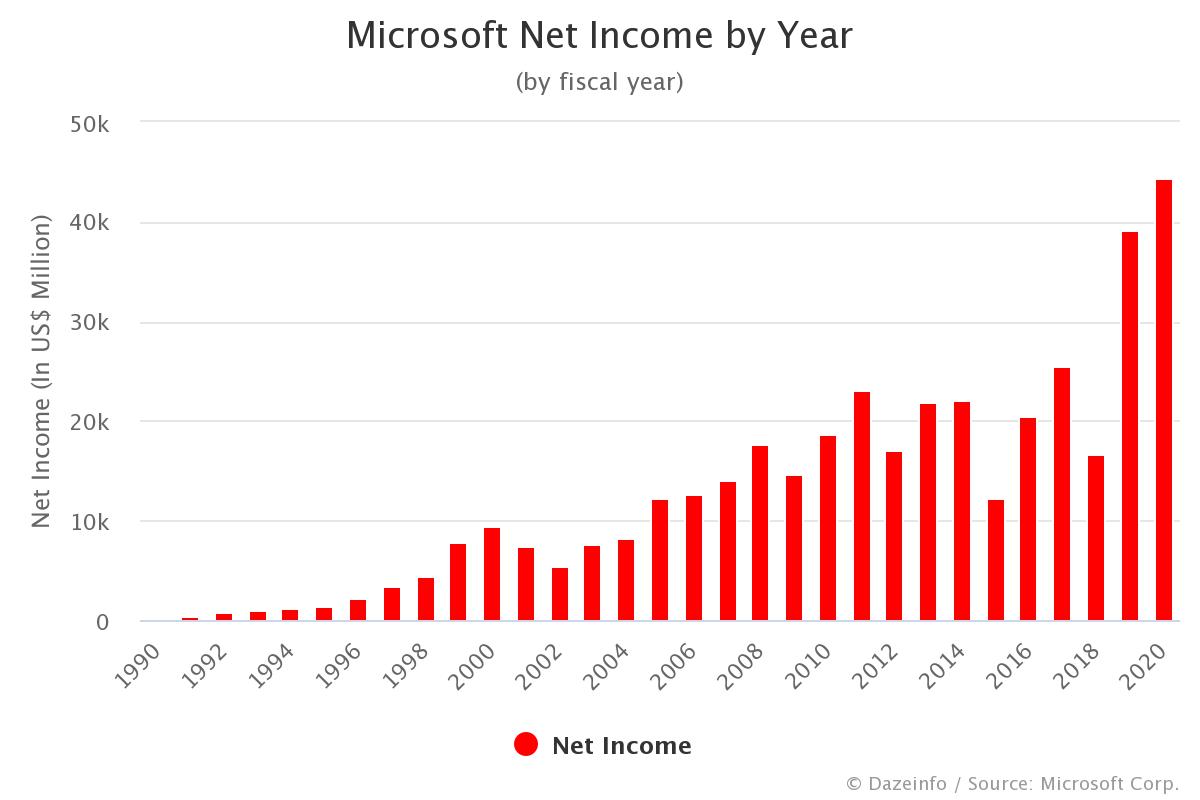
To understand the current net worth of Microsoft shares, one must look at the trajectory of the company’s financial health over the last few years. The following table illustrates the growth in key metrics that support the $4 trillion valuation range.
| Fiscal Year | Revenue (Billions USD) | Net Income (Billions USD) | Shares Outstanding (Approx.) | Market Cap Range (Trillions USD) |
|---|---|---|---|---|
| 2024 (Actual) | $245.1 | $88.1 | 7.43 Billion | $3.0 - $3.4 |
| 2025 (Actual) | $280.5 | $102.4 | 7.42 Billion | $3.4 - $3.7 |
| 2026 (Current) | $315.0 (Est.) | $118.0 (Est.) | 7.41 Billion | $3.8 - $4.1 |
Note: Data for 2024-2025 is based on historical filings. 2026 figures represent current market tracking and analyst projections.
Shareholder Structure and Ownership Impact
The "net worth" of Microsoft is distributed across a diverse group of shareholders. The distribution of these shares affects the stock's stability and its price-to-earnings (P/E) ratio.
- Institutional Investors: Over 70% of Microsoft shares are held by institutional investors, including massive asset managers like The Vanguard Group, BlackRock, and State Street Corporation. These institutions typically hold shares for the long term, providing a level of stability to the valuation.
- Individual/Retail Investors: While retail investors hold a smaller percentage of the total float, Microsoft remains one of the most widely held stocks in individual brokerage accounts and retirement funds (401ks).
- Insider Ownership: Current and former executives, including board members, hold a significant but minority stake. While Bill Gates has diversified most of his holdings over the decades, his historical association remains a point of public interest, though it no longer significantly impacts the day-to-day share price.
The company also engages in consistent share buyback programs. By purchasing its own shares from the open market and retiring them, Microsoft reduces the total number of shares outstanding. This process increases the "ownership slice" of each remaining share, which helps support a higher share price even if the total market cap remains static.
Historical Stock Splits and Share Value
A common question regarding Microsoft’s share value is the history of stock splits. Stock splits do not change the total net worth of the company, but they do change the price per share and the total number of shares held by investors.
Microsoft has conducted nine stock splits in its history since its IPO in 1986. However, the company has not implemented a split since 2003. In the 2026 market environment, despite a high nominal share price, Microsoft has opted to maintain its current share structure, relying on fractional share trading offered by modern brokerages to ensure accessibility for smaller investors.
Risks to Microsoft's Net Worth
No corporate valuation is guaranteed, and Microsoft faces several "headwinds" in 2026 that could impact the value of its shares:
- Regulatory Scrutiny: Antitrust investigations in the United States and the European Union regarding cloud bundling and AI partnerships remain a persistent risk. Adverse rulings could force a restructuring of business units, potentially impacting the valuation.
- Hardware Costs: The "AI arms race" requires massive capital expenditure (CapEx) for specialized chips and data center infrastructure. If the revenue from AI services does not scale as quickly as the infrastructure costs, profit margins could compress.
- Competition: Competitors like Amazon Web Services (AWS) and Google Cloud continue to fight for market share. In the productivity space, open-source AI models and niche SaaS competitors provide ongoing pressure on Microsoft’s pricing power.
Frequently Asked Questions
What is the current price of one Microsoft share in 2026?
As of 2026, the price per share typically ranges between $510 and $560, depending on quarterly earnings results and broader macroeconomic conditions such as interest rates and inflation.
How does Microsoft’s net worth compare to Apple or Saudi Aramco?
Microsoft frequently trades places with Apple for the title of the world's most valuable company. In 2026, the gap between the two is narrow, often decided by the market's reception of new AI features (for Microsoft) versus hardware cycles (for Apple). Saudi Aramco remains a competitor for the top spot, though its valuation is more closely tied to global energy prices.
Does Microsoft pay dividends to shareholders?
Yes, Microsoft is a consistent dividend payer. In 2026, the company continues its trend of annual dividend increases, appealing to "income investors" who seek both capital appreciation and regular cash payouts. The dividend yield typically hovers around 0.7% to 1.0%, reflecting the high growth nature of the stock.
How can I verify Microsoft's official financial filings?
Investors should consult the Microsoft Investor Relations portal or the SEC EDGAR database for official Form 10-K (annual) and Form 10-Q (quarterly) reports. These documents provide the most accurate data on shares outstanding and net income.
Will Microsoft split its stock again in 2026?
There has been no official announcement regarding a stock split in 2026. While the share price is high, the prevalence of fractional trading has reduced the traditional pressure on companies to split their stock for retail accessibility.
Practical Recommendation for Investors
For those looking to understand or invest in the shares of Microsoft, the most effective strategy in 2026 remains a focus on long-term fundamentals. The company’s net worth is increasingly tied to its "moat" in enterprise AI and cloud infrastructure. Investors should monitor the Azure growth rate and CapEx efficiency as the primary indicators of whether the company can maintain its $4 trillion valuation. Diversification remains key; while Microsoft is a cornerstone of the modern economy, its share price is sensitive to regulatory changes and shifts in the global tech landscape.
Image Gallery