How a Loan on a Life Insurance Policy Works with a 1035 Exchange
Executing a Section 1035 exchange on a life insurance policy with an outstanding loan requires careful structural planning. If the debt is extinguished during the transfer, the IRS treats the forgiven debt as taxable boot, potentially...
Executing a Section 1035 exchange on a life insurance policy with an outstanding loan requires careful structural planning. If the debt is extinguished during the transfer, the IRS treats the forgiven debt as taxable boot, potentially triggering an immediate tax liability. To maintain full tax deferral, policyholders must either pay off the outstanding balance before the transfer or complete a carryover loan exchange, where the receiving insurer assumes both the net cash value and the existing loan balance.
Contents
Fundamentals of IRC Section 1035 Exchanges
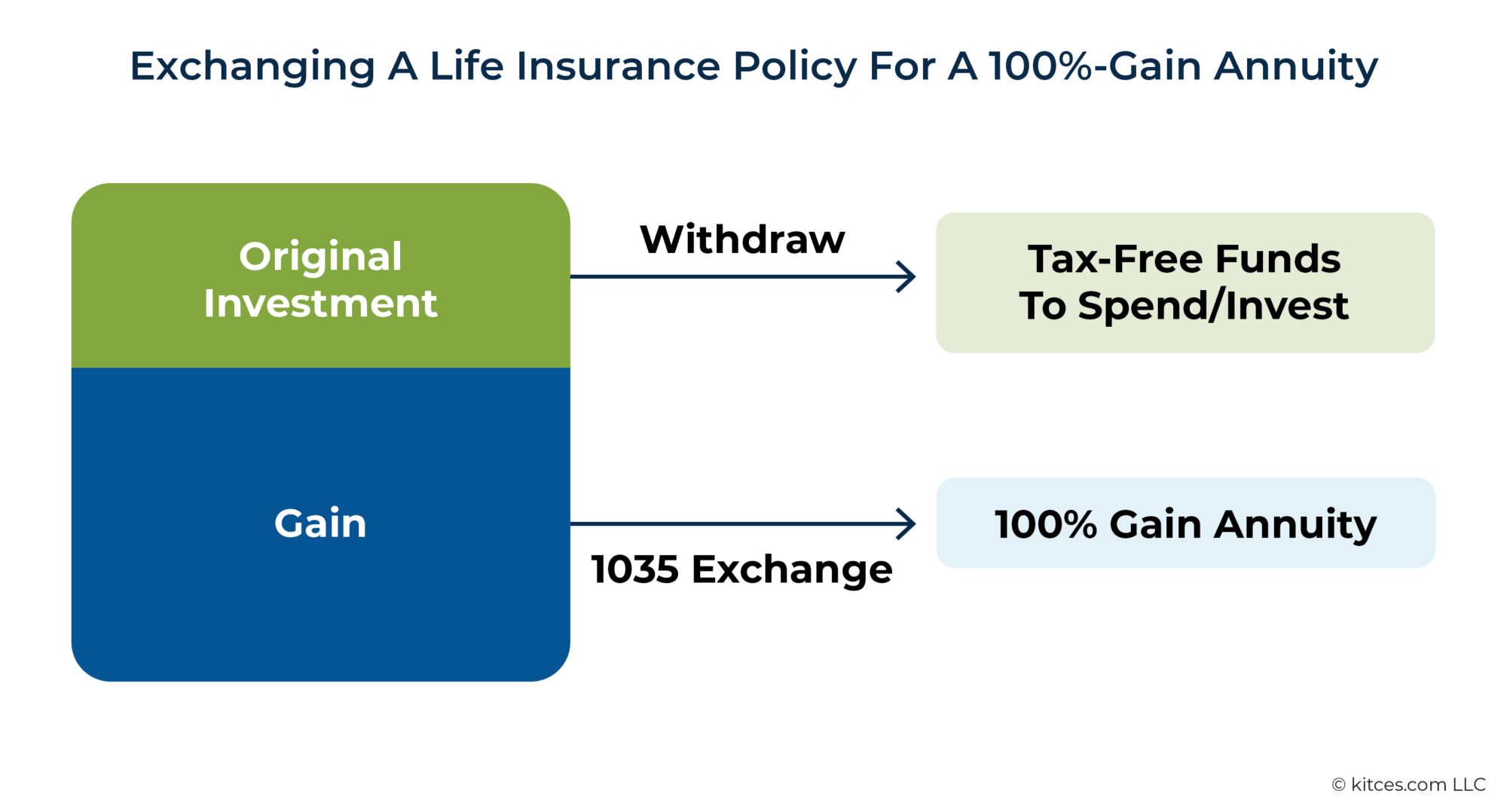
Internal Revenue Code (IRC) Section 1035 allows policyholders to exchange an existing life insurance policy for a new life insurance, endowment, or annuity contract without recognizing gain or loss for federal income tax purposes. The primary advantage of a 1035 exchange is preserving accumulated earnings within permanent life insurance—such as Whole Life, Universal Life, or Variable Universal Life—allowing policyholders to transition into products with better performance, lower administrative fees, or updated rider options without incurring immediate taxes.
Under standard conditions, a 1035 exchange requires a direct assignment of the contract from the existing insurance company (surrendering carrier) to the new insurance company (issuing carrier). The surrendering carrier liquidates the policy assets and transfers the gross surrender value directly to the issuing carrier. The original investment in the contract, known as the tax basis (or cost basis), carries over to the new policy.
- Existing Policy
- Gross Cash Value
- Cumulative Premiums (Cost Basis)
- Direct 1035 Transfer to New Policy
- Transferred Cash Value
- Retained Cost Basis
- Updated Features
When an outstanding policy loan enters the transaction, the mechanics become significantly more complex. Policy loans are collateralized advances against the policy's cash surrender value. Although borrowing against a life insurance contract is generally a non-taxable event during the life of the policy, debt relief occurring during a structural contract change can alter the tax-deferred nature of the exchange.
The Impact of an Outstanding Policy Loan on Exchange Taxation
When a policyholder exchanges a policy that carries an active loan balance, the central tax issue centers on debt relief. Under federal tax law governing non-taxable exchanges (derived from IRC § 1031 principles and applied under Treasury Regulation § 1.1035-1), any non-like-kind property received in an exchange is classified as "boot."
Debt cancellation or debt forgiveness is treated as cash received by the taxpayer. If an existing policy loan is simply canceled, wiped out, or extinguished upon surrender without being absorbed by the new contract or repaid out of pocket, the IRS treats the eliminated loan amount as boot.
- Gross Cash Value = Net Cash Value Transferred + Outstanding Loan Balance
- If not transferred or repaid: Classified as Taxable "Boot"
The tax implications of receiving boot during a 1035 exchange are governed by specific statutory rules:
- Recognition of Gain: The taxpayer must recognize gain up to the amount of boot received.
- Gain Limitation: The taxable gain is capped at the total gain realized in the original contract (Gross Cash Value minus Cost Basis).
- Tax Rate Application: Recognized gain resulting from policy debt relief is taxed as ordinary income, not capital gains.
If a policy's gross cash value exceeds its cost basis, extinguishing a loan during a 1035 exchange will convert part or all of that gain into an immediate income tax liability.
Primary Pathways for Exchanging a Policy with a Loan
Policyholders holding a policy with an outstanding loan have three distinct structural pathways when executing a 1035 exchange. Each option carries unique tax, cash flow, and underwriting consequences.
Policy Loan Options in 1035 Exchange:
- Pathway 1: Pre-Pay Loan
- Repay debt in full
- Pure 1035 exchange
- $0 tax liability
- Pathway 2: Loan Carryover
- Transfer net cash + loan
- Requires new carrier approval
- $0 immediate tax liability
- Pathway 3: Extinguish Loan
- Debt cancelled at transfer
- Triggers taxable "boot"
- Taxes owed on realized gain
Pathway 1: Pre-Exchange Loan Payoff (Clean Transfer)
The cleanest operational method for preserving tax deferral is to pay off the outstanding policy loan prior to initiating the 1035 exchange.
- Mechanics: The policyholder uses personal cash reserves or liquid external assets to pay off the principal and accrued interest owed to the original insurer. Once the loan balance reaches zero, a standard, debt-free 1035 exchange is executed.
- Tax Result: Zero boot is generated. The entire gross cash value transfers to the new policy, and tax deferral remains completely intact.
- Best Suited For: Policyholders who have adequate liquidity to clear the debt and wish to maximize the initial cash value entering the new policy.
Pathway 2: Loan Carryover / Debt Assumption (Tax-Deferred Transfer)
If liquidating external funds to clear the debt is unfeasible, the transaction can be structured as a carryover loan exchange.
- Mechanics: The receiving insurance carrier issues a replacement policy that explicitly assumes the existing loan balance. The surrendering carrier transfers the net cash value (Gross Cash Value minus Loan Balance) while simultaneously transferring the debt balance to the new carrier.
- Tax Result: Because the debt is carried forward onto the replacement contract rather than forgiven, the policyholder experiences no net debt relief. Consequently, no boot is generated, and no gain is recognized.
- Best Suited For: Policyholders who lack liquid capital to pay off the loan balance prior to transfer, provided the receiving carrier's underwriting standards accept debt carryovers.
Pathway 3: Debt Extinction During Exchange (Taxable Exchange)
In this scenario, the exchange proceeds without paying off the loan in advance and without transferring the debt to the new policy.
- Mechanics: The surrendering insurer nets the loan balance against the gross cash value and sends only the remaining net cash value to the replacement carrier. The original loan is formally extinguished on the original carrier's books.
- Tax Result: The extinguished debt is classified as boot. Taxable gain is recognized to the extent of the lesser of the realized gain in the policy or the amount of debt relief.
- Best Suited For: Policyholders who fully understand and intentionally plan for the tax liability, often because the policy is in danger of lapse or the new policy's long-term structure far outweighs the immediate tax obligation.
Mathematical Anatomy of a 1035 Loan Exchange
To understand how boot and gain recognition interact, consider a scenario involving an underperforming permanent policy.
Baseline Financial Profile
- Cumulative Premiums Paid (Cost Basis): $60,000
- Gross Cash Surrender Value: $100,000
- Outstanding Policy Loan Balance: $30,000
- Net Cash Surrender Value: $70,000 ($100,000 - $30,000)
- Total Realized Gain in Policy: $40,000 ($100,000 Gross Cash Value - $60,000 Cost Basis)
Comparative Tax Scenarios
Scenario A: Debt Extinguishing Exchange (Boot Triggered)
The policyholder completes a 1035 exchange, transferring the $70,000 net cash value to a new policy while allowing the original carrier to cancel the $30,000 loan balance.
- Boot Received (Debt Relief): $30,000
- Realized Gain: $40,000
- Recognized Taxable Income: Min(Boot, Realized Gain) = $30,000
- New Policy Cost Basis: $60,000 (Original Basis) + $30,000 (Recognized Gain) - $30,000 (Boot Received) = $60,000
- Tax Impact: The policyholder receives Form 1099-R from the surrendering carrier reporting $30,000 of ordinary income, resulting in phantom income tax (tax liability owed without cash distributed directly to the policyholder).
Scenario B: Loan Carryover Exchange (Tax-Deferred)
The policyholder transfers the $70,000 net cash value alongside the $30,000 outstanding loan to a replacement contract structured to accept a $30,000 debt obligation.
- Boot Received: $0
- Recognized Taxable Income: $0
- New Policy Gross Cash Value: $100,000 ($70,000 cash + $30,000 encumbered debt balance)
- New Policy Cost Basis: $60,000 (Full basis carries over)
- Tax Impact: No immediate tax liability.
Strategy Comparison Matrix
| Feature / Metric | Pre-Exchange Loan Payoff | Loan Carryover Exchange | Debt Extinction / Cancellation Exchange |
|---|---|---|---|
| Tax Status | 100% Tax-Deferred | 100% Tax-Deferred | Taxable to extent of Boot / Gain |
| Out-of-Pocket Cash Required | High (Full loan amount) | None | None (Taxes paid separately at year-end) |
| Receiving Carrier Approval Needed? | Standard Underwriting | Specialized Approval & Loan Provisions Required | Standard Underwriting |
| Boot Generated | $0 | $0 | Equal to Extinguished Loan |
| Impact on Cost Basis | Retains full original basis plus new payoff capital | Retains original cost basis | Adjusted by recognized gain and boot |
| Risk of Phantom Income | None | None | High |
| Operational Complexity | Low | High | Medium |
Underwriting & Operational Criteria for Carryover Loan Exchanges
Carrying over an existing policy loan during a 1035 exchange is not automatically granted by life insurance companies. Receiving carriers enforce rigorous administrative and actuarial standards before accepting encumbered cash value transfers.
1. Loan-to-Value (LTV) Ratios
Issuing insurance carriers generally enforce maximum loan-to-value caps on replacement policies. Most carriers require that the loan carryover amount not exceed 50% to 70% of the gross cash value being transferred. If a policyholder has borrowed 85% of their accumulated cash value, the new carrier will likely decline a carryover 1035 exchange unless the policyholder pays down a portion of the loan prior to processing.
2. Illustration Matching
To ensure structural solvency, the issuing carrier requires specialized policy illustrations demonstrating that the new policy's projected cash value accumulation and crediting rates can support the ongoing interest charges of the carried-over loan balance. If interest costs outpace product performance, the replacement policy risks premature lapse.
3. Policy Construction Requirements
Not all life insurance policy structures support carryover debt. For example, transferring a carryover loan into a Variable Universal Life (VUL) contract introduces market volatility risk to an encumbered balance, prompting carriers to enforce stricter debt-to-value limits compared to Whole Life or Indexed Universal Life (IUL) contracts.
Step-by-Step Workflow for Executing a 1035 Exchange with a Policy Loan
Executing a policy transfer with an existing loan requires chronological precision to prevent accidental contract termination or unintended tax events.
- Step 1: Conduct Policy Audit & Calculate Basis
- Step 2: Determine Carrier Loan Carryover Eligibility
- Step 3: Secure Loan-Encumbered Policy Illustrations
- Step 4: Complete Absolute Assignment & 1035 Forms
- Step 5: Direct Carrier-to-Carrier Transfer Execution
- Step 6: Confirm Form 1099-R Reporting Accuracy
Step 1: Policy Audit and Cost Basis Verification
Obtain an official in-force policy statement from the existing carrier. Request written confirmation of:
- Gross Cash Surrender Value
- Exact Principal and Accrued Interest on the Policy Loan
- Total Premiums Paid (Cost Basis)
- Net Surrender Value
Step 2: Evaluate New Carrier Loan Carryover Acceptance
Confirm that the prospective issuing carrier permits loan carryover 1035 exchanges. Verify their maximum loan-to-value ratio, minimum remaining net cash value thresholds, and interest rate structures for borrowed funds (e.g., fixed vs. variable loan interest rates).
Step 3: Request Comparative Policy Illustrations
Obtain formal policy illustrations from the issuing carrier showing the policy's performance with the carried-over loan balance built into the model. Ensure the replacement contract remains financially viable over the long term despite ongoing loan interest expenses.
Step 4: Complete Transfer Documentation
Complete the replacement carrier's 1035 Exchange Assignment Form, explicitly checking the boxes designating a Loan Carryover Exchange. Complete the absolute assignment documentation transferring policy ownership rights directly to the new insurance company.
Step 5: Direct Carrier-to-Carrier Transfer
The new insurance company submits the 1035 assignment paperwork directly to the surrendering company. Never receive the funds directly. Constructive receipt of funds by the policyholder breaks the 1035 tax chain, immediately rendering the entire transaction a taxable surrender regardless of loan status.
Step 6: Post-Exchange Audit and Form 1099-R Review
Following transaction completion, verify that the initial statement from the replacement carrier accurately reflects the transferred net cash value alongside the carried-over loan balance. In January of the following tax year, confirm that the surrendering carrier files a tax-neutral Form 1099-R (typically using Distribution Code 6 for tax-free exchanges) rather than reporting a taxable distribution.
Common Traps and Strategic Considerations
Phantom Income Tax Exposure
The most significant financial risk in a loan-encumbered 1035 exchange is phantom income. Phantom income occurs when debt cancellation triggers ordinary income tax obligations, but no liquid cash is distributed to the policyholder to pay the tax bill. Policyholders who allow an old, heavily borrowed policy to surrender via an uncoordinated 1035 exchange often discover they owe thousands of dollars in taxes without receiving any liquid funds.
Over-Leveraged Policy Lapses
Exchanging an over-leveraged policy into a product with higher underlying cost-of-insurance (COI) charges can accelerate policy collapse. If the loan balance is carried over and interest charges compound while net cash growth remains modest, the policy may require substantial out-of-pocket premium injections to prevent lapse.
Partial Pre-Pay Strategy
If an issuing carrier rejects a loan carryover exchange due to an excessively high loan-to-value ratio, policyholders can execute a partial loan paydown. By paying down a portion of the debt out of pocket prior to transfer, the policyholder reduces the loan balance to an acceptable threshold (e.g., 50% LTV), allowing the remaining balance to transfer tax-deferred via carryover 1035 mechanics.
Frequently Asked Questions
Can I do a partial 1035 exchange if my policy has an outstanding loan?
Yes, but partial 1035 exchanges involving policies with loans carry heightened IRS scrutiny. Under IRS Revenue Ruling 2003-105 and Revenue Procedure 2011-38, withdrawing cash or cancelling debt shortly before or after a partial exchange can invalidate the tax-free status of the transfer, causing the IRS to recharacterize the transaction as a taxable withdrawal.
What happens if the original insurance carrier issues a Form 1099-R showing taxable income after a loan carryover 1035 exchange?
If the original carrier incorrectly reports the transferred debt as a taxable distribution (using Distribution Code 1 or 7 instead of Code 6), contact the surrendering carrier's tax operations department immediately. Submit proof of the receiving carrier’s acceptance of the carryover debt and request a corrected Form 1099-R (1099-R-Correction).
Does paying off a policy loan right before a 1035 exchange trigger the step-transaction doctrine?
If you use personal funds to pay off a loan prior to an exchange, the transaction is generally respected as tax-free. However, if you borrow money from a third party or receive short-term financing to clear the loan, and then immediately re-borrow the funds from the new policy after the exchange, the IRS may apply the step-transaction doctrine to collapse the events, treating the entire process as a taxable debt forgiveness event.
What is the difference between a direct transfer and an indirect transfer for a policy with a loan?
A direct transfer occurs when funds and debt liabilities move straight from one insurance company to another without the policyholder taking control of the cash value. An indirect transfer occurs if the policyholder receives a check for the surrender value. Constructive receipt of funds invalidates 1035 protection, immediately triggering full taxation on realized gains regardless of whether a new policy is purchased.
Will a loan carryover affect the loan interest rate on my new policy?
Yes. The replacement policy's contractual terms govern all ongoing debt. The new carrier will apply its own loan interest rate structure—which may be fixed, variable, or indexed—to the carried-over balance. Always review the borrowing rules and crediting rate mechanics of the receiving policy before initiating the transfer.
Actionable Next Steps
To successfully execute a Section 1035 exchange on a life insurance policy encumbered by a loan, follow these primary recommendations:
- Calculate the Exact Tax Basis and Gain: Request a formal tax basis letter from your current insurance company to calculate your exposure to potential boot before initiating transfer paperwork.
- Consult a Qualified Tax Professional: Work with a Certified Public Accountant (CPA) or tax attorney to review the proposed structure, particularly if your loan balance exceeds your cost basis.
- Verify Receiving Carrier Guidelines: Confirm that the prospective insurance company accepts carryover debt, permits your policy type, and that your policy’s loan-to-value ratio falls within their underwriting parameters.
- Demand In-Force Carryover Illustrations: Review formal illustrations from the new carrier that explicitly model the carried-over loan balance, interest rate charges, and long-term policy performance to ensure post-exchange sustainability.
Image Gallery