What to Study in Civil Engineering Subjects: A Complete Academic & Industry Guide
Studying civil engineering requires mastering foundational sciences, core structural mechanics, environmental systems, and modern project management techniques. A standard university curriculum covers mathematics, fluid mechanics, soil...
Studying civil engineering requires mastering foundational sciences, core structural mechanics, environmental systems, and modern project management techniques. A standard university curriculum covers mathematics, fluid mechanics, soil mechanics, structural analysis, transportation engineering, and building information modeling (BIM), equipping students to design, construct, and maintain resilient public and private infrastructure.
Contents
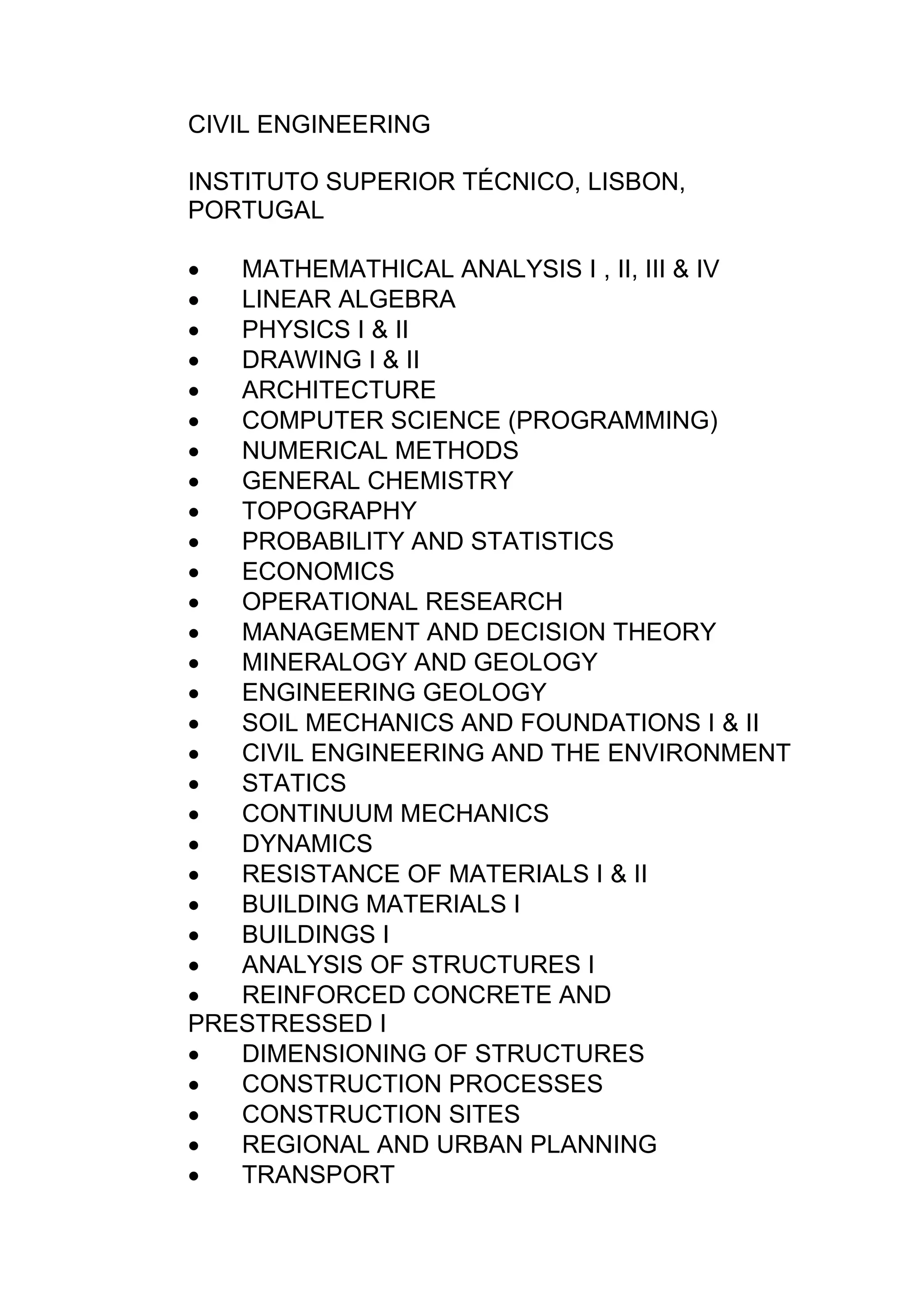
Foundational Mathematics and Natural Sciences
Before tackling specialized engineering problems, civil engineering students build a strong foundation in basic sciences and advanced mathematics. These early courses develop the analytical rigor needed to model physical forces, predict material responses, and analyze dynamic environmental systems.
- Foundational Natural Sciences & Math
- Calculus & Differential Equations
- Classical & Applied Physics
- Materials & Environmental Chemistry
Advanced Engineering Mathematics
Mathematical competency is essential for modeling real-world structural and fluid systems. The core mathematical sequence typically spans four semesters:
- Calculus I & II (Single Variable): Focuses on differentiation, integration, series expansions, and geometric applications used to evaluate dynamic motion and area moments of inertia.
- Multivariable Calculus: Introduces partial derivatives, vector calculus, line integrals, and surface integrals—vital concepts for understanding stress tensors, fluid velocity fields, and electromagnetic applications.
- Differential Equations: Covers ordinary and partial differential equations (ODEs and PDEs), which govern structural vibrations, heat transfer, fluid flow through porous media, and rate reactions in environmental engineering.
- Linear Algebra & Numerical Methods: Teaches matrix algebra, eigenvalues, and numerical analysis algorithms. These tools form the mathematical backbone of modern structural matrix analysis software and finite element modeling (FEM).
Physics and Applied Mechanics
Physics coursework translates abstract mathematical equations into physical realities. Students complete university-level physics focused on classical mechanics, thermodynamics, wave motion, and electromagnetism. Key principles covered include:
- Newtonian Mechanics: Understanding vectors, force equilibrium, work-energy theorems, and rotational momentum.
- Thermodynamics: Analyzing heat transfer, thermal expansion of construction materials, and energy balances in environmental systems.
- Wave Dynamics: Studying acoustic insulation, wave forces on offshore structures, and seismic wave propagation during earthquakes.
Engineering Chemistry and Materials Science
Civil engineers work extensively with chemical compounds, concrete chemistry, and environmental interactions. Chemistry courses cover stoichiometry, electrochemistry (critical for understanding metal corrosion), organic chemistry related to polymers and bitumens, and water quality chemistry. Understanding material degradation mechanisms at the molecular level prevents catastrophic failures in reinforced concrete and steel structures.
The Core Sub-Disciplines of Civil Engineering
The core curriculum of an accredited civil engineering program—aligned with standards from bodies like the Accreditation Board for Engineering and Technology (ABET)—spans six primary sub-disciplines. Each sub-discipline addresses a fundamental component of the built and natural environment.
- Civil Engineering Core Sub-Disciplines
- Structural Mechanics
- Geotechnical & Geology
- Hydraulics & Water
- Transport & Highway
- Environment & Project
1. Structural Engineering and Mechanics
Structural engineering focuses on designing load-bearing systems so that buildings, bridges, dams, and tunnels remain safe and serviceably stable throughout their intended lifespans.
- Statics: The study of rigid bodies in static equilibrium. Students learn to calculate internal force distributions, axial forces, shear forces, and bending moments in trusses, beams, and frames under static loading conditions.
- Dynamics: Examines bodies in motion under applied forces, providing the framework to evaluate wind gusts, machinery vibrations, and seismic accelerations.
- Mechanics of Materials (Strength of Materials): Analyzes stress, strain, axial deformation, torsion, and flexural bending within elastic structural elements. Concepts like Hooke’s Law, Mohr’s Circle for stress transformation, and elastic buckling limits are thoroughly explored.
- Structural Analysis I & II: Covers determinate and indeterminate structures using classical methods (moment distribution, slope-deflection) and modern stiffness matrix methods.
- Reinforced Concrete Design: Focuses on designing structural elements using concrete reinforced with rebar. Topics include ultimate strength design principles, flexural design, shear reinforcement, deflection limits, and bond stress, adhering to standards set by the American Concrete Institute (ACI).
- Structural Steel Design: Applies load and resistance factor design (LRFD) philosophies to structural steel members, covering tension elements, columns, beams, composite beams, welded connections, and bolted joints.
2. Geotechnical Engineering and Engineering Geology
Every civil structure rests on or within soil or rock. Geotechnical engineering evaluates soil properties to design safe foundation systems.
Engineering Geology: Introduces rock classification, weathering processes, structural geology, fault lines, and geological hazard assessment.
Soil Mechanics: Focuses on phase relationships (void ratio, porosity, saturation), soil classification systems (USCS, AASHTO), effective stress theory, seepage, consolidation settlement, and shear strength parameters (cohesion and friction angle).
Foundation Engineering: Covers the practical design of shallow foundations (isolated footings, mat foundations) and deep foundations (drilled shafts, driven piles). Students learn to calculate bearing capacity, evaluate lateral earth pressures on retaining walls, and analyze slope stability to prevent landslides.
Soil Mechanics & Foundation Core
- Sub-Surface Evaluation
- Phase Ratios & Seepage
- Shear Strength & Friction
- Consolidation Settlement
- Structural Application
- Bearing Capacity
- Deep Piles & Retaining
- Slope Stability Analysis
- Sub-Surface Evaluation
3. Hydraulic, Coastal, and Water Resources Engineering
Water resources engineering manages fluid behavior, water supply systems, flood mitigation, and coastal protection.
- Fluid Mechanics: Covers fluid properties, hydrostatics (buoyancy, fluid pressure on submerged surfaces), and hydrodynamics. Students learn to apply the continuity equation, Bernoulli equation, momentum equation, and Navier-Stokes equations.
- Hydraulics: Applies fluid principles to closed conduits (pipe networks, head loss calculations, pump selection using the Hardy Cross method) and open channels (uniform flow, Manning's equation, gradually varied flow profiles, hydraulic jumps).
- Engineering Hydrology: Studies the hydrological cycle, rainfall-runoff modeling, storm hydrographs, flood routing, groundwater flow, and statistical flood frequency analysis.
- Coastal & River Engineering: Focuses on wave mechanics, coastal erosion management, sediment transport, and river channel stabilization.
4. Environmental Engineering
Environmental engineering applies physical, chemical, and biological principles to protect human health and natural ecosystems.
- Water and Wastewater Treatment: Focuses on unit processes for drinking water purification (coagulation, flocculation, sedimentation, filtration, disinfection) and biological wastewater treatment systems (activated sludge processes, trickling filters, anaerobic digestion).
- Solid and Hazardous Waste Management: Covers municipal solid waste collection routing, sanitary landfill engineering (liner design, leachate collection, landfill gas recovery), and remediation strategies for contaminated soil and groundwater.
- Environmental Impact Assessment (EIA): Evaluates environmental policy, regulatory frameworks, environmental sampling techniques, and pollutant dispersion modeling (air pollution plumes, water contaminant transport).
5. Transportation and Highway Engineering
Transportation engineering focuses on safe and efficient movement systems for vehicles, transit lines, pedestrians, and cargo.
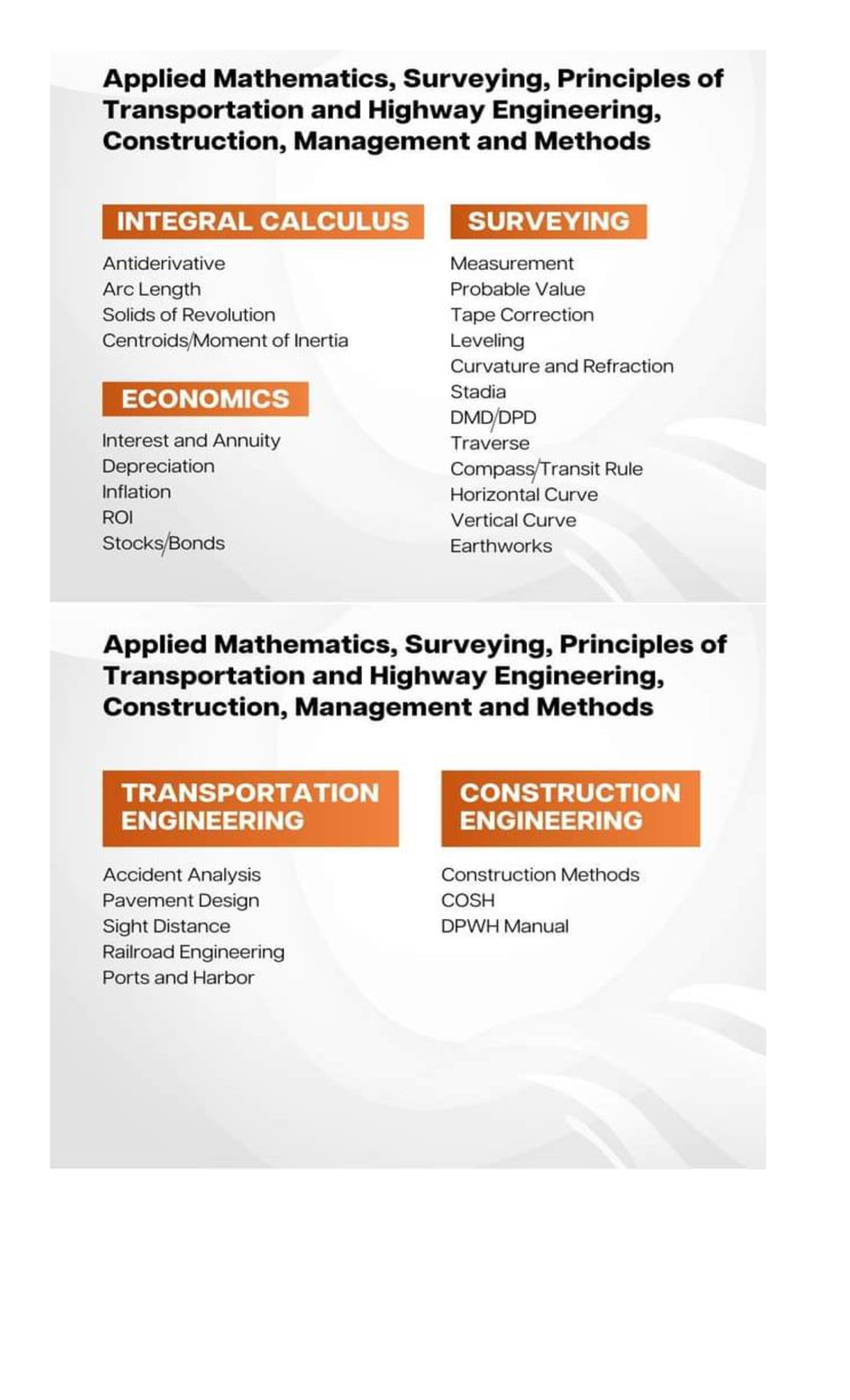
- Geometric Design of Highways: Applies design principles to establish horizontal alignment (curves, superelevation), vertical alignment (sag and crest vertical curves), cross-sectional elements, and stopping sight distance.
- Pavement Engineering: Studies asphalt and concrete pavement design using empirical and mechanistic-empirical methods. Topics include traffic load characterization (ESALs), subgrade strength testing (CBR), and binder properties.
- Traffic Flow Theory and Engineering: Evaluates traffic volume, density, velocity relationships, signal timing optimization, highway capacity analysis, and intelligent transportation system (ITS) deployments.
6. Construction Engineering and Management
This branch bridges technical engineering designs and physical execution on job sites.
- Construction Planning and Scheduling: Covers work breakdown structures (WBS), Critical Path Method (CPM) network scheduling, PERT analysis, and resource levelling.
- Cost Estimating and Quantity Surveying: Teaches quantity takeoff techniques, direct and indirect cost estimation, bidding strategies, and life-cycle cost analysis (LCCA).
- Contracts, Law, and Construction Ethics: Details contract types (Lump Sum, Design-Build, Cost-Plus), legal claims, dispute resolution mechanisms, occupational health and safety regulations, and professional engineering ethics, as advocated by the American Society of Civil Engineers (ASCE).
Technical Tools, Software, and Digital Literacy
Modern engineering curricula heavily integrate computational tools alongside theoretical studies. Mastering core software packages allows students to execute complex analyses and manage large-scale project data efficiently.
- Core Software Framework
- Drafting & Modeling (CAD)
- AutoCAD / Civil 3D
- Autodesk Revit (BIM)
- Structural & Geotech
- STAAD.Pro / ETABS
- GeoStudio / PLAXIS
- Hydrology & Mapping (GIS)
- HEC-RAS / EPANET
- ArcGIS / QGIS
- Drafting & Modeling (CAD)
Computer-Aided Drafting (CAD) and Building Information Modeling (BIM)
- AutoCAD & Civil 3D: Standard tools for drafting 2D construction drawings, terrain modeling, site grading, corridor creation, and volumetric earthwork calculations.
- Autodesk Revit: The primary platform for 3D Building Information Modeling (BIM), allowing civil engineers to collaborate with structural, mechanical, and architectural disciplines within a unified digital asset model.
Structural and Geotechnical Simulation Software
- STAAD.Pro / ETABS / SAP2000: Finite element structural analysis engines used to model multi-story frames, bridges, and complex structural components under static, dynamic, wind, and seismic loadings.
- PLAXIS / GeoStudio: Advanced finite element and limit equilibrium packages used to analyze soil stress distributions, slope stability, slope reinforcement, underground tunneling, and consolidation behavior.
Water Resources and Spatial Analysis Software
- HEC-RAS & HEC-HMS: Hydrologic modeling systems developed by the U.S. Army Corps of Engineers to calculate river flow profiles, flood inundation mapping, and watershed runoff behavior.
- EPANET: Hydraulic modeling software designed to simulate pressurized pipe networks, pump operations, and water quality behavior in municipal supply lines.
- ArcGIS / QGIS: Geographic Information Systems (GIS) used to analyze spatial data, catchment basin boundaries, land-use zoning, and regional infrastructure planning.
Year-by-Year Academic Curriculum Pathway
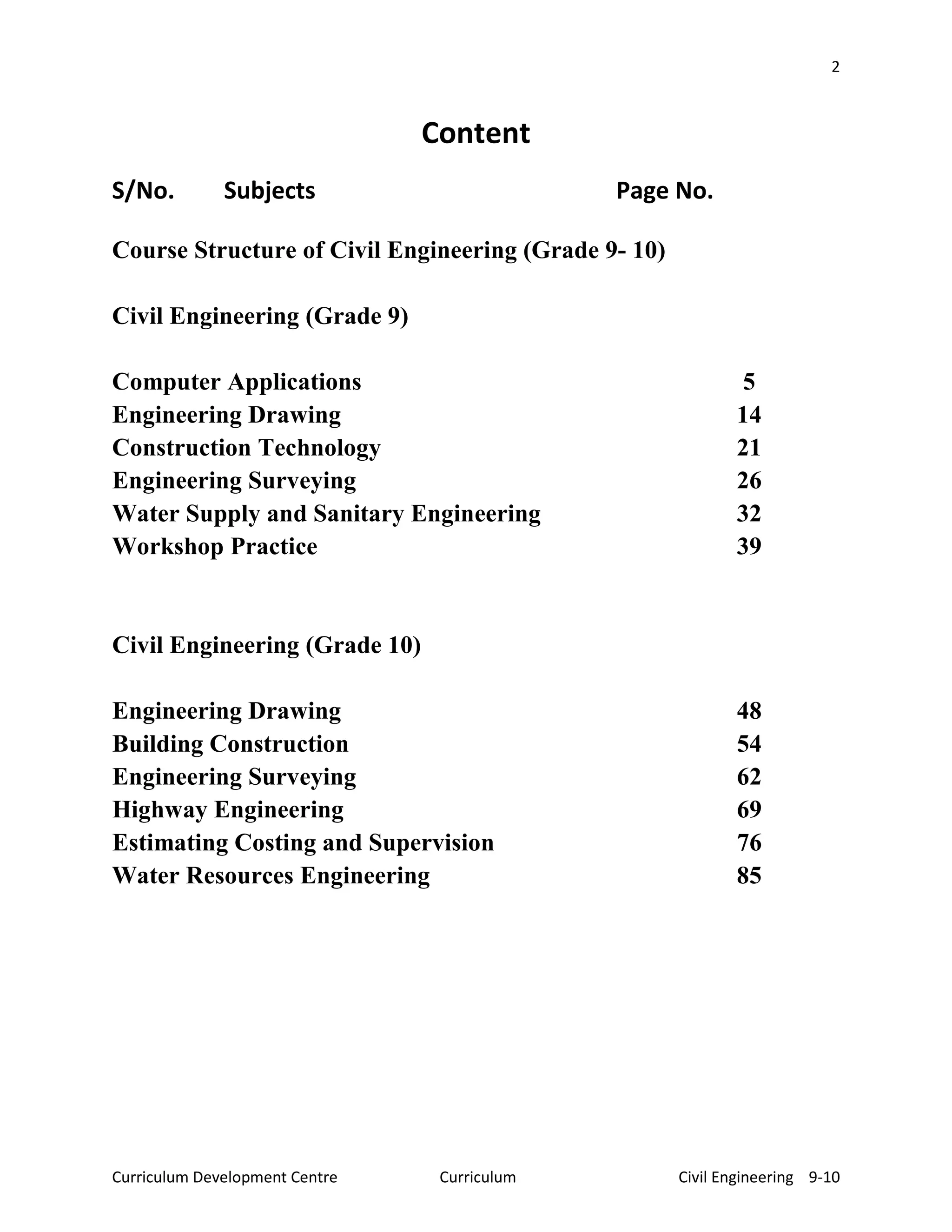
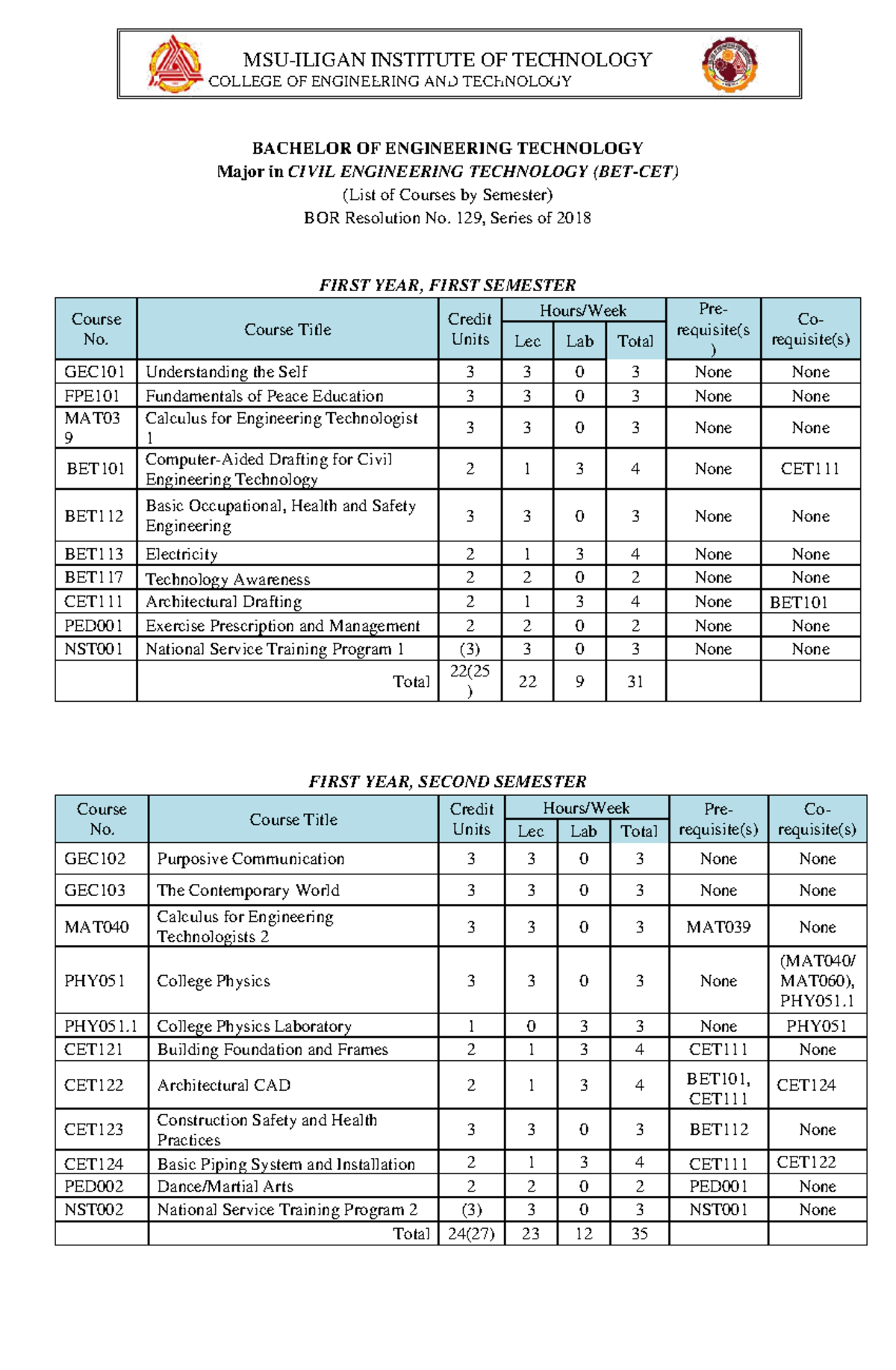
A typical four-year Bachelor of Science (B.S.) degree in Civil Engineering follows a structured progression. Theoretical math and basic science foundational courses build up to integrated, real-world structural and infrastructure design challenges.
| Academic Year | Primary Curriculum Focus | Core Subjects Covered | Practical Labs & Fieldwork |
|---|---|---|---|
| Year 1 (Freshman) | Foundational Mathematics, Basic Natural Sciences & Engineering Graphics | Calculus I & II, General Chemistry, University Physics I, Intro to Civil Engineering, CAD Drafting | Physics Mechanics Lab, Chemistry Qualitative Analysis, CAD Studio Projects |
| Year 2 (Sophomore) | Intermediate Engineering Sciences & Core Analytical Principles | Multivariable Calculus, Differential Equations, Statics, Dynamics, Mechanics of Materials, Surveying | Materials Testing Lab (Concrete/Steel Tension/Compression), Topographic Field Surveying |
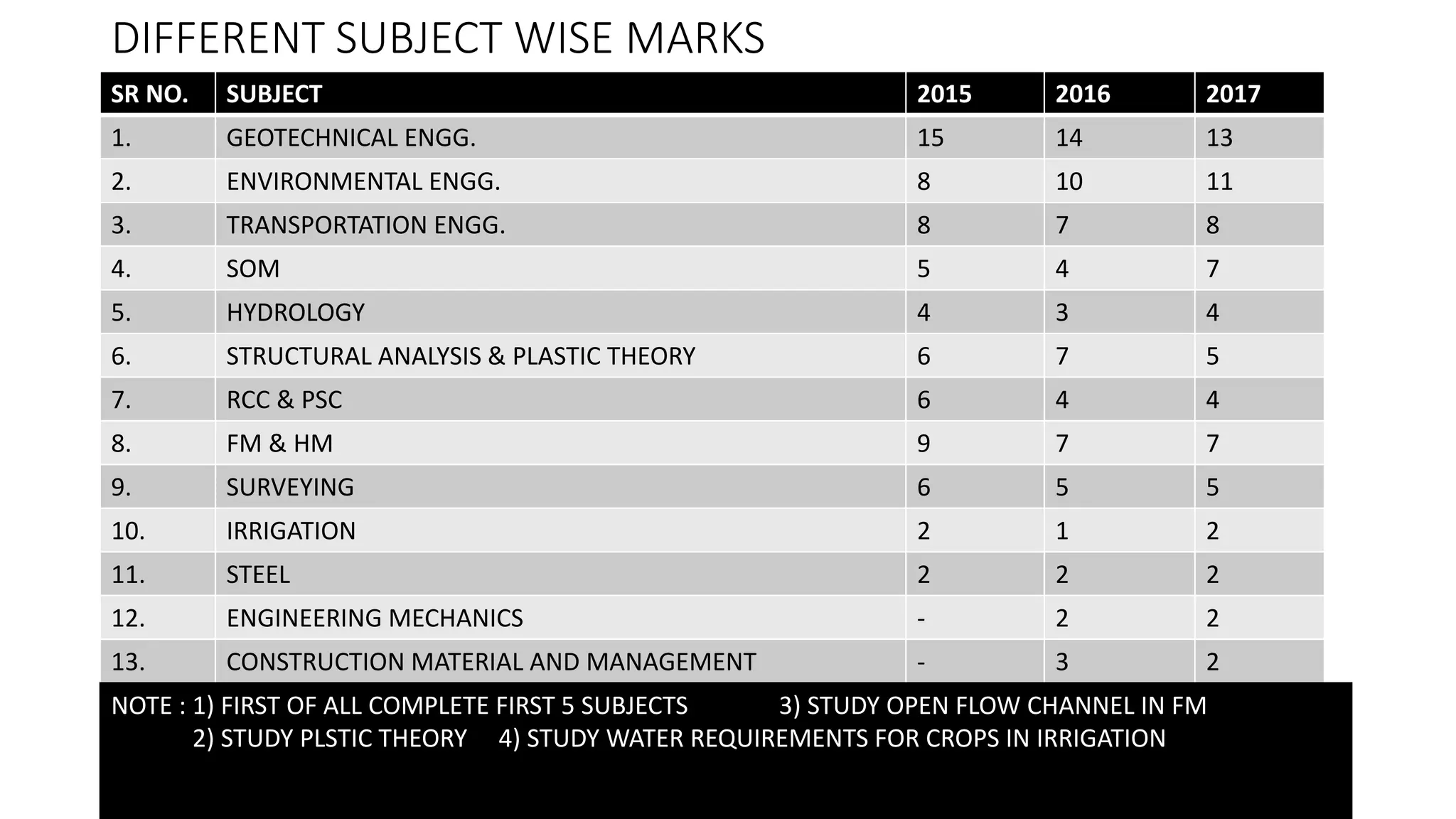
| Year 3 (Junior) | Advanced Application across Fundamental Sub-Disciplines | Fluid Mechanics, Soil Mechanics, Structural Analysis, Transportation Design, Hydrology, Environmental Engineering | Fluid Mechanics Lab, Soil Mechanics Testing (Atterberg limits, triaxial shear), Environmental Water Quality Lab |
| Year 4 (Senior) | Specialized Design, Professional Practice & Integrated Systems | Reinforced Concrete Design, Steel Design, Foundation Engineering, Construction Management, Senior Capstone Project | Concrete Mix Design Lab, Integrated Capstone Project Presentation, BIM Field Simulations |
Emerging Electives and Industry Trends
As infrastructure requirements adapt to technological advances and changing environmental conditions, university curricula incorporate advanced electives focused on sustainability and digital integration.
- Modern Civil Engineering Elective Domains
- Smart Cities & Digital Infrastructure
- Structural Health Sensors (IoT)
- AI-Driven Traffic Optimization
- Infrastructure Digital Twins
- Resilience & Sustainable Engineering
- Carbon-Neutral Material Science
- Climate Adaptation Design
- Green Infrastructure & LEED
- Smart Cities & Digital Infrastructure
Smart Cities and Infrastructure Sensing
This specialization covers structural health monitoring (SHM), deployment of Internet of Things (IoT) sensors on bridge structures, structural damage detection algorithms, asset management systems, and real-time traffic signal optimization using machine learning models.
Sustainable Engineering and Resilient Materials
Coursework explores green building standards (such as LEED certification principles), life-cycle carbon assessment, energy-efficient building envelopes, ultra-high-performance concrete (UHPC), self-healing materials, circular construction methods, and designing infrastructure capable of withstanding extreme weather conditions.
Computational Mechanics and Finite Element Analysis (FEA)
Advanced students can opt for courses focused on writing custom algorithms, utilizing scripting languages (such as Python or MATLAB) to perform non-linear structural analysis, and evaluating complex thermal-structural fluid-structure interaction dynamics.
Frequently Asked Questions
Which subject in civil engineering is considered the most difficult?
Mechanics of Materials, Structural Analysis II, and Fluid Mechanics are widely regarded as the most challenging undergraduate subjects. They require a strong command of multivariable calculus and vector physics, combined with the ability to visualize three-dimensional force distributions and stress fields.
Is computer programming necessary for civil engineering students?
While basic civil engineering work relies primarily on pre-built software (such as AutoCAD, Civil 3D, and ETABS), learning programming languages like Python or MATLAB is increasingly valuable. Programming allows engineers to automate repetitive design calculations, process large spatial datasets (GIS), script custom BIM workflows, and perform parametric finite element analyses.
How much math is actually involved in civil engineering coursework?
Math plays a major role during the first two years of study, covering Calculus I through III, Differential Equations, Linear Algebra, and Numerical Methods. In the upper-division years (Years 3 and 4), pure mathematics transitions into applied engineering mathematics, where calculus and linear algebra are integrated directly into structural mechanics, fluid dynamics, and soil analysis formulas.
What is the difference between Structural Engineering and Civil Engineering?
Civil Engineering is the broad, overarching umbrella discipline that encompasses structural, geotechnical, hydraulic, environmental, transportation, and construction management fields. Structural Engineering is a specific sub-discipline within civil engineering that focuses exclusively on analyzing, designing, and evaluating load-bearing structures like buildings, bridges, and towers.
Are laboratory sessions mandatory for civil engineering subjects?
Yes. Accredited civil engineering degree programs require physical laboratory sessions to bridge theoretical concepts with real-world material behavior. Mandatory labs include Materials Testing (destructive testing of steel rebar and concrete cylinders), Soil Mechanics (sieve analysis, compaction, permeability, and shear testing), Fluid Mechanics (pipe friction and open-channel flume experiments), and Environmental Engineering (water quality parameter testing).
Strategic Advice for Civil Engineering Students
To build a successful engineering career, approach your civil engineering studies systematically:
- Master early statics and mechanics fundamentals: Subjects taught in Year 2—specifically Statics and Mechanics of Materials—form the foundation for all structural, geotechnical, and transportation engineering courses in Years 3 and 4. Deficiencies in basic vector statics make advanced design courses much harder than necessary.
- Combine structural design theory with CAD and BIM proficiency: Understanding theoretical calculations on paper is essential, but industry employers expect entry-level engineers to quickly translate structural ideas into clear construction drawings and 3D models using AutoCAD, Civil 3D, and Revit.
- Secure field experience early: Gain summer internships or join university field teams (such as ASCE Steel Bridge or Concrete Canoe competitions). Hands-on site exposure helps clarify how abstract structural drawings translate into physical construction sequences, rebar placements, and ground improvements.
- Prepare early for Professional Licensure: Take the Fundamentals of Engineering (FE) exam during your final year of university. Passing this exam is the required first step toward earning your Professional Engineer (PE) license, which unlocks key career advancements and project sign-off authority.
Image Gallery