Understanding the IICRC Mold Remediation Technician Supervisor Certification
The IICRC Mold Remediation Technician and Supervisor certifications establish industry-recognized standards for identifying, containing, and safely removing indoor mold contamination. Earning these credentials requires completing accre...
The IICRC Mold Remediation Technician and Supervisor certifications establish industry-recognized standards for identifying, containing, and safely removing indoor mold contamination. Earning these credentials requires completing accredited coursework based on the ANSI/IICRC S520 standard, fulfilling prerequisites like the Water Damage Restoration Technician (WRT) certification, passing a proctored examination, and maintaining ongoing continuing education credits.
Contents
What Is the IICRC Mold Remediation Certification?
The Institute of Inspection, Cleaning and Restoration Certification (IICRC) serves as the primary standard-setting body for the inspection, cleaning, and disaster restoration industries. Within its microbial remediation domain, the IICRC offers targeted credentialing paths, most notably the Applied Microbial Remediation Technician (AMRT) and supervisor-level training aligned with the standard ANSI/IICRC S520.
These certifications validate an environmental professional's knowledge of fungal biology, moisture dynamics, health risks, containment protocols, containment equipment engineering, and personal protective equipment (PPE). A certified technician or supervisor is qualified to perform mold remediation projects in commercial, industrial, healthcare, and residential structures while minimizing liability and cross-contamination risks.
While introductory restoration credentials focus primarily on drying structures after clean-water losses, microbial remediation credentials directly address biological hazards, active fungal growth, and indoor air quality concerns. Certification indicates that a technician or project manager understands how to interpret environmental consultant protocols, manage hazardous materials safely, and return a structure to a biologically neutral condition—termed Condition 1 under industry standards.
The Core Blueprint: The ANSI/IICRC S520 Standard
Every IICRC mold remediation training course and examination derives its technical curriculum from the ANSI/IICRC S520 Standard for Professional Mold Remediation. Understanding this foundational document is essential for anyone pursuing supervisor-level credentialing.
- ANSI/IICRC S520 FRAMEWORK
- BUILDING CONDITIONS
- Condition 1: Normal Ecology
- Condition 2: Settled Spores
- Condition 3: Active Growth
- REMEDIATION PRINCIPLES
- Health & Safety First
- Documentation & Assessment
- Containment & Control
- Moisture Control
- Physical Removal
- BUILDING CONDITIONS
The ANSI/IICRC S520 establishes three primary indoor environmental states regarding fungal contamination:
- Condition 1 (Normal Fungal Ecology): An indoor environment that has a normal deposition of spores and fungal fragments consistent with outside ambient air, without unaddressed moisture problems or active growth.
- Condition 2 (Settled Spores or Spore Traces): An indoor environment contaminated with settled spores or fungal fragments that were dispersed from an active growth source elsewhere, but where active fungal growth is not present on the material itself.
- Condition 3 (Actual Fungal Growth): An indoor environment contaminated with active fungal growth and spore production, creating elevated spore concentrations and potential structural or health impacts.
The S520 emphasizes physical removal of fungal growth over chemical treatments. A key tenet taught in supervisor training is that dead mold spores remain allergenic and toxic; simply applying biocides or fogging agents without physical containment and HEPA-vacuuming does not restore a building to Condition 1.
Prerequisites and Pathway to Certification
To earn advanced microbial restoration credentials such as the IICRC AMRT or supervisor equivalent, candidates must fulfill specific prerequisites. The IICRC enforces these requirements to ensure students possess fundamental knowledge of moisture measurement and structural drying prior to addressing biological hazards.
Mandatory Prerequisites
- IICRC Water Damage Restoration Technician (WRT): Candidates must successfully complete the three-day WRT course and pass the corresponding exam. Moisture control is mandatory for mold control; understanding psychrometrics, moisture meters, and structural drying mechanics is essential prior to beginning microbial studies.
- Health and Safety Compliance Training: While not always an absolute technical prerequisite for course enrollment, supervisors must understand worker safety standards, including OSHA General Industry Regulations (29 CFR 1910) and respiratory protection standard 29 CFR 1910.134.
Recommended Industry Experience
Although a novice can complete the prerequisite WRT and take the AMRT course consecutively, industry experts recommend at least 6 to 12 months of field experience in water restoration or containment construction. Supervisors frequently oversee complex isolation zones, manage negative air pressures, interact with Independent Environmental Professionals (IEPs), and author scope documentation. Practical field exposure significantly improves exam pass rates and operational success.
Technical Competencies and Course Curriculum
IICRC mold remediation supervisor training spans approximately 4 days (minimum 30 hours of classroom and practical instruction), concluding with a comprehensive examination. The curriculum covers both theoretical science and hands-on mechanical execution.
Fungal Biology and Health Effects
Supervisors must understand the environmental factors required for mold growth: organic food sources (such as drywall paper or wood framing), ambient temperatures, and bio-available moisture (relative humidity above 60% or water activity $a_w > 0.75$). The course covers common indoor fungal genera including Aspergillus, Penicillium, Cladosporium, and Stachybotrys chartarum, along with the health implications of mycotoxins, microbial volatile organic compounds (mVOCs), and allergenic proteins.
Containment Construction and Engineering Controls
A key responsibility of a mold remediation supervisor is establishing containment barriers to prevent cross-contamination into clean areas of a structure. Training includes:
- Source Containment: Isolating small, localized areas of contamination using plastic sheeting and tape.
- Critical Barriers: Sealing HVAC vents, doorways, windows, and structural openings with 6-mil poly sheeting.
- Full Containment: Building isolated enclosures featuring decontamination chambers (airlocks) for personnel and equipment transport.
- Negative Air Pressure Systems: Calculating air changes per hour (ACH)—typically requiring a minimum of 4 ACH—and installing HEPA-filtered negative air machines (NAMs) to maintain a negative pressure differential of at least -0.02 inches of water column (-5 Pascals) relative to unaffected areas.
Personal Protective Equipment (PPE) and Worker Safety
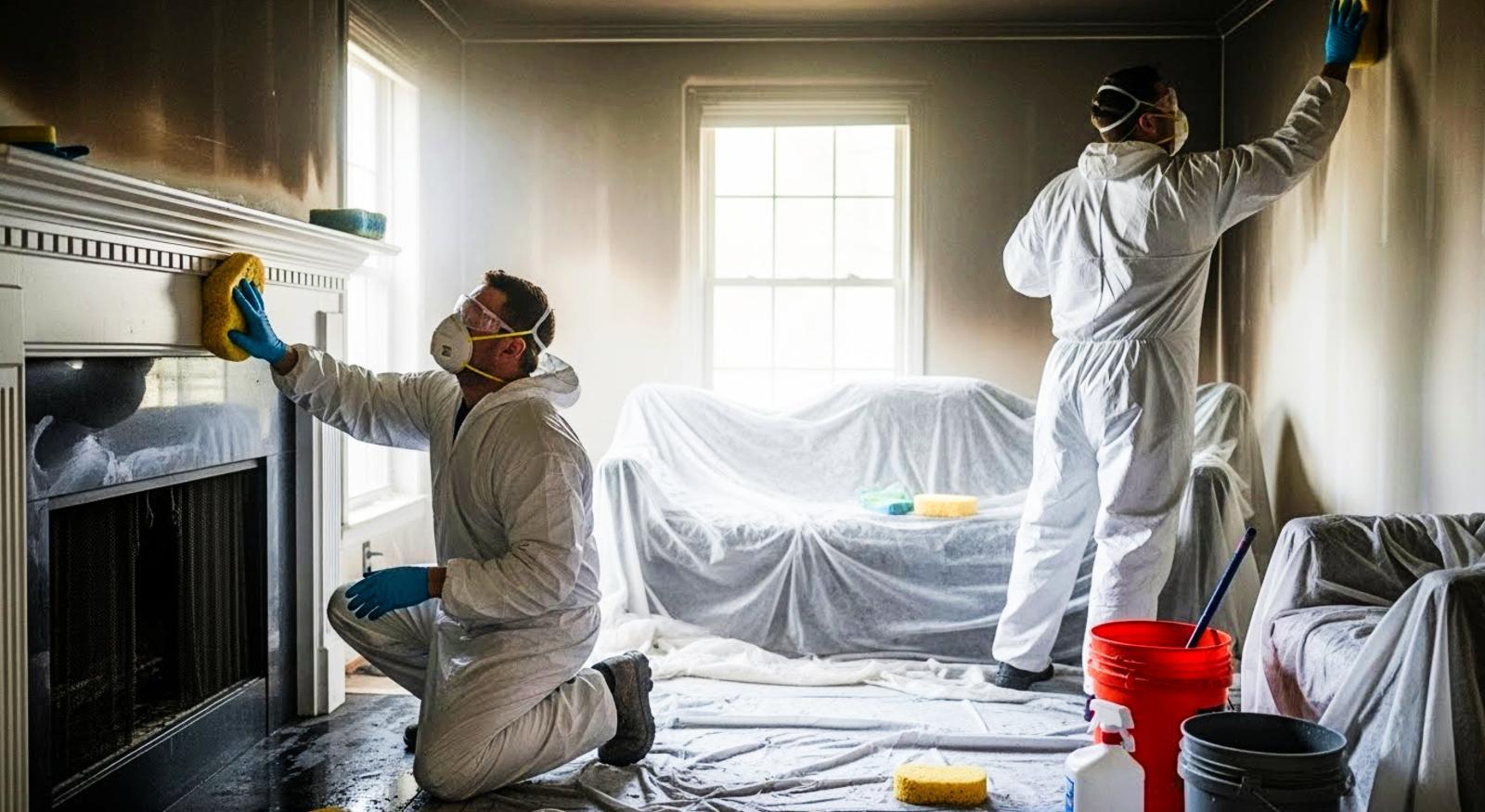
Supervisors must select and implement appropriate personal protective equipment tailored to the contamination level and hazardous materials present:
- Respiratory Protection: Selection between disposable N95 respirators, half-face elastomeric respirators with P100 filters, full-face respirators, or Powered Air-Purifying Respirators (PAPRs).
- Body Protection: Disposable Tyvek or Polyolefin suits with attached boots and hoods.
- Hand and Eye Protection: Heavy-duty nitrile or neoprene gloves paired with non-vented safety goggles when handling cleaning chemicals or disturbed mold colonies.
Physical Remediation Protocols and Clearance Assessment
Remediation methodology focuses on mechanical removal:
- HEPA Vacuuming: Capturing loose surface spores using High-Efficiency Particulate Air vacuums rated at 99.97% efficiency at 0.3 microns.
- Controlled Demolition: Removing porous materials (e.g., drywall, insulation, carpet) exhibiting Condition 3 growth inside containment using dust-suppression techniques.
- Abrasive Cleaning: Sanding, wire-brushing, or dry-ice blasting non-porous and semi-porous structural framing members.
- Post-Remediation Verification (PRV): Coordinating with an Independent Environmental Professional (IEP) to conduct visual inspections and air/surface sampling to verify that containment areas have returned to Condition 1 baseline levels prior to dismantling barriers.
Breakdown of IICRC Mold Certifications
The IICRC offers several credentials related to water, moisture, and biological damage. The table below compares these certifications:
| Certification Title | Primary Focus | Prerequisites | Course Duration | Typical Target Role |
|---|---|---|---|---|
| Water Damage Restoration Technician (WRT) | Structural drying, psychrometrics, clean/grey water extraction | None | 3 Days (19–21 hours) | Field Technician, Restoration Estimator |
| Applied Microbial Remediation Technician (AMRT) | Mold remediation execution, containment, HEPA controls, PPE | WRT Certification | 4 Days (30+ hours) | Remediation Technician, Lead Crew Worker |
| Mold Remediation Specialist (MRS) | Advanced supervisor skills, protocol management, legal compliance | AMRT or extensive field experience + exam application | Dedicated Examination | Senior Supervisor, Operations Manager, Project Manager |
| Commercial Drying Specialist (CDS) | Large-scale drying, complex commercial HVAC and moisture management | WRT Certification | 4 Days | Commercial Project Manager, Lead Supervisor |
Examination, Pricing, and Maintenance Requirements
Obtaining and maintaining an IICRC Mold Remediation certification involves specific financial obligations, proctored testing, and continuous professional development.
- CERTIFICATION LIFECYCLE & RENEWAL
- Complete Coursework (AMRT / MRS Approved School)
- Pass Proctored Exam (70%+ passing grade standard)
- Annual Renewal Fee (Paid directly to IICRC)
- Continuing Education Credits (14 CECs required every 4 years)
Examination Details
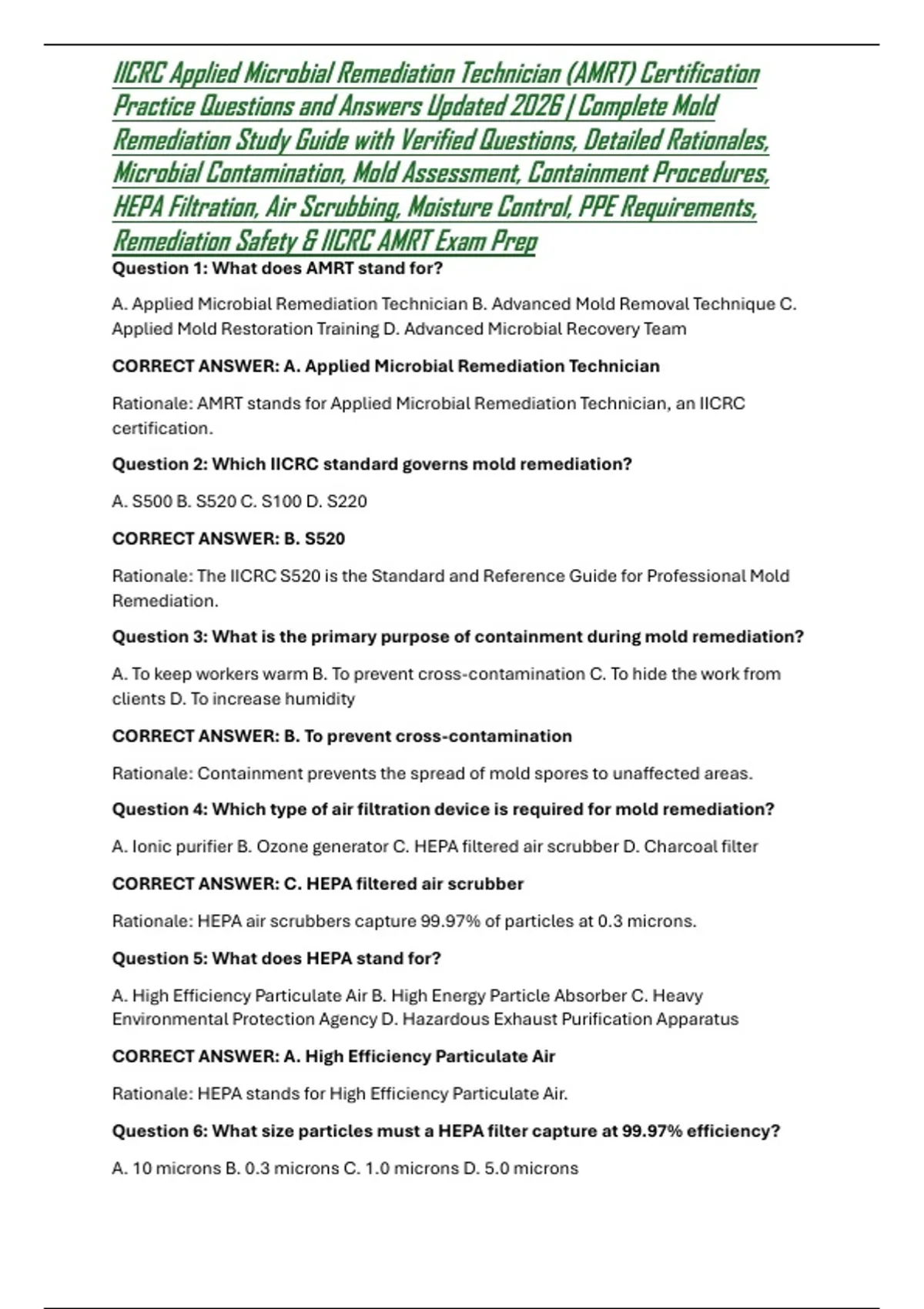
The AMRT and supervisor exams consist of multiple-choice questions covering biological principles, safety standards, containment math (calculating cubic footage and CFM requirements for negative air machines), equipment operation, and the ANSI/IICRC S520 rules. A passing score of 70% or higher is generally required. Exams may be administered in-person at an approved training facility or via monitored online proctoring.
Associated Costs (Estimates)
- Tuition Fees: Accredited training schools charge between $800 and $1,400 for the 4-day course, depending on whether hands-on laboratory work and materials are included.
- IICRC Exam Fee: The testing fee paid directly to the IICRC is typically $80 to $150 per attempt.
- Annual Maintenance Fee: Certified individuals pay an annual registration fee (approximately $70 to $100) to keep their credentials active across all held certifications.
Renewal and Continuing Education (CECs)
IICRC certifications are not permanent one-time awards. To maintain active status, certificate holders must earn 14 Continuing Education Credits (CECs) every four years. CECs can be earned by attending approved industry conventions, completing specialized short courses, taking advanced certification modules, or participating in approved webinars hosted by restoration associations.
State Licensing vs. IICRC Certification
A common point of confusion for environmental contractors is the difference between voluntary industry certifications (such as the IICRC) and mandatory state licensing laws.
While the IICRC certification is an internationally recognized professional credential, several U.S. states enforce statutory licensing requirements for mold assessment and remediation contractors. For example:
- Florida: Requires separate state licenses for Mold Remediators and Mold Assessors through the Florida Department of Business and Professional Regulation (DBPR).
- Texas: Regulates mold remediation through the Texas Department of Licensing and Regulation (TDLR), enforcing strict separation between assessment firms and remediation contractors.
- New York: Enforces the New York State Mold Law under the Department of Labor, requiring completion of state-approved training courses and licensing.
In states with mandatory licensing laws, an IICRC certification alone may not legally authorize a contractor to perform commercial or residential mold abatement. However, state licensing boards frequently model their educational requirements after the ANSI/IICRC S520, and holding an IICRC certification often streamlines state exam preparation or fulfills educational prerequisites. Always consult local state and municipal regulations before performing microbial remediation.
Practical Application: Preparing for the Certification
To maximize success when pursuing the IICRC Mold Remediation Technician or Supervisor credential, candidates should take the following structured approach:
- Master Psychrometrics and WRT Concepts: Review structural drying formulas, vapor pressure calculations, and moisture metering technologies learned during WRT training. Fungi cannot survive without moisture; understanding building science is essential.
- Study the ANSI/IICRC S520 Standard: Obtain and review the official S520 standard document prior to class. Focus specifically on definitions regarding Condition 1, 2, and 3 environments, as well as the responsibilities of the Indoor Environmental Professional (IEP).
- Practice Containment Mathematics: Review basic volume and air-exchange calculations: $$\text{Volume (cu ft)} = \text{Length} \times \text{Width} \times \text{Height}$$ $$\text{Required CFM} = \frac{\text{Volume} \times \text{Desired ACH}}{60}$$ Understanding how to calculate cubic feet per minute (CFM) requirements for negative air filtration is a core component of both field work and certification exams.
- Understand Safety and OSHA Rules: Refresh knowledge regarding fit-testing requirements for elastomeric respirators under OSHA's Respiratory Protection Standard, hazard communication (OSHA HazCom), and confined space entry guidelines.
Frequently Asked Questions
What is the difference between an IICRC AMRT and a Mold Remediation Supervisor?
The Applied Microbial Remediation Technician (AMRT) certification focuses on the technical execution of containment construction, environmental safety, HEPA filtration, and structural removal of mold. Supervisor-level credentials (such as the Mold Remediation Specialist or advanced supervisor coursework) build upon this foundation, emphasizing project management, worker safety compliance, protocol interpretation from Independent Environmental Professionals (IEPs), customer liability management, and post-remediation verification documentation.
Is the IICRC WRT certification required before taking the mold remediation exam?
Yes, the Water Damage Restoration Technician (WRT) certification is a formal prerequisite for the IICRC AMRT course. Because mold growth is secondary to uncontrolled moisture, candidates must understand water intrusion mechanics, psychrometrics, and structural drying principles before learning microbial remediation protocols.
How long does an IICRC Mold Remediation certification remain valid?
IICRC certifications remain valid as long as the credential holder pays the annual renewal fee to the IICRC and completes 14 Continuing Education Credits (CECs) every four years. Failing to fulfill CEC requirements or pay annual maintenance fees results in credential suspension or expiration.
Can an IICRC certified supervisor perform mold assessment testing?
Under the ANSI/IICRC S520 standard and professional ethics rules, a remediation contractor should not perform post-remediation clearance testing on their own work. Assessment and clearance testing should be conducted by an Independent Environmental Professional (IEP) to avoid conflicts of interest. Furthermore, state licensing laws in states like Texas and Florida strictly prohibit an individual or company from acting as both the assessor and the remediator on the same project.
Does an IICRC mold certification allow me to work in any state?
Not automatically. An IICRC certification demonstrates professional competency according to global industry standards, but it is not a government license. If your state regulates mold remediation (e.g., Florida, Texas, New York, Louisiana), you must also obtain a state-issued license before advertising or performing mold remediation services.
Next Steps for Restoration Professionals
Earning the IICRC Mold Remediation Technician or Supervisor credential elevates a restoration contractor's technical capability, operational efficiency, and market credibility. To begin:
- Verify that your IICRC Water Damage Restoration Technician (WRT) certification is active.
- Locate an accredited IICRC training provider offering the Applied Microbial Remediation Technician (AMRT) or advanced mold supervisor course modules.
- Review your state's occupational licensing directory to ensure compliance with any local mold contractor laws alongside your national accreditation.
Image Gallery