Most Affordable MBA Programs in the USA: 2026 Guide to Low-Cost Accredited Degrees
Pursuing a Master of Business Administration (MBA) in the United States does not require taking on six-figure student debt. Dozens of regionally accredited public and non-profit universities offer comprehensive, high-quality MBA degree...
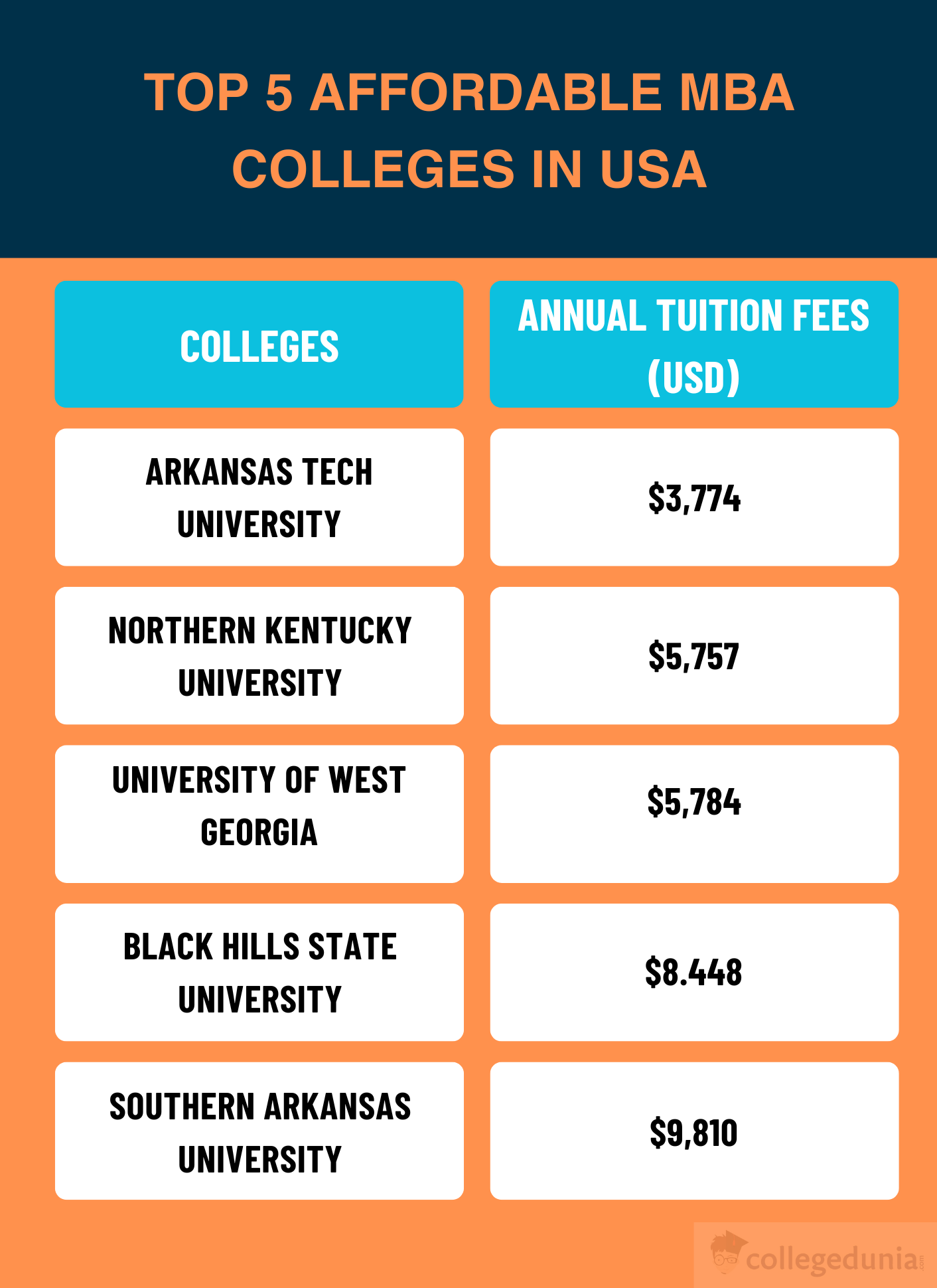
Pursuing a Master of Business Administration (MBA) in the United States does not require taking on six-figure student debt. Dozens of regionally accredited public and non-profit universities offer comprehensive, high-quality MBA degrees with total tuition costs ranging between $8,000 and $25,000. These budget-friendly programs provide rigorous business training, professional networking opportunities, and institutional accreditation recognized by top global employers.
Contents
Understanding the True Cost of an MBA: Tuition vs. Total Investment
When searching for the cheapest MBA programs in the USA, looking solely at per-credit tuition rates can be misleading. A program advertising low cost per credit hour may still end up expensive if it requires extensive prerequisite leveling courses, mandatory on-campus residencies, or excessive administrative fees. Evaluating the true financial obligation requires breaking down the complete cost structure into distinct components.
Total Program Cost = (Required Credit Hours × Cost per Credit Hour) + Mandatory Institutional Fees + Learning Materials + Residency Expenses
Key Financial Variables to Evaluate
- Total Credit Hour Requirements: Standard MBA programs typically require 30 to 36 credit hours for completion. However, applicants without an undergraduate background in business may need to complete 6 to 12 additional credits of foundation coursework (such as financial accounting, microeconomics, and business statistics), which directly increases overall tuition.
- Residency and Registration Fees: Many online and hybrid options charge technology fees, distance learning surcharges, or online proctoring fees per course. On-campus programs may assess student activity fees, facility maintenance costs, and parking permits.
- In-State vs. Out-of-State Distinction: While traditional state university programs charge significantly higher tuition to non-resident students, many public institutions now offer a flat, uniform tuition rate for online graduate students regardless of state residency.
- Course Materials and Textbooks: Digital course packs, case studies from publishers like Harvard Business Publishing, and specialized software licenses can add $1,000 to $2,500 to total degree expenses over the course of the program.
Top Low-Cost Accredited MBA Programs in the USA
The following recognized public and non-profit universities stand out for maintaining exceptional academic standards while keeping total tuition under or near $25,000. All highlighted institutions hold regional accreditation, ensuring degree validity, transferability, and federal financial aid eligibility.
1. Southeastern Oklahoma State University (John Massey School of Business)
- Estimated Total Tuition: ~$10,000 – $12,000
- Delivery Format: 100% Online
- Accreditation: AACSB International
Southeastern Oklahoma State University offers one of the most affordable AACSB-accredited MBA degrees in North America. Designed primarily for working adults, the program consists of 30 credit hours and can be completed in as few as 12 months. Students can choose from multiple specialized concentrations, including Healthcare Information Systems, Strategic Communication, Data Analytics, and Finance. The university maintains a flat pay-per-course tuition rate that applies equally to in-state and out-of-state students, eliminating non-resident surcharges.
2. University of Texas Permian Basin (College of Business)
- Estimated Total Tuition: ~$11,700 – $14,000
- Delivery Format: 100% Online or On-Campus
- Accreditation: AACSB International
Part of the prestigious University of Texas System, UTPB delivers a streamlined 30- to 36-credit-hour MBA program. The curriculum focuses on operational leadership, managerial economics, strategic management, and financial analysis. With 8-week accelerated course modules, students can manage coursework around full-time employment schedules. UTPB accepts up to 6 eligible transfer credits, enabling qualified students to further reduce total degree completion costs.
3. Fort Hays State University (Wert Family College of Business)
- Estimated Total Tuition: ~$11,500 – $13,500
- Delivery Format: Online or On-Campus (Hays, Kansas)
- Accreditation: Higher Learning Commission (HLC); ACBSP Business Accreditation
Fort Hays State University (FHSU) has consistently ranked among the most cost-effective higher education options in the Midwest. Its 33-credit-hour MBA program offers concentrations in Marketing, Leadership Studies, Digital Marketing, and International Business. FHSU is noted for its flexible prerequisite waiver policies for applicants demonstrating relevant professional management experience or prior business coursework.
4. Fitchburg State University
- Estimated Total Tuition: ~$13,500 – $15,000
- Delivery Format: 100% Online
- Accreditation: NECHE (Regional); IACBE Business Accreditation
Located in Massachusetts, Fitchburg State University provides an accelerated 30-credit-hour online MBA that can be completed in 10 to 12 months. The curriculum covers foundational executive competencies, including corporate finance, organizational behavior, management information systems, and global strategy. Tuition is assessed on a transparent per-credit basis, inclusive of core course materials, making financial planning straightforward.
5. University of Illinois Urbana-Champaign (Gies College of Business – iMBA)
- Estimated Total Tuition: ~$24,000 – $25,000
- Delivery Format: 100% Online (iMBA)
- Accreditation: AACSB International
For students seeking top-tier brand recognition at a disruptive price point, the University of Illinois iMBA represents one of the highest-value higher education offerings globally. Delivered via global online learning platforms and live interactive sessions, this 72-credit-hour (quarter system equivalent) program matches the curriculum of elite traditional MBAs. Students engage directly with senior faculty in leadership, strategic innovation, managerial economics, and global marketing while expanding their global peer networks.
6. Boston University (Questrom School of Business Online MBA)
- Estimated Total Tuition: ~$25,000
- Delivery Format: 100% Online
- Accreditation: AACSB International
Boston University’s Questrom School of Business offers an online MBA designed around integrated business modules rather than isolated functional courses. The program emphasizes global business strategy, data-driven decision-making, and digital transformation. While slightly higher in overall cost than regional state schools, it provides access to an elite global alumni network and world-class faculty at a fraction of the cost of traditional resident programs.
Comparison of Low-Cost US MBA Programs
The table below summarizes key metrics for leading budget-friendly MBA programs across the United States. Tuition figures reflect estimated total costs for the core program curriculum.
| University | Delivery Format | Business Accreditation | Program Length (Credits) | Estimated Total Tuition |
|---|---|---|---|---|
| Southeastern Oklahoma State Univ. | 100% Online | AACSB | 30 Credits | $10,000 – $12,000 |
| Univ. of Texas Permian Basin | Online / Hybrid | AACSB | 30–36 Credits | $11,700 – $14,000 |
| Fort Hays State University | Online / On-Campus | ACBSP | 33 Credits | $11,500 – $13,500 |
| Fitchburg State University | 100% Online | IACBE | 30 Credits | $13,500 – $15,000 |
| Univ. of Illinois Urbana-Champaign | 100% Online | AACSB | 72 Credit Hours (Equiv.) | $24,000 – $25,000 |
| Boston University (Questrom) | 100% Online | AACSB | Integrated (45 Credits) | ~$25,000 |
Program Accreditation: Why AACSB, ACBSP, and Regional Status Matter
Navigating budget graduate education requires verifying institutional credentials to ensure the degree holds real-world value. Enrolling in an unaccredited or improperly accredited program can compromise employment prospects and render degrees ineligible for employer reimbursement or federal aid.
Institutional (Regional) Accreditation
Institutional accreditation is the baseline requirement for any legitimate US college or university. Regional accrediting organizations operating across the United States—such as the Higher Learning Commission (HLC), Southern Association of Colleges and Schools Commission on Colleges (SACSCOC), and New England Commission of Higher Education (NECHE)—evaluate overall institutional governance, financial stability, and academic rigor. You can verify institutional accreditation directly via the U.S. Department of Education Database of Accredited Postsecondary Institutions and Programs.
Specialized Business Accreditation
Specialized programmatic accreditation evaluates the specific business school curriculum, faculty qualifications, and learning outcomes:
- AACSB (Association to Advance Collegiate Schools of Business): Widely recognized as the gold standard in business education worldwide. AACSB accreditation requires rigorous faculty research metrics and strict continuous quality standards. Top-tier corporate employers and financial institutions often require an AACSB-accredited degree for executive leadership roles.
- ACBSP (Accreditation Council for Business Schools and Programs): Focused primarily on teaching excellence, practical application, and student learning outcomes rather than faculty research volume. ACBSP accreditation is highly common among excellent regional public universities and private teaching institutions.
- IACBE (International Accreditation Council for Business Education): Outcome-based business accreditation that validates curriculum alignment with industry standards, particularly suited for mission-driven regional colleges.
Practical Strategies to Lower Your MBA Expenses
Even within low-cost programs, proactive financial planning can cut out-of-pocket tuition costs significantly.
- Evaluate Employer Tuition Assistance
- Maximize Transfer Credits & CLEP/Prior Learning Assessment (PLA) Credits
- Secure Graduate Assistantships or Departmental Scholarships
- Utilize Tax Credits (Lifetime Learning)
1. Leverage Employer Tuition Assistance
Under Section 127 of the Internal Revenue Code, U.S. employers can provide up to $5,250 per year in tax-free educational assistance to employees for tuition, fees, and books. Because many low-cost online MBAs cost around $10,000 to $12,000 total, spreading coursework over two calendar years allows working professionals to complete an entire degree with zero personal tuition debt.
2. Apply Prior Learning Assessments (PLA) and Transfer Credits
Many regional universities accept up to 6 to 9 graduate transfer credits from prior accredited coursework. Additionally, applicants with extensive professional experience, professional certifications (such as CPA, PMP, or SHRM-SCP), or military training may earn credit through Prior Learning Assessments (PLA) or portfolio evaluations, reducing total required course hours.
3. Apply for Graduate Assistantships (On-Campus Programs)
For students opting for full-time, on-campus study, graduate assistantships (GAs) offer tuition waivers combined with a monthly living stipend in exchange for 15 to 20 hours per week of teaching or research support. GA positions effectively make an MBA free while building professional institutional experience.
4. Claim the Lifetime Learning Tax Credit
U.S. tax filers paying graduate tuition out-of-pocket may qualify for the federal Lifetime Learning Credit (LLC). Eligible tax filers can claim 20% of up to $10,000 in qualified tuition and educational expenses per year, providing up to a $2,000 direct reduction in federal tax liability annually. Detailed eligibility guidelines are maintained on the IRS Higher Education Tax Credits Portal.
Hidden Fees and Administrative Expenses to Watch For
When comparing low-cost MBA options, always review the institution's official bursar schedule for secondary administrative charges. Seemingly small per-term fees can accumulate rapidly over a multi-year degree program:
- Distance Learning Surcharges: Certain state institutions charge an additional $30 to $100 per credit hour for online platform delivery.
- Course Proctoring Services: Online programs utilizing third-party proctoring tools (such as ProctorU or Honorlock) may require students to pay $15 to $35 per exam directly to the vendor.
- Graduation and Degree Audit Fees: Universities typically charge a mandatory $50 to $150 diploma application fee prior to commencement.
- Prerequisites and Foundation Modules: If your undergraduate degree was in a non-business discipline, confirm whether foundation prerequisites are charged at standard graduate tuition rates or offered as low-cost self-paced prep modules.
Frequently Asked Questions
Is a low-cost MBA degree respected by major employers?
Yes, provided the degree is earned from a regionally accredited institution with recognized business accreditation (such as AACSB or ACBSP). Employers prioritize accreditation, practical skill sets, and demonstrated professional achievements over the price tag of your university diploma.
Are cheap online MBA programs lower quality than expensive traditional MBAs?
Not necessarily. Modern online MBAs offered by established public state universities utilize the same faculty, curriculum frameworks, and learning management platforms as their resident programs. The lower cost often reflects scaled administrative efficiency and reduced physical facility overhead rather than compromised educational quality.
Can international students enroll in low-cost US online MBA programs?
Yes. Most US public universities offering online MBA programs accept international applicants. International students completing an online program from their home countries are generally exempt from F-1 visa requirements, though they must complete credential evaluations (such as WES or ECE) for non-US undergraduate transcripts and demonstrate English language proficiency.
How fast can I complete a low-cost MBA?
Accelerated low-cost MBA programs can be completed in 10 to 12 months of full-time study using continuous 7- or 8-week course terms. Working professionals studying part-time typically complete their degrees within 18 to 24 months.
Strategic Next Steps for Prospective Students
Selecting the ideal affordable MBA program requires balancing total tuition expenses against career objectives, scheduling constraints, and accreditation requirements.
- Request Official Degree Plans: Contact graduate admissions advisors at 3 to 4 candidate universities to request an individualized evaluation of your undergraduate transcripts and potential prerequisite waivers.
- Consult Your Employer’s HR Department: Verify whether your company offers educational assistance, preferred partner tuition discounts, or flexible scheduling arrangements.
- Verify Accreditation Credentials: Cross-reference prospective institutions on official databases published by the Council for Higher Education Accreditation (CHEA) or the U.S. Department of Education.
- Calculate Total All-In Expenses: Create a simple financial ledger factoring in tuition per credit, mandatory fees, proctoring expenses, and learning materials to establish the absolute total cost of completion.
Image Gallery