The FBI Headquarters Relocation: Status and Impact of the Greenbelt Project in 2026
The Federal Bureau of Investigation (FBI) is transitioning its primary operations from the aging J. Edgar Hoover Building in downtown Washington, D.C., to a new, consolidated suburban campus in Greenbelt, Maryland. As of 2026, the proj...
The Federal Bureau of Investigation (FBI) is transitioning its primary operations from the aging J. Edgar Hoover Building in downtown Washington, D.C., to a new, consolidated suburban campus in Greenbelt, Maryland. As of 2026, the project has moved into the advanced design and site preparation phase following the General Services Administration's (GSA) final site selection.
Contents
The decision to move the FBI headquarters is one of the most significant federal infrastructure projects of the 21st century. It involves relocating thousands of personnel and massive technical infrastructure from a Brutalist landmark on Pennsylvania Avenue to a 61-acre site in Prince George’s County. This transition is driven by the physical deterioration of the current headquarters and the need for a modern facility that meets post-9/11 security standards and advanced cybersecurity requirements.
The Decline of the J. Edgar Hoover Building
For over half a century, the J. Edgar Hoover Building at 935 Pennsylvania Avenue NW has served as the face of federal law enforcement. Completed in 1974, the building is a prime example of Brutalist architecture, but its functional lifespan has long since expired. By the early 2020s, the facility was literally crumbling, with protective netting required to prevent pieces of the concrete facade from falling onto the sidewalks below.
Beyond aesthetics and physical decay, the Hoover Building is operationally obsolete. It was designed for a 1960s-era bureaucracy, not a modern intelligence-led law enforcement agency. The internal layout is rigid, preventing the open, collaborative environments required for modern data analysis and multi-agency task forces. Furthermore, the building cannot accommodate the FBI’s entire D.C.-based workforce, which is currently scattered across more than a dozen leased spaces throughout the National Capital Region. This fragmentation creates significant logistical hurdles and security vulnerabilities.
The Selection of Greenbelt, Maryland
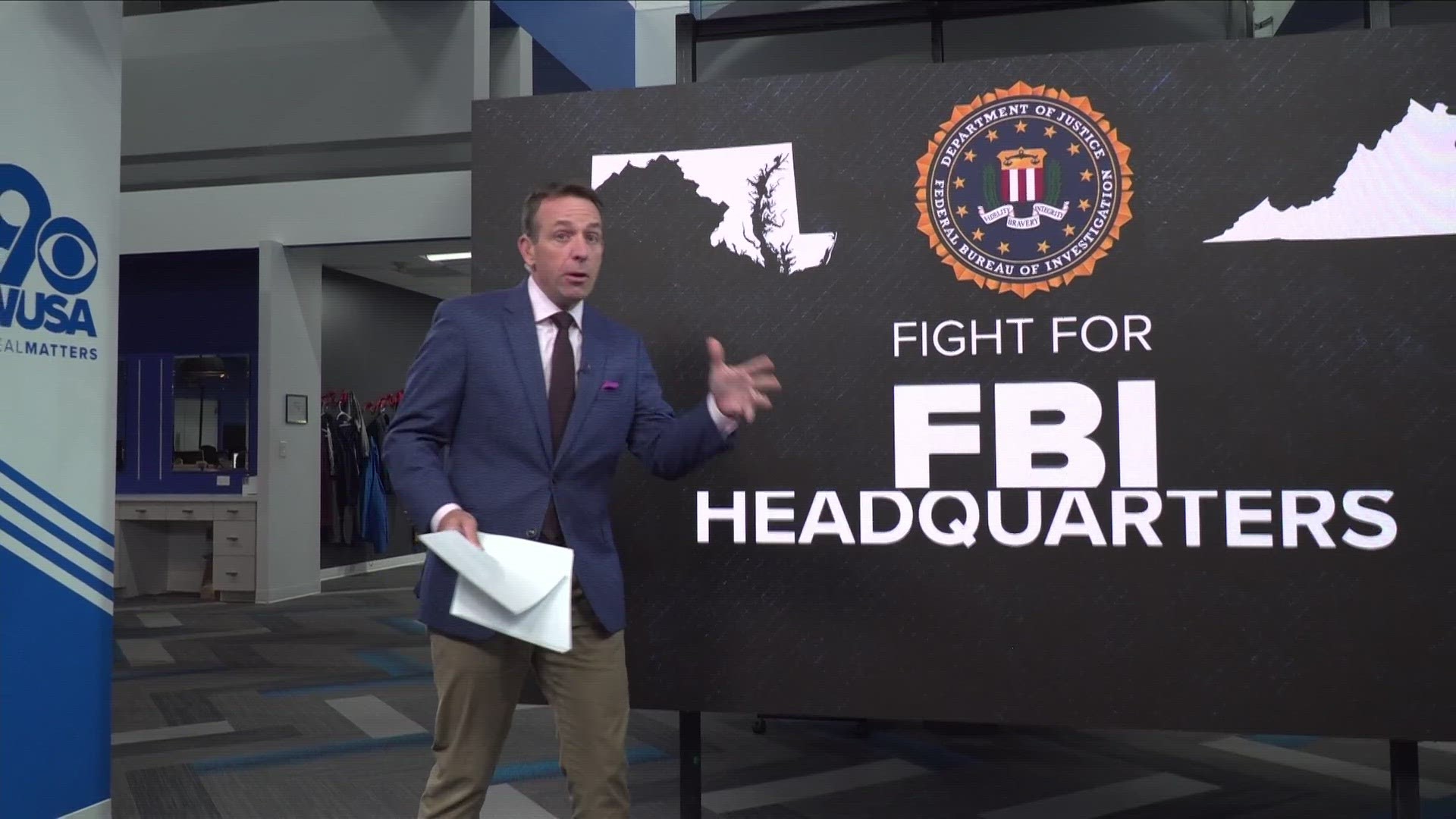
In late 2023, the GSA announced that Greenbelt, Maryland, had been selected as the site for the new consolidated headquarters. The decision concluded a decade-long search and a high-stakes competition between Maryland and Virginia. The Greenbelt site was chosen over competing locations in Springfield, Virginia, and Landover, Maryland, based on a specific set of criteria established by the GSA and the FBI.
The 61-acre site is situated near the Greenbelt Metro and MARC station. This location was prioritized because it offered the best access to public transportation for the workforce while meeting the stringent "buffer zone" requirements mandated by the Interagency Security Committee. Unlike the downtown D.C. location, which sits directly on the street, the Greenbelt campus allows for significant setbacks, blast-resistant perimeters, and controlled access points essential for a Tier IV security installation.
Why the FBI is Moving: Security and Consolidation
The primary driver for the relocation is consolidation. Currently, the FBI’s "Headquarters" is an ecosystem of fragmented offices. Moving to a single campus allows the Bureau to integrate its various divisions—such as the Cyber Division, Counterterrorism Division, and the Criminal Investigative Division—into a unified command structure.
Technical and Security Requirements
A modern intelligence facility requires infrastructure that the Hoover Building simply cannot support. The new Greenbelt headquarters is being designed with the following technical specifications:
- SCIF Expansion: The new site will feature significantly more Sensitive Compartmented Information Facility (SCIF) space, allowing for the secure handling of classified data at the highest levels.
- Cybersecurity Resilience: The facility will include dedicated, redundant power grids and advanced data centers capable of supporting the FBI’s growing reliance on AI and big data analytics for threat detection.
- Operational Flexibility: Modern floor plans will allow for "plug-and-play" task force spaces where the FBI can easily host partners from the CIA, NSA, and local law enforcement.
Economic and Equity Considerations
The move is also a major win for Prince George’s County. For years, federal investment in the D.C. region has been heavily weighted toward Northern Virginia. The selection of Greenbelt was partly justified by the federal government's commitment to equity, aiming to spur economic development in a predominantly minority-owned and middle-class area of Maryland. The project is expected to bring over 7,500 jobs to the immediate vicinity and stimulate billions of dollars in secondary economic activity.
Comparison of Proposed Headquarters Sites
The selection process was rigorous, evaluating sites on cost, transit access, and development timeline. The following table summarizes the final evaluation metrics used during the selection process.
| Criteria | Greenbelt, MD (Selected) | Springfield, VA | Landover, MD |
|---|---|---|---|
| Site Size | 61 Acres | 58 Acres | 80+ Acres |
| Transit Access | Excellent (Metro/MARC) | Good (Metro/VRE) | Moderate (Metro distant) |
| Construction Cost | Lowest estimated site prep | High (existing structures) | Moderate |
| Security Setbacks | Meets all Tier IV standards | Meets all Tier IV standards | Meets all Tier IV standards |
| Economic Equity | Highest impact score | Lowest impact score | High impact score |
| Proximity to Quantico | ~45-60 minutes | ~20-30 minutes | ~50-65 minutes |
Project Timeline and Current Status in 2026
As of 2026, the project has transitioned from the political and legal battleground of site selection into the execution phase overseen by the GSA. While the announcement of the site occurred years ago, federal projects of this magnitude move through several distinct stages.
- Environmental Impact Statement (EIS) and Final Design (2024–2025): The GSA completed the necessary environmental reviews and began the detailed architectural design of the campus. This phase focused on integrating the facility into the existing Greenbelt transit hub.
- Early Site Preparation (2026): Currently, the site is undergoing clearing and utility relocation. This includes significant upgrades to the electrical grid and water management systems to support a high-security campus.
- Foundation and Vertical Construction (Estimated 2027–2030): Full-scale construction is expected to begin shortly, with the specialized security infrastructure being the most time-consuming component.
- Phased Relocation (Estimated 2031–2034): The move will not happen overnight. Personnel will likely be transitioned in phases as different wings of the new campus are certified for secure operations.
Political and Legal Challenges
The move has not been without controversy. Virginia lawmakers, representing the Springfield site, raised significant objections to the GSA’s scoring process, alleging that the criteria were unfairly weighted toward Maryland. This led to a series of audits and reviews by the GSA’s Office of Inspector General (OIG).
By 2026, these legal hurdles have largely been resolved, though congressional oversight remains intense. The focus has shifted from where the building will be to how much it will cost. Budgetary transparency is a recurring theme in House and Senate committee hearings, as the total cost of the move, including construction and the decommissioning of the Hoover Building, is expected to exceed $4 billion.
The Future of the Hoover Building Site
A major secondary question of the FBI move is what happens to the land at 935 Pennsylvania Avenue. Located in a "prime" corridor between the U.S. Capitol and the White House, the site is highly valuable.
There are two primary schools of thought for the Hoover site:
- Commercial/Residential Redevelopment: Demolishing the current structure to build a mixed-use complex of offices, luxury apartments, and retail. This would put the land back on the local tax rolls.
- Continued Federal Use: Utilizing the land for a new federal agency headquarters or a museum. Given the scale of the site—spanning a full city block—it represents one of the few remaining opportunities for massive development in the heart of the District.
Frequently Asked Questions
When will the FBI officially leave Washington, D.C.?
While the move to Greenbelt is confirmed, the FBI will maintain a presence in the J. Edgar Hoover Building for several more years. Total relocation is not expected to be completed until the early 2030s. The Bureau will also likely maintain a smaller "downtown" footprint for liaison work with the Department of Justice.
How many employees are moving to the new headquarters?
The new campus is designed to accommodate approximately 7,500 employees. This includes personnel currently at the Hoover Building and those dispersed across various satellite offices in the D.C. area.
Is the Greenbelt Metro station staying open?
Yes. In fact, the new headquarters is designed to integrate with the Greenbelt Metro station. The GSA and local transit authorities are working on infrastructure improvements to handle the increased ridership, including dedicated pedestrian access for FBI employees.
Why was Springfield, Virginia, rejected?
Springfield was a strong contender due to its proximity to the FBI Academy at Quantico. However, the Greenbelt site scored higher on cost-efficiency and public transit accessibility. Additionally, the federal government’s commitment to "equitable development" favored the Maryland location.
Will the public be allowed to visit the new headquarters?
The new headquarters will be a highly secure facility. Unlike the early days of the Hoover Building, which offered popular public tours, the Greenbelt campus will be a closed intelligence facility. Any public-facing elements, such as a museum or visitor center, would be separated from the main operational areas by significant security barriers.
Practical Recommendations for Residents and Stakeholders
For those living or investing in the Greenbelt and Prince George’s County area, the FBI’s move represents a long-term shift in the local economy. Real estate markets near the Greenbelt Metro station are expected to see sustained demand. If you are a local business owner, consider the logistical needs of a 7,500-person workforce, specifically in the service and hospitality sectors.
For federal contractors, the design and construction phases through 2026-2028 offer significant opportunities in cybersecurity infrastructure, physical security systems, and green building technologies. Monitoring the GSA's procurement portal is essential for staying updated on active bidding cycles for the project.
Image Gallery