Why Kinesiology Is Often the Best Undergrad Degree for Physical Therapy
For most aspiring clinicians in 2026, kinesiology serves as the optimal undergraduate degree because its core curriculum aligns almost perfectly with Doctor of Physical Therapy (DPT) prerequisites. It provides a foundational understand...
For most aspiring clinicians in 2026, kinesiology serves as the optimal undergraduate degree because its core curriculum aligns almost perfectly with Doctor of Physical Therapy (DPT) prerequisites. It provides a foundational understanding of human movement, biomechanics, and exercise physiology, which are essential for both the DPT application process and professional clinical practice.
Contents
The journey toward becoming a licensed physical therapist is rigorous, requiring a bachelor’s degree followed by a three-year Doctor of Physical Therapy (DPT) program. While the American Physical Therapy Association (APTA) and the Physical Therapist Centralized Application Service (PTCAS) do not mandate a specific undergraduate major, the choice of major significantly impacts an applicant's preparation, GPA, and time-to-degree. Kinesiology, the study of human movement, stands out as the most efficient and relevant pathway for the majority of students.
The Synergy Between Kinesiology and DPT Prerequisites
The primary challenge for pre-PT students is completing the heavy load of science prerequisites required for DPT admission while maintaining a high cumulative and science GPA. Most DPT programs in 2026 require a specific suite of courses: two semesters each of Anatomy and Physiology, General Biology, General Chemistry, and General Physics, along with Statistics and Psychology.
Kinesiology programs are uniquely structured to include many of these requirements within the major's "core" curriculum. In many universities, a Kinesiology degree (often categorized as Exercise Science or Human Performance) naturally incorporates:
- Human Anatomy and Physiology: Unlike general biology majors who may study plant life or cellular microbiology, kinesiology students focus intensely on the musculoskeletal, nervous, and cardiovascular systems.
- Biomechanics: This is the application of mechanical principles to living organisms. It is a cornerstone of physical therapy, and kinesiology is one of the few undergraduate majors where this is a required, upper-division course.
- Exercise Physiology: Understanding how the body responds to acute and chronic physical stress is the "language" of rehabilitation. This course provides the physiological justification for the exercises a PT prescribes.
By choosing kinesiology, students avoid the "credit bloat" often found in other science majors. A Biology major, for example, might be required to take Organic Chemistry II, Genetics, or Ecology—subjects that are rarely required by DPT programs and can potentially lower a student's GPA due to their extreme difficulty and lack of clinical relevance.
Clinical Relevance and the "Movement Professional" Identity
In the current healthcare landscape of 2026, physical therapists are increasingly recognized as "movement specialists." The vision of the American Physical Therapy Association (APTA) emphasizes transforming society by optimizing movement to improve the human experience.
Kinesiology students begin developing this identity three to four years before their peers in other majors. While a Psychology or Sociology major may have a strong grasp of the human element of care, they often lack the foundational "movement eye" that kinesiology provides. Kinesiology coursework often includes:
Motor Control and Learning
This sub-discipline explores how the brain organizes movement and how humans acquire new motor skills. For a future PT working with stroke survivors or pediatric patients, understanding the stages of motor learning is vital. Kinesiology majors graduate with an understanding of feedback loops, practice schedules, and neuroplasticity that gives them a significant head start in DPT neurology courses.
Measurement and Evaluation
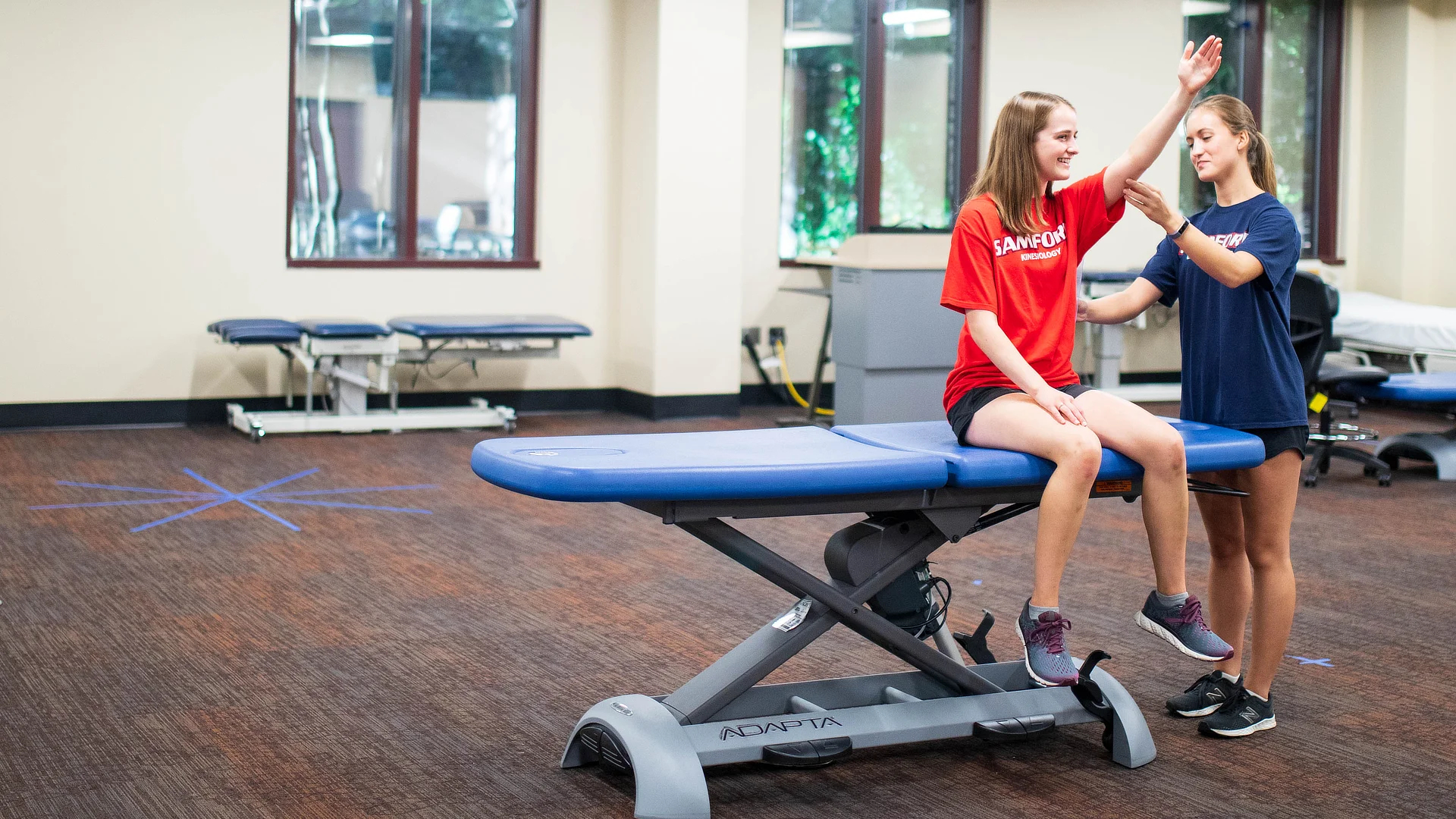
Physical therapy relies heavily on objective data—range of motion, manual muscle testing, and functional scales. Kinesiology programs typically include a course on "Tests and Measurements," teaching students how to collect and interpret physiological data accurately. This familiarity makes the transition to clinical examinations in graduate school much smoother.
The Advantage in Observation and Internship Hours
DPT admissions are highly competitive. In 2026, most programs still require or strongly recommend between 50 and 100 hours of clinical observation under a licensed physical therapist. Kinesiology departments often have established relationships with local outpatient clinics, hospitals, and sports medicine centers.
Many kinesiology programs require a senior internship or "practicum" for graduation. This allows students to earn academic credit while fulfilling their DPT observation requirements. This structural advantage ensures that kinesiology majors are not scrambling to find volunteer hours during their weekends or summer breaks; it is baked into their academic progression.
Comparison of Common Pre-PT Undergraduate Majors
Choosing the right major requires looking at the "path of least resistance" to a high GPA and the most relevant knowledge base.
| Feature | Kinesiology / Exercise Science | Biology | Psychology | Health Science |
|---|---|---|---|---|
| Prerequisite Overlap | Very High (80-90%) | Moderate (60-70%) | Low (30-40%) | High (70-80%) |
| Clinical Relevance | Exceptional | Moderate | High (Behavioral) | High (Systemic) |
| GPA Risk | Moderate | High (due to Chem/Organic) | Low to Moderate | Moderate |
| Movement Focus | Primary Focus | Secondary/Incidental | Minimal | Secondary |
| Common "Waste" Credits | None (all apply to PT) | Botany, Ecology, Zoology | Developmental/Social Psych | Healthcare Admin |
Navigating the "Any Major" Myth
It is a common refrain among admissions counselors that "you can major in anything as long as you take the prerequisites." While true in a technical sense, it ignores the practical realities of the 2026 DPT admissions cycle.
Students who major in non-science fields often find themselves taking "extra" years of school to catch up on science sequences (Post-Baccalaureate work). Furthermore, the DPT curriculum is an intensive, three-year doctoral program. Students who haven't spent four years immersed in the language of human movement (kinesiology) often face a steeper learning curve in their first year of graduate school, particularly in Cadaver Anatomy and Kinesiology/Pathokinesiology courses.
However, there is a caveat: if a student is significantly more passionate about another subject—such as Music, Dance, or Psychology—and can maintain a 4.0 GPA while taking the science prerequisites on the side, they may stand out as a "unique" applicant. But for the "most aspiring clinicians," the efficiency of kinesiology is unbeatable.
Strategic Planning for the 2026 Admissions Cycle
If you choose kinesiology as your undergraduate path, you must still be strategic to ensure your application is competitive for the Physical Therapist Centralized Application Service (PTCAS).
- Maintain a 3.5+ GPA: While 3.0 is often the minimum, the average accepted student in 2026 typically holds a 3.5 or higher. Kinesiology is rigorous, but its relevance often makes the material easier to engage with for PT-minded students.
- Exceed Minimum Observation Hours: Use the kinesiology internship to gain 100+ hours in at least two different settings (e.g., one in outpatient orthopedics and one in inpatient acute care).
- Focus on the "Big Three" Sciences Early: Complete your General Chemistry and Physics sequences by the end of your junior year. Many kinesiology majors wait too long, causing a bottleneck in their senior year when they should be focused on applications.
- Engage in Research: Many kinesiology departments have human performance labs. Assisting a professor with research on gait analysis, ACL prevention, or geriatric balance can significantly boost a DPT application.
Potential Drawbacks to Consider
While kinesiology is the strongest fit, it is not without risks. The primary concern is "Plan B" utility. If a student decides halfway through their junior year that they no longer want to be a physical therapist, a kinesiology degree has a narrower range of high-paying career options compared to a degree in Nursing or Computer Science.
Most kinesiology grads without a graduate degree find work as personal trainers, strength and conditioning coaches, or corporate wellness coordinators. While these are rewarding careers, they do not command the same salary as a DPT. Therefore, students should be reasonably certain of their clinical path before committing to the major.
Frequently Asked Questions
Is Kinesiology harder than a Biology degree?
Generally, Biology is considered more difficult in terms of abstract scientific concepts (like organic chemistry and molecular genetics). Kinesiology is rigorous but more "applied." For a student interested in human movement, kinesiology may feel easier because the material is more interesting and intuitive, but it still requires high-level mastery of physics and human physiology.
Can I get into PT school with a Psychology degree?
Yes. Many successful PTs started in psychology. This background is actually very helpful for understanding patient motivation and chronic pain management. However, you will likely have to use your "elective" credits to take the required chemistry, physics, and biology courses, which are not typically part of a psychology degree plan.
Does the name of the undergrad school matter for DPT admission?
In 2026, most DPT programs prioritize your cumulative GPA, science GPA, and GRE scores (if required) over the "prestige" of your undergraduate institution. It is often better to attend a school where you can maintain a high GPA and get hands-on experience in a kinesiology lab than to struggle at an Ivy League school.
Do I need a master's degree before applying to DPT school?
No. In the United States, the entry-level degree is the Doctor of Physical Therapy. You apply during your senior year of undergraduate studies or after you have completed your bachelor's degree.
What if my school calls the major "Exercise Science" instead?
"Kinesiology" and "Exercise Science" are often used interchangeably. Some schools also use "Human Performance" or "Movement Science." All of these are excellent choices, provided they include the standard DPT science prerequisites.
Final Recommendation for Aspiring Clinicians
For the vast majority of students targeting a career in physical therapy in 2026, Kinesiology is the premier undergraduate choice. It offers the most direct path to completing prerequisites, provides the strongest foundation for graduate-level coursework, and naturally facilitates the acquisition of clinical observation hours. By aligning your undergraduate education with the professional identity of a movement specialist, you set yourself up for success not just in the admissions process, but in your future career as a healthcare provider.
Image Gallery