Illinois Workers’ Compensation Subrogation Lien Explained: Section 5(b) Rules & Calculations
An Illinois workers' compensation subrogation lien allows an employer or its workers' compensation insurance carrier to recover benefit payments from a third party responsible for an employee’s workplace injury. Governing this process,...
An Illinois workers' compensation subrogation lien allows an employer or its workers' compensation insurance carrier to recover benefit payments from a third party responsible for an employee’s workplace injury. Governing this process, Section 5(b) of the Illinois Workers' Compensation Act ensures the employer is reimbursed from any third-party settlement or judgment while requiring them to contribute to legal costs.
Contents
What Is an Illinois Workers' Compensation Subrogation Lien?
When an employee suffers an injury on the job in Illinois, the employer’s workers’ compensation insurance pays statutory benefits regardless of fault. These benefits typically cover reasonable and necessary medical treatment, Temporary Total Disability (TTD) for lost wages, Permanent Partial Disability (PPD), or vocational rehabilitation.
However, many workplace accidents involve a negligent third party who is not the employer or a co-worker. Common examples include:
- A delivery driver struck by a negligent motorist while on the job.
- A construction worker injured by a defective piece of machinery manufactured by an outside vendor.
- A property manager injured due to a hazardous condition maintained by an independent subcontractor.
In these scenarios, the injured worker has the right to file two distinct claims: a no-fault workers' compensation claim against their employer and a third-party personal injury lawsuit against the negligent entity.
To prevent the employee from receiving a double recovery for the same injury and to place ultimate financial responsibility on the at-fault party, Illinois law grants the employer a statutory right of subrogation. Encapsulated in Section 5(b) of the Illinois Workers' Compensation Act (820 ILCS 305/5(b)), this right creates a legal claim—known as a subrogation lien—against any money recovered from the third party.
The Legal Framework: Section 5(b) of the Illinois Workers' Compensation Act
Section 5(b) acts as both an authorization and a balancing mechanism. It provides that if an employee recovers damages from a third-party tortfeasor, the employer is entitled to reimbursement for the total amount of workers' compensation benefits paid out.
However, Illinois law recognizes that the employee (and their personal injury attorney) expended time, effort, and financial resources to secure the third-party recovery. Consequently, Section 5(b) mandates that the employer must contribute its fair share toward the attorney fees and litigation costs incurred to obtain that recovery.
Key Statutory Requirements under Section 5(b)
- Reimbursement Rights: The employer or its insurer has a direct right to be reimbursed out of any gross recovery obtained via settlement or jury verdict.
- Mandatory Attorney Fee Contribution: The employer must pay a statutory fee of 25% of the gross amount reimbursed to its attorney of record in the third-party action, unless another arrangement is adjudicated.
- Pro-Rata Contribution to Expenses: The employer must pay its proportionate share of the reasonable costs and litigation expenses incurred in pursuing the third-party claim.
- Right of Intervention: If the employee does not file a third-party action within the applicable statute of limitations window (typically within three months of the expiration date), the employer has the statutory right to institute proceedings in its own name or join the existing lawsuit.
How the Subrogation Lien Calculation Works
Calculating the net amount payable to the workers' compensation carrier requires a multi-step mathematical process established by statute and reaffirmed in Illinois supreme court precedent, such as Zuber v. Illinois Power Co.
The Three Components of the Lien Formula
To calculate the net lien reimbursement, you must know:
- Gross Lien Amount: Total workers' compensation benefits paid to date (medical, TTD, PPD).
- Statutory Attorney Fee (25%): Automatically deducted from the gross lien amount to compensate the attorney who secured the third-party recovery.
- Pro-Rata Expense Ratio: The percentage of the total third-party recovery represented by the gross lien, which determines the employer's share of court costs, expert witness fees, and filing fees.
$$\text{Pro-Rata Expense Ratio} = \frac{\text{Gross Lien Amount}}{\text{Gross Third-Party Recovery}}$$
$$\text{Employer's Expense Contribution} = \text{Pro-Rata Expense Ratio} \times \text{Total Litigation Expenses}$$
$$\text{Net Lien Reimbursement} = \text{Gross Lien Amount} - (25% \text{ Statutory Fee}) - \text{Employer's Expense Contribution}$$
Detailed Step-by-Step Example
Suppose an injured worker collects $100,000 in workers' compensation benefits. Their attorney files a third-party lawsuit against a negligent equipment manufacturer, resulting in a $300,000 settlement. The total litigation expenses incurred during the third-party case (court filings, depositions, medical expert testimony) equal $12,000.
- Identify Gross Lien: $100,000
- Deduct 25% Attorney Fee: $$$100,000 \times 0.25 = $25,000$$
- Calculate Pro-Rata Share of Expenses:
- Ratio: $$100,000 / $300,000 = 33.33%$
- Employer Share of Costs: $33.33% \times $12,000 = $4,000$
- Calculate Net Lien Reimbursement: $$$100,000 - $25,000 - $4,000 = $71,000$$
In this case, the workers' compensation insurer receives $71,000 to satisfy its $100,000 lien, while the remaining settlement funds are distributed to the plaintiff and their attorney according to their fee agreement.
Illinois Workers' Compensation Subrogation Calculation Summary
The following table demonstrates how Section 5(b) reductions apply across varying recovery scenarios in Illinois:
| Settlement & Lien Variables | Scenario A (Standard Recovery) | Scenario B (High Litigation Expenses) | Scenario C (Partial Lien Coverage) |
|---|---|---|---|
| Gross Third-Party Recovery | $300,000 | $500,000 | $150,000 |
| Gross Workers' Comp Lien | $100,000 | $200,000 | $75,000 |
| Total Litigation Expenses | $12,000 | $50,000 | $6,000 |
| Pro-Rata Expense Percentage | 33.33% ($100k / $300k) | 40.00% ($200k / $500k) | 50.00% ($75k / $150k) |
| 25% Legal Fee Reduction | -$25,000 | -$50,000 | -$18,750 |
| Pro-Rata Cost Reduction | -$4,000 (33.33% of $12k) | -$20,000 (40% of $50k) | -$3,000 (50% of $6k) |
| Net Payable to WC Insurer | $71,000 | $130,000 | $53,250 |
| Effective Lien Reduction | 29.00% | 35.00% | 29.00% |
Complex Legal Issues Affecting Illinois Subrogation Liens
While the statutory formula appears straightforward, real-world workers' compensation lien resolution in Illinois frequently involves complex legal doctrines and negotiation strategies.
1. The Kotecki Cap and Employer Negligence
Under Illinois law, a third-party defendant sued by an injured employee can file a contribution claim against the employer if the employer’s negligence contributed to the workplace injury. However, in the landmark case Kotecki v. Cyclops Welding Corp. (1991), the Illinois Supreme Court ruled that an employer's contribution liability is capped at the total amount of its workers' compensation liability.
In practice, third-party defendants often assert Kotecki contribution claims against employers. To eliminate potential liability in the third-party suit, employers frequently agree to waive all or part of their workers' compensation lien as part of a global settlement.
2. Credit for Future Workers' Compensation Benefits
What happens if the third-party case settles, but the injured worker requires ongoing medical care or future disability payments under workers' compensation?
Under Illinois law, any remaining net recovery received by the worker after satisfying the initial lien acts as a credit against future workers' compensation benefits. The employer does not have to pay additional benefits until the net third-party funds are fully exhausted.
However, under the rule established in Zuber v. Illinois Power Co., even while taking a credit against future payments, the employer remains obligated to pay the worker's attorney a 25% fee on the value of future benefits that the employer avoids paying due to the credit, along with ongoing expense contributions.
3. Policy Limit Deficits and Undervalued Cases
When a third-party defendant has limited insurance coverage that cannot fully compensate the injured worker, enforcing the full Section 5(b) lien can leave the injured party with little or no recovery.
While Section 5(b) gives the employer a strict statutory lien, judges in trial courts and Illinois administrative settings often encourage negotiated reductions. Practitioners frequently negotiate a compromise lien reduction beyond the statutory 25% plus pro-rata costs when full lien enforcement would prevent a global settlement from occurring.
4. Illinois Rules on Medical Bill Reductions
Workers' compensation insurers pay medical providers according to the Illinois Workers' Compensation Commission (IWCC) fee schedule, which is significantly lower than billed charges. The gross subrogation lien is limited strictly to the amounts actually paid by the workers' comp carrier, not the gross medical charges billed by hospitals or physicians.
Steps to Resolving a Subrogation Lien in Personal Injury Claims
To protect all parties and prevent delays in settlement disbursement, attorneys and insurance adjusters follow a structured procedure for handling Section 5(b) liens:
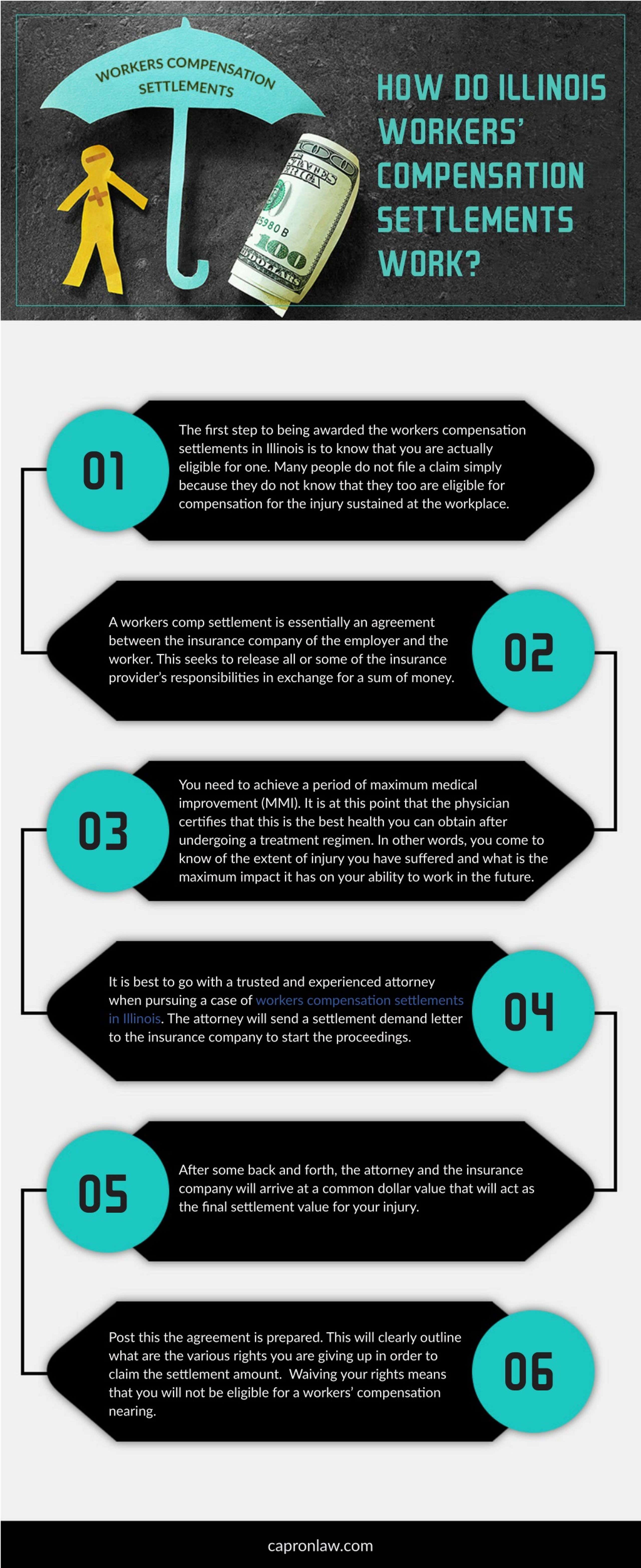
Injury Occurs & Benefits Paid
Formal Lien Notice Issued by WC Insurer
Third-Party Suit Resolved via Settlement/Verdict
Calculate Statutory Reductions (25% Fee + Pro-Rata Costs)
Negotiate Special Factors (Kotecki, Policy Limits, Future Rights)
Execute Lien Release & Final Settlement Approval
Notice of Lien: The workers' compensation carrier sends formal written notice of its subrogation interest to the third-party insurer, the plaintiff’s attorney, and any defense counsel.
Itemized Payment Ledger: The carrier provides an itemized statement of all indemnity (TTD/PPD) and medical payments made to date.
Audit of Payments: The plaintiff's counsel reviews the ledger to ensure all listed expenses are causally related to the work injury and that fee schedule adjustments are reflected correctly.
Calculation & Negotiation: Applying Section 5(b), counsel calculates the net lien payable. If third-party limits are insufficient or employer liability is alleged under Kotecki, the parties negotiate a reduced lien payoff.
Execution of Lien Release: Upon agreement, the workers' compensation insurer issues a formal satisfaction and release of lien in exchange for payment from the settlement proceeds.
Frequently Asked Questions
Can a workers' compensation lien exceed the third-party settlement amount?
Yes, technically a gross workers' compensation lien can exceed the third-party recovery if the insurance policy limits of the third party are low. However, Section 5(b) limits the reimbursement to the actual amount recovered. Furthermore, after applying the mandatory 25% attorney fee deduction and pro-rata litigation costs, the insurer cannot receive more than the net recovery available.
Is an employer required to pay 25% in legal fees on their lien reimbursement?
Yes. Under 820 ILCS 305/5(b), the 25% statutory attorney fee reduction is mandatory unless the employer retained its own attorney who actively participated in achieving the third-party recovery alongside the employee's attorney.
Does the subrogation lien apply to pain and suffering damages?
Yes. Illinois Section 5(b) subrogation rights apply to the total gross recovery obtained from the third party, regardless of how the settlement funds are categorized (e.g., medical expenses, lost wages, or pain and suffering).
What happens if an injured worker settles a third-party claim without the employer's consent?
Settling a third-party lawsuit without protecting the employer's subrogation lien can lead to severe legal consequences. The employer may file a lawsuit directly against the employee or the third-party insurer to enforce its lien rights, and the worker risks forfeiting future workers' compensation benefits.
Can an employer waive its subrogation lien entirely?
Yes. Employers frequently waive their subrogation liens during settlement negotiations. This often occurs when the employer wants to settle a disputed workers' compensation claim simultaneously, or when Kotecki contribution claims create financial exposure for the employer in the third-party litigation.
Practical Recommendations for Managing Illinois Subrogation Liens
Navigating an Illinois workers' compensation subrogation lien requires careful coordination between the workers' compensation case and the third-party injury claim.
- For Injured Workers: Never attempt to settle a third-party personal injury case without addressing the underlying workers' compensation lien. Uncoordinated settlements can jeopardize your right to ongoing medical care and lead to immediate reimbursement demands from the workers' compensation carrier.
- For Legal Practitioners: Request updated payment ledgers from the workers' compensation carrier early and audit every itemized entry. Ensure that medical fee schedule write-downs are accurately calculated and that all court costs are accounted for when computing the employer's pro-rata expense contribution.
- Evaluate Third-Party Fault Early: If employer negligence played a role in the workplace accident, use the Kotecki doctrine strategically during settlement negotiations to bargain for a partial or full waiver of the subrogation lien.
Disclaimer: Workers' compensation and third-party personal injury laws in Illinois involve strict statutory deadlines and complex legal calculations. This guide is intended solely for educational purposes. Consult a licensed Illinois attorney for legal advice tailored to your specific case.
Image Gallery