What Is the Difference Between Customs and Immigration?
The primary difference between customs and immigration is that immigration regulates the people entering or exiting a country, while customs regulates the goods and possessions those people carry. Immigration officers verify your ident...
The primary difference between customs and immigration is that immigration regulates the people entering or exiting a country, while customs regulates the goods and possessions those people carry. Immigration officers verify your identity, nationality, visa status, and legal eligibility to cross a border. Customs officers inspect your luggage, cargo, currency, and commercial items to enforce trade laws, collect tariffs, and prevent illegal contraband or agricultural hazards from entering the domestic economy.
Contents
The Core Distinction: People vs. Possessions
Although travelers frequently encounter border inspection as a single continuous procedure, international law and sovereign border control distinguish sharply between individual identity rights and the movement of personal property.
Understanding this boundary is critical for international travel, business logistics, and legal compliance. While both functions protect a nation's security and sovereign integrity, they operate under distinct statutory frameworks, consult different databases, and carry entirely different legal consequences for non-compliance.
| Immigration (Focuses on the Traveler) | Customs (Focuses on the Goods) |
|---|---|
| • Identity & Passports | • Baggage & Cargo Inspection |
| • Visas & Entry Eligibility | • Duty & Tariff Collection |
| • Biometric Background Checks | • Agricultural Biosecurity |
| • Overstay & Employment Rules | • Currency Declaration Limits |
What Is Immigration Control?
Immigration control is the process by which a sovereign government monitors, evaluates, and regulates the entry, stay, and departure of human beings across its national borders. The legal basis of immigration rests on national sovereignty—the inherent right of a nation to determine who may enter its territory, under what conditions, and for how long.
- Traveler Approaches
- Passport & Identity
- Verifies biometric data & passport validity
- Visa & Authorization
- Confirms entry permit (ESTA, ETIAS, Visa)
- Security Screening
- Checks Interpol, criminal & watchlists
- Admission Decision
Primary Responsibilities of Immigration
- Identity Verification: Confirming that travelers are who they claim to be using passports, national identity cards, biometrics (facial recognition, fingerprints, iris scans), and machine-readable travel documents.
- Legal Entitlement and Visa Verification: Assessing whether a non-citizen possesses the requisite legal permissions to enter, such as tourist visas, work permits, student visas, or electronic travel authorizations like the U.S. Electronic System for Travel Authorization (ESTA) or the European Travel Information and Authorisation System (ETIAS).
- Security Screening: Cross-referencing traveler manifests against law enforcement watchlists, Interpol notices, national security databases, and arrest warrants to intercept individuals who pose criminal or security threats.
- Enforcing Duration of Stay: Establishing how long a visitor may remain legally within the country, stamping passports or updating digital entry registers, and identifying individuals who have previously overstayed entry limits.
- Asylum and Refugee Processing: Receiving claims for international protection, evaluating immediate human rights risks, and directing claimants to national asylum tribunals.
How the Immigration Process Works at the Border
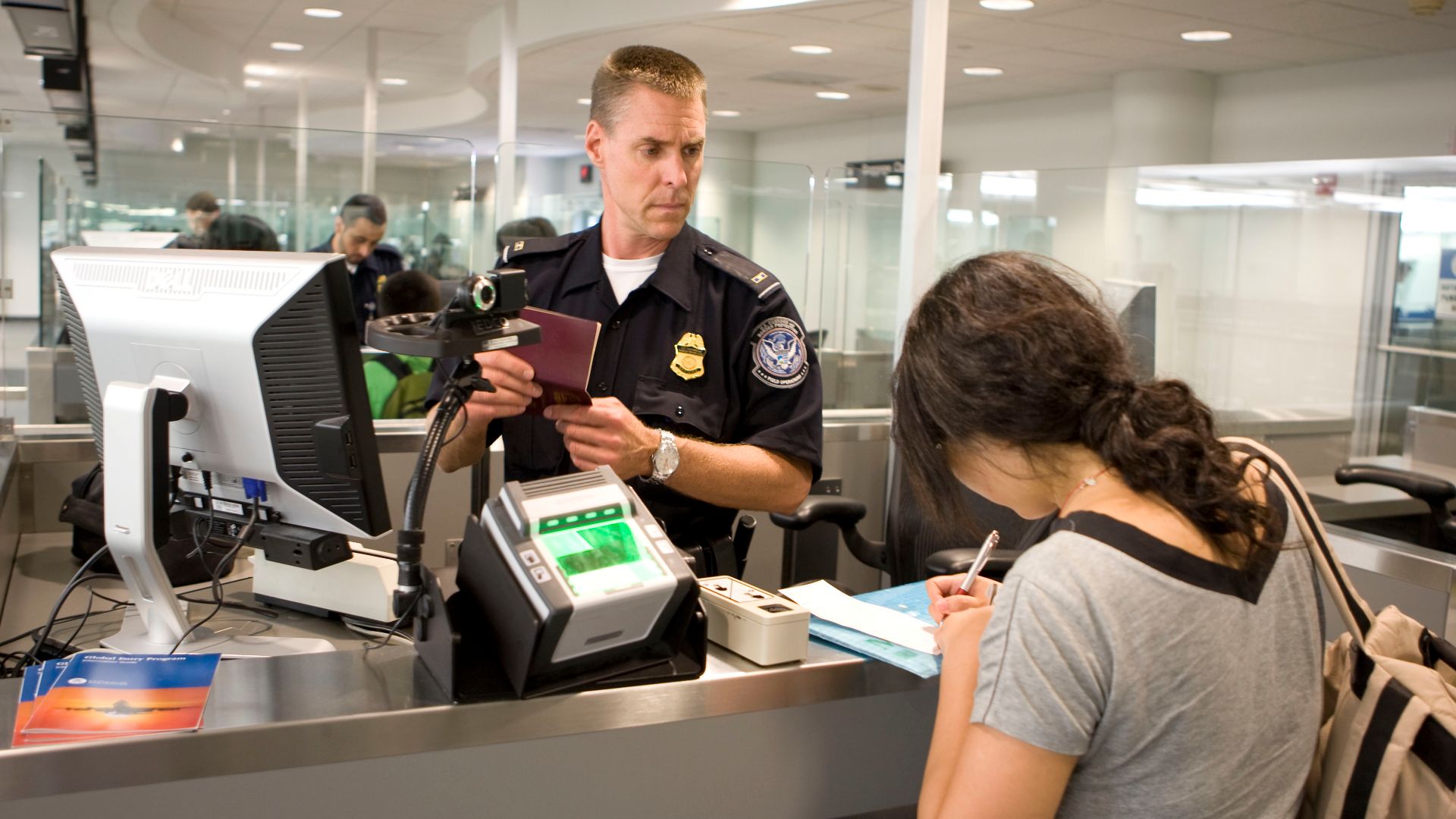
When you approach an immigration booth or an automated passport gate (e-Gate), the border officer or system evaluates you rather than your bags. You present your travel document, answer questions regarding the purpose and length of your visit, and provide biometric data if requested.
If the officer determines you meet all legal entry criteria, you receive an entry stamp or digital record clearance, granting legal admission into the territory. If eligibility cannot be proven, you may be referred to secondary inspection, denied entry, or placed in administrative detention pending repatriation.
What Is Customs Control?
Customs control is the administrative and physical oversight of goods, equipment, merchandise, animals, plants, and currency transported across international borders. Unlike immigration, which concentrates on human entry rights, customs is anchored in trade policy, public health, national biosecurity, and revenue collection.
- Baggage & Cargo
- Declaration & Review
- Evaluates customs form & declarations
- Biosecurity & Safety
- Inspects for agricultural pests & food
- Revenue & Duty Audit
- Calculates tariffs on excess goods/cash
- Customs Clearance
Primary Responsibilities of Customs
- Tariff and Revenue Collection: Assessing and collecting import duties, excise taxes, and value-added tax (VAT) on goods brought across the border that exceed statutory personal allowances or commercial exemptions.
- Agricultural and Biological Safety (Biosecurity): Intercepting foreign plants, soil, living animals, meats, seeds, and unpasteurized food products to prevent foreign pests, invasive species, and plant or animal pathogens (such as foot-and-mouth disease or avian flu) from damaging the domestic ecology and agriculture.
- Prohibited and Restricted Items Enforcement: Preventing the entry of illegal contraband, illicit narcotics, unapproved pharmaceuticals, counterfeit merchandise, illegal firearms, hazardous materials, and protected wildlife products governed by international treaties like CITES (Convention on International Trade in Endangered Species).
- Financial and Currency Regulation: Enforcing Anti-Money Laundering (AML) laws by monitoring monetary instruments. In most jurisdictions, travelers carrying physical currency or negotiable instruments equal to or exceeding $10,000 USD (or local currency equivalent) must submit a formal declaration.
- Commercial Trade Compliance: Ensuring that commercial shipments entering a country comply with local consumer safety standards, intellectual property laws, quotas, and trade sanctions.
How the Customs Process Works at the Border
Customs processing typically takes place after you have collected your checked luggage. Travelers are required to disclose what they are bringing into the country, either through a written paper form, a digital kiosk, a mobile application, or a verbal declaration.
In many international terminals, this process is structured around a two-channel system:
- The Green Channel ("Nothing to Declare"): Used by passengers carrying goods within the legal tax-free allowances and possessing no prohibited, restricted, or agricultural items.
- The Red Channel ("Goods to Declare"): Mandatory for passengers carrying commercial samples, merchandise for resale, excess alcohol or tobacco, cash over the legal declaration limit, or regulated items such as live plants or food products.
Even if you choose the Green Channel, customs officers retain broad statutory authority to subject your luggage to X-ray scans, physical searches, and detection-dog inspections.
Key Differences at a Glance
The functional differences between these two regulatory checkpoints are summarized below:
| Feature / Dimension | Immigration Control | Customs Control |
|---|---|---|
| Primary Target | Individuals, passengers, and flight crew (People). | Luggage, cargo, animals, plants, and currency (Goods). |
| Main Objective | Verify legal identity, national security risks, and entry eligibility. | Protect agriculture, collect duties/taxes, and intercept contraband. |
| Key Documents Checked | Passports, visas, residency cards, ESTA/ETIAS, return tickets. | Customs declaration forms, commercial invoices, agricultural permits. |
| Core Governing Laws | Nationality acts, immigration codes, refugee conventions. | Tariff acts, trade agreements, biosecurity & environmental protection acts. |
| Typical Screening Methods | Biometric scans, facial recognition, database cross-checks, interviews. | Baggage X-ray scans, sniffer dogs, physical luggage inspections, duty audits. |
| Financial Reporting Thresholds | N/A (Focuses on economic self-sufficiency, not physical currency count). | Mandatory declaration for cash/instruments usually $\ge $10,000$ (or equivalent). |
| Timing at Airport Arrival | Immediately upon disembarking, before baggage claim. | After collecting checked luggage, prior to exiting into public areas. |
| Common Consequences of Violations | Refusal of entry, visa cancellation, deportation, administrative detention. | Asset seizure, administrative fines, criminal prosecution for smuggling. |
Integrated Border Agencies: The Unified Approach
Historically, immigration and customs were administered by separate government departments located at different desks inside an arrival terminal. For example, a traveler might first speak to a Department of Justice immigration officer and later hand a paper form to a Department of Treasury customs inspector.
Over the past two decades, many nations consolidated these functions into unified border security organizations to streamline operations, enhance intelligence sharing, and improve security efficiency:
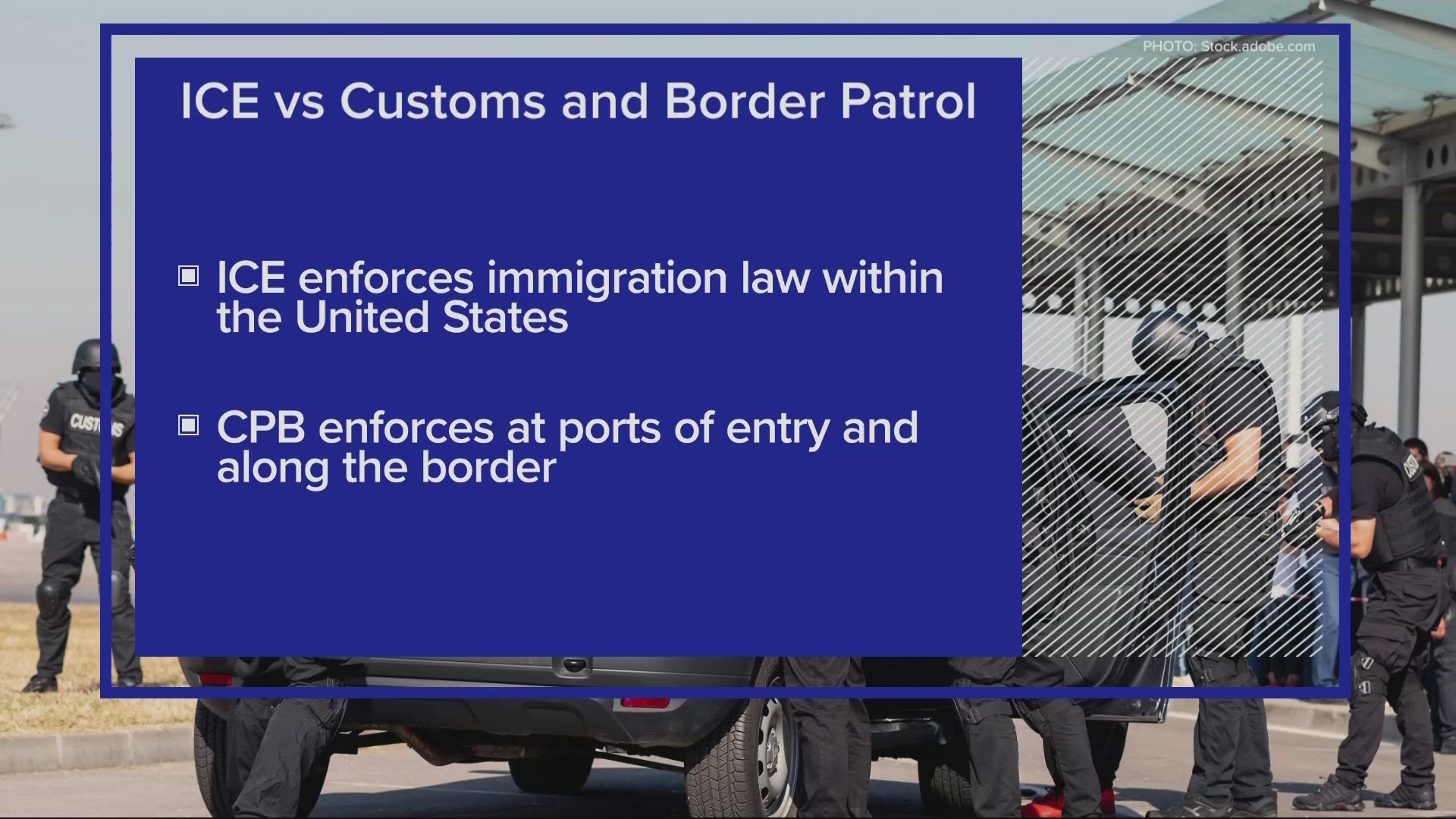
United States: The creation of U.S. Customs and Border Protection (CBP) within the Department of Homeland Security combined the former Immigration and Naturalization Service (INS) inspection division with the U.S. Customs Service and Animal and Plant Health Inspection Service (APHIS).
United Kingdom: The UK Border Force operates under the Home Office, combining immigration status control with customs enforcement at ports of entry.
Canada: The Canada Border Services Agency (CBSA) handles integrated border operations, enforcing over 90 acts, regulations, and international agreements governing people and goods.
Australia: The Australian Border Force (ABF), operating under the Department of Home Affairs, conducts unified operations across immigration, customs, and maritime security.
Unified Border Agency (e.g., US CBP / UK Border Force / Canada CBSA)
- Immigration Division
- Passport Control
- Visa Validation
- Biometric Systems
- Customs Division
- Baggage Searches
- Tariff Assessment
- Agricultural Inspection
- Immigration Division
Despite this organizational integration, the legal distinction between customs law and immigration law remains fully intact. A single border officer may act as an immigration agent when examining your passport, and instantly switch to a customs agent when questioning you about the contents of your baggage or foreign acquisitions.
Step-by-Step Airport Walkthrough: Arriving on an International Flight
To visualize how these two controls intersect during international travel, consider the process of arriving on an intercontinental flight:
- Flight Arrival
- Immigration Control
- Checks passport, visa, biometrics (Pre-Baggage Claim)
- Baggage Claim
- Collects checked luggage
- Customs Inspection
- Scans bags, checks declarations, agricultural review
- Exit Terminal
- Enters arrival lounge / public zone
1. In-Flight or Digital Pre-Clearance
Prior to landing, airline crew may distribute paper customs and immigration declarations, or direct passengers to complete these forms electronically via mobile apps or kiosks upon arrival.
2. Step 1: Immigration Control (Passport Control)
- Location: Immediately after leaving the aircraft gate area and before entering the baggage retrieval hall.
- Action: You present your passport and visa/travel authorization to an officer or an automated e-Gate.
- Focus: The officer confirms that your identity matches your documentation, checks criminal databases, verifies that your visa permits entry, and records your entry timestamp. You cannot retrieve your baggage until you clear this stage.
3. Step 2: Baggage Claim
- Location: The secure baggage hall located past immigration passport control.
- Action: You retrieve your checked suitcases from the luggage carousel.
4. Step 3: Customs Control
- Location: Located at the exit point of the baggage claim area, leading into the public arrival hall.
- Action: You present your physical luggage and declaration form (or digital pass) to customs officials.
- Focus: Officers observe whether you carry item declarations, select bags for X-ray scanning or physical opening, check for restricted agricultural products, verify duty-free limits, and ensure monetary instruments equal to or exceeding legal thresholds are accurately reported.
5. Step 4: Final Clearance
- Location: Public arrivals hall.
- Action: Once cleared by customs, you exit the secure zone and enter the country officially.
Regional Nuances and Special Cases
While the sequence above is standard across most international transportation hubs, regional agreements and specialized border arrangements alter how customs and immigration operate.
1. The Schengen Area (European Union)
The Schengen Area presents a clear division between immigration and customs rules across 29 European member states:
- Immigration within Schengen: Border controls on people moving between internal Schengen member states have been legally abolished. A traveler flying from Paris to Madrid passes through no internal immigration checks.
- Customs within Schengen: While the EU operates a unified customs union allowing free movement of goods, individual member states retain national rules regarding specific excisable products (alcohol, tobacco) and biosecurity regulations. Furthermore, non-Schengen EU countries or non-EU Schengen countries (such as Switzerland or Norway) maintain distinct customs borders even where immigration checks are streamlined.
2. U.S. Preclearance Terminals
In select international locations—including Ireland (Dublin and Shannon), Canada, the Bahamas, Bermuda, and the United Arab Emirates (Abu Dhabi)—the U.S. government operates Preclearance facilities.
Under these agreements, U.S. CBP officers inspect both immigration status and luggage customs before the passenger boards the flight. Upon arrival at a U.S. airport, the aircraft lands at a domestic terminal, allowing passengers to bypass arrival border checks and exit directly to their ground transport or connecting flights.
- Preclearance Location (e.g., Dublin, Toronto)
- Step 1: Immigration Screening
- Step 2: Customs & Baggage Clearance
- Step 3: Board Flight to US
- Destination (e.g., New York JFK)
- Lands at Domestic Terminal
- Exit Directly to Baggage/Exit
3. International Air Transit
If you are connecting through a third country to reach a final destination, border requirements vary:
- Airside Transit: Many hubs allow passengers to stay within a secure international transit lounge. In these cases, you clear transit security (screening for weapons and liquids) but bypass both local immigration passport control and local customs.
- Landside Transit: If your transit requires changing airports, picking up checked baggage to re-check with another carrier, or staying overnight in a hotel outside the airport, you must fully clear immigration and customs in the transit country.
Frequently Asked Questions
Do you go through immigration or customs first?
You almost always go through immigration first, followed by customs. Passport control takes place immediately after disembarking the aircraft to ensure that only authorized individuals enter the terminal area. You then collect your checked bags and present both yourself and your possessions to customs officers before exiting into the public arrival hall.
What happens if you fail to declare items at customs?
Failing to declare reportable items—such as commercial goods, excess currency over legal thresholds, restricted food products, or taxable items—can result in severe penalties. Consequences include monetary fines, confiscation of undisclosed items, civil administrative charges, revoked trusted-traveler privileges (such as Global Entry or NEXUS), and potential criminal prosecution or arrest for smuggling.
Is "border control" the same thing as immigration?
No, "border control" is an umbrella term that encompasses all regulatory checks performed at a nation's boundary. Border control includes immigration checks (identity and visa legalities), customs checks (goods and tax assessments), biosecurity screening (agricultural safety), and maritime/national defense security. Immigration is simply one major component of broader border control.
Do domestic flights clear customs or immigration?
No. Domestic flights travel entirely within a single sovereign territory or customs zone, meaning passengers do not pass through immigration or customs upon landing. Passengers on domestic flights only undergo security screening at departure to detect weapons, explosives, and immediate transport safety hazards.
Why do some customs exits have Green and Red channels?
The dual-channel system allows border agencies to expedite passenger clearance. The Green Channel is a self-declaration lane for travelers who know they meet all legal limits and carry no reportable, duty-liable, or prohibited goods. The Red Channel is for travelers who carry items requiring inspection, tax payment, or formal authorization. Operating dual channels optimizes flow while allowing customs officers to perform random spot-checks on passengers in the Green lane.
Practical Recommendations for International Travelers
To ensure smooth processing through both customs and immigration checkpoints, apply these practical guidelines:
- Keep Documentation Accessible: Always keep your passport, visas, arrival declarations, and onward travel confirmations easily accessible in your hand luggage rather than in your checked bags, as immigration occurs before baggage retrieval.
- Know Your Biosecurity Restrictions: Research the agricultural rules of your destination country prior to departure. Fresh fruits, meats, soil, seeds, and unprocessed biological products are strictly regulated worldwide and frequently attract significant administrative fines if undeclared.
- Disclose Currency Accurately: Carrying large sums of cash internationally is legally permissible in most jurisdictions, but failing to declare monetary instruments meeting or exceeding reporting limits (typically $10,000 USD or local equivalent) can result in asset seizure and legal penalties.
- Always Choose the Red Channel When Uncertain: If you are unsure whether an item requires disclosure, enter the Red Channel or explicitly ask a border officer. Voluntarily declaring an item—even if restricted or subject to duty—prevents penalties, seizures, and accusations of smuggling.
Image Gallery