How to Choose a LASIK Surgeon in NYC: A Comprehensive 2026 Guide
Choosing a LASIK surgeon in NYC requires verifying board certification from the American Board of Ophthalmology, evaluating the clinic’s use of latest-generation bladeless technology, and ensuring the surgeon personally performs your p...
Choosing a LASIK surgeon in NYC requires verifying board certification from the American Board of Ophthalmology, evaluating the clinic’s use of latest-generation bladeless technology, and ensuring the surgeon personally performs your pre-operative assessment. Prioritize surgeons with fellowship training in cornea and refractive surgery to ensure the highest safety standards.
Contents
New York City represents one of the most competitive landscapes for refractive surgery in the world. As of 2026, the density of clinics in Manhattan, Brooklyn, and Queens offers patients unprecedented access to advanced laser technology, but it also creates a significant "noise" problem. With hundreds of providers ranging from high-volume discount centers to exclusive boutique practices, the burden of due diligence falls on the patient. Selecting the right surgeon is not merely about finding someone who can operate the laser; it is about finding a specialist who can accurately screen out high-risk candidates and manage the nuanced healing process of the corneal tissue.
Establishing Surgeon Credentials and Specialization
The first step in narrowing your search is verifying the medical and surgical credentials of the provider. In the United States, any licensed medical doctor can legally perform laser eye surgery, but only those with specific training in ophthalmology should be considered.
Board Certification and Fellowship Training
The gold standard for a LASIK provider is certification by the American Board of Ophthalmology (ABO). This certification ensures the doctor has completed an accredited residency and passed rigorous examinations. However, for the best results in 2026, look for a surgeon who has gone a step further with a Fellowship in Cornea and Refractive Surgery. This additional year or two of specialized training focuses specifically on the front part of the eye and the complexities of laser-tissue interactions.
A cornea-fellowship-trained surgeon is better equipped to handle "irregular" corneas or complications that a general ophthalmologist might not see frequently. You can verify a doctor’s certification status through the American Board of Ophthalmology’s official verification tool.
Experience and Procedure Volume
While "thousands of procedures performed" is a common marketing claim, context matters. Ask the surgeon how many LASIK procedures they have performed specifically with the equipment currently in their office. Surgical skill is a combination of muscle memory and an intimate understanding of how a specific laser platform behaves. Ideally, your surgeon should be an active member of the American Society of Cataract and Refractive Surgery (ASCRS), which indicates they stay current with evolving surgical protocols and safety data.
Evaluating LASIK Technology in 2026
By 2026, the technology behind Laser-Assisted In Situ Keratomileusis (LASIK) has reached a point of extreme precision, but not all NYC clinics use the same equipment. There are two primary phases of the surgery, and you should ensure the clinic uses "all-laser" or "bladeless" methods for both.
Flap Creation: Femtosecond Lasers
The first step of LASIK involves creating a thin flap in the corneal tissue. Historically, this was done with a mechanical blade called a microkeratome. Modern NYC standards dictate the use of a Femtosecond laser (such as the Intralase iFS or Zeiss VisuMax). These lasers use ultra-fast light pulses to create a flap at a precise depth, significantly reducing the risk of flap-related complications like "buttonholes" or irregular cuts.
Corneal Reshaping: Excimer Lasers and Mapping
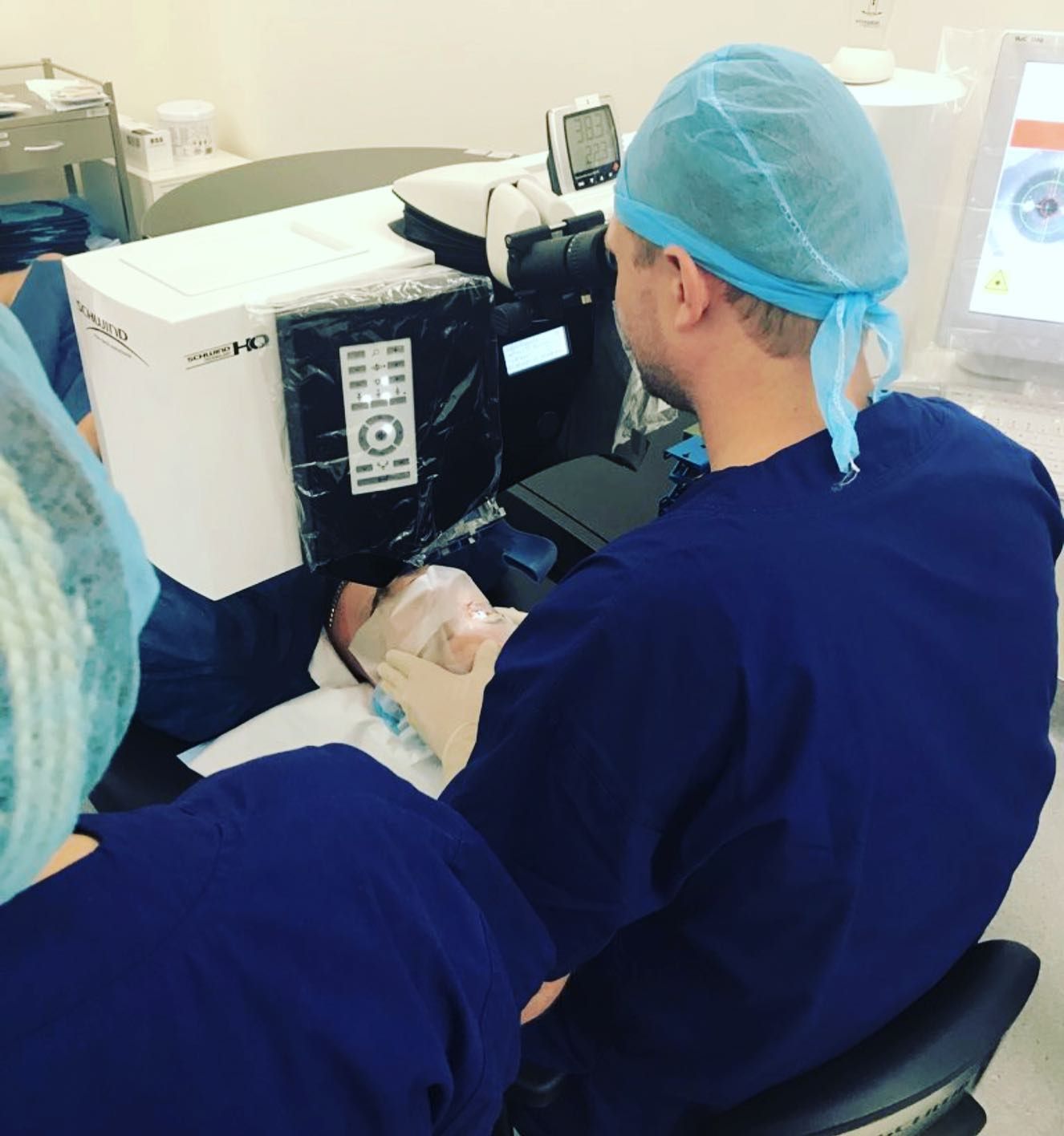
Once the flap is lifted, an Excimer laser reshapes the underlying stroma. In 2026, you should look for clinics offering Topography-Guided LASIK (e.g., Contoura Vision) or Wavefront-Guided LASIK.
- Wavefront-Guided: Measures how light travels through your entire eye to correct "higher-order aberrations" that glasses cannot fix.
- Topography-Guided: Maps the unique microscopic peaks and valleys of your corneal surface (22,000 elevation points) to create a highly customized treatment.
Avoid clinics that still utilize "conventional" or "non-custom" LASIK profiles, as these are outdated and lead to higher rates of nighttime glare and halos.
The Critical Role of the Pre-Operative Consultation
One of the most significant "red flags" in the NYC market is a clinic where you do not meet your surgeon until the day of the procedure. A reputable LASIK center will involve the surgeon in the screening process.
Comprehensive Diagnostic Testing
A thorough exam in 2026 should include more than just a standard vision test. The clinic must perform:
- Corneal Pachymetry: Measuring the thickness of your cornea to ensure enough tissue remains after ablation.
- Corneal Topography/Tomography: Checking for signs of Keratoconus (thinning and bulging of the cornea) which would disqualify you from LASIK.
- Dry Eye Analysis: LASIK can temporarily exacerbate dry eyes; a pre-existing condition must be treated before surgery.
- Pupillometry: Measuring your pupil size in low light to predict the risk of post-operative night vision issues.
Transparency and Candidacy
A great surgeon is defined as much by the patients they reject as those they treat. Approximately 15% to 20% of patients are not ideal candidates for LASIK due to thin corneas, high prescriptions, or underlying health issues. If a surgeon suggests an alternative like PRK (Photorefractive Keratectomy) or ICL (Implantable Collamer Lens), it is often a sign of high clinical integrity rather than a "bait and switch."
Comparing NYC LASIK Providers
Use the following table to compare potential surgeons during your research phase.
| Evaluation Metric | High-Quality Provider (Standard) | Discount/High-Volume Center |
|---|---|---|
| Surgeon Involvement | Surgeon performs the final pre-op check. | Seen only by technicians or optometrists. |
| Technology | All-laser (Femtosecond + Topography-Guided). | May still use mechanical blades (Microkeratome). |
| Price (per eye) | $2,500 – $4,500 | $499 – $1,500 (often "teaser" rates). |
| Follow-up Care | Included for 12 months with the surgeon. | May charge extra or use rotating staff. |
| Enhancement Policy | Clear, written "touch-up" policy included. | Often hidden fees for enhancements. |
| Office Environment | Focuses on medical outcomes and safety. | Focuses on sales quotas and fast turnover. |
Understanding Costs and Financing in New York City
In 2026, the average cost for premium, all-laser LASIK in New York City ranges from $2,500 to $4,500 per eye. While this may seem high compared to "discount" advertisements, these fees generally cover the surgeon's expertise, the licensing fees for the advanced laser software, and all post-operative visits for one year.
The Danger of "Bait and Switch" Pricing
Many NYC advertisements promise LASIK for as low as $500 per eye. These prices are almost always "teaser" rates that only apply to the mildest prescriptions (e.g., -1.00 diopter) and use older, bladed technology. Once you are in the office, the price for a typical prescription using modern lasers often balloons to the market average. True transparency in pricing is a hallmark of a trustworthy practice.
Tax Advantages and Financing
Since LASIK is an elective procedure, it is rarely covered by standard health insurance. However, many NYC residents utilize Flexible Spending Accounts (FSA) or Health Savings Accounts (HSA) to pay for the procedure with pre-tax dollars, effectively saving 20-30%. Most top-tier NYC surgeons also partner with healthcare financing companies like CareCredit to offer 12-to-24-month 0% interest payment plans.
Red Flags to Watch For
When navigating the NYC market, be wary of the following scenarios:
- Guaranteed Results: No ethical surgeon can guarantee 20/20 vision. While the vast majority of patients achieve it, individual healing variables are always present.
- Pressure Sales Tactics: If a "counselor" pressures you to sign a contract or pay a deposit "today only" to get a discount, walk away. Medical decisions should not be treated like retail transactions.
- Lack of Informed Consent: You should receive a detailed explanation of risks, including dry eye, nighttime starbursts, and the possibility of needing a "touch-up" or enhancement. The FDA’s LASIK information page provides a baseline for the risks you should be briefed on.
Post-Operative Care and Long-Term Support
The success of your LASIK procedure depends heavily on the 48 hours following the surgery and the subsequent six months of healing. In a city as fast-paced as New York, you need a surgeon who provides clear, direct communication for post-operative care.
Ask the practice:
- Who handles emergencies? Do you have the surgeon's direct emergency contact or a 24-hour on-call service?
- What is the enhancement rate? A surgeon’s "enhancement rate" (the percentage of patients needing a second procedure to fine-tune the result) should be low—typically under 5%.
- Are medications included? Some clinics include the cost of antibiotic and steroid drops, while others provide a prescription for you to fill at a local NYC pharmacy.
Frequently Asked Questions
Is LASIK permanent in 2026?
The physical reshaping of the cornea is permanent. However, LASIK does not prevent age-related changes. Most people will still develop presbyopia (the need for reading glasses) in their 40s or 50s. Furthermore, your underlying prescription can sometimes change slightly over decades, which is why surgeons look for "refractive stability" before operating.
Does NYC insurance cover LASIK?
Standard medical insurance (like Blue Cross Blue Shield or UnitedHealthcare) typically views LASIK as elective. However, some vision plans like VSP or EyeMed offer "contracted discounts" with specific NYC providers. Always check if your employer-sponsored plan has a negotiated rate with a local center.
What is the recovery time for a typical NYC professional?
Most patients treated with all-laser LASIK can return to an office environment and use a computer within 24 to 48 hours. However, NYC’s environment (subway dust, dry office air) can be harsh on healing eyes. Surgeons usually recommend wearing sunglasses outdoors and using preservative-free artificial tears every hour for the first few weeks.
Can I get LASIK if I have astigmatism?
Yes. Modern Topography-Guided lasers are exceptionally good at treating astigmatism. In fact, many patients with high astigmatism see better after LASIK than they ever did with glasses or contacts, because the laser corrects the irregularities across the entire corneal surface.
What happens if I blink or move during the surgery?
Modern lasers used in 2026 have sophisticated active eye-trackers. These systems follow the movement of your eye hundreds of times per second. If you move or blink excessively, the laser automatically pauses and resumes only when your eye is perfectly centered again.
Final Recommendation
To find the best LASIK surgeon in NYC, start by searching for Cornea-Fellowship trained ophthalmologists at reputable institutions or private practices with long-standing reputations. Schedule at least two consultations to compare the diagnostic thoroughness and the "feel" of the practice. Do not prioritize cost over technology or surgeon accessibility. Your vision is a lifelong asset; choose a provider who treats it with the appropriate clinical rigor.
Image Gallery