Tesla Model 3 Standard Overview: Specifications, Performance, and Buyer’s Guide
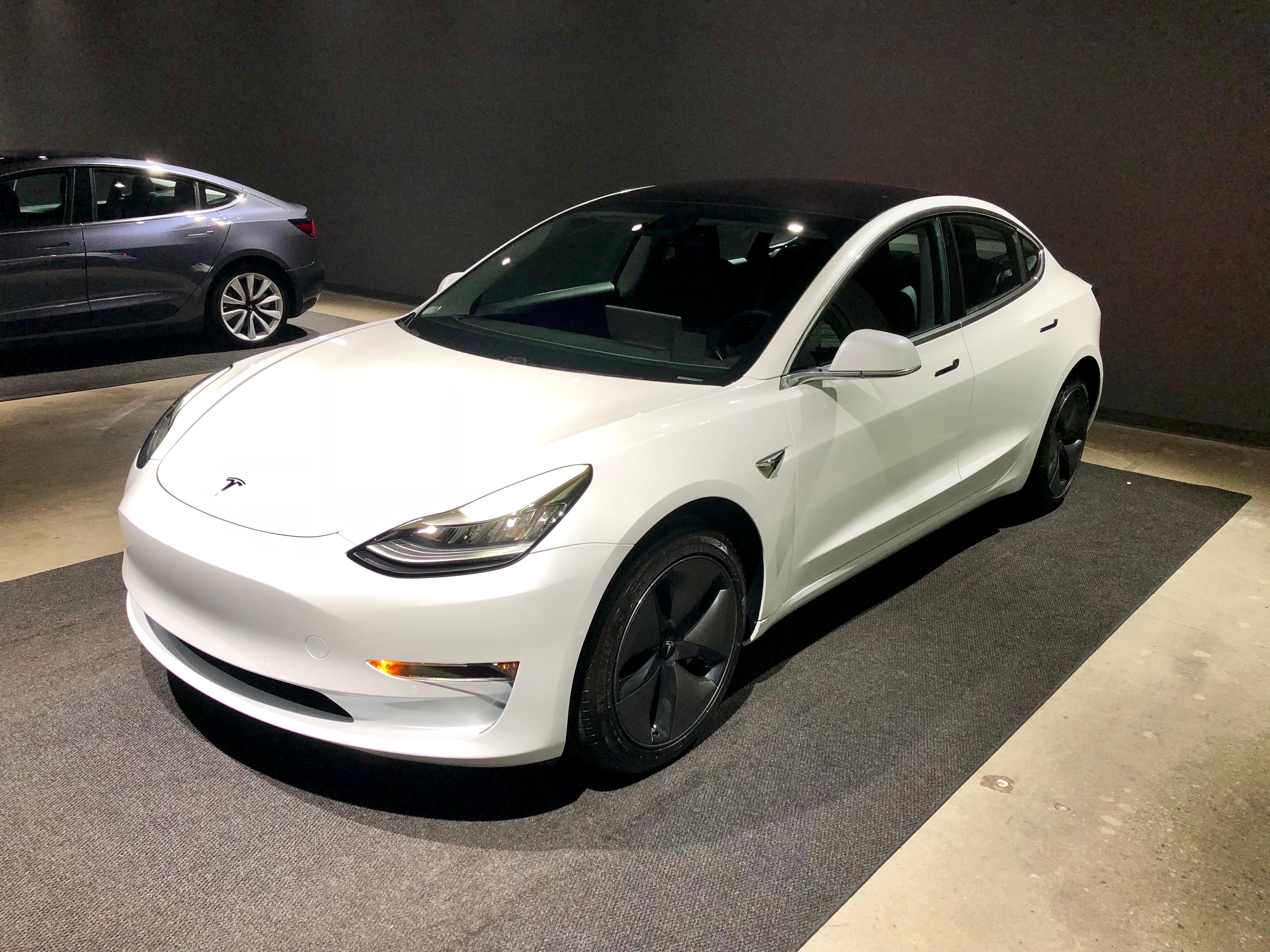
The Tesla Model 3 Standard—officially designated by Tesla simply as the Model 3 Rear-Wheel Drive (RWD)—serves as the entry point into Tesla’s electric sedan lineup. Equipped with a single-motor rear-wheel-drive powertrain, a Lithium Ir...
The Tesla Model 3 Standard—officially designated by Tesla simply as the Model 3 Rear-Wheel Drive (RWD)—serves as the entry point into Tesla’s electric sedan lineup. Equipped with a single-motor rear-wheel-drive powertrain, a Lithium Iron Phosphate (LFP) battery pack, an EPA-estimated range of up to 272 miles, and a 0–60 mph acceleration time of 5.8 seconds, the standard trim balances everyday efficiency, lower operational costs, and access to Tesla’s global Supercharger network.
Contents
Evolution of the Standard Trim: From Standard Range to Model 3 RWD
The entry-level Tesla Model 3 has undergone significant structural and technological updates since its commercial launch. Originally introduced in early 2019 as the "Standard Range" and later refined as the "Standard Range Plus" (SR+), Tesla eventually simplified the naming convention to "Model 3 Rear-Wheel Drive" (or colloquially, Model 3 Standard).
The most consequential evolution occurred with the transition of the battery chemistry. Early iterations utilized nickel-manganese-cobalt (NMC) battery cells identical in chemistry to the higher-tier trims, albeit with fewer modules to reduce capacity. Starting in late 2021, Tesla shifted standard-trim production at Gigafactory Shanghai and Gigafactory Fremont to Lithium Iron Phosphate (LFP) chemistry provided by CATL.
Following the major mid-cycle refresh (code-named "Highland"), the standard trim received extensive architectural upgrades:
- Enhanced exterior aerodynamics reducing the coefficient of drag ($C_d$) to 0.219.
- 360-degree acoustic glass insulation for improved cabin quietness.
- Retuned double-wishbone front and multi-link rear suspension dampening.
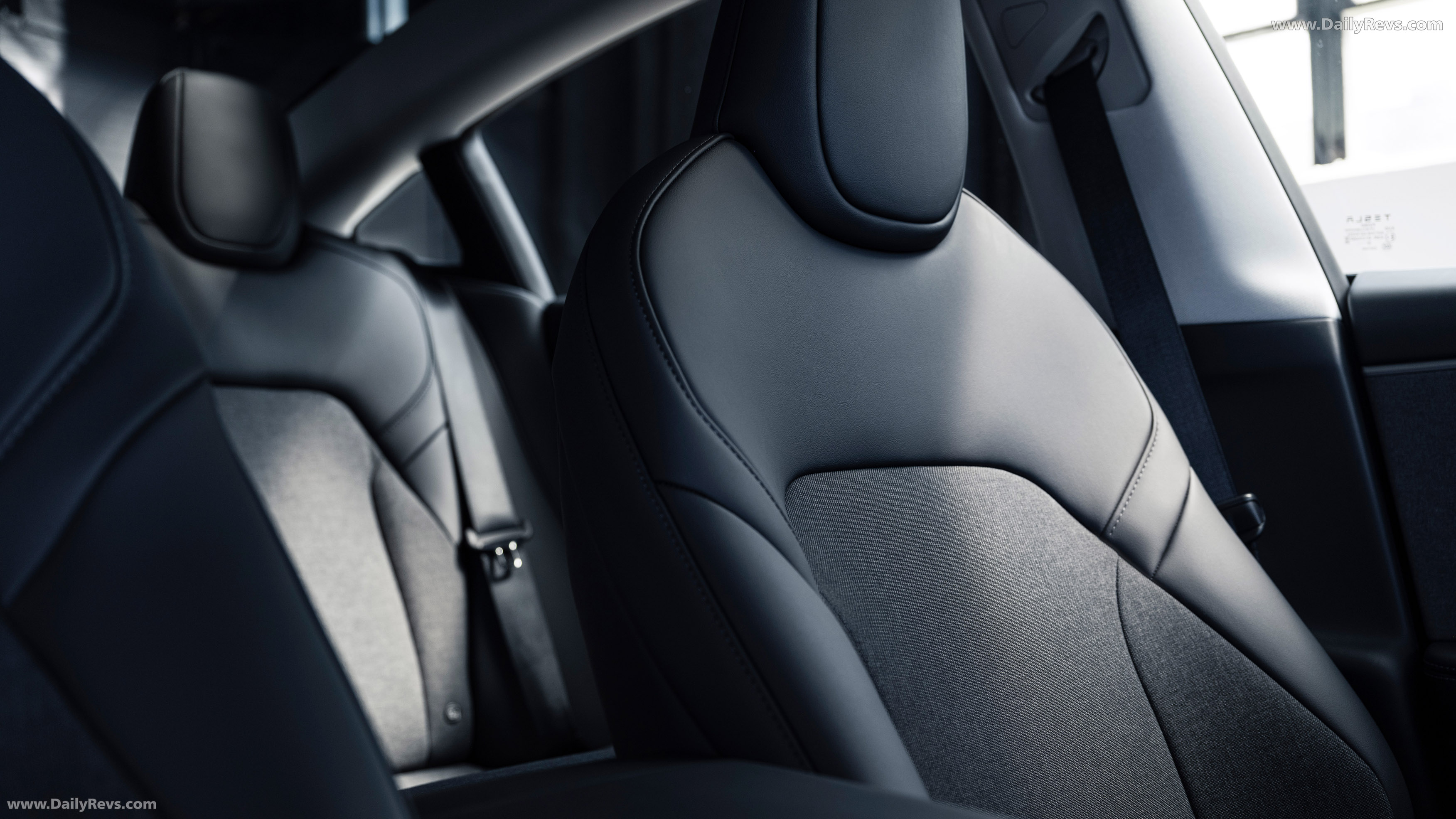
- Interior revisions, including ambient lighting, ventilated front seats, and the removal of physical column stalks in favor of steering-wheel controls and touchscreen gear selection.
Powertrain, LFP Battery Technology, and Range
LFP Chemistry vs. Traditional NMC Batteries
The defining engineering characteristic of the Tesla Model 3 Standard is its Lithium Iron Phosphate (LFP) battery pack. Unlike traditional Nickel Manganese Cobalt (NMC) batteries found in performance and long-range electric vehicles, LFP cells offer distinct chemical advantages and operational trade-offs:
- Daily Charge Thresholds: LFP batteries exhibit significantly higher thermal and chemical stability, allowing owners to charge the vehicle to 100% capacity on a daily basis without accelerating cell degradation. Standard NMC packs typically recommend an 80% daily charging cap to preserve long-term battery health.
- Cycle Life and Stability: LFP chemistry endures a higher number of complete charge-discharge cycles over its lifespan, making it exceptionally resilient against capacity fade over high mileages.
- Energy Density and Weight: LFP cells possess a lower volumetric and gravimetric energy density than NMC cells. Consequently, the standard trim’s battery pack is physically heavier relative to the kilowatt-hours (kWh) of usable energy it stores, slightly increasing total vehicle curb weight (~3,862 lbs).
Range and Real-World Efficiency
The Model 3 Standard achieves an official EPA-estimated range of 272 miles when equipped with standard 18-inch Photon wheels (or approximately 248 miles with optional 19-inch Nova wheels).
| Efficiency Metric | Value / Specification |
|---|---|
| Usable Pack Capacity | ~57.5 kWh – 60 kWh (gross capacity varies by cell supplier) |
| EPA Energy Consumption Rate | ~25 kWh per 100 miles (~138 MPGe combined) |
| Real-World Highway Range (70 mph) | ~215 – 230 miles (ideal ambient conditions) |
| Cold Weather Range Impact | ~20% to 35% reduction depending on HVAC usage and preconditioning |
Because LFP cells experience more pronounced internal resistance at lower ambient temperatures, utilizing Tesla’s cabin and battery preconditioning features via the Tesla mobile app prior to driving in winter conditions is essential for maintaining optimal regenerative braking and energy efficiency.
Charging Architecture and Power Acceptance
The Model 3 Standard utilizes Tesla’s proprietary Native Charging System (NACS) charging architecture. Its charging capabilities differ slightly from higher-tier dual-motor variants due to pack voltage and onboard charger limitations.
| Charging Architecture | Specification / Rate |
|---|---|
| DC Fast Charging (Supercharger) | Peak Acceptance Rate: 170 kW10% to 80% Charge Time: ~25 minutes |
| AC Home Charging (Level 2) | Max Acceptance: 32 Amps / 7.7 kWReplenishment Rate: ~30 miles of range / hour |
Direct Current (DC) Fast Charging
On Tesla Supercharging V3 and V4 hardware (or compatible third-party DC fast chargers via adapters), the standard trim accepts a peak charge rate of 170 kW. While this is lower than the 250 kW peak rate of the Long Range variants, the LFP battery maintains a relatively flat charge curve in the mid-state-of-charge region:
- 10% to 80% Charge Duration: Approximately 25 minutes under optimal battery temperature conditions.
- Preconditioning Integration: When a Supercharger destination is selected in the onboard navigation system, the vehicle actively conditions the LFP pack to the optimal target temperature (approx. 40°C–45°C) to maximize peak energy intake immediately upon plugging in.
Alternating Current (AC) Home Charging
For residential and Level 2 destination charging, the Model 3 Standard contains a 32-amp onboard charger, capable of drawing up to 7.7 kW of power.
- Connected to a standard 240V NEMA 14-50 outlet or a hardwired Tesla Wall Connector on a 40-amp circuit, the vehicle recharges from 0% to 100% in roughly 7.5 to 8.5 hours.
- This provides roughly 30 miles of added range per hour of charging, easily satisfying overnight replenishment needs for typical daily commutes.
Interior Architecture, Ergonomics, and Technology
The interior of the Tesla Model 3 Standard emphasizes radical minimalism, centered entirely around a primary touch interface and integrated vehicle software.
| Cabin Area | Features |
|---|---|
| Front Cabin | 15.4-inch High-Brightness Central TouchscreenDual Wireless Smartphone Charging Pads (15W each)Perforated Synthetic Leather Seats (Heated & Ventilated) |
| Rear Cabin | 8.0-inch Rear Passenger Touchscreen (Climate & Media Control)Dual USB-C Ports (45W Power Delivery)Integrated Heating for Outer Rear Seats |
Digital Control and UI
All driver information, primary vehicle controls, climate adjustments, and infotainment functions are managed through a central 15.4-inch touchscreen display (1920x1200 resolution).
- Drive Selection: Physical gear selector stalks are omitted; gear selection is performed via a vertical slider on the left edge of the touchscreen or backup physical capacitive buttons on the overhead console.
- Steering Wheel Controls: Turn signals, high beams, windshield wipers, voice commands, and Autopilot functions are operated using tactile buttons and scroll wheels mounted directly on the steering wheel.
Audio and Connectivity Packages
To maintain price separation from premium trims, Tesla equips the standard RWD model with the Custom Audio System:
- Speaker Count: 9 speakers with a single amplifier, omitting the dual subwoofers and overhead speakers found in the 17-speaker premium audio package of the Dual-Motor variants.
- Acoustic Insulation: Features 360-degree acoustic laminated glass across all windows, substantially reducing wind and road noise compared to pre-refresh Model 3 iterations.
- Rear Passenger Display: An 8-inch rear touchscreen allows back-seat passengers to adjust their own climate zones, stream video content (via Netflix, YouTube, or Hulu), and control audio playback independently.
Technical Specifications: Model 3 Trim Comparison
To understand how the Model 3 Standard compares within the broader vehicle family, the table below outlines key technical and operational parameters:
| Feature / Specification | Model 3 Standard (RWD) | Model 3 Long Range (RWD) | Model 3 Long Range (AWD) |
|---|---|---|---|
| Drivetrain | Single Motor Rear-Wheel Drive | Single Motor Rear-Wheel Drive | Dual Motor All-Wheel Drive |
| Battery Cathode Chemistry | Lithium Iron Phosphate (LFP) | Nickel Manganese Cobalt (NMC) | Nickel Manganese Cobalt (NMC) |
| EPA Estimated Range | 272 Miles (18" wheels) | 363 Miles (18" wheels) | 341 Miles (18" wheels) |
| 0–60 mph Acceleration | 5.8 Seconds | 4.9 Seconds | 4.2 Seconds |
| Max DC Fast Charge Rate | 170 kW | 250 kW | 250 kW |
| Max AC Charge Rate | 32 Amps (7.7 kW) | 48 Amps (11.5 kW) | 48 Amps (11.5 kW) |
| Curb Weight | 3,862 lbs (1,752 kg) | 3,800 lbs (1,723 kg) | 4,030 lbs (1,828 kg) |
| Audio Configuration | 9 Speakers (1 Amp) | 9 Speakers (1 Amp) | 17 Speakers + 2 Subwoofers |
| Daily Charge Limit Rec. | 100% | 80% | 80% |
Active Safety, Autopilot, and Hardware Platform
Every Model 3 Standard leaves the factory equipped with Tesla’s Suite of active safety and driver-assistance features powered by the Tesla Vision camera architecture.
- Tesla Vision Sensor Suite (8 Exterior Optical Cameras)
- Standard Active Safety
- Automatic Emergency Brake
- Forward Collision Warning
- Blind Spot Monitoring
- Autopilot Features
- Traffic-Aware Cruise Ctrl
- Autosteer (Lane Center)
- Lane Departure Avoidance
- Standard Active Safety
Safety Ratings and Construction
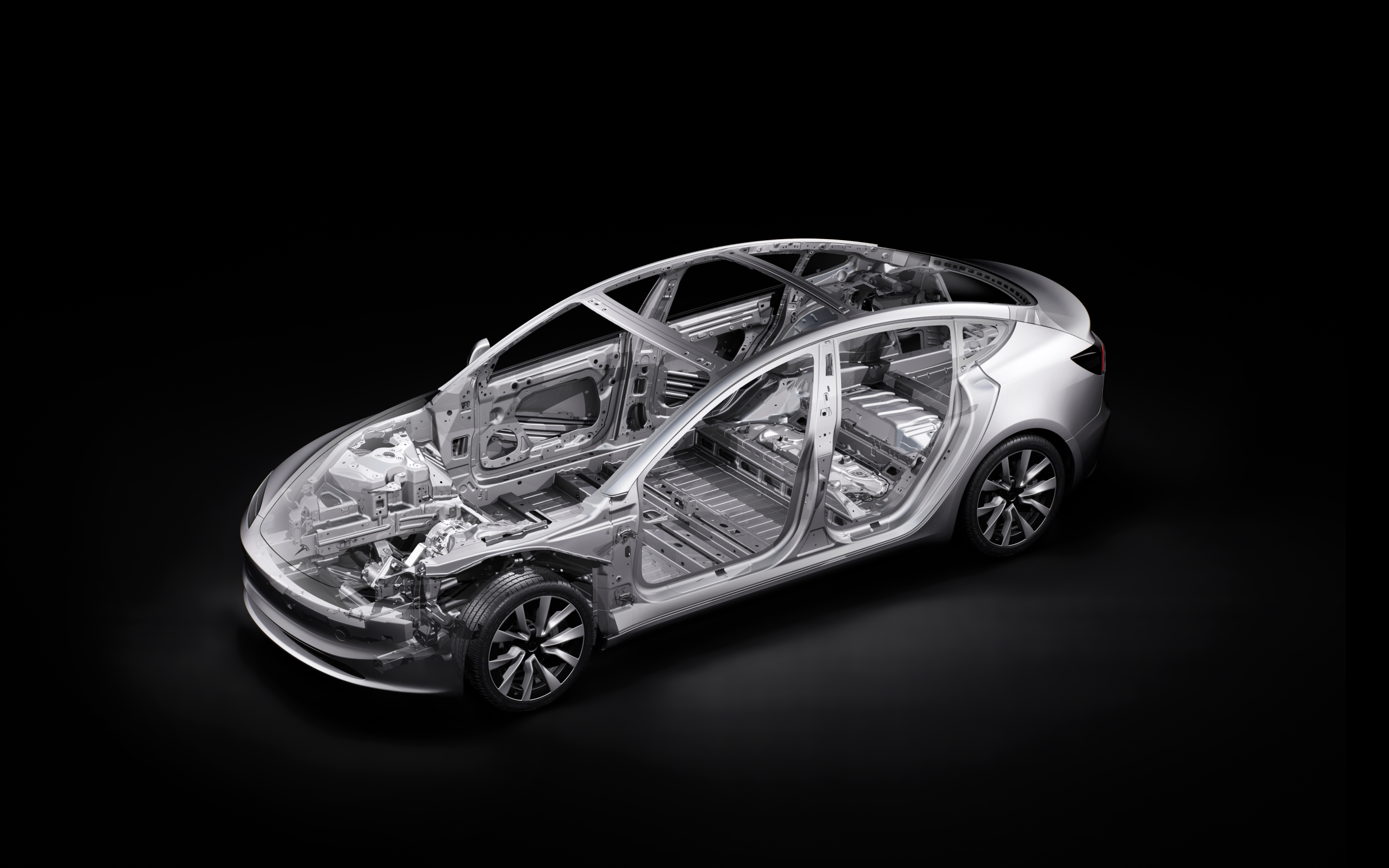
The Model 3 platform relies on an ultra-high-strength steel and aluminum passenger cell, achieving 5-star overall safety ratings from the National Highway Traffic Safety Administration (NHTSA) and top marks from the Insurance Institute for Highway Safety (IIHS). Standard active safety systems include:
- Automatic Emergency Braking (AEB) with pedestrian and cyclist detection.
- Blind-spot collision warning with active side-camera camera feeds displayed upon signal activation.
- Obstacle-aware acceleration and lane departure prevention.
Standard Autopilot vs. Full Self-Driving (Supervised)
- Standard Autopilot: Included at no extra cost, comprising Traffic-Aware Cruise Control (matches vehicle speed to surrounding traffic) and Autosteer (maintains vehicle position within clearly marked lanes).
- Full Self-Driving (Supervised): Available via upfront purchase or monthly subscription. Enables automatic lane changes, navigation on autopilot (on-ramp to off-ramp), traffic sign and stoplight recognition, and urban street navigation under active driver supervision.
Ownership Costs, Maintenance, and Operational Economics
The Model 3 Standard represents one of the lowest total-cost-of-ownership (TCO) profiles in the executive compact luxury segment due to mechanical simplicity and battery longevity.
Maintenance Schedule
Because the vehicle lacks an internal combustion engine (ICE), multi-speed transmission, spark plugs, timing belts, and fuel pumps, routine maintenance is minimal:
- Brake Fluid Check: Moisture testing every 2 years; replacement as necessary.
- Cabin Air Filter: Replacement every 2 years.
- Tire Rotation: Recommended every 6,250 miles (or when tread depth difference exceeds 2/32 in).
- Air Conditioning Service: Desiccant bag replacement every 4 years.
- Brake Service: Cleaning and lubricating brake calipers annually in northern cold-climate regions where road salt is heavily utilized (since regenerative braking minimizes traditional pad-to-rotor friction use).
Energy Costs and Efficiency Savings
Assuming an average residential electricity rate of $0.16 per kilowatt-hour (kWh), driving the Model 3 Standard 12,000 miles per year consumes approximately 3,000 kWh of electricity, resulting in an annual home energy cost of approximately $480. By comparison, an internal combustion engine car averaging 30 MPG consuming gasoline at $3.50 per gallon costs roughly $1,400 per year in fuel, yielding substantial long-term operating savings.
Pros and Cons: Evaluating the Standard Trim
Before deciding on the standard rear-wheel-drive trim over higher variants or competing EVs (such as the Hyundai Ioniq 6 or BMW i4), consider its structural strengths and practical limitations.
Advantages
- 100% Daily Charging: The LFP battery allows full capacity utilization daily without accelerating degradation, effective bridging the real-world range gap against 80%-capped NMC models.
- Lower Purchase Price: Provides access to the Model 3 platform, Tesla software updates, and Supercharger integration at the lowest initial capital outlay.
- High Operational Efficiency: Single-motor rear-wheel drive exhibits exceptional miles-per-kWh efficiency in suburban and city commuting environments.
- Quiet and Refined Cabin: Post-refresh sound dampening and retuned dampening deliver acoustic isolation comparable to mid-size luxury sedans costing significantly more.
Considerations & Trade-Offs
- Slower Fast Charging Peak: Capped at 170 kW peak intake compared to the 250 kW acceptance rate on Dual-Motor and Long Range variants.
- Rear-Wheel Drive in Extreme Winter: While traction control algorithms are fast-acting, dual-motor all-wheel drive remains preferred for unplowed snow or severe winter climates.
- Base Audio System: Lacks the dedicated subwoofer, exterior ambient speaker tuning, and multi-channel amplifier of the premium sound system.
- No Federal Tax Credit (Jurisdiction Dependent): Depending on localized EV tax incentive rules and battery component sourcing criteria (e.g., US Inflation Reduction Act rules regarding Chinese LFP cells), the standard trim may not qualify for full point-of-sale tax credits in certain regions.
Frequently Asked Questions
Can you charge the Tesla Model 3 Standard to 100% every day?
Yes. Unlike Long Range or Performance trims that utilize Nickel Manganese Cobalt (NMC) batteries, the Model 3 Standard features a Lithium Iron Phosphate (LFP) battery. Tesla explicitly recommends setting the charge limit to 100% for regular daily driving to maintain accurate range estimation calibrations and optimize usable energy.
How fast does the Model 3 Standard charge at a Tesla Supercharger?
The standard trim accepts a peak DC fast-charging power rate of up to 170 kW. Under nominal ambient conditions, charging from a 10% state of charge to 80% takes approximately 25 minutes.
What is the practical difference between the standard Model 3 and the Long Range?
The standard Model 3 utilizes a single rear motor (RWD), an LFP battery pack (272-mile EPA range), a 170 kW max charge rate, and a 9-speaker sound system. The Long Range variant adds a larger NMC battery pack (over 340 miles of range), higher DC charging rates (250 kW), dual-motor all-wheel drive option, faster acceleration, and a 170-watt 17-speaker premium audio system.
How does the rear-wheel-drive Model 3 Standard perform in cold weather and snow?
The Model 3 Standard manages traction effectively in light-to-moderate winter conditions due to instantaneous electronic motor torque management. However, because LFP batteries are sensitive to cold, preconditioning the battery while connected to a charger prior to departure is critical to preserve range and regenerative braking capabilities. Fitting high-quality dedicated winter tires is highly recommended for driving on snow or ice.
Is Autopilot standard on the entry-level Model 3?
Yes. Basic Autopilot comes standard on every Model 3. It includes Traffic-Aware Cruise Control and Autosteer (lane-centering assistance). Advanced capabilities, such as Full Self-Driving (Supervised), require an additional software purchase or monthly subscription.
Practical Verdict and Recommendation
The Tesla Model 3 Standard (RWD) represents one of the most compelling value propositions in the modern electric vehicle ecosystem. By leveraging durable Lithium Iron Phosphate (LFP) chemistry, it permits daily 100% charging that makes its 272-mile EPA range highly practical for daily use.
Choose the Model 3 Standard if:
- Your typical commute falls well within 200 miles daily, and you have access to Level 2 home or workplace charging.
- You prefer low long-term operational costs and simple maintenance.
- You live in temperate or moderate climates where dual-motor all-wheel-drive traction is not strictly required.
Upgrade to the Long Range or Performance Trims if:
- You frequently travel long distances across rural routes with sparse fast-charging infrastructure.
- You live in regions experiencing heavy winter precipitation and demand all-wheel-drive performance.
- You prioritize maximum straight-line acceleration and immersive multi-speaker audio performance.
For most daily commuters and first-time EV adopters, the standard trim offers the ideal balance of efficiency, technological refinement, software capability, and long-term value.
Image Gallery