How Many Cases of Hantavirus in the US Right Now? Current Numbers and Trends
The United States records an average of 20 to 40 cases of Hantavirus disease each year. Since national surveillance officially began in 1993 following a major outbreak in the Four Corners region, the Centers for Disease Control and Pre...
The United States records an average of 20 to 40 cases of Hantavirus disease each year. Since national surveillance officially began in 1993 following a major outbreak in the Four Corners region, the Centers for Disease Control and Prevention (CDC) has documented between 850 and 900 cumulative cases nationwide, with Hantavirus Pulmonary Syndrome (HPS) maintaining a high case fatality rate of approximately 35%.
Contents
Medical Disclaimer: This article provides general public health information derived from official government surveillance data. It is not a substitute for professional medical evaluation, diagnosis, or treatment. If you suspect recent exposure to rodent droppings and experience fever or difficulty breathing, seek immediate emergency medical care.
Current Annual Case Numbers and CDC Surveillance Framework
Hantavirus infection remains a rare but severe illness across the United States. Rather than fluctuating by thousands of cases annually like seasonal influenza or respiratory syncytial virus (RSV), hantavirus disease maintains a steady, low-frequency baseline. In any given calendar year, U.S. public health authorities confirm between 20 and 40 cases nationwide.
The primary mechanism for tracking these numbers is the National Notifiable Diseases Surveillance System (NNDSS), coordinated by the CDC in partnership with state public health departments. Hantavirus Pulmonary Syndrome (HPS) was designated a nationally reportable condition in 1995, requiring healthcare providers and laboratories to notify state health authorities whenever a diagnosis is laboratory-confirmed.
- State Laboratories / Healthcare Facilities
- State Departments of Health
- CDC National Notifiable Diseases Surveillance System (NNDSS)
Because of the disease's high mortality rate, surveillance in the U.S. is rigorous. However, case reporting often experiences a minor lag while state public health agencies perform laboratory testing—typically using reverse transcription-polymerase chain reaction (RT-PCR) or enzyme-linked immunosorbent assay (ELISA) serology—to confirm the viral strain and eliminate clinical lookalikes such as severe influenza, leptospirosis, or plague.
Seasonality of Reported Cases
Case detection follows a clear seasonal pattern:
- Spring and Early Summer (May through July): Peak reporting window. During these months, rodent populations surge, outdoor activities increase, and property owners perform spring cleaning in closed, rodent-infested structures such as cabins, sheds, and garages.
- Late Autumn (October and November): Secondary minor bump. As ambient temperatures drop, wild rodents migrate toward human dwellings, outbuildings, and vehicles seeking warmth and food stores, increasing human-rodent encounters.
Cumulative U.S. Case History Since 1993
Modern awareness of hantavirus in North America began in May 1993, when a cluster of previously healthy young adults in the Four Corners area (where New Mexico, Arizona, Colorado, and Utah meet) died from rapid-onset acute respiratory distress. Laboratory investigations identified a novel hantavirus strain, named Sin Nombre virus, carried primarily by the deer mouse (Peromyscus maniculatus).
Since surveillance began in 1993, public health records indicate:
- Total Cumulative Cases: Approximately 850 to 900 laboratory-confirmed cases nationwide.
- Clinical Manifestation: More than 95% of reported domestic cases present as Hantavirus Pulmonary Syndrome (HPS), a severe respiratory illness. A small fraction present as Hemorrhagic Fever with Renal Syndrome (HFRS), usually associated with imported or urban rodent reservoirs carrying alternative strains like Seoul virus.
- Mortality Rate: The national case-fatality rate for HPS has historically hovered between 35% and 38%. While early intensive care management has improved clinical outcomes, the disease progresses rapidly once respiratory symptoms manifest.
Demographic Patterns Among Confirmed Cases
Data compiled over three decades of CDC tracking reveals distinct demographic trends regarding who contracts the virus:
- Gender Distribution: Approximately 63% of confirmed cases occur in males, while 37% occur in females. This skew reflects occupational and recreational exposure patterns, including agricultural labor, heavy construction, forestry, land clearing, and clearing out old farm structures.
- Age Profile: Cases have been reported in individuals ranging from young children to elderly adults, but the median patient age is approximately 40 years old. Working-age adults face the highest statistical risk due to higher rates of exposure to dusty, enclosed rural environments.
- Racial and Ethnic Factors: While hantavirus affects individuals of all backgrounds, rural residents in Western states—including Native American populations residing in the Southwest—show disproportionate historical representation due to geographic proximity to high-density deer mouse habitats.
Geographic Hotspots: Which States Report the Highest Numbers?
Hantavirus is not distributed evenly across the United States. More than 75% of all reported cases occur in rural areas of the Western and Southwestern states.
U.S. GEOGRAPHIC RISK MAP
| HIGH INCIDENCE (Western/Southwest) | LOW INCIDENCE (Eastern/Southern) |
|---|---|
| • New Mexico | • Pennsylvania |
| • Colorado | • Florida |
| • Arizona | • Virginia |
| • California | • North Carolina |
| • Washington | • New York |
| • Montana | |
| • Texas | |
| • Utah |
The concentration of cases in the West directly correlates with the habitat distribution of the deer mouse (Peromyscus maniculatus). Arid environments also play a key role: dry climates allow rodent excrement, urine, and saliva to dry quickly, creating fine particles that are easily aerosolized when disturbed by human activity.
Comparison of Eastern vs. Western U.S. Strains
Although the Sin Nombre virus dominates Western numbers, other hantavirus strains exist across different U.S. regions:
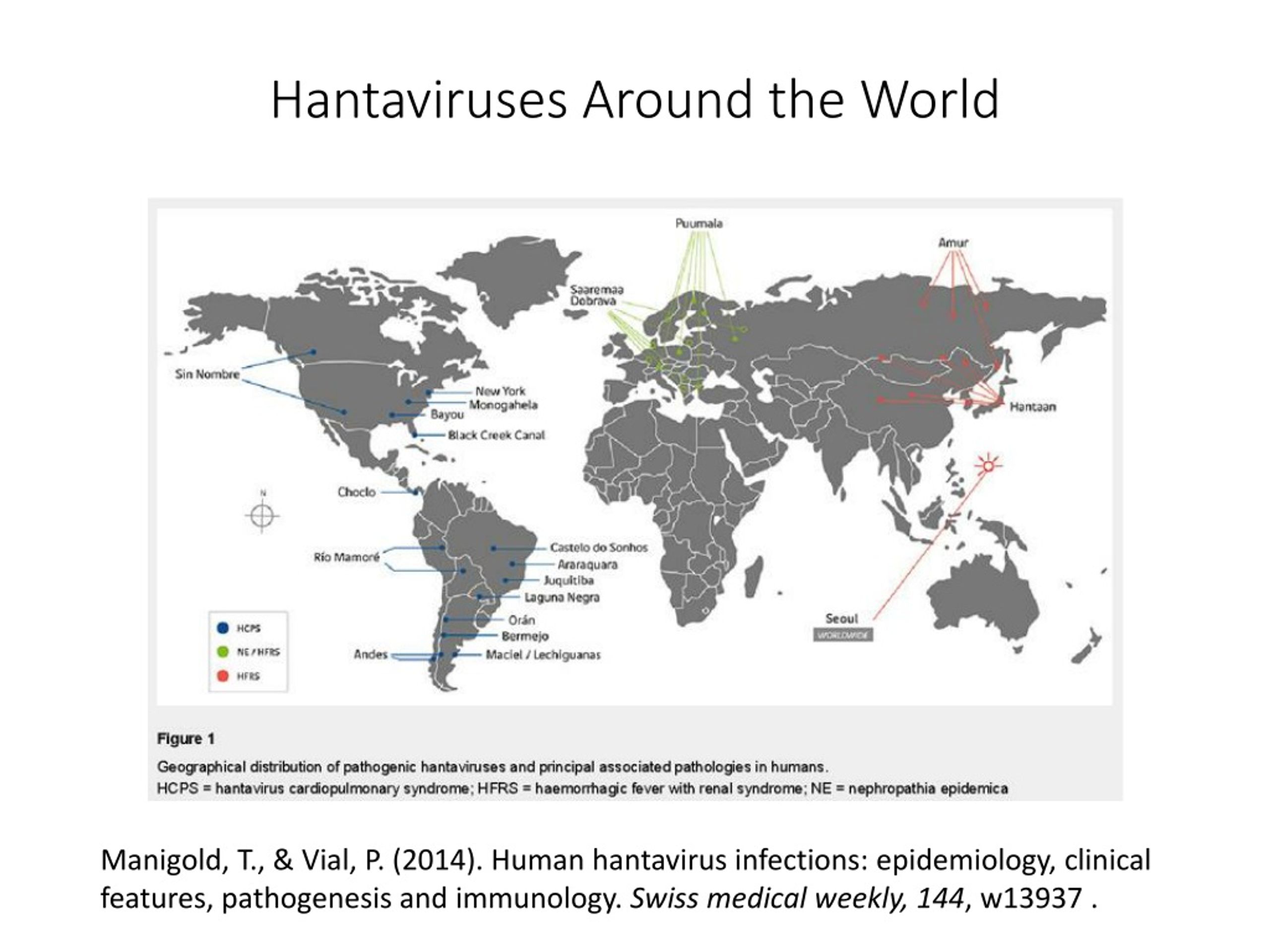
- Sin Nombre Virus (Western US): Transmitted by the deer mouse. It is responsible for the vast majority of HPS cases nationwide and carries the highest mortality rate.
- New York Virus (Northeastern US): Transmitted by the white-footed mouse (Peromyscus leucopus). It produces HPS symptoms similar to Sin Nombre but causes far fewer annual cases.
- Bayou Virus (Southeastern US): Transmitted by the marsh rice rat (Oryzomys palustris). It causes HPS with potential renal complications and is reported sporadically in states like Louisiana and Texas.
- Black Creek Canal Virus (Florida): Transmitted by the hispid cotton rat (Sigmodon hispidus). It causes HPS and remains extremely rare.
- Seoul Virus (Nationwide/Urban): Transmitted by the Norway rat (Rattus norvegicus). Unlike indigenous wild strains, Seoul virus causes Hemorrhagic Fever with Renal Syndrome (HFRS), which generally presents with kidney failure rather than severe pulmonary edema.
Transmission Vectors and High-Risk Environments
Hantaviruses are enveloped RNA viruses belonging to the family Orthohantaviridae. Unlike many zoonotic pathogens, hantaviruses are not vector-borne—they are not transmitted by insect bites such as mosquitoes, ticks, or fleas.
- Rodent Reservoir (Urine, Excrement, Saliva)
- Dry, Aerosolized Dust / Particles
- Human Inhalation of Contaminated Air
- Infection (Hantavirus Pulmonary Syndrome)
Modes of Transmission
Humans contract hantavirus through three primary routes:
- Aerosol Inhalation (Primary Route): When rodent urine, droppings, or nesting materials are disturbed, tiny droplets or dust particles containing the virus become suspended in the air. Breathing this contaminated dust is the primary cause of human infection.
- Direct Contact: Touching rodent excrement, saliva, or contaminated nesting materials and subsequently touching the eyes, nose, or mouth.
- Bites: Direct bites or open skin wounds exposed to rodent saliva or urine, though this transmission path is less common.
High-Risk Exposure Scenarios
Infections rarely occur during routine outdoor walks or casual open-air encounters. Instead, transmissions happen in confined spaces with poor ventilation where rodent infestations have remained undisturbed for weeks or months. High-risk activities include:
- Cleaning out long-closed seasonal cabins, hunting lodges, or vacation homes.
- Sweeping or vacuuming dust in utility sheds, barns, grain silos, or detached garages.
- Working in crawlspaces, basements, or attics during home renovation or pest control projects.
- Handling heavy machinery, tractor cabs, or stored vehicles that have sat idle in rural areas.
- Camping or sleeping in shelters where rodents nest in walls or beneath flooring.
Symptoms, Timeline, and Clinical Outcomes
The incubation period for hantavirus pulmonary syndrome is relatively long, making diagnosis challenging. Symptoms typically begin 1 to 8 weeks (most commonly 1 to 3 weeks) after breathing aerosolized virus particles.
- Exposure
- Prodromal Phase (Days 1-5)
- Fever & Chills
- Severe Muscle Aches
- Fatigue & Headache
- Cardiopulmonary Phase (Days 6-10)
- Rapid shortness of breath
- Fluid accumulation in lungs
- Low blood pressure / shock
Phase 1: Early Prodromal Symptoms
The initial phase lasts between 1 and 5 days. Symptoms mimic common viral illnesses like influenza or gastroenteritis:
- High fever (often exceeding 101°F / 38.3°C) and chills
- Deep muscle aches, particularly in the large muscle groups (thighs, hips, back, and shoulders)
- Persistent fatigue, dizziness, and severe headaches
- Gastrointestinal distress, including nausea, vomiting, abdominal pain, and diarrhea
Crucial Clinical Marker: Nasal congestion, runny nose, and sore throat are rare in early hantavirus infections. The absence of typical upper respiratory cold symptoms alongside severe muscle aches and fever in someone exposed to rodents is a key diagnostic clue.
Phase 2: Severe Cardiopulmonary Phase
As the virus damages the vascular endothelial cells in the lungs, capillaries leak fluid directly into the alveolar spaces. Within 24 to 48 hours of the onset of respiratory symptoms, the disease progresses rapidly:
- Sudden onset of severe, worsening shortness of breath (dyspnea) and dry cough
- Rapidly progressing pulmonary edema (lungs filling with liquid fluid)
- Hypotension (dangerously low blood pressure) and reduced cardiac output
- Respiratory failure and cardiovascular shock
Treatment and Medical Management
There is no specific antiviral treatment, vaccine, or cure approved by the FDA for Hantavirus Pulmonary Syndrome. Medical care relies entirely on supportive therapy delivered in an Intensive Care Unit (ICU):
- Oxygen Therapy & Mechanical Ventilation: Patients require intubation and mechanical ventilation to maintain blood oxygenation as pulmonary edema advances.
- Extracorporeal Membrane Oxygenation (ECMO): In severe cases, ECMO is used to pump blood outside the body, remove carbon dioxide, oxygenate the red blood cells, and return blood to the body, allowing the heart and lungs to rest. Early transfer to a facility equipped with ECMO significantly increases survival rates.
- Fluid Management: Careful monitoring of fluid levels is vital; over-hydration can worsen fluid accumulation in the lungs.
Safe Cleanup Guidelines for Rodent-Infested Spaces
Because there is no vaccine or specific antiviral treatment for hantavirus, prevention focused on safe rodent cleanup is essential. Standard household cleaning methods—such as dry sweeping with a broom or using a conventional vacuum cleaner—can stir up viral particles into the air, creating a dangerous aerosol hazard.
- DO NOT DRY SWEEP OR VACUUM
- Stirs up aerosolized viral particles
- USE WET DISINFECTION METHOD INSTEAD
Protocol for Safe Rodent Decontamination
To safely clean areas with evidence of rodent activity, follow this step-by-step public health protocol:
- Ventilate the Space: Open outer doors and windows for at least 30 minutes prior to entering or cleaning closed structures. Leave the area during this ventilation period to allow fresh air to circulate.
- Wear Personal Protective Equipment (PPE): Wear rubber, latex, or nitrile gloves. For heavily infested or enclosed areas, wear a properly fitted N95 respirator (or higher) to filter out airborne particles.
- Apply Liquid Disinfectant: Thoroughly spray rodent droppings, urine stains, nests, and surrounding floors with a commercial disinfectant or a freshly prepared household bleach solution (1 part bleach to 9 parts water).
- Allow Soaking Time: Let the liquid disinfectant sit undisturbed on the affected surfaces for at least 5 to 10 minutes to neutralize the virus completely.
- Wipe Up (No Dry Sweeping): Use paper towels or disposable rags to pick up the soaked droppings and nesting material. Place all waste directly into a heavy-duty plastic garbage bag.
- Double-Bag and Seal: Seal the plastic garbage bag tightly. Place it inside a second garbage bag, seal it, and discard it in an outdoor trash receptacle.
- Clean and Sanitize: Mop floors and wipe down countertops, shelves, and tools with disinfectant. Wash gloved hands with soap and water before removing gloves, then wash bare hands thoroughly with warm water and soap.
Hantavirus Surveillance Statistics and Risk Factors
The following table summarizes key public health metrics, clinical characteristics, and risk parameters for hantavirus disease in the United States.
| Surveillance Category / Risk Metric | Verified Figure / Standard Range | Key Context & Public Health Significance |
|---|---|---|
| Average Annual U.S. Cases | 20 – 40 confirmed cases | Consistently low domestic incidence; seasonal spikes occur in late spring/early summer. |
| Cumulative U.S. Cases (Since 1993) | ~850 – 900 total cases | Formally tracked via the CDC National Notifiable Diseases Surveillance System (NNDSS). |
| Case Fatality Rate (HPS) | 35% – 38% | High mortality rate requiring emergency ICU management and respiratory support. |
| Dominant U.S. Viral Strain | Sin Nombre virus | Responsible for over 95% of native North American Hantavirus Pulmonary Syndrome cases. |
| Primary Animal Vector | Deer mouse (Peromyscus maniculatus) | Widespread across rural areas; sheds virus in urine, droppings, and saliva. |
| Geographic Hotspots | Southwestern & Western U.S. | Over 75% of cases occur in NM, CO, AZ, CA, WA, MT, UT, and TX. |
| Incubation Period | 1 – 8 weeks (avg. 1–3 weeks) | Prolonged delay between exposure and illness onset often complicates initial diagnosis. |
| Primary Route of Exposure | Aerosol inhalation | Caused by sweeping, vacuuming, or disturbing dry rodent excrement in closed spaces. |
Frequently Asked Questions
How common is hantavirus in the United States?
Hantavirus is extremely rare in the United States. Public health agencies register only 20 to 40 cases across the entire country each year. While the overall risk to the general public is very low, the risk is higher for people who live or work in rural areas where deer mice are present.
Can hantavirus spread directly from person to person?
In the United States, hantavirus does not spread from person to person. You cannot catch Hantavirus Pulmonary Syndrome (HPS) from coughing, sneezing, touching, or caring for an infected individual. Person-to-person transmission has been documented only in South America involving a different viral strain known as the Andes virus.
What are the first warning signs of a hantavirus infection?
Early symptoms usually begin 1 to 3 weeks after exposure and include a sudden high fever, severe fatigue, and deep muscle aches in the thighs, hips, and back. Patients often experience headaches, chills, abdominal pain, nausea, and vomiting. Notably, early hantavirus infection typically does not cause a runny nose, sore throat, or nasal congestion.
What is the survival rate for someone diagnosed with hantavirus?
The survival rate for Hantavirus Pulmonary Syndrome is approximately 62% to 65%, reflecting a mortality rate of 35% to 38%. Prompt hospitalization and early supportive care in an Intensive Care Unit—including mechanical ventilation and ECMO—improve a patient's chances of recovery.
Is there a vaccine or specific medication available to treat hantavirus?
There is currently no FDA-approved vaccine, specific antiviral medication, or cure for hantavirus infection. Treatment focuses entirely on supportive care in an ICU to manage respiratory failure and maintain blood pressure while the patient's immune system fights off the virus.
Practical Recommendations and Prevention Strategy
To protect yourself and your home from hantavirus risks, take proactive steps to limit rodent exposure:
- Seal Entry Points: Inspect outer walls, foundations, rooflines, and utility penetrations. Block any gaps or holes larger than a quarter-inch (0.6 cm) using steel wool, concrete, or heavy metal flashing, as deer mice can squeeze through tiny openings.
- Eliminate Food Sources: Store human food, pet food, and livestock feed in thick, sealed plastic or metal containers with tight-fitting lids. Keep garbage in sturdy outdoor cans with secure covers.
- Clear Surrounding Vegetation: Keep grass mowed short, clear away brush piles, stack firewood at least 100 feet away from living structures, and elevate wood piles at least 12 inches off the ground to eliminate rodent nesting sites.
- Practice Safe Decontamination: Never dry-sweep or vacuum rodent droppings. Always soak contaminated areas with a diluted bleach solution or disinfectant spray for 5 to 10 minutes before wiping them up with disposable paper towels while wearing protective gloves.
If you develop a high fever, severe muscle aches, or sudden respiratory distress within 1 to 8 weeks after cleaning a space with signs of rodents, seek emergency medical care immediately and inform healthcare providers of your potential exposure.
Image Gallery