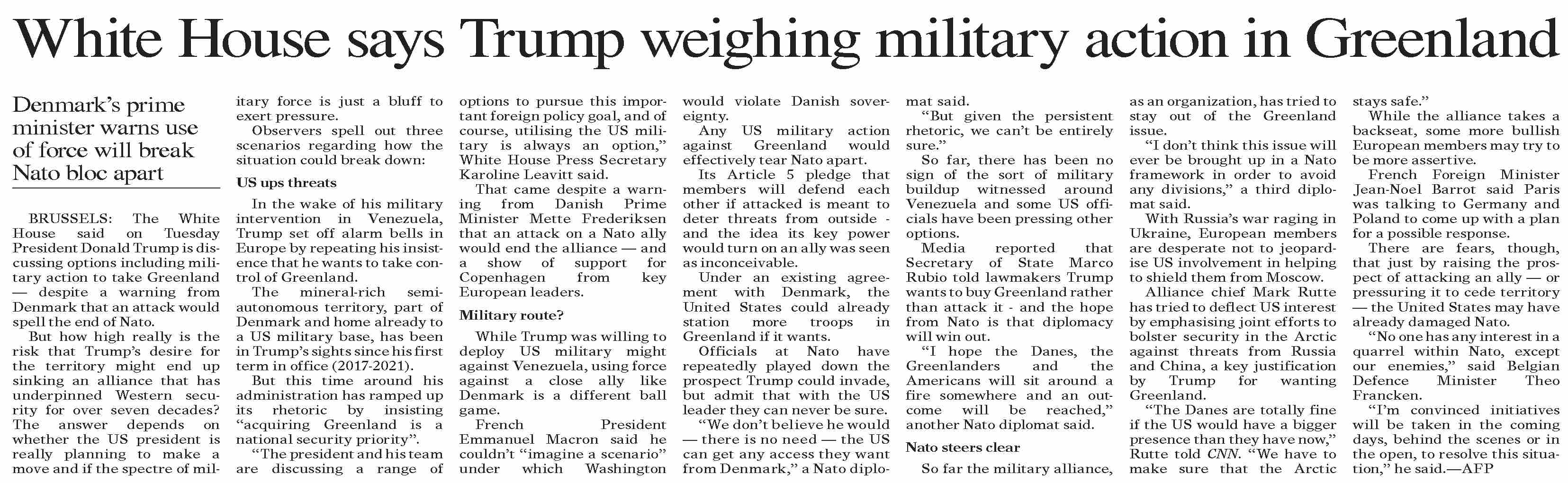
White House Statements on Military Options and Strategic Defense in Greenland
White House discussions regarding military options in Greenland focus on strategic Arctic defense, missile early warning infrastructure, and joint NATO security capabilities rather than unilateral military force. U.S. military operatio...
White House discussions regarding military options in Greenland focus on strategic Arctic defense, missile early warning infrastructure, and joint NATO security capabilities rather than unilateral military force. U.S. military operations in Greenland are governed by the 1951 Defense of Greenland Agreement with the Kingdom of Denmark, which grants the United States operational access to key bases under bilateral treaty terms.
Contents
| U.S.-Greenland Strategic Framework | Details |
|---|---|
| Legal Foundation | 1951 Defense of Greenland Agreement (US & Denmark) |
| Primary Facility | Pituffik Space Base (formerly Thule Air Base) |
| Key Operational Roles | • Ballistic Missile Early Warning System (BMEWS)• Space Domain Awareness & Tracking• Arctic Security & Deterrence Operations |
| Governance Context | Greenland Self-Government Act (2009) & NATO Alliance |
Geopolitical Context: The U.S. Strategic Role in Greenland
Greenland holds a pivotal position in North American and Arctic security architecture. Positioned geographically between North America and Europe, the island serves as a vital vantage point for monitoring maritime transit, sub-surface submarine movements, and intercontinental ballistic missile trajectories over the North Pole.
Public statements from the White House concerning military options, strategic security, or baseline presence in Greenland frequently draw significant international attention. However, analyzing these statements requires distinguishing political rhetoric from the formal legal and operational posture maintained by the United States Department of Defense.
The 1951 Defense Agreement and Pituffik Space Base
The cornerstone of the United States' military presence in Greenland is the 1951 Agreement Concerning the Defense of Greenland, signed by the United States and Denmark. Negotiated in the early years of the Cold War under the auspices of the North Atlantic Treaty Organization (NATO), this bilateral accord authorized the U.S. military to construct, maintain, and operate defense facilities across Greenlandic territory.
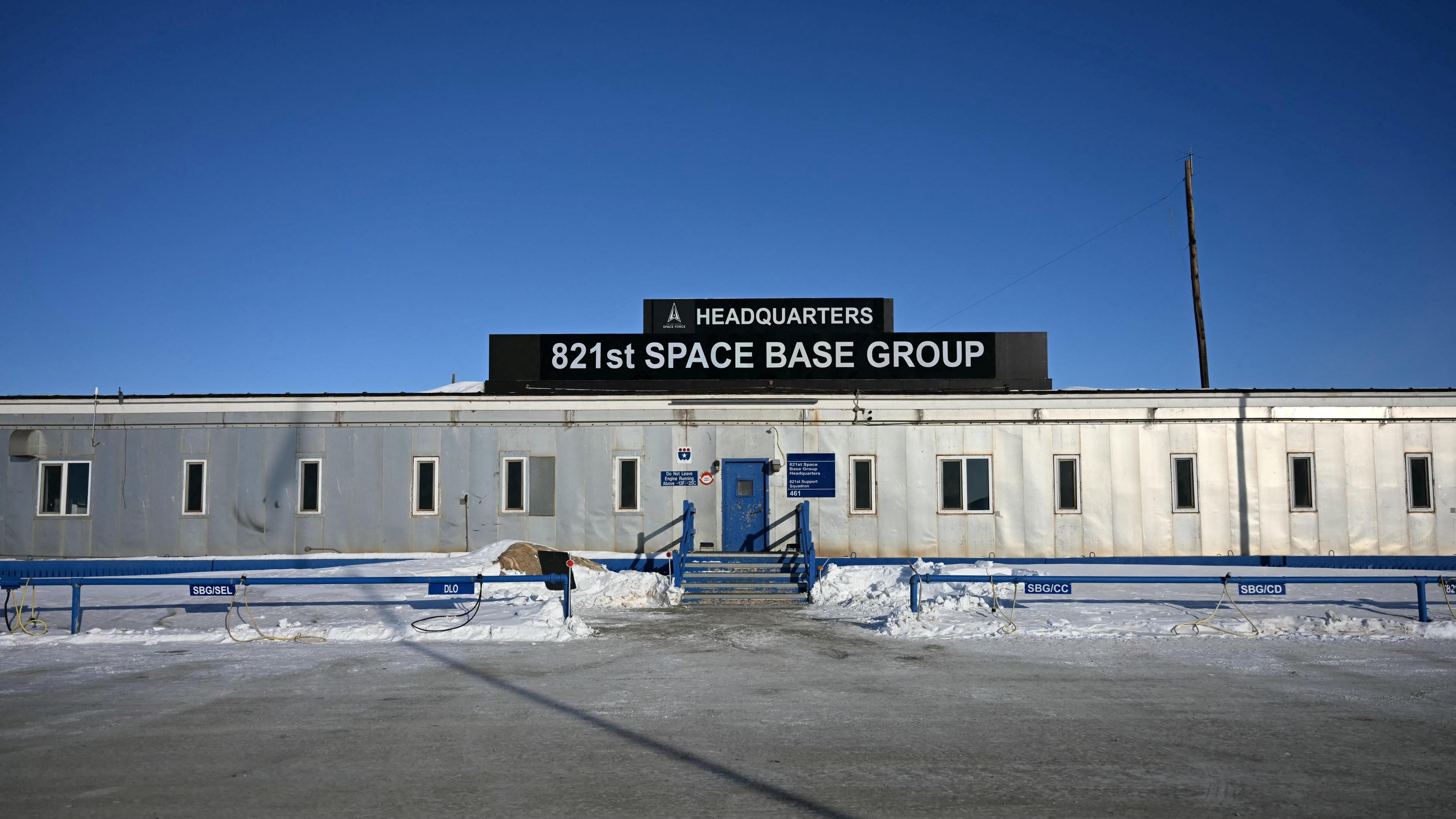
The primary installation resulting from this framework is Pituffik Space Base (formerly designated as Thule Air Base), located in northwestern Greenland. Operated primarily by the United States Space Force, Pituffik houses critical defense assets, including:
- AN/FPS-132 Upgraded Early Warning Radar (UEWR): A phased-array radar system designed to detect incoming intercontinental ballistic missiles (ICBMs) and submarine-launched ballistic missiles (SLBMs).
- Space Surveillance Operations: Deep-space tracking assets that monitor satellites, space debris, and orbital deployments in polar orbits.
- Deep-Water Port and Airfield Support: Northernmost deep-water port facilities capable of supporting cold-weather military supply chains, refueling operations, and emergency staging.
Under the 1951 treaty, the United States maintains operational control over designated defense areas, but the sovereignty of the territory remains unequivocally with the Kingdom of Denmark.
Diplomatic Framework and Sovereignty of Denmark and Greenland
Greenland is an autonomous territory within the Kingdom of Denmark. While the Danish government in Copenhagen retains official responsibility for foreign affairs and national defense, the local government of Greenland (Naalakkersuisut) exercises extensive internal self-rule under the Act on Greenland Self-Government of 2009.
This dual-tier governance structure means any strategic discussion originating from the White House involves three distinct political stakeholders:
- The United States: Seeking to secure its northern border, protect ballistic missile warning systems, and maintain freedom of navigation in Arctic waters.
- The Kingdom of Denmark: Fulfilling its obligations as a NATO founding member while upholding its constitutional responsibility to protect Greenlandic interests.
- The Government of Greenland (Naalakkersuisut): Advocating for local economic sovereignty, environmental protections, and direct consultation on any foreign military expansion within its borders.
Deconstructing White House Posture and Rhetoric
When executive officials address military capabilities or strategic options in Greenland, these remarks reflect broader national defense priorities rather than plans for non-consensual military action. Executive rhetoric regarding Greenland generally centers on three underlying policy objectives: Arctic deterrence, infrastructure modernization, and counteracting competitor influence.
Strategic Defense vs. Unilateral Force: Clarifying the Ambiguity
In international security discourse, the term "military option" can encompass a wide spectrum of policy tools. In the context of executive branch communications regarding Greenland, military options refer to strategic defense choices, including:
- Expanding Base Modernization: Upgrading radar sensitivity, satellite communication arrays, and airfield runway resiliency at Pituffik to handle next-generation aircraft.
- Enhancing Multi-National Arctic Exercises: Increasing joint operational training alongside Danish defense forces, Canadian Armed Forces, and other NATO allies through exercises such as Operation NANOOK.
- Deploying Domain-Awareness Assets: Integrating uncrewed aerial systems (UAS), maritime surveillance platforms, and underwater sensor networks to monitor the Greenland-Iceland-United Kingdom (GIUK) gap.
Unilateral military deployment without Danish and Greenlandic consent would violate international law, the NATO Charter, and specific bilateral treaties. Official policy documents from the U.S. Department of Defense consistently emphasize that military strategic initiatives in the High North are executed in cooperation with regional partners.
- White House & Executive Statements
- Strategic Intent & Arctic Policy Objectives
- Treaty-Bound Actions
- Base modernization
- Sensor upgrades at Pituffik
- Joint NATO exercises
- Diplomatic Consultations
- Joint Committee meetings
- Consultations with Denmark
- Engagement with Greenland
- Treaty-Bound Actions
- Strategic Intent & Arctic Policy Objectives
The Role of Arctic Security in U.S. National Defense Strategies
Recent iterations of the U.S. National Strategy for the Arctic Region highlight a rapidly changing operational environment. Accelerated sea-ice loss has opened seasonal shipping lanes, while global powers have expanded their military footprints in the High North.
White House statements outlining defense preparedness in Greenland align directly with strategic goals outlined by global security organizations like NATO, including:
- Maintaining Strategic Deterrence: Preserving early warning coverage over the Arctic vector to prevent unmonitored adversary activity.
- Securing Critical Sea Lines of Communication: Monitoring access points connecting the Arctic Ocean to the North Atlantic.
- Preventing External Geopolitical Encroachment: Inhibiting non-Arctic states from establishing dual-use military or intelligence facilities in proximity to North American defense installations.
Legal and Treaty Architecture Governing Greenland Defense
The legal structure governing military activities in Greenland relies on established treaties and constitutional frameworks. Strategic options considered by U.S. planners must conform to these formal agreements.
NATO Article 5 and Collective Security Provisions
Because Denmark is a founding member of NATO, Greenland falls directly under the protective umbrella of Article 5 of the North Atlantic Treaty, which establishes that an armed attack against one ally is considered an attack against all allies.
Under this treaty, U.S. military presence in Greenland serves a dual function: protecting the North American homeland and contributing to the collective security of the alliance's northern flank. Strategic military options considered by the Executive Branch are integrated into NATO's overall defense planning, ensuring operational alignment with allied command structures.
Greenland's Self-Government Act of 2009 and Local Governance
The passage of the 2009 Self-Government Act recognized the people of Greenland as a distinct political community under international law. While foreign policy and defense officially remain under the purview of Copenhagen, practical military planning requires consultation with Nuuk (Greenland’s capital).
The 2004 Igaliku Agreement—an amendment to the original 1951 defense treaty—formally incorporated the Government of Greenland as an equal partner in discussions regarding U.S. military operations on its territory. Consequently, any expanded military presence, strategic restructuring, or environmental remediation planning must pass through tripartite consultations involving Washington, Copenhagen, and Nuuk.
Strategic Defense Infrastructure in the Arctic Region
To understand the scope of U.S. strategic options in Greenland, it is helpful to examine the key legal instruments, defense facilities, and governing frameworks operating in the region.
| Agreement / Facility / Entity | Governing Parties | Primary Strategic Function | Legal / Operational Framework |
|---|---|---|---|
| 1951 Defense Agreement | United States & Kingdom of Denmark | Authorizes U.S. military presence and defense zone creation in Greenland. | Bilateral Security Treaty |
| Pituffik Space Base | U.S. Space Force (Host Nation: Denmark/Greenland) | Missile early warning, space surveillance, polar orbit tracking. | 1951 Treaty & 2004 Igaliku Agreement |
| 2004 Igaliku Agreement | U.S., Denmark, and Greenland | Grants Greenland formal consultation rights on U.S. defense activities. | Tripartite Diplomatic Agreement |
| Act on Greenland Self-Government (2009) | Denmark & Greenland | Grants internal autonomy to Greenland; establishes self-determination process. | Danish Constitutional Law |
| NATO North Atlantic Treaty | 32 Allied Nations (including U.S. & Denmark) | Collective defense (Article 5) covering European and North American territories. | Multilateral Defense Treaty |
| GIUK Gap Surveillance Network | U.S., UK, Norway, NATO Allies | Anti-submarine warfare and maritime domain awareness across North Atlantic transits. | NATO Strategic Defense Command |
Economic, Resource, and Environmental Factors
Military strategy in the Arctic does not exist in isolation from economic and resource considerations. Executive policy decisions concerning Greenland reflect a broader spectrum of commercial and environmental realities.
Critical Minerals and Rare Earth Development
Greenland holds some of the world's largest undeveloped deposits of critical minerals, including neodymium, dysprosium, terbium, and uranium. These rare earth elements are critical components in modern military hardware, advanced electronics, precision-guided munitions, and renewable energy technologies.
- Greenland Critical Resources
- Rare Earths: Neodymium, Dysprosium
- Energy Transition: Electronics, Batteries
- Military Hardware: Guidance systems, Aerospace tech
- Energy Transition: Electronics, Batteries
- Rare Earths: Neodymium, Dysprosium
Securing supply chain resiliency for these materials is a key national security priority for the United States. White House focus on Greenland often includes diplomatic initiatives designed to encourage Western investment in Greenlandic mining projects, preventing strategic competitors from acquiring controlling stakes in critical supply nodes.
Arctic Sea Routes and Great Power Competition
Climate shifts have accelerated the loss of Arctic sea ice, expanding the seasonal viability of key maritime passages:
- The Northwest Passage: Running along the northern coast of North America.
- The Northern Sea Route: Spanning the northern coast of Russia.
- The Transpolar Sea Route: A potential future deep-water route across the center of the Arctic Ocean.
As maritime traffic increases, maintaining maritime domain awareness becomes vital to national security. U.S. strategic options include deploying airborne maritime patrol aircraft, oceanographic research vessels, and surface assets capable of navigating polar conditions to safeguard maritime commerce and enforce international freedom of navigation principles.
Frequently Asked Questions (FAQs)
Does the U.S. have the legal right to establish new military bases in Greenland without Danish consent?
No. Under the 1951 Defense Agreement and subsequent amendments, including the 2004 Igaliku Agreement, any new military installations or significant operational expansions require explicit consultation and approval from both the Kingdom of Denmark and the Autonomous Government of Greenland.
What military base does the United States currently operate in Greenland?
The United States operates Pituffik Space Base (formerly Thule Air Base), located in northwestern Greenland. The installation is operated by the U.S. Space Force and houses missile early warning systems, deep-space surveillance radars, and Arctic logistic facilities.
How does NATO's Article 5 apply to Greenland?
Greenland is covered under Article 5 of the North Atlantic Treaty because it is part of the territory of Denmark, a founding member of NATO. An attack on Greenland or defense installations located there would trigger collective defense provisions among all NATO allies.
Can Greenland independently sign defense agreements with foreign powers?
No. Under the Danish Constitution and the 2009 Act on Greenland Self-Government, foreign affairs and national defense remain under the official authority of the Kingdom of Denmark. Greenland participates directly in diplomatic discussions affecting its territory, but sovereign defense treaties are executed by Denmark.
Why is Greenland strategically vital for U.S. missile defense?
Greenland lies directly along the shortest flight path for intercontinental ballistic missiles traveling between northern Eurasia and North America over the Arctic. Radar assets at Pituffik Space Base provide early warning data required for U.S. Northern Command and NORAD interception systems.
Strategic Takeaways and Future Arctic Governance
Understanding White House commentary on military options in Greenland requires evaluating treaty commitments, NATO alliance structures, and North American strategic security needs. While political rhetoric may occasionally highlight the geopolitical importance of the region, U.S. operations remain anchored in established legal frameworks.
For policymakers, military analysts, and observers following Arctic security, key operational elements to monitor include:
- Implementation of Tripartite Agreements: Monitoring how consultations between Washington, Copenhagen, and Nuuk handle modern defense modernization projects.
- Infrastructure Upgrades at Pituffik: Tracking investments in early warning radar, satellite communication capabilities, and polar airfield resiliency.
- Joint NATO Arctic Presence: Following multi-national defense exercises designed to strengthen cold-weather operational readiness across the High North.
By operating through established diplomatic channels and respecting local autonomy, the United States continues to maintain its strategic posture in Greenland while safeguarding North American airspace and supporting global security cooperation in the Arctic.
Image Gallery