How Morgan Stanley Wealth Management Survivorship Life Insurance Works
Morgan Stanley survivorship life insurance, commonly referred to as "second-to-die" insurance, is a policy that covers two individuals—typically spouses—and pays out a death benefit only after the second person passes away. It is prima...
Morgan Stanley survivorship life insurance, commonly referred to as "second-to-die" insurance, is a policy that covers two individuals—typically spouses—and pays out a death benefit only after the second person passes away. It is primarily utilized within the Morgan Stanley Wealth Management framework as a specialized estate planning tool designed to provide liquidity for estate taxes, preserve family legacies, and facilitate the efficient transfer of high-net-worth assets.
Contents
The Strategic Role of Survivorship Insurance in 2026
In the current financial landscape of 2026, survivorship life insurance has become a cornerstone of sophisticated estate planning. Following the sunset of several provisions of the Tax Cuts and Jobs Act (TCJA) at the end of 2025, federal estate tax exemptions have returned to lower, inflation-adjusted levels. This shift has increased the potential tax liability for many high-net-worth families, making the liquidity provided by a "second-to-die" policy more critical than ever.
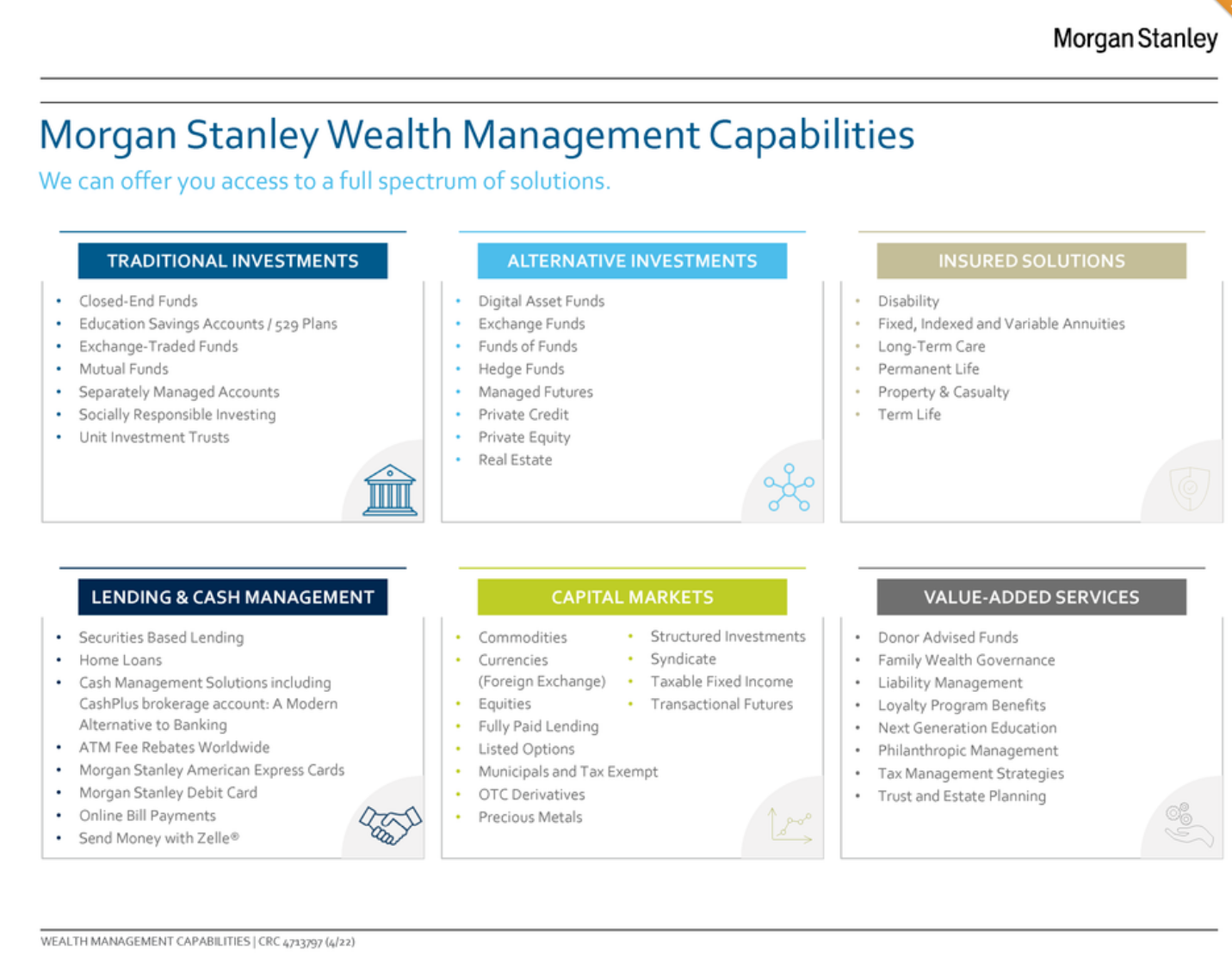
Morgan Stanley Wealth Management does not act as the direct underwriter of these policies. Instead, their Protection Strategy Group acts as an intermediary, sourcing coverage from a curated list of top-tier insurance carriers. By integrating insurance into a client’s broader "LifeView" or "Total Wealth" plan, Morgan Stanley advisors ensure that the policy aligns with the client’s investment portfolio, philanthropic goals, and succession plans.
The primary appeal of this structure is its cost-efficiency. Because the insurance company only has to pay the death benefit once (after the second death), the premiums are generally significantly lower than the combined cost of two separate individual life insurance policies. Furthermore, the underwriting process evaluates the joint life expectancy of both insured parties, which often allows for more favorable terms if one spouse is in better health than the other.
The Core Mechanism: How "Second-to-Die" Policies Function
Understanding how these policies function requires looking at the progression from application to the final distribution of the death benefit. Unlike a standard individual policy, where a payout occurs upon the death of the insured, a survivorship policy remains "in-force" after the first death occurs.
The Two-Life Underwriting Process
When applying through Morgan Stanley, both individuals undergo a medical and financial underwriting process. The insurer calculates the premium based on the "joint equivalent age" of the two applicants. This calculation accounts for the statistical probability that the second person will live significantly longer than the first. For clients where one spouse may have a pre-existing medical condition that would make individual coverage prohibitively expensive, survivorship insurance can be a viable alternative. As long as one spouse is relatively healthy, the policy is often issued at a manageable rate.
Premium Payments and Cash Value
Most survivorship policies offered through wealth management platforms are permanent insurance products, such as Whole Life or Universal Life (including Indexed or Variable versions). These policies often accumulate a cash value over time.
- Premiums: These can be structured as level premiums (staying the same throughout the policy), limited-pay (paying for a set number of years), or single-pay.
- Cash Value Growth: Depending on the policy type, the cash value may grow at a fixed rate or be linked to market performance. Morgan Stanley advisors often analyze how this cash value can be used as a "living benefit" or as a source of emergency liquidity, though the primary focus remains the ultimate death benefit.
The Payout Event
Upon the death of the first spouse, nothing happens regarding the death benefit. The surviving spouse (or the policy owner, such as a trust) continues to hold the policy. It is only when the second insured individual passes away that the death benefit is triggered. This benefit is then paid out to the designated beneficiaries or, more commonly in wealth management, to an Irrevocable Life Insurance Trust (ILIT).
Strategic Applications for High-Net-Worth Individuals
Survivorship life insurance is rarely used for basic income replacement. Instead, Morgan Stanley clients typically deploy it for several high-level financial objectives.
1. Estate Tax Liquidity
The most frequent use of survivorship insurance is to provide cash to pay federal and state estate taxes. In 2026, the 40% federal estate tax rate remains a significant hurdle for large estates. If an estate consists primarily of illiquid assets—such as a family business, commercial real estate, or private equity—the heirs might be forced to sell those assets at a discount to pay the tax bill within nine months of the death. A survivorship policy provides an immediate cash influx, allowing the assets to remain intact for the heirs.
2. Equalizing Inheritances
For clients who intend to leave a specific asset, like a family business, to one child who is active in the company, survivorship insurance can provide a "balancing" inheritance for other children. The death benefit provides a cash payout to the children not involved in the business, ensuring an equitable distribution of the total estate without requiring the sale or fractionalization of the primary business asset.
3. Funding a Charitable Legacy
Many Morgan Stanley clients use survivorship policies to fund private foundations or charitable lead/remainder trusts. By naming a charity as the beneficiary, the policy can create a significant philanthropic impact that might not have been possible through liquid asset donations during the clients' lifetimes.
4. Maximizing the "Step-Up" in Basis
By using life insurance to cover tax liabilities, families can avoid selling appreciated assets. This allows those assets to receive a "step-up" in basis upon the second death, potentially saving the heirs millions in capital gains taxes when they eventually sell the inherited property or securities.
Eligibility and Technical Requirements
Accessing survivorship life insurance through Morgan Stanley Wealth Management requires meeting specific financial and legal prerequisites.
- Relationship Requirement: Clients must generally have an established relationship with a Morgan Stanley Financial Advisor. This ensures the insurance is viewed through the lens of a comprehensive financial plan.
- Insurable Interest: There must be a clear insurable interest between the two parties. This is typically a legal marriage, but business partners with a shared interest can also sometimes qualify for specialized joint policies.
- Minimum Coverage Amounts: Wealth management-grade policies often have high face values, frequently starting at $1 million and extending into the hundreds of millions for ultra-high-net-worth clients.
- Irrevocable Life Insurance Trust (ILIT): To ensure the death benefit itself is not included in the taxable estate, the policy is usually owned by an ILIT. Morgan Stanley advisors work closely with the client's legal counsel to coordinate the "Crummey" notices and the gift-tax-efficient funding of the trust to pay the premiums.
Comparing Policy Structures: Individual vs. Survivorship
| Feature | Individual Life Insurance | Survivorship (Second-to-Die) |
|---|---|---|
| Insured Parties | One individual | Two individuals (usually spouses) |
| Payout Trigger | Death of the single insured | Death of the second/last insured |
| Primary Purpose | Income replacement / Debt payoff | Estate tax liquidity / Legacy planning |
| Relative Cost | Higher per $1,000 of coverage | Lower per $1,000 of coverage |
| Underwriting | Based on one health profile | Based on joint life expectancy |
| Ease of Issuance | Strict medical requirements | More lenient if one spouse is healthy |
| Cash Value | Accumulates for one person | Accumulates for the joint policy |
Potential Risks and Limitations
While survivorship insurance is a powerful tool, it is not without risks that must be managed through active Morgan Stanley advisory.
Policy Lapse and Underfunding
For Universal Life or Variable Survivorship policies, the performance of the underlying investments or interest rates affects the policy’s health. If the cash value falls too low and the premiums are not increased, the policy could lapse. Morgan Stanley advisors perform periodic "policy reviews" to ensure the internal costs of insurance are being met by the current funding levels.
The Impact of Divorce
A survivorship policy is designed for a couple with a shared estate plan. In the event of a divorce, the policy can become a complicated asset to divide. Some policies include a "divorce exchange rider" that allows the joint policy to be split into two individual policies, though this often requires an additional fee or higher premiums.
Legislative Changes
Tax laws are subject to change. While the 2026 environment makes these policies attractive, future acts of Congress could alter the estate tax landscape or the tax-advantaged status of life insurance. Morgan Stanley monitors these regulatory shifts to help clients pivot their strategies as needed.
Working with a Morgan Stanley Financial Advisor
The process of implementing a survivorship policy begins with a "LifeView" analysis. This proprietary tool allows the advisor to model various scenarios, demonstrating how an estate might be taxed under different conditions and how a life insurance death benefit would mitigate those costs.
Once the need is identified, the advisor brings in specialists from the Protection Strategy Group. These specialists handle the "market shop," obtaining quotes from multiple high-rated carriers (such as Prudential, New York Life, or Pacific Life) to find the most competitive pricing and policy features. They also coordinate with the client’s CPA and estate attorney to ensure the ownership structure is legally sound and tax-optimized.
Frequently Asked Questions
Can we buy a survivorship policy if one of us is uninsurable?
Often, yes. This is one of the primary benefits of second-to-die insurance. Because the insurer is betting on the life expectancy of the healthier individual, they can often offer coverage even if one spouse has a serious health condition, such as a history of cancer or heart disease, as long as the other spouse is in reasonably good health.
What happens if the surviving spouse cannot afford the premiums?
If the policy is permanent and has built up enough cash value, the survivor may be able to use that cash value to pay the premiums (a "vanish" strategy) or take a loan against the policy. However, this reduces the final death benefit. Most estate plans through Morgan Stanley include a funding strategy for the ILIT to ensure premiums are covered regardless of the surviving spouse's liquid cash flow.
Is the death benefit of a survivorship policy taxable?
Generally, life insurance death benefits are not subject to federal income tax. However, if the policy is owned by the individuals personally, it will be included in the taxable estate for estate tax purposes. To avoid this, Morgan Stanley typically recommends that the policy be owned by an Irrevocable Life Insurance Trust (ILIT).
How does a "Variable" Survivorship policy differ from a "Whole Life" Survivorship policy?
A Whole Life survivorship policy offers a guaranteed death benefit and a fixed premium, with cash value growth determined by the insurer’s dividends. A Variable survivorship policy allows the owner to invest the cash value in sub-accounts (similar to mutual funds). This offers higher growth potential but carries market risk; if the investments perform poorly, the owner may need to pay higher premiums to keep the policy active.
Can we change the beneficiaries after the first spouse dies?
This depends on the ownership structure. If the policy is owned by an Irrevocable Life Insurance Trust (ILIT), the beneficiaries are set by the trust document and are generally difficult to change. If owned personally, the surviving spouse can change beneficiaries, but this often defeats the estate tax advantages of the policy.
Final Recommendation
For families with estates projected to exceed the 2026 federal exemption limits, Morgan Stanley survivorship life insurance should be evaluated as a liquidity management tool rather than just an insurance product. It is most effective when integrated into a broader wealth transfer strategy that includes an ILIT and a well-defined succession plan. To begin, clients should request a formal "Estate Liquidity Analysis" from their financial advisor to determine the specific gap between their projected tax liability and their liquid assets at the time of the second death.
Image Gallery