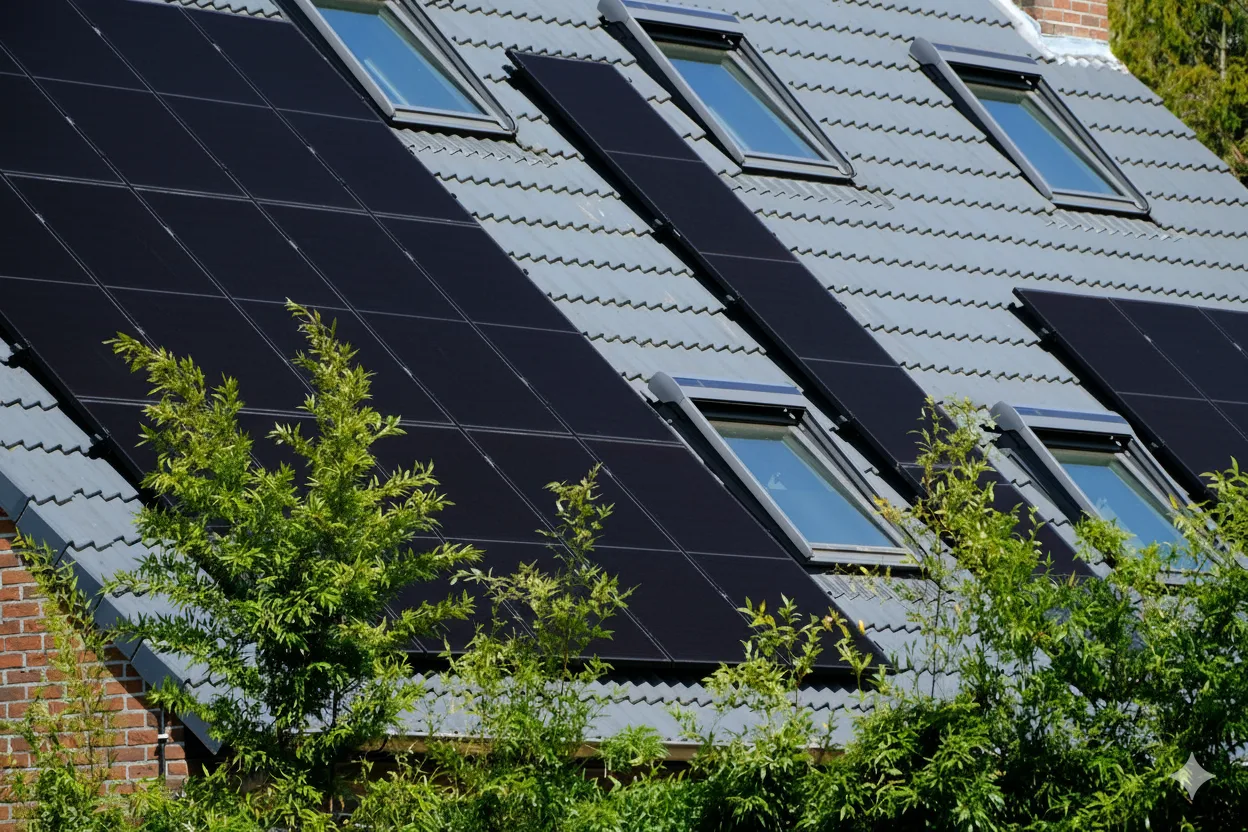
Solar Panel Installations Glasgow: A 2026 Guide to Costs, Grants, and Performance
Solar panel installations in Glasgow offer a resilient solution to rising energy costs and carbon reduction goals in 2026. By utilizing modern photovoltaic technology designed for high efficiency in diffuse light, Glasgow homeowners ca...
Solar panel installations in Glasgow offer a resilient solution to rising energy costs and carbon reduction goals in 2026. By utilizing modern photovoltaic technology designed for high efficiency in diffuse light, Glasgow homeowners can significantly reduce their grid dependency and benefit from robust Scottish government financial incentives and export tariffs.
Contents
Why Solar Power Works in Glasgow (Despite the Weather)
A common misconception among residents in the West of Scotland is that the frequent cloud cover and rain render solar energy ineffective. However, in 2026, the technology has advanced to a point where "sunshine" in the traditional sense is not the only requirement for power generation. Solar photovoltaic (PV) panels operate on light energy (photons), not heat or direct sunlight.
Glasgow receives approximately 1,300 to 1,400 hours of daylight annually. While this is lower than the south of England, modern N-type monocrystalline cells and TOPCon (Tunnel Oxide Passivated Contact) technology have become the industry standard. these panels are specifically engineered to capture a broader spectrum of light, including the "diffuse" radiation that penetrates through Glasgow's characteristic grey skies.
Furthermore, solar panels actually perform more efficiently in cooler temperatures. High heat can increase the electrical resistance within the cells, leading to a drop in voltage. The temperate maritime climate of the Clyde Valley ensures that panels rarely overheat, allowing them to maintain a more consistent output than they might in hotter, more arid climates. When paired with the long daylight hours of the Scottish summer—where the sun can stay above the horizon for over 17 hours in June—the cumulative annual yield remains highly competitive.
Current Costs and Financial Incentives in 2026
The financial landscape for solar energy in Scotland remains one of the most favorable in the United Kingdom. As of 2026, the Scottish Government, through Home Energy Scotland (HES), continues to provide substantial support to help homeowners transition away from fossil fuels.
The Home Energy Scotland Grant and Loan
Managed by the Energy Saving Trust, the HES scheme provides a combination of grants and interest-free loans for renewable installations. For a standard solar PV system, homeowners may be eligible for a grant of up to £2,500, with the remaining balance covered by an interest-free loan repayable over several years. This significantly lowers the "break-even" point for the average household.
Typical System Pricing
While global supply chains have stabilized, the cost of solar installations in Glasgow reflects current labor rates and high-efficiency hardware. On average, a 4kWp system—typical for a three-bedroom semi-detached home—ranges between £6,000 and £8,500. Adding a 5kWh battery storage system typically adds another £3,000 to £4,500 to the total.
| System Size (kWp) | Estimated Installation Cost | Annual Generation (Glasgow) | Estimated Annual Saving |
|---|---|---|---|
| 2.5 kWp | £4,000 - £5,200 | 1,900 - 2,100 kWh | £500 - £650 |
| 4.0 kWp | £6,500 - £8,000 | 3,300 - 3,600 kWh | £900 - £1,100 |
| 6.0 kWp | £9,500 - £12,000 | 4,900 - 5,400 kWh | £1,400 - £1,700 |
| 8.0 kWp | £13,000 - £16,000 | 6,600 - 7,200 kWh | £1,900 - £2,300 |
Note: Savings vary based on self-consumption rates and the specific export tariff chosen. Figures include the use of battery storage to maximize self-consumption.
Choosing the Right Solar PV System for Your Property
Selecting the hardware for a Glasgow installation requires a focus on durability and low-light performance. The proximity to the coast and the frequent rainfall mean that hardware must be resistant to corrosion and moisture ingress.
Panel Technology: Monocrystalline vs. Bifacial
For residential roofs, monocrystalline panels are the preferred choice due to their high efficiency and sleek aesthetic. However, for ground-mounted systems or flat roofs (common in some Glasgow commercial districts), bifacial panels are increasingly popular. These panels capture light on both sides, utilizing reflected light from the roof surface or ground, which can increase energy yield by up to 15% in certain conditions.
Inverter Technology
The inverter is the "brain" of the system, converting the Direct Current (DC) produced by the panels into the Alternating Current (AC) used by your home.
- String Inverters: Ideal for simple, south-facing roofs without shading issues. They are cost-effective and easy to maintain.
- Microinverters: These are attached to each individual panel. They are highly recommended for Glasgow's Victorian tenements or properties with complex rooflines where chimneys or nearby trees might cast intermittent shadows. If one panel is shaded, the rest of the system continues to operate at peak capacity.
Battery Storage
In 2026, very few Glasgow installations occur without some form of battery storage. Because much of the energy is generated during the day when many residents are at work, batteries allow that power to be stored for use in the evening. This increases the "self-consumption" rate from roughly 30% to over 70%, drastically improving the return on investment.
Finding and Vetting Installers in Glasgow
The surge in demand for renewables has led to a proliferation of installers. It is critical to choose a provider that understands the local architectural nuances, from sandstone villas in Pollokshields to modern developments in the West End.
Mandatory Certifications
Any installer you consider must be certified by the Microgeneration Certification Scheme (MCS). This certification is a prerequisite for accessing Scottish Government grants and for selling excess electricity back to the grid. An MCS certified installer ensures that the equipment and the installation meet rigorous safety and performance standards.
Consumer Protection
Verify that the company is a member of a consumer protection body such as the Renewable Energy Consumer Code (RECC) or the Home Insulation & Energy Systems Quality Assured Contractors Scheme (HIES). These organizations provide deposit protection and insurance-backed guarantees, which are vital for a long-term investment like solar.
Local Knowledge
Local Glasgow firms often have established relationships with SP Energy Networks, the District Network Operator (DNO) for Central and Southern Scotland. They will handle the necessary G98 or G99 notifications required to connect your system to the local grid, ensuring all technical requirements for the Glasgow infrastructure are met.
Planning Permission and Building Regulations in Scotland
In most cases, installing solar panels on a domestic property in Glasgow falls under Permitted Development Rights. This means you do not need formal planning permission, provided certain conditions are met, such as the panels not protruding more than 200mm from the roof slope.
However, Glasgow is home to numerous Conservation Areas (such as parts of the West End, Shawlands, and the City Centre) and thousands of Listed Buildings. If your property falls into these categories, you must consult with Glasgow City Council's planning department.
For listed buildings, you will likely require Listed Building Consent. In conservation areas, the council often prefers panels to be installed on the rear elevation of the property to minimize the visual impact on the streetscape. Building warrants are generally not required for standard roof-mounted solar PV unless the installation involves significant structural alterations to the roof.
The Installation Process: From Survey to Grid Connection
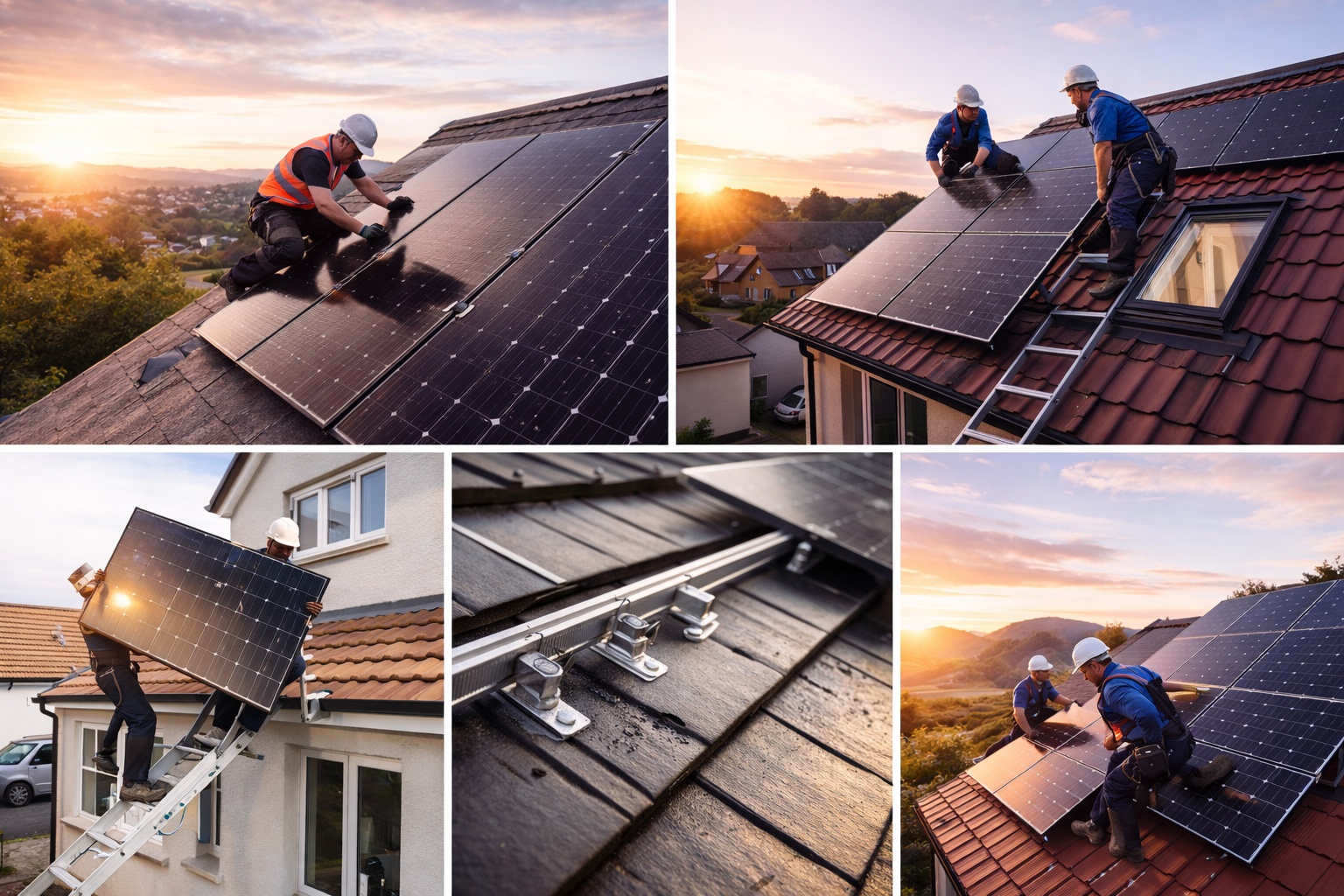
A professional installation typically follows a standardized five-step process:
- Technical Site Survey: An engineer will assess your roof's orientation, pitch, and structural integrity. They will also check your internal consumer unit (fuse box) to ensure it can handle the new load.
- Design and Proposal: Based on your energy bills, the installer designs a system optimized for your consumption patterns. This include a "shading analysis" to predict yearly yield.
- Scaffolding and Mounting: Safe access is established. Roof anchors are fixed to the rafters, and a mounting rail system is installed.
- Electrical Integration: Panels are mounted to the rails, and DC wiring is run to the inverter and battery storage unit. The system is then connected to your home's electrical system via a dedicated circuit.
- Commissioning and Handover: The system is tested, and you are provided with an MCS certificate, an electrical installation certificate, and instructions on how to use the monitoring app to track your generation in real-time.
Maximizing ROI: Smart Export Guarantee (SEG) and Smart Tariffs
Installing panels is only half the strategy; the other half is managing the energy you produce. Under the Smart Export Guarantee (SEG), energy suppliers are legally required to pay you for the excess renewable electricity you export to the National Grid.
In 2026, "Smart Tariffs" have become highly sophisticated. Companies like Octopus Energy and OVO offer dynamic pricing where export rates fluctuate based on grid demand. By using your battery storage strategically—charging from the grid when prices are low (or negative) and exporting when demand in Glasgow is high—you can significantly accelerate your system's payback period.
Frequently Asked Questions
Do solar panels work when it snows in Glasgow? Yes, though at a reduced capacity. If a light dusting of snow covers the panels, light can still reach the cells. Heavy snow will block generation, but because panels are installed at an angle and generate a small amount of heat during operation, snow typically slides off much faster than it does from the rest of the roof.
How long do solar PV systems last? Most modern panels come with a 25-year linear power warranty, guaranteeing they will still produce at least 80-85% of their original output after two and a half decades. Inverters typically have a lifespan of 10 to 15 years, and batteries usually carry warranties for 10 years or 6,000 cycles.
Can I install solar panels if I live in a flat? In Glasgow, this is more complex due to shared roof ownership (common law of the tenement). You generally need the agreement of the other owners in the building. However, many "factors" (property managers) are now experienced in facilitating solar installations for communal areas or specific top-floor flats.
Is maintenance expensive? Solar PV is remarkably low maintenance because it has no moving parts. In Glasgow, the frequent rain actually helps keep the panels clean of dust and debris. It is recommended to have a professional "health check" every 3 to 5 years to ensure the electrical connections remain tight and the inverter is performing optimally.
What happens during a power cut? By default, most solar systems shut down during a power cut for safety reasons (to prevent "islanding," where electricity is sent back to a grid that engineers might be working on). However, if you have a battery with an Emergency Power Supply (EPS) or "island mode" capability, you can still power essential circuits in your home during an outage.
Final Recommendation
If you are considering solar panel installations in Glasgow, your first step should be to obtain a Home Energy Scotland assessment. This will confirm your eligibility for interest-free funding. Once confirmed, seek at least three quotes from MCS-certified installers who have a physical presence in West Central Scotland. Prioritize systems that include battery storage and high-efficiency N-type panels to ensure your property is resilient against the energy market volatility of the late 2020s.
Image Gallery