Innovative Mobility: Navigating the Future of Integrated and Sustainable Transport in 2026
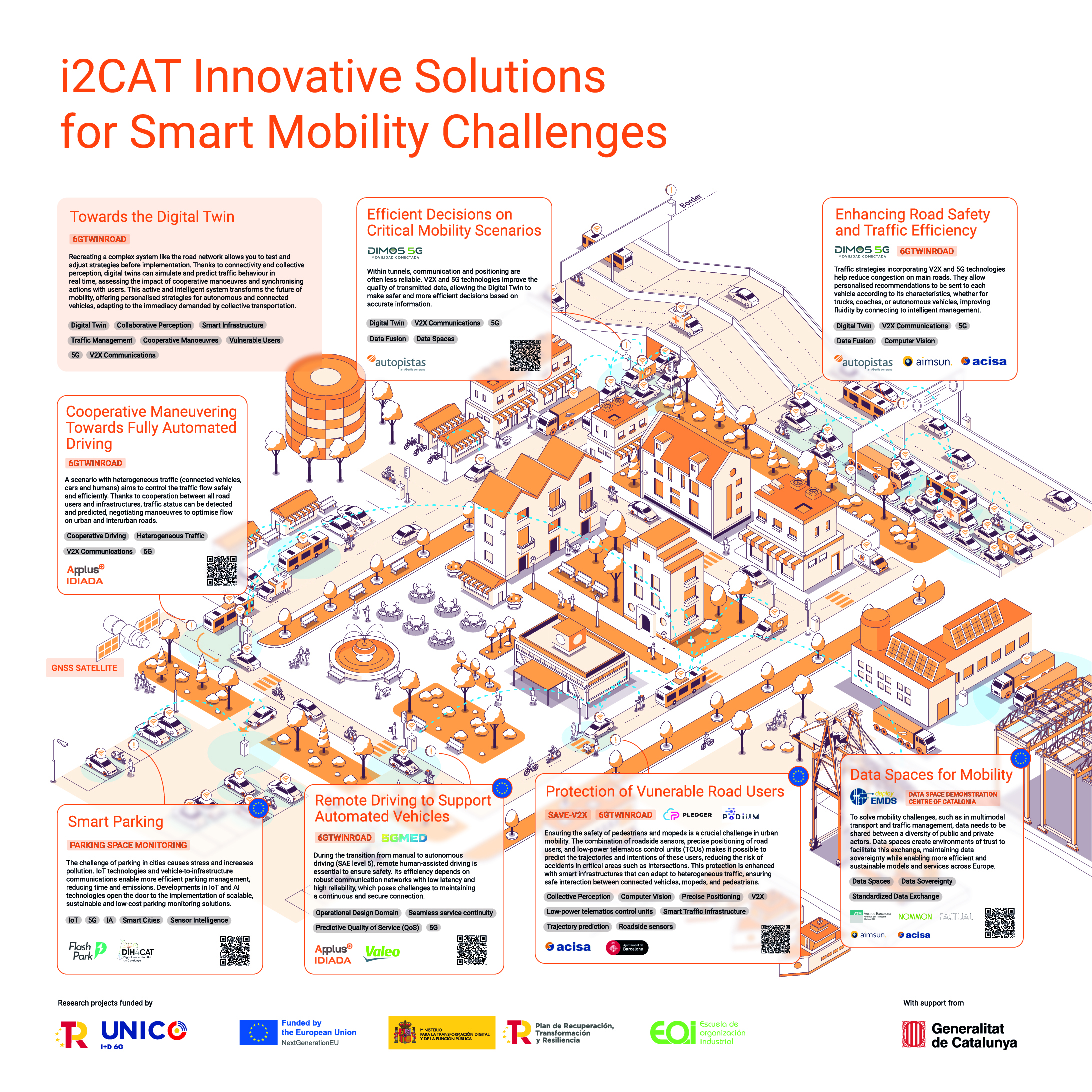
Innovative mobility refers to the transition from siloed, vehicle-centric transportation to a holistic, technology-driven ecosystem defined by integration and sustainability. In 2026, this encompasses Mobility-as-a-Service (MaaS), auto...
Innovative mobility refers to the transition from siloed, vehicle-centric transportation to a holistic, technology-driven ecosystem defined by integration and sustainability. In 2026, this encompasses Mobility-as-a-Service (MaaS), autonomous electric fleets, and micro-mobility solutions, all coordinated via real-time data to reduce urban congestion, lower carbon emissions, and prioritize equitable access for all users.
Contents
The Paradigm Shift: From Ownership to Access
For decades, the standard for personal transportation was defined by individual vehicle ownership. However, by 2026, the global perspective has shifted toward "access over ownership." Innovative mobility is not merely the introduction of electric cars; it is the fundamental reorganization of how people and goods move through space. This shift is driven by three primary technological convergences: electrification, automation, and digital connectivity.
The current landscape prioritizes Mobility-as-a-Service (MaaS). MaaS platforms aggregate various forms of transport—including buses, trains, ride-hailing, e-bikes, and even walking paths—into a single digital interface. Users no longer need to navigate multiple apps or payment systems. Instead, they can plan, book, and pay for a multimodal trip through one gateway. This integration relies heavily on open API standards and data-sharing agreements between public transit authorities and private mobility providers.
The Role of Software-Defined Vehicles (SDVs)
In 2026, the hardware of a vehicle is increasingly secondary to its software. Software-Defined Vehicles (SDVs) allow for "over-the-air" (OTA) updates that improve performance, safety features, and battery efficiency without requiring a physical visit to a service center. This flexibility is a cornerstone of innovative mobility, as it ensures that fleet vehicles—whether they are autonomous shuttles or shared electric cars—remain at the cutting edge of safety and efficiency throughout their lifecycle.
Core Pillars of the 2026 Mobility Ecosystem
To understand how innovative mobility functions today, we must examine the specific components that allow the system to operate as a cohesive unit. These pillars support the "15-minute city" concept, where essential services are reachable within a short walk or ride, reducing the reliance on long-distance commuting.
1. Autonomous and Connected Systems
Autonomous vehicle (AV) technology has reached a point of specialized maturity. While full Level 5 autonomy (operation anywhere in any condition) remains a niche pursuit, Level 4 autonomy is now common in "geofenced" urban environments. These vehicles operate on fixed or semi-fixed routes, providing "first-and-last-mile" connectivity to transit hubs.
Connectivity is facilitated by Vehicle-to-Everything (V2X) communication. This allows cars to "talk" to traffic lights, pedestrians' smartphones, and other vehicles. V2X reduces the latency of traffic management systems, enabling smoother traffic flow and significantly reducing the "stop-and-go" patterns that contribute to urban smog and driver frustration.
2. The Electrification of Everything
The transition to Electric Vehicles (EVs) is no longer a future goal but a present reality. Innovative mobility in 2026 focuses on the infrastructure supporting this transition. Vehicle-to-Grid (V2G) technology allows EV batteries to act as a decentralized power storage system, feeding electricity back into the grid during peak demand. This transforms the car from a passive consumer of energy into an active participant in the energy market.
3. Micro-mobility and Last-Mile Logistics
The "last mile" has traditionally been the most expensive and inefficient part of the logistics chain. Innovative mobility solves this through specialized micro-mobility solutions:
- Electric Cargo Bikes: Used by logistics firms for inner-city deliveries, bypassing gridlock.
- Dockless E-scooters and Bikes: Integrated into public transit apps to facilitate the final leg of a commute.
- Modular Delivery Hubs: Automated lockers and micro-fulfillment centers that reduce the need for large delivery vans in residential areas.
Technical Specifications and Infrastructure Requirements
The success of innovative mobility is contingent upon robust "hard" and "soft" infrastructure. Without the underlying digital and physical framework, these technologies remain fragmented.
| Component | Traditional Model (Pre-2020) | Innovative Model (2026) | Primary Benefit |
|---|---|---|---|
| Data Flow | Siloed (Separate apps for bus, rail, car) | Unified (Open Data/API Integration) | Seamless user experience |
| Energy Source | Internal Combustion (Petrol/Diesel) | Battery Electric / Hydrogen Fuel Cell | Zero tailpipe emissions |
| Vehicle Use | Private Ownership (Idle 95% of time) | Shared/On-Demand (High utilization) | Reduced urban footprint |
| Traffic Control | Pre-timed signals / Manual sensing | AI-Driven / V2I (Infrastructure) | Reduced congestion |
| Urban Design | Road-centric / Large parking lots | Pedestrian-centric / Green corridors | Improved livability |
Digital Infrastructure: The 6G/5G Backbone
By 2026, the deployment of high-speed, low-latency 5G and early-stage 6G networks has become the "nervous system" of innovative mobility. High-definition mapping and real-time sensor fusion require massive bandwidth. For an autonomous shuttle to react to a sudden obstacle, the data must be processed at the "edge"—meaning the computation happens close to the vehicle rather than in a distant data center.
Physical Infrastructure: Smart Poles and Inductive Charging
Cities are replacing traditional streetlights with Smart Poles. These units serve multiple functions: they are EV charging stations, 5G small cells, environmental sensors, and smart lighting. Furthermore, pilot programs for inductive (wireless) charging are now being embedded into bus lanes, allowing public transit vehicles to charge while they stop to pick up passengers, eliminating the need for long downtimes at depots.
Urban Air Mobility (UAM): The New Frontier
One of the most visible shifts in innovative mobility as of 2026 is the emergence of Urban Air Mobility (UAM). Electric Vertical Take-off and Landing (eVTOL) aircraft are beginning to integrate into the broader transport network. These are not "flying cars" for the general public, but rather highly regulated air taxis operating between "vertiports."
UAM serves a specific purpose: bypassing ground-level congestion for time-sensitive travel, such as airport transfers or emergency medical services. The integration of UAM into the MaaS ecosystem ensures that a user can book an air taxi as easily as they would a train, with the platform handling the transition from ground to air seamlessly.
Addressing Challenges: Privacy, Equity, and Regulation
Despite the rapid advancement of innovative mobility, several hurdles remain that require careful management by policymakers and technologists.
Data Privacy and Security
As mobility becomes more data-dependent, the risk to user privacy increases. MaaS providers collect vast amounts of location data. In 2026, regulatory frameworks like the Data Governance Act and updated privacy statutes ensure that this data is anonymized and used only for system optimization. Cybersecurity is also paramount; a breach in a connected traffic system could have catastrophic physical consequences.
The Digital Divide and Equity
Innovative mobility must not become a luxury service. There is a risk that "tech-heavy" solutions could exclude those without smartphones or those living in under-served rural areas. Forward-thinking cities are mandating "equity zones" where private mobility providers must maintain a minimum level of service, regardless of profitability, to ensure that low-income residents have reliable access to jobs and healthcare.
Regulatory Lag
Technology often moves faster than the law. In 2026, the primary regulatory challenge is establishing liability for autonomous vehicle accidents. Most jurisdictions have moved toward a model where the manufacturer or software provider bears primary responsibility, provided the vehicle was operating within its intended "Operational Design Domain" (ODD).
Operational Benefits and Economic Impact
The move toward innovative mobility provides measurable economic and environmental advantages. According to the International Energy Agency (IEA), the widespread adoption of shared electric mobility is a critical factor in reaching net-zero targets by 2050.
- Reduced Congestion Costs: Traffic congestion costs billions in lost productivity. By optimizing routes through AI, innovative mobility recaptures this time.
- Land Use Optimization: As shared mobility reduces the need for private car ownership, cities can reclaim parking lots for housing or green spaces.
- Job Creation: While traditional driving jobs may evolve, the sector is seeing a surge in demand for fleet technicians, software engineers, and urban data analysts.
Frequently Asked Questions
What is the difference between smart mobility and innovative mobility?
Smart mobility usually refers to the application of ICT (Information and Communication Technology) to improve transport efficiency. Innovative mobility is a broader term that includes smart technology but also encompasses new business models (like MaaS), new vehicle types (eVTOLs), and fundamental changes in urban planning and energy usage.
How does MaaS actually save money for the average user?
MaaS reduces the high fixed costs of vehicle ownership, including insurance, maintenance, depreciation, and parking. By paying only for the "trip" rather than the "asset," users can often reduce their monthly transport expenditure while gaining access to a wider variety of transport modes.
Are autonomous shuttles safe for pedestrians?
In 2026, autonomous shuttles use a combination of LiDAR, Radar, and high-resolution cameras to create a 360-degree view of their surroundings. They are programmed with extremely conservative "safety buffers" and are often restricted to lower speeds in pedestrian-heavy areas, making them statistically safer than human-driven vehicles in those same environments.
Can innovative mobility work in rural areas?
While most focus is on cities, innovative mobility in rural areas involves Demand Responsive Transport (DRT). Instead of large buses running on fixed schedules with few passengers, smaller automated vans are dispatched based on real-time requests, providing a more efficient and cost-effective service for remote populations.
What is a "Vertiport"?
A vertiport is a specialized landing and takeoff site for eVTOL aircraft. Unlike traditional airports, they are much smaller and can be located on the roofs of parking garages or transit hubs. They include charging infrastructure and specialized safety systems for high-frequency aerial operations.
Does electrification solve all environmental problems of transport?
No. While it eliminates tailpipe emissions, the environmental impact also depends on the "cleanliness" of the electrical grid and the sustainability of battery manufacturing. Innovative mobility addresses this by focusing on high-occupancy and shared vehicles to reduce the total number of batteries needed.
Practical Next Steps for Implementation
For municipalities or organizations looking to adopt innovative mobility solutions, the first step is the creation of a Common Data Layer. Establishing a framework where public and private entities can securely share real-time transit data is the prerequisite for any integrated system.
For individuals, the most effective action is to explore local MaaS offerings and consider transitioning away from a second household vehicle in favor of shared electric options. As the infrastructure for innovative mobility continues to solidify through 2026, the reliability and convenience of these systems will only increase, making the transition not just an environmental choice, but a practical one for daily life.
Image Gallery