Why the Details of Notes Payable Matter on a Balance Sheet
The details of notes payable on a balance sheet matter because they disclose a company’s explicit contractual debt obligations, including interest costs, exact repayment schedules, maturity dates, collateral pledges, and restrictive co...
The details of notes payable on a balance sheet matter because they disclose a company’s explicit contractual debt obligations, including interest costs, exact repayment schedules, maturity dates, collateral pledges, and restrictive covenants. Unlike general accounts payable, notes payable represent formal promissory agreements that directly determine short-term liquidity requirements, long-term solvency risk, and overall creditworthiness.
Contents
Understanding Notes Payable: Beyond the Line Item
On a corporate balance sheet, financial statement users frequently encounter the line item notes payable. While it represents money owed to third parties, treating it as a simple liability figure obscures critical underlying financial realities. A note payable is a legally binding written promise—a promissory note—to pay a specified sum of money to a lender or vendor at a defined future date or over a set period, typically carrying explicit interest terms.
Understanding the specifics of these notes requires looking beyond the aggregate liability dollar figure. Two companies can present an identical $5 million notes payable balance on their financial statements, yet face vastly different operational financial realities:
- Company A may hold a five-year note payable at a fixed 4% interest rate with equal monthly amortizing payments, secured by real estate, with no debt covenants.
- Company B may hold a one-year uncollateralized note payable at a variable 10% interest rate with a single balloon payment due in three months, subject to strict leverage ratio covenants.
Although both balance sheets show the exact same nominal obligation, Company B carries exponentially higher liquidity, refinancing, and default risk. Consequently, financial analysts, lenders, equity investors, and management teams must analyze the explicit structural details behind notes payable to evaluate a company's financial health accurately.
- Promissory Note Agreement
- Short-Term Portion (Due ≤ 12 Months)
- Working Capital Impact
- Long-Term Portion (Due > 12 Months)
- Solvency & Capital Structure
- Short-Term Portion (Due ≤ 12 Months)
Short-Term vs. Long-Term Classification and Liquidity Metrics
The primary distinction in balance sheet presentation is the division between current liabilities and non-current (long-term) liabilities. The placement of notes payable across these categories directly dictates a company's working capital position and liquidity metrics.
Current Maturities of Long-Term Debt (CMLTD)
When a company takes out a multi-year loan, the principal due within the next 12 months (or operating cycle, if longer) must be reclassified from long-term notes payable to current liabilities as Current Maturities of Long-Term Debt (CMLTD). The remainder of the principal balance remains in non-current liabilities.
Properly tracking and reporting this distinction matters for several reasons:
- Working Capital Calculations: Working capital is defined as current assets minus current liabilities. Shifting a note payable from long-term to short-term immediately reduces working capital without altering total debt.
- Current Ratio Assessment: The current ratio ($\text{Current Assets} \div \text{Current Liabilities}$) drops when long-term notes enter their final 12-month window. Lenders monitor this ratio closely to determine whether the borrowing firm maintains sufficient cash flows to meet upcoming obligations.
- Quick Ratio (Acid-Test) Evaluation: The quick ratio measures immediate liquidity by excluding inventory from current assets. A significant current note payable balance puts direct pressure on cash reserves and liquid receivables.
Refinancing Rules Under Accounting Frameworks
Under U.S. GAAP (ASC 470) and IFRS (IAS 1), short-term notes payable maturing within 12 months cannot simply be classified as long-term debt based on management's hopes of extending the loan. To keep a maturing note payable in the non-current liability section, an entity must demonstrate both the explicit intent and the verified ability to refinance the obligation on a long-term basis. Under U.S. GAAP, this ability must be demonstrated before the financial statements are issued—either by executing a long-term refinancing agreement or issuing long-term securities after the balance sheet date. Under IFRS, the legal right to defer settlement for at least 12 months must exist at the end of the reporting period.
Structural Details That Alter Financial Risk
To fully evaluate how notes payable affect a company's risk profile, financial readers must examine four key structural elements usually detailed in financial statement footnotes:
1. Interest Rate Terms (Fixed vs. Variable)
Notes payable carry contractual interest rates that dictate future cash outflows.
- Fixed-Rate Notes: Provide predictable debt service costs, protecting the business from broader macroeconomic interest rate increases. However, if market rates fall, the business remains locked into higher borrowing costs unless it refinances.
- Variable-Rate (Floating) Notes: Benchmark their interest rates against reference indexes (such as SOFR or prime rates) plus a spread. In periods of rising central bank policy rates, variable notes cause interest expenses to escalate automatically, reducing net income and squeezing operating margins without any change in principal balance.
2. Maturity Dates and "Debt Wall" Risks
The maturity profile of notes payable dictates when capital repayments are required. A concentrated maturity structure—where multiple notes or large principal balloon payments come due simultaneously—creates a debt wall risk. If capital markets tighten or the firm experiences temporary earnings weakness when a major note matures, management may struggle to roll over or refinance the debt, forcing distress asset sales or dilution through emergency equity issuances.
3. Collateral and Asset Pledges
Notes payable are classified as either secured or unsecured.
- Secured Notes: Backed by specific assets pledged as collateral (such as property, plant, equipment, or accounts receivable). If the company defaults, the lender holds a legal lien over those assets. For external stakeholders, collateralized notes reduce the unencumbered asset base available to cover unsecured claims during a liquidation.
- Unsecured Notes: Supported only by the general creditworthiness of the borrower. While they do not tie up specific asset titles, unsecured notes often carry higher interest rates to compensate lenders for taking greater risk.
4. Financial Debt Covenants
Lenders frequently insert financial covenants into note agreements to protect their capital. Covenants impose operational boundaries and minimum financial performance benchmarks on the borrowing firm. Common covenants include:
- Leverage Caps: Maintaining a maximum Debt-to-EBITDA ratio (e.g., total debt cannot exceed 3.5x annual EBITDA).
- Interest Coverage Floors: Maintaining a minimum ratio of earnings before interest and taxes to interest expense (e.g., EBIT / Interest Expense $\ge 3.0\text{x}$).
- Fixed Charge Coverage Ratios (FCCR): Requiring available cash flows to exceed debt service and lease commitments by a defined margin.
- Capital Expenditure Caps: Restricting annual capital spending until the note principal is reduced below a set threshold.
A covenant breach grants the lender the right to declare the note in technical default, demand immediate repayment of the full principal balance, or raise interest rates significantly. On the balance sheet, a defaulted long-term note payable must immediately be reclassified as a current liability unless the lender grants a formal written waiver extending at least 12 months into the future.
How Notes Payable Details Drive Key Financial Ratios
Analyzing notes payable details allows financial analysts to calculate and interpret core accounting ratios accurately. The table below illustrates how specific note attributes directly impact balance sheet metrics and financial performance evaluations:
| Note Payable Detail / Attribute | Primary Balance Sheet Classification | Key Financial Metric Impacted | Analytical Significance & Risk Direction |
|---|---|---|---|
| Maturity Within 12 Months (CMLTD) | Current Liability | Current Ratio, Quick Ratio, Working Capital | Increases Liquidity Risk: Reduces net working capital and lowers liquidity ratios, signalling immediate cash strain. |
| Maturity Beyond 12 Months | Non-Current Liability | Debt-to-Equity, Total Debt-to-Assets | Increases Solvency Risk: Elevates long-term leverage profile without depressing immediate working capital. |
| Floating / Variable Interest Rate | Footnote Disclosure (Note Liability) | Interest Coverage Ratio, Net Profit Margin | Increases Earnings Volatility: Exposes cash flow and interest coverage to central bank rate adjustments. |
| Secured / Collateralized Asset Lien | Footnote Disclosure & Asset Encumbrance | Asset Coverage Ratio, Recovery Rate | Reduces Asset Flexibility: Restricts company's ability to sell or pledge assets for alternative credit facilities. |
| Strict Financial Covenant (e.g., Max Debt/EBITDA) | Footnote Disclosure | Operational Capital Allocation Limits | Increases Default Risk: Technical breach forces long-term debt into current liabilities immediately. |
| Balloon / Bullet Payment at Maturity | Non-Current (until final year) | Refinancing Risk, Free Cash Flow Conversion | Increases Principal Repayment Risk: Requires substantial cash buildup or debt market access for rollover at maturity. |
Footnote Disclosures: Where the Critical Details Live
While the face of the balance sheet displays the summary debt totals, financial statement footnotes provide the operational context required for thorough financial analysis. Under accounting frameworks such as U.S. GAAP (ASC 470) and IFRS (IFRS 7), entities are required to disclose extensive quantitative and qualitative data regarding their borrowing arrangements.
- BALANCE SHEET (Summary)
- Current Liabilities: Current Portion of Notes Payable ... $ 2M
- Non-Current Liabilities: Long-Term Notes Payable ....... $ 8M
- FOOTNOTE DISCLOSURES (Details)
- 5-Year Debt Amortization Schedule (Maturity Breakdown)
- Weighted Average Interest Rates & Base Benchmarks (SOFR/Prime)
- Specific Collateral & Pledged Asset Details
- Financial Covenant Requirements & Compliance Status
- Refinancing Rights, Conversion Terms, & Early Payoff Penalties
Key footnote disclosures analysts examine include:
- Five-Year Maturity Amortization Schedule: Tables showing the exact principal amounts due in each of the next five years and the aggregate balance thereafter. This allows analysts to model future debt service requirements against projected cash flows.
- Weighted Average Interest Rates: Disclosures detailing nominal interest rates, effective interest rates, and amortization of loan issuance costs or debt discounts.
- Unused Credit Lines and Draw Conditions: Details on revolving note facilities, including remaining capacity, commitment fees, and conditions required for additional draws.
- Events of Default and Restructuring: Full disclosure of any covenant waivers obtained, restructured payment terms, or ongoing dispute proceedings with debt holders.
Common Pitfalls and Misinterpretations
Failing to scrutinize notes payable details frequently leads to inaccurate business valuations, improper credit risk assessments, and unexpected liquidity crises.
Confusing Notes Payable with Accounts Payable
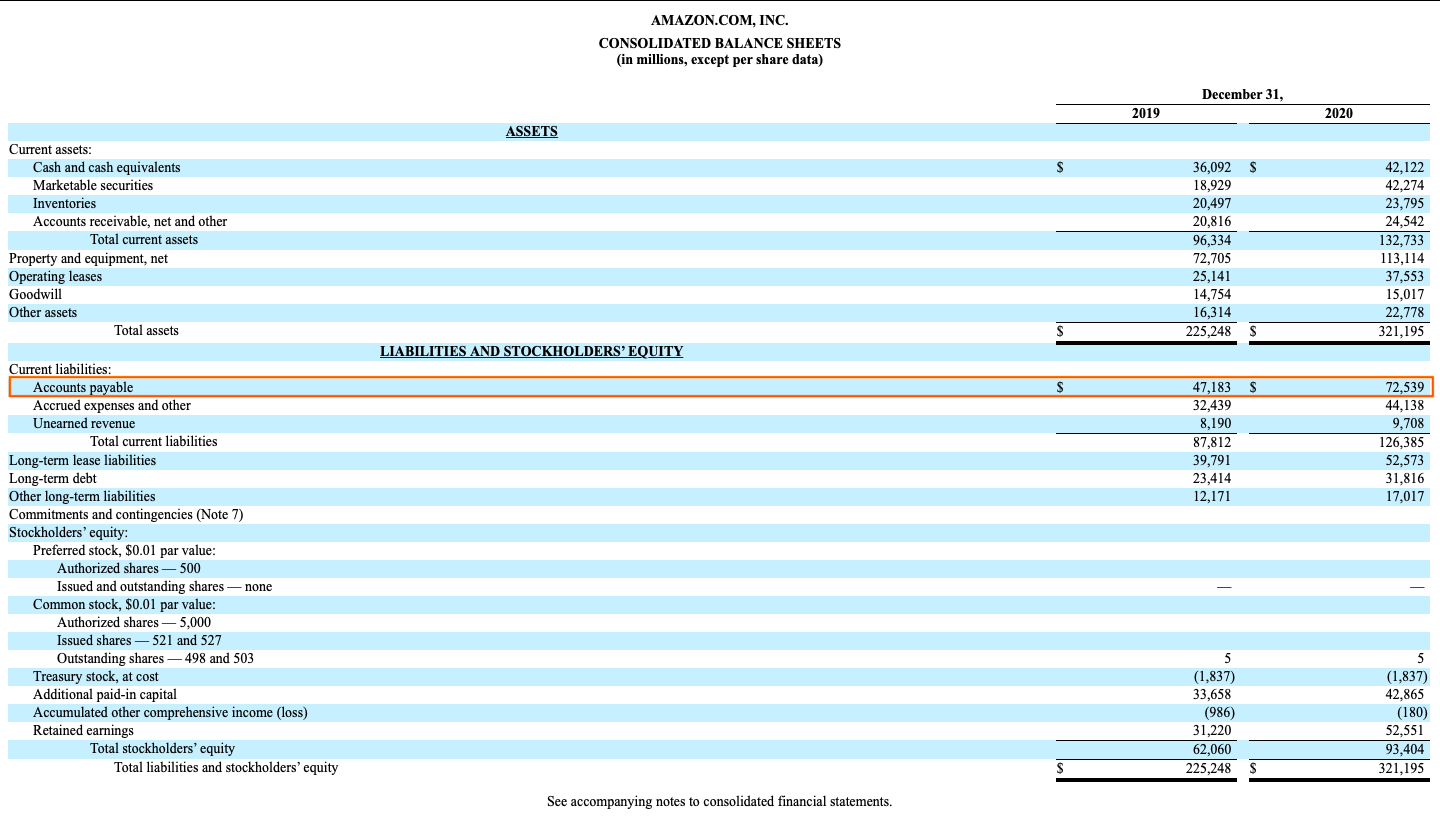
A frequent mistake in preliminary financial analysis is lumping notes payable together with accounts payable. Accounts payable represent short-term, interest-free obligations owed to trade suppliers for routine purchases, usually settled within 30 to 90 days under informal trade credit terms. Notes payable represent formal contractual financial debt carrying explicit interest costs and legally enforceable payment schedules. Treating notes payable as operational trade debt understates a company's true financial cost of capital and masks structural leverage.
Omitting Non-Cash Interest Amortization
When notes payable are issued at a discount or premium (or carry transaction costs), the carrying value on the balance sheet differs from the face value. Over time, the difference is amortized into interest expense using the effective interest method under GAAP (ASC 835-30) or IFRS (IFRS 9). Analysts who look only at nominal cash interest payments miscalculate true interest expense, understating the total cost of borrowing.
Ignoring Covenant Trigger Thresholds
A company may report strong cash balances and low current liabilities today, masking the fact that it is within 1% of breaching a leverage covenant specified in its long-term notes payable agreement. If earnings decline slightly, the lender can declare a default and accelerate the debt, turning a long-term liability into an immediate, short-term debt obligation overnight.
Frequently Asked Questions
How does a note payable differ from trade accounts payable on a balance sheet?
Accounts payable arise from short-term trade credit granted by vendors for goods and services, typically due within 30 to 90 days without formal promissory documents or interest charges. In contrast, a note payable is a formal, legally binding written agreement (promissory note) specifying explicit interest rates, strict payment terms, and defined maturity dates, often backed by collateral.
What happens when a long-term note payable approaches its final year of maturity?
When a long-term note payable comes within 12 months of its final maturity date, the portion of principal due within that 12-month period must be reclassified on the balance sheet from non-current liabilities to current liabilities as Current Maturities of Long-Term Debt. This reclassification increases current liabilities and reduces net working capital.
Can a note payable maturing within 12 months remain classified as a long-term liability?
Yes, but only under strict accounting rules. Under U.S. GAAP (ASC 470-10-45), a short-term note can remain in long-term liabilities if the company demonstrates both the clear intent and the verified ability to refinance the debt on a long-term basis before the financial statements are issued. Under IFRS (IAS 1), the enforceable legal right to roll over or refinance the obligation for at least 12 months after the reporting date must exist at the balance sheet date itself.
How do floating interest rates on notes payable impact financial statement analysis?
Floating (variable) interest rates link the note’s interest rate to market benchmark rates like SOFR or prime rates. If benchmark rates increase, the borrower’s interest expense rises automatically, reducing net income, squeezing operating margins, and lowering the interest coverage ratio, even though the balance sheet principal balance remains unchanged.
Why do auditors and lenders closely monitor debt covenants attached to notes payable?
Auditors and lenders monitor debt covenants because a covenant breach puts the borrowing company in technical default. A default gives the lender the legal right to demand immediate full repayment of the loan principal. For auditing and reporting purposes, a covenant breach requires reclassifying long-term notes payable into current liabilities unless the borrower secures a formal, written waiver extending at least 12 months.
Best Practices for Financial Analysis and Corporate Reporting
To ensure accurate balance sheet interpretation and robust financial management, analysts, finance managers, and corporate officers should implement the following core practices:
- Conduct Dynamic Liquidity Stress Testing: Evaluate working capital metrics by modeling the impact of upcoming notes payable maturities under conservative cash flow scenarios rather than relying solely on historical current ratios.
- Review Footnotes for Embedded Risks: Always cross-reference balance sheet line items with debt schedule footnotes to map out interest rate sensitivity, pledged collateral, and covenant buffer margins.
- Align Debt Structure with Asset Life: Ensure short-term notes payable are used for temporary working capital needs, while multi-year capital assets are funded with long-term notes matched to the useful life of the underlying physical or intangible assets.
- Maintain Proactive Covenant Tracking: Corporate finance teams should establish internal monitoring dashboards for key covenant ratios to prevent inadvertent breaches and give management sufficient lead time to negotiate debt modifications or waivers before reporting deadlines.
Disclaimer: Financial accounting rules and reporting guidelines vary by jurisdiction and specific accounting framework (e.g., U.S. GAAP vs. IFRS). Organizations and financial analysts should consult qualified certified public accountants (CPAs) or accredited financial advisers for authoritative interpretations concerning specific corporate balance sheets and debt agreements.
Image Gallery