Choosing a Life Insurance Ad for Your Home Agency: A 2026 Guide for Independent Brokers
Selecting the right life insurance advertisement involves balancing regulatory compliance, target audience demographics, and high-conversion creative elements. Whether you are running a home-based brokerage or targeting local homeowner...
Selecting the right life insurance advertisement involves balancing regulatory compliance, target audience demographics, and high-conversion creative elements. Whether you are running a home-based brokerage or targeting local homeowners, your choice must align with your specific niche—be it final expense, term life, or indexed universal life (IUL) policies—while ensuring all disclosures meet 2026 state insurance department standards.
Contents
Identifying Your Niche and Target Audience
Before choosing an advertisement template or platform, you must define the specific demographic you intend to serve. In 2026, the life insurance market is highly segmented. A "generic" life insurance ad rarely performs well because it fails to address the unique pain points of different age groups and financial brackets.
Term Life for Young Families
If your home-based agency focuses on young families, your ads should emphasize income replacement and mortgage protection. The creative direction should focus on "peace of mind" and "affordability." For this group, digital ads on platforms like Meta or TikTok are highly effective, as these platforms allow for granular targeting based on life events such as buying a new home or having a child.
Final Expense for Seniors
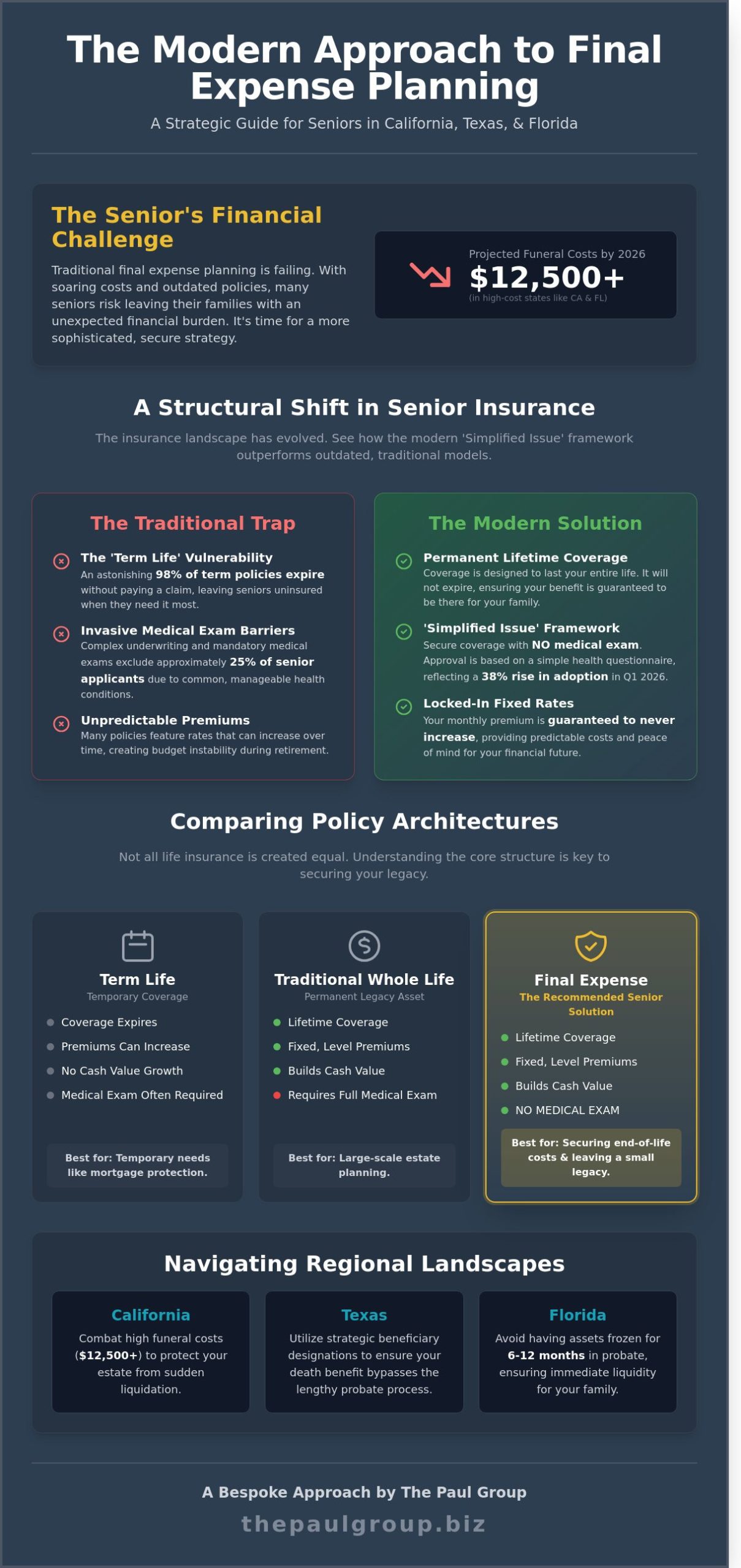
For agents targeting the senior market (ages 50–85), the "ad" might not be a digital banner but a direct mail piece or a Connected TV (CTV) spot. Choosing an ad for this niche requires simple, large-font text and messaging focused on "leaving a legacy" or "not being a burden to children." In 2026, direct mail continues to see high engagement in this demographic because it provides a physical touchpoint that builds trust.
High-Net-Worth and IUL
If you are marketing Indexed Universal Life (IUL) or Whole Life policies as wealth-building tools, your ads must look and feel premium. These ads are often "long-form," such as a sponsored educational webinar or a detailed LinkedIn lead magnet. The focus here is on tax-free growth and asset protection rather than just death benefits.
Compliance Standards and Legal Requirements in 2026
When choosing an ad, the most critical "technical" step is ensuring it passes regulatory muster. The National Association of Insurance Commissioners (NAIC) and individual state Departments of Insurance (DOI) have strict rules regarding how life insurance can be marketed.
- Avoid Guaranteed Language: You cannot use words like "guaranteed" or "instant approval" unless the policy truly offers those features without qualification. In 2026, regulators have increased scrutiny on "AI-generated" claims that promise specific returns on cash-value policies.
- Disclosure of Producer Identity: Every ad, whether a social media post or a flyer, must clearly state your name (as licensed) and your National Producer Number (NPN). Some states also require your resident or non-resident license numbers to be visible.
- No "Investment" Labels: Life insurance cannot be advertised primarily as an "investment" or "savings plan" without making it clear that it is, first and foremost, a life insurance contract.
- AI Transparency: Under 2026 guidelines, if you use AI-generated avatars or voices in your video ads, a small disclaimer must often be present to inform the consumer that the "agent" in the video is a digital representation.
Selecting the Right Ad Format and Medium
The "where" is just as important as the "what." A home-based agent has limited resources, so choosing the medium that offers the highest Return on Investment (ROI) is paramount.
Digital Lead Forms
This is the most common choice for home agencies. These ads run on Facebook or Instagram and include a built-in form that prepopulates with the user's data.
- Pros: Lower cost per lead; easy to set up.
- Cons: Higher "junk" lead rate; requires immediate follow-up.
Direct Mailers
Choosing a direct mail ad involves selecting a "lead card" that a homeowner fills out and mails back. While it sounds old-fashioned, for a home-based agent focusing on a 20-mile radius, it establishes a local presence.
- Pros: High intent; the physical card acts as a "permission slip" to call the lead.
- Cons: High upfront cost for printing and postage; slow turnaround.
Search Engine Marketing (SEM)
Choosing a Google Ad means you are targeting people actively searching for "life insurance quotes."
- Pros: Highest intent of any ad type.
- Cons: Extremely expensive (high Cost Per Click); requires a high-quality landing page to convert.
Comparing Ad Channels for Home-Based Agents
The following table compares the most popular ad types available in 2026 for independent life insurance professionals.
| Ad Type | Primary Audience | Estimated Lead Cost | Speed of Results | Technical Difficulty |
|---|---|---|---|---|
| Meta Lead Ads | Families / Gen X | $15–$45 | Immediate | Moderate |
| Direct Mail | Seniors (Final Expense) | $25–$60 | 2–3 Weeks | Low |
| Google Search | Active Shoppers | $50–$150 | Immediate | High |
| TikTok Video | Millennials / Gen Z | $10–$30 | 24–48 Hours | Moderate (Editing) |
| Connected TV | Broad Local Market | $100+ (CPM) | 1–2 Months | High |
Evaluating Creative Elements: Copy and Visuals
When you are looking at different ad templates or working with a marketing agency, you must evaluate the "creative" (the images and words).
The Power of Authenticity
In 2026, polished, corporate-style stock photos are largely ignored. For a home agency, the most effective ads often feature the actual agent. A short, 30-second smartphone video of you standing in your home office explaining the difference between term and whole life can outperform a $5,000 professionally produced commercial. It builds a human connection and removes the "faceless corporation" barrier.
The Hook-Story-Offer Formula
Every ad you choose should follow this proven psychological structure:
- The Hook: A headline that stops the scroll (e.g., "Why most 40-year-olds overpay for life insurance").
- The Story: A brief explanation of the problem (e.g., "Many people rely on work policies that don't follow them if they leave their job").
- The Offer: A clear Call to Action (CTA) (e.g., "Get a customized quote in 2 minutes").
Avoiding Common Mistakes in Ad Selection
Many independent agents waste thousands of dollars by choosing the wrong "vibe" for their ads. Avoid these common pitfalls:
- Being Too "Salesy": Ads that look like late-night infomercials tend to trigger skepticism. In the 2026 market, consumers value transparency and education over high-pressure tactics.
- Ignoring Mobile Optimization: Over 85% of insurance research in 2026 happens on mobile devices. If your ad leads to a website that is hard to navigate on a thumb-sized screen, you are throwing money away.
- Weak Call to Action: Avoid vague CTAs like "Learn More." Use specific instructions like "Calculate Your Coverage" or "See My Rate."
- Failing to Track Data: Never choose an ad platform that doesn't provide a "pixel" or tracking code. You need to know exactly which ad resulted in a sale, not just which one got the most clicks.
Financial Considerations and Budgeting
For a home-based agent, your ad spend is your primary overhead. A common rule of thumb in 2026 is to allocate 15% to 25% of your projected commission back into advertising.
If you are just starting, begin with "Retargeting Ads." These are ads shown only to people who have already visited your website. They are significantly cheaper than "Cold Traffic" ads because you are reaching out to a "warm" audience that already knows who you are. This is a highly efficient way to choose an ad strategy that protects your cash flow.
Frequently Asked Questions
What is the best ad for a brand-new home-based agent?
Meta (Facebook/Instagram) Lead Ads are generally the best starting point. They require minimal technical setup, allow for low daily budgets (starting at $10–$20), and provide immediate contact information for potential clients.
Do I need a professional designer for my insurance ads?
Not necessarily. In 2026, tools like Canva and AI-driven design platforms allow agents to create high-quality, compliant ads using pre-verified templates. However, ensuring the copy is compliant with your state's laws is more important than the "art" itself.
How do I know if an ad is compliant?
Most reputable lead generation companies or ad template providers have their materials pre-cleared by legal teams. If you are writing your own, you should submit the copy to your primary insurance carrier's compliance department for a "marketing review" before publishing.
Should I include pricing in my life insurance ads?
Generally, no. Unless you are advertising a specific "starting at" rate for a very healthy individual, putting prices in ads can lead to "bait and switch" complaints if the prospect is eventually rated higher due to health issues. Focus on the value of the coverage instead.
Is video advertising better than static images in 2026?
Yes. Statistical data from 2025 and early 2026 shows that video ads for professional services have a 40% higher engagement rate. For life insurance, video allows you to explain complex topics quickly, which builds the trust necessary for a high-ticket financial purchase.
Practical Recommendation
To begin, choose one niche and one platform. If you specialize in mortgage protection, start with a Facebook ad campaign targeting new homeowners in your zip code. Use a video-based ad where you introduce yourself as a local resident and agent. This "local-first" approach is the most effective way for a home-based professional to compete with giant national brands in 2026. Once you have a consistent flow of leads and a positive ROI, you can then consider expanding into more expensive channels like Google Search or Direct Mail.
Image Gallery