How Medicaid Look-Back Handles Negative Net Worth and Debt
For Medicaid long-term care eligibility, having a negative net worth does not exempt an applicant from the 60-month look-back period. Medicaid evaluates eligibility based on gross countable assets rather than a balance sheet net worth....
For Medicaid long-term care eligibility, having a negative net worth does not exempt an applicant from the 60-month look-back period. Medicaid evaluates eligibility based on gross countable assets rather than a balance sheet net worth. Gifting or transferring assets without receiving fair market value still triggers a transfer penalty, even if your total debts exceed your total assets.
Contents
Understanding Medicaid Asset Rules vs. Net Worth
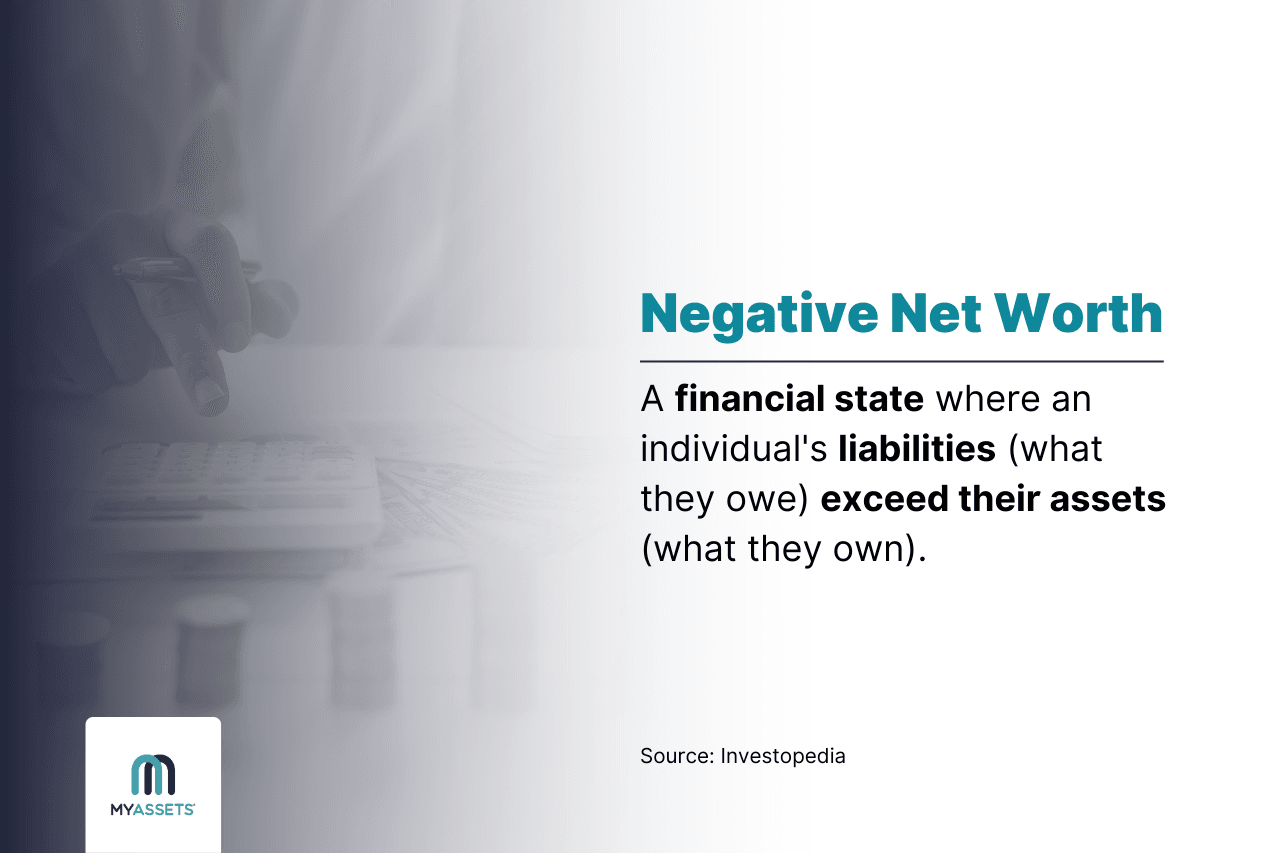
A common misconception among individuals applying for long-term care Medicaid is that a negative net worth automatically qualifies an applicant for coverage or shields them from scrutiny during the asset review process. In corporate accounting and personal finance, net worth is calculated by subtracting total liabilities (debts) from total assets. However, state Medicaid agencies operating under federal guidelines (Title XIX of the Social Security Act) do not evaluate an applicant's financial eligibility using standard net worth balance sheets.
Instead, Medicaid agencies categorize an applicant’s financial picture into two separate categories: countable assets and income. Unsecured liabilities, such as credit card balances, personal loans, and unpaid medical bills, are generally ignored when determining whether an applicant meets the strict countable asset threshold—which is typically set at $2,000 for an individual in most states, though some states establish higher limits.
- Medicaid Evaluation Model
- Countable Assets (Bank accounts, stocks, real estate): Evaluated against state asset limit (e.g., $2,000 individual limit)
- Unsecured Debt (Credit cards): DOES NOT offset cash held in bank accounts
If an individual possesses $30,000 in a checking account but owes $50,000 in unsecured credit card debt, their accounting net worth is negative $20,000. Despite this insolvency, Medicaid views the applicant as having $30,000 in countable assets—putting them significantly over the eligibility threshold. The agency will not deduct the $50,000 unsecured debt from the $30,000 liquid balance to declare the applicant eligible. To achieve eligibility, the applicant must properly spend down those countable assets according to state Medicaid rules.
How the 60-Month Look-Back Period Functions
When an individual applies for Medicaid long-term care benefits (such as nursing home care or Home and Community-Based Services waivers), the state Medicaid agency reviews all financial transactions conducted during a specific period preceding the application date. Under federal law, this review window is known as the 60-month look-back period.
The primary purpose of the look-back review is to determine whether the applicant transferred, gifted, or sold any assets for less than Fair Market Value (FMV). If the state identifies an uncompensated transfer within the 60-month window, it imposes a penalty period—a duration during which the applicant is disqualified from receiving Medicaid coverage for long-term care services, even if they meet all medical and current financial criteria.
The Penalty Period Formula
The length of the penalty period is calculated using a straightforward formula established by state regulations:
$$\text{Penalty Period (Months)} = \frac{\text{Total Uncompensated Asset Transfers}}{\text{State Penalty Divisor (Average Monthly Cost of Private Nursing Care)}}$$
For example, if an applicant gifted $70,000 to family members within the 5-year look-back window, and the state's average private-pay monthly rate for nursing care is $7,000, the penalty period is 10 months ($70,000 \div $7,000). During those 10 months, Medicaid will not cover nursing facility costs, leaving the applicant or their family responsible for payment.
Does Negative Net Worth Waive Transfer Penalties?
A critical question arises when an individual who is technically insolvent transfers money or property. If a person has a negative net worth and gives away an asset, does Medicaid excuse the transfer because the individual was broke on paper?
The short answer is no. State Medicaid agencies do not grant exceptions to look-back penalties simply because an applicant’s total liabilities exceeded their total assets at the time of the transfer.
1. Uncompensated Transfers Remain Penalized
If an applicant with $100,000 in debt and $20,000 in savings gives the $20,000 to a child or relative, Medicaid treats that transaction as an uncompensated transfer of $20,000. The existence of the $100,000 debt does not nullify the fact that $20,000 in liquid assets was transferred without receiving fair market value in return. The state will penalize the $20,000 gift accordingly.
2. Creditor Rights vs. Medicaid Eligibility Rules
While bankruptcy law and debtor-creditor law focus on overall solvency and preference payments, Medicaid regulations focus strictly on asset preservation for long-term care funding. Medicaid rules state that an applicant cannot impoverish themselves or diminish potential self-support resources by giving away assets. The argument that "the money belonged to my creditors anyway" is not recognized by state caseworkers unless the money was actually paid to those creditors to satisfy legal claims prior to applying.
Secured Debt vs. Unsecured Debt: Crucial Distinctions
While unsecured debt does not automatically reduce countable bank balances, secured debt plays a direct role in determining the value of specific real and personal property under Medicaid rules. Understanding the legal difference between secured and unsecured debt is essential for accurate Medicaid planning.
- Types of Debt in Medicaid Planning
- Secured Debt (Mortgage, Lien): Directly tied to an asset; reduces the net equity value.
- Unsecured Debt (Credit Cards, Med): Not tied to specific collateral; does NOT reduce liquid assets.
Secured Debt (Mortgages, Liens, Auto Loans)
Secured debt is directly attached to a specific asset through a mortgage, deed of trust, security agreement, or tax lien. When evaluating a non-exempt, real, or personal asset, Medicaid determines its value based on equity value rather than gross fair market value.
- Equity Value Formula: $$\text{Equity Value} = \text{Fair Market Value} - \text{Encumbrances (Secured Mortgages or Liens)}$$
If an applicant owns a secondary piece of real estate (a countable asset) worth $200,000 with a remaining mortgage balance of $170,000, the countable value of that real estate for Medicaid purposes is $30,000. If the mortgage on that property is $220,000, the asset has negative equity. In this scenario, Medicaid values the asset's countable contribution as $0. It cannot be reduced below $0 to offset cash in bank accounts.
Unsecured Debt (Credit Cards, Personal Loans, Medical Bills)
Unsecured debt is not attached to a specific collateral asset. Credit card balances, unpaid doctor or hospital bills, personal signatures, and legal judgments without attached property liens fall into this category.
- Impact on Cash: Unsecured debt does not lower the countable value of liquid accounts. If you hold $15,000 in a savings account and owe $25,000 in medical bills, Medicaid considers your countable asset level to be $15,000.
- Correct Action: To use unsecured debt to qualify for Medicaid, the applicant must physically transfer the liquid funds to the creditor to satisfy the debt prior to applying. Once paid, the cash balance drops, and the payment is recognized as a fair-market transaction (exchanging cash for debt discharge).
Debt Repayment vs. Improper Transfers
One of the safest ways for an applicant with excess countable assets and high debt to achieve Medicaid eligibility is through legitimate debt repayment. Paying off valid, legal obligations is considered a fair-market exchange: the applicant gives up an asset (cash) in return for the equal value of debt discharge.
However, debt repayment must be carefully documented to avoid triggering look-back penalties during Medicaid's audit of financial records.
Paying Off Personal Debts
Using liquid countable assets to pay down an applicant's own credit cards, mortgages, home equity lines of credit, or medical debt is an approved spend-down strategy.
- Example: An applicant has $40,000 in a savings account and $35,000 in credit card debt. The applicant pays off the $35,000 credit card balance in full. The bank balance drops to $5,000. Medicaid views this as a valid spend-down because the debt was owed directly by the applicant, and full fair value (debt reduction) was received.
Paying Off Debt Owed by Family Members
Paying off someone else's debt—such as an adult child's student loan, credit card, or mortgage—is classified by Medicaid as a gift/uncompensated transfer. Even if the applicant feels a moral obligation to help a relative or considers the payment a family settlement, Medicaid will penalize the entire payment amount if conducted within the 60-month look-back window.
Informal Family Loans
A common point of contention occurs when an applicant uses excess funds to pay back money borrowed from family members over the years. If an applicant receives cash from a child over a decade to assist with living expenses and then pays the child back $30,000 right before applying for Medicaid, the state will treat the $30,000 payment as a gift unless strict evidentiary criteria are met.
To prove that a payment to a family member is a legitimate loan repayment rather than a penalized gift, the applicant must provide:
- A written, legally binding Promissory Note executed at the time the original loan was made.
- Clear terms showing interest rate, repayment schedules, and principal amount.
- Bank records showing the original transfer of loan funds into the applicant's account when the loan was created.
Without contemporaneous written documentation created when the loan was originated, Medicaid agencies operate under the legal presumption that funds transferred between family members are gifts, making subsequent repayments subject to transfer penalties.
Treatment Matrix: Assets, Debts, and Look-Back Actions
The following table summarizes how different financial scenarios involving debt, assets, and look-back transactions are treated under state Medicaid guidelines:
| Scenario / Financial Condition | Asset / Debt Valuation Treatment | Look-Back Penalty Status | Correct Action / Strategy |
|---|---|---|---|
| Negative Net Worth with Cash in Bank ($10k cash, $30k credit debt) | Cash is counted at full value ($10k). Debt does not lower cash balance. | No penalty for holding cash, but applicant exceeds $2k asset limit. | Spend down cash by paying legitimate debts before applying. |
| Asset Transfer while Insolvent ($5k cash, $50k debt; gifts $5k to relative) | Cash balance drops to $0, but gift triggers look-back review. | PENALIZED. Transfer of $5,000 results in a penalty period based on state rate. | Avoid gifting. Pay debt directly to creditor instead of gifting cash. |
| Secured Real Estate with Negative Equity (FMV $150k, Mortgage $180k) | Countable asset value is set to $0. Equity cannot go negative to offset cash. | No transfer penalty if retained or sold to satisfy mortgage. | Retain as exempt/zero-value asset or sell via short sale/payoff. |
| Paying Applicant’s Own Debt (Using liquid assets to settle medical bills) | Reduces countable liquid assets dollar-for-dollar. | NO PENALTY. Considered a fair-market exchange for debt satisfaction. | Obtain and archive official payoff statements and zero-balance receipts. |
| Paying Child's or Relative's Debt (Applicant pays off child's auto loan) | Liquid asset balance drops, but transaction is audited. | PENALIZED. Classified as an uncompensated gift to the relative. | Do not pay third-party debts from applicant funds within 60 months. |
| Repaying Informal Family Loan (Paying back undocumented family aid) | Liquid asset balance drops, audited as family transaction. | PENALIZED unless supported by contemporaneous written promissory note. | Require formal promissory notes at the time loans are originated. |
Common Pitfalls for Applicants with High Debt
Navigating Medicaid eligibility when managing significant liabilities requires strict adherence to regulatory processes. Applicants and their families frequently make costly errors due to misunderstandings about how debt interacts with look-back rules.
- Common Medicaid Pitfalls
- Misinterpreting Net Worth: Assuming total debts negate liquid cash for Medicaid limits.
- Informal Debt Repay: Paying back family without written loan papers from day one.
- Gifting Insolvent Assets: Gifting cash or assets while owing significant creditors.
Pitfall 1: Assuming Net Insolvency Grants Automatic Eligibility
Applicants often submit Medicaid applications while holding $15,000 in bank accounts because their total debts equal $60,000. Caseworkers will immediately deny the application for exceeding the $2,000 countable asset threshold.
- Resolution: Liquidate countable assets by paying down legitimate debts before submitting the formal application.
Pitfall 2: Selling Assets Below Fair Market Value to Pay Debt
Sometimes individuals sell property quickly below market value to pay off pressuring creditors. If an applicant sells a piece of land worth $50,000 for $25,000 to pay off a pressing credit card company, Medicaid will audit the sale. The $25,000 discount given to the buyer is considered an uncompensated transfer of $25,000, triggering a penalty period, even though the proceeds were used to pay legitimate debt.
- Resolution: Always sell assets at documented Fair Market Value (FMV), verified by professional appraisals or tax assessments, regardless of how quickly creditors demand payment.
Pitfall 3: Failing to Track Spend-Down Documentation
When paying off creditors during a spend-down process, applicants must retain meticulous records. Medicaid caseworkers review 60 months of bank statements line-by-line. Any large withdrawal or payment without a corresponding receipt, invoice, or debt-satisfaction letter will be flagged as a presumed gift.
- Resolution: Maintain a dedicated binder containing creditor statements, cancelled checks, bank confirmation slips, and written debt-payoff letters matching every major transaction within the 60-month window.
Frequently Asked Questions
1. Does unsecured credit card debt lower my countable assets for Medicaid?
No. Unsecured debt such as credit card balances, medical bills, or personal loans does not offset or reduce your countable liquid assets. If you have $10,000 in savings and $20,000 in credit card debt, Medicaid considers your asset level to be $10,000. To reduce your asset level, you must use the savings to pay off the credit card debt prior to applying.
2. What happens if I gave money to my children while I had a negative net worth?
The transfers are treated as uncompensated gifts and will trigger a Medicaid penalty period if made within the 60-month look-back window. Medicaid rules evaluate whether you received fair market value in return for the specific asset transferred; having a overall negative balance sheet does not waive transfer penalties.
3. How is a home with a mortgage handled under Medicaid look-back rules?
A home’s value for Medicaid purposes is based on equity (Fair Market Value minus the primary mortgage balance or attached liens). In many states, a primary residence is considered an exempt asset up to certain home equity limits if the applicant or their spouse lives there. If the home is non-exempt or sold, only the net equity remaining after paying off the secured mortgage is counted.
4. Can I pay back a family member who lent me money years ago without facing a penalty?
Only if you have clear, written, legally enforceable documentation (such as a promissory note) created at the exact time the funds were original lent. The documentation must specify interest rates, principal amounts, and repayment schedules. Without this proof, Medicaid presumes repayments to relatives are gifts and will apply a penalty period.
5. If my debts exceed my assets, can I file for bankruptcy right before applying for Medicaid?
Yes, filing for bankruptcy discharges qualifying legal debts, but it must be coordinated carefully with Medicaid timing. Discharging debt via bankruptcy clears liabilities, but any non-exempt cash or assets you retain will still be counted toward Medicaid’s asset limit. Bankruptcy court filings provide public legal documentation of your assets and debts, which Medicaid caseworkers will cross-reference during the 60-month look-back review.
Practical Next Steps for Applicants
If you or a family member are preparing to apply for Medicaid long-term care benefits while managing debt or a negative net worth, follow these practical steps to protect eligibility and maintain compliance with federal and state regulations:
Conduct a Line-Item Audit of Assets and Liabilities: Separate all liabilities into secured debt (mortgages, auto liens) and unsecured debt (credit cards, medical bills). Determine the net equity of all physical assets and tally total liquid cash separately from your liabilities.
Execute a Permissible Spend-Down Strategy: If liquid assets exceed the state eligibility threshold (typically $2,000 for an individual), utilize excess funds to pay off legitimate, documented unsecured debt owed directly by the applicant. Ensure funds are paid directly to original creditors or verified debt servicers.
Gather 60 Months of Financial Records: Obtain complete financial statements for all bank accounts, investment vehicles, and property transactions dating back exactly 60 months from the anticipated application date. Match every transaction over the state's audit threshold to a corresponding invoice, receipt, or debt-cancellation document.
Do Not Make Informal Asset Transfers: Refrain from gifting cash, transferring real estate deeds, or paying off third-party obligations (including those of children or grandchildren) to reduce your asset balance.
Consult an Accredited Elder Law Attorney: Because Medicaid rules vary substantially by state—including state-specific penalty divisors, home equity caps, and spousal impoverishment protections—work with a qualified elder law attorney or certified Medicaid planning professional in your jurisdiction before submitting your formal application.
Image Gallery