Changing Your Life Insurance Agent: How to Switch Without Losing Coverage
Changing your life insurance agent is a straightforward administrative process known as an "Agent of Record" (AOR) change. Because your insurance contract is legally held between you and the insurance company—not the specific agent—you...
Changing your life insurance agent is a straightforward administrative process known as an "Agent of Record" (AOR) change. Because your insurance contract is legally held between you and the insurance company—not the specific agent—your coverage, premiums, and death benefits remain fully intact throughout the transition. To switch, you simply need to identify a new representative and submit a formal request to your insurance carrier to transfer the servicing rights of your policy.
Contents
For many policyholders, the relationship with an insurance agent is one that spans decades. However, as your financial needs evolve or as the level of service you receive fluctuates, there may come a time in 2026 when your current representative no longer aligns with your goals. Whether your agent is retiring, you have moved to a different state, or you simply feel your questions are being ignored, you have the absolute right to request a new point of contact.
Understanding the Relationship: Agent vs. Insurance Company
To switch agents successfully without fear of losing coverage, it is vital to understand the tri-party relationship between the policyholder, the agent, and the insurance carrier. The insurance carrier (such as Prudential, New York Life, or Northwestern Mutual) is the entity that issues the policy, accepts the risk, and is legally obligated to pay the death benefit. The agent is an intermediary—a licensed professional who facilitates the sale, provides ongoing service, and assists with administrative updates.
Your life insurance policy is a binding legal contract with the carrier. The specific agent assigned to your file is the "servicing agent." Their primary role is to help you with beneficiary changes, policy loans, or coverage increases. When you change your agent, you are not canceling the contract; you are simply changing who receives the service commission and who is authorized to view your file and provide advice. This distinction is the primary reason why your coverage cannot be "lost" or "voided" during a transfer of service.
Common Reasons to Change Your Life Insurance Agent
As we navigate the financial landscape of 2026, the complexity of estate taxes, digital asset integration into legacies, and fluctuating interest rates require proactive management. If your agent is not providing this level of care, a switch may be necessary.
1. Lack of Communication and Responsiveness
The most common grievance among policyholders is "ghosting." If your agent only contacts you when it is time to sell a new product but fails to return calls regarding existing policy questions, the relationship has broken down. In an era where digital communication is instantaneous, waiting weeks for a response regarding a premium payment or a beneficiary update is unacceptable.
2. Agent Retirement or Career Change
Many long-term policyholders eventually face the retirement of their trusted advisor. When an agent retires, the insurance company typically assigns the "orphan" policy to a new agent within the same agency or region. If you do not have a rapport with this new, randomly assigned individual, you have the right to hand-pick a different professional who better suits your personality and needs.
3. Need for Specialized Expertise
You may have purchased a simple term life policy in your 20s, but as you enter your 40s or 50s, your needs may have shifted toward high-net-worth estate planning, irrevocable life insurance trusts (ILITs), or supplemental retirement income through whole life cash values. If your current agent lacks the technical expertise to handle these complex structures, finding an agent with specific designations—such as a Chartered Life Underwriter (CLU)—is a prudent move.
4. Geographic Relocation
While many agents are licensed in multiple states, some are not. If you move across the country, you may prefer a local agent who understands state-specific regulations and can meet with you in person. Localized service often provides a better understanding of the regional economic factors that might influence your broader financial plan.
The Step-by-Step Process to Switch Agents
The process of switching agents is standardized across the insurance industry. By following these steps, you ensure that the transition is seamless and that your policy records remain accurate.
Step 1: Identify and Vet a New Agent
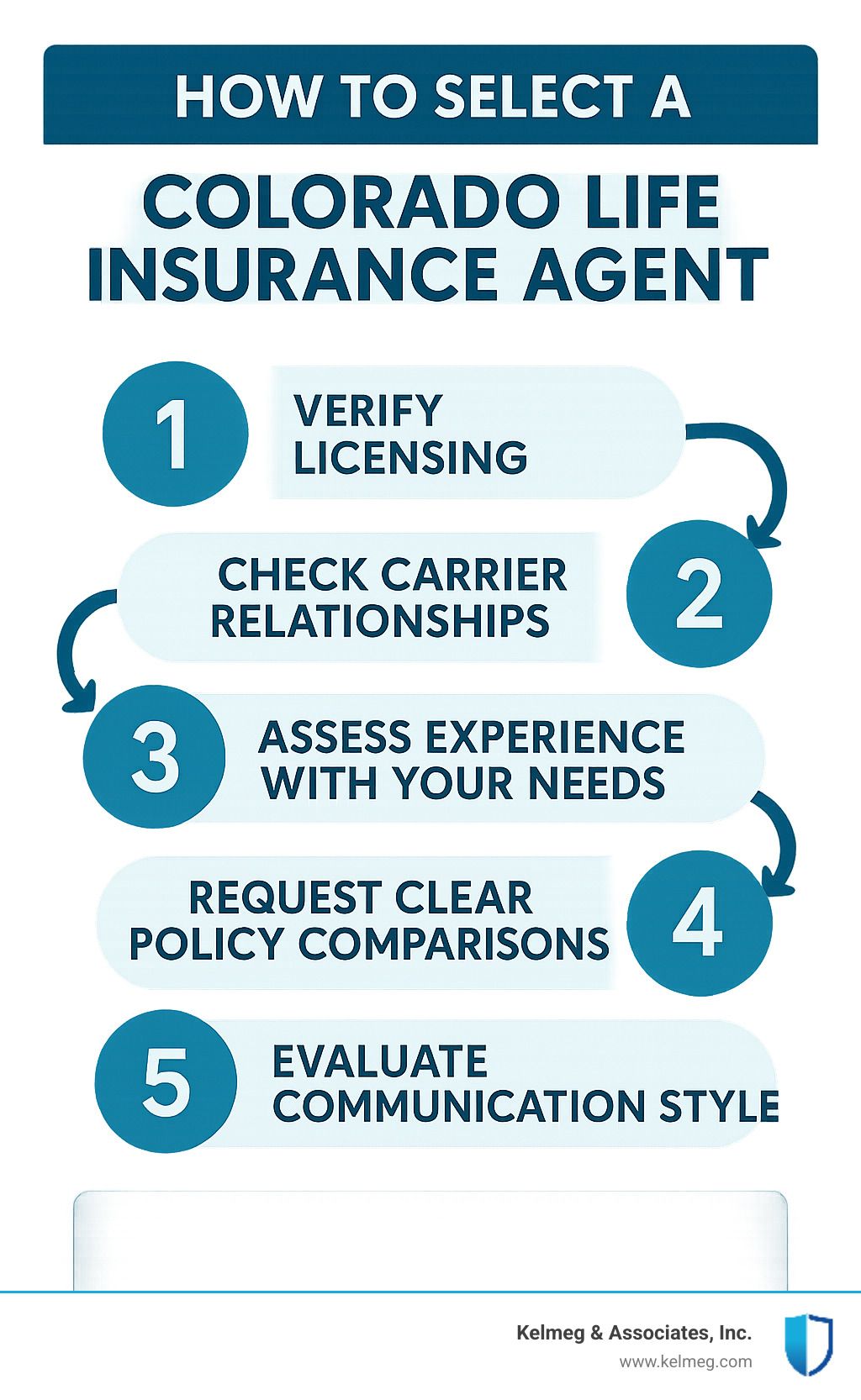
Before firing your current agent, you must have a replacement ready. You can find a new agent by asking for referrals from your CPA or attorney, or by researching independent agencies that represent your current insurance carrier. Ensure the new agent is properly licensed in your state by checking the National Association of Insurance Commissioners (NAIC) database.
Step 2: Request an Agent of Record (AOR) Letter
An Agent of Record letter is a formal document signed by the policyowner that notifies the insurance company that you wish to change your representative. Most modern insurance carriers provide a standardized template for this. The letter typically includes:
- Your full name and address.
- The policy number(s) involved.
- The name and agent code of the new representative.
- A clear statement that the new agent has the authority to represent you regarding the specified policies.
Step 3: Submit the Documentation to the Carrier
Your new agent will usually handle the submission of the AOR letter to the insurance company's home office. The carrier then processes the request, which typically takes between 5 and 10 business days. During this time, the carrier may notify the outgoing agent of the change. This is a standard industry practice that allows the original agent a "grace period" to reach out and attempt to resolve any issues, though you are under no obligation to stay with them.
Step 4: Verify the Change
Once the carrier processes the request, you should receive a written confirmation or see the update reflected in your online policy portal. Reach out to your new agent to schedule a "policy review" session. This initial meeting is crucial for the new agent to familiarize themselves with your coverage and for you to establish expectations for future service.
Comparison: Captive Agents vs. Independent Agents for Transfers
When switching, it is helpful to understand the type of agent you are moving to, as this affects how the transfer is handled.
| Feature | Captive Agent | Independent Agent (Broker) |
|---|---|---|
| Carrier Representation | Represents only one insurance company. | Represents multiple insurance companies. |
| Transfer Ease | Very easy if staying with the same carrier. | Easy, provided they are appointed by your carrier. |
| Objectivity | Focused on the specific carrier's products. | Can compare your current policy against the whole market. |
| Service Scope | Specialized knowledge of one company's tech/forms. | Broader knowledge of industry trends and competitors. |
| Commission Structure | Usually receives a renewal commission from the carrier. | Receives a portion of the renewal or service fee. |
Protecting Your Coverage During the Transition
The most significant concern for policyholders is the risk of a coverage gap. To ensure your life insurance remains active and effective during an agent switch, keep the following safeguards in mind:
Maintain Premium Payments
Never stop paying your premiums during the transition process. Your obligation to pay the premium is to the insurance company, not the agent. Even if you are unhappy with your agent, a missed payment can lead to a policy lapse. If a policy lapses, you may be required to undergo a new medical exam to reinstate it, which could result in higher costs if your health has declined since the original purchase.
Avoid "Churning" or Unnecessary Replacement
Some agents may encourage you to cancel your current policy and buy a new one (a practice known as replacement). While replacement is sometimes beneficial if rates have dropped or your health has significantly improved, it is often a tactic used to generate new, high first-year commissions. Before replacing a policy, ask for a "Life Insurance Replacement Disclosure" and compare the contestability periods. A new policy resets the two-year contestability window, during which the insurer can more easily deny a claim.
Update Beneficiary Information
An agent switch is the perfect time to audit your beneficiaries. If you have had a birth, death, marriage, or divorce in the family, ensure your new agent submits the correct forms immediately. Errors in beneficiary designations are far more common than errors in agent assignments, and they can lead to significant legal delays during a claim.
Potential Challenges and How to Solve Them
While the process is designed to be simple, you may encounter minor hurdles.
- Refusal to Transfer: Some proprietary or "closed" blocks of business cannot be serviced by outside agents. If your policy is part of a specific group or a defunct subsidiary, the carrier may inform you that only certain agents can service it. In this case, ask the carrier for a list of authorized representatives.
- Commission Vesting: In some older contracts, the original agent may "own" the commissions for the life of the policy. Even if you switch the servicing agent, the new agent might not get paid for their work. If this happens, some agents may charge a flat consulting fee for their time. Be transparent with your new agent about whether they will be compensated by the carrier or if you need to agree on a separate service fee.
- The "Winning" Agent's Resistance: If you are moving a policy to a new agent but not buying anything new, they might see it as "service work" without a payout. To solve this, look for a holistic financial advisor or a dedicated "service-first" agency that values long-term relationships over quick sales.
FAQ: Changing Your Life Insurance Agent
Does changing my agent increase my premium?
No, changing your agent does not affect your premium. Your premium is calculated based on your age, health, and policy type at the time of issuance. The commission paid to the agent is already built into the policy's cost structure and does not change when the recipient of that commission changes.
Do I need to talk to my old agent before switching?
No, you are not legally required to speak with your current agent. While it is often considered a courtesy to explain why you are leaving, you can complete the entire AOR process through the insurance carrier and your new agent without ever contacting the old one.
Can I have more than one agent for the same policy?
Generally, a single policy can only have one "Agent of Record" at a time. However, you can have different agents for different policies. For example, you might have one agent for your term life insurance and a different specialist for your whole life or disability insurance.
How long does the switch take to become official?
Most insurance companies process an Agent of Record change within 7 to 14 business days. You will typically receive a notification via mail or email once the change is finalized in the company's system.
What if I don't want any agent at all?
You can choose to be an "unassigned" policyholder. In this scenario, you deal directly with the insurance company's customer service department for all administrative needs. While this removes the middleman, you lose the benefit of having a professional advocate who can help navigate complex claims or policy changes.
Final Recommendation: Taking Action
If you are dissatisfied with your current life insurance representation, do not delay the switch. A life insurance policy is a critical component of your financial security, and it requires professional oversight to remain effective.
Start by reviewing your most recent policy statement to find your policy number and the insurance company's contact information. Then, interview at least two potential new agents, specifically asking about their experience with your particular type of policy and their communication standards. Once you have selected a new partner, sign the Agent of Record letter and verify the change with the carrier within 30 days. By taking these steps, you ensure that your legacy remains protected by a professional who truly understands your needs in 2026 and beyond.
Image Gallery