Best Employee Retention Strategies to Reduce Turnover in 2026
Effective employee retention in 2026 requires a multi-dimensional approach that prioritizes competitive compensation, psychological safety, and hyper-personalized career growth. Organizations must move beyond basic perks toward fosteri...
Effective employee retention in 2026 requires a multi-dimensional approach that prioritizes competitive compensation, psychological safety, and hyper-personalized career growth. Organizations must move beyond basic perks toward fostering a culture of belonging, providing flexible work models, and investing in continuous upskilling to ensure long-term commitment from top-tier talent in a competitive global market.
Contents
The State of Employee Retention in 2026
By 2026, the traditional employment contract has undergone a significant transformation. The workforce is no longer motivated solely by a steady paycheck; instead, employees seek alignment between their personal values and their professional contributions. High turnover rates remain a critical threat to organizational stability, with the cost of replacing a mid-level employee often reaching 150% to 200% of their annual salary when accounting for lost productivity, recruiting fees, and training time.
Retention is no longer just an HR metric—it is a core business strategy. The "Great Realignment" of the mid-2020s has led to a landscape where top performers have unprecedented mobility. To mitigate the risk of talent drain, companies must address the root causes of attrition, which typically include stagnant wages, poor management, lack of career advancement, and burnout.
Competitive Compensation and Holistic Benefits
While culture is vital, financial security remains the foundation of the employer-employee relationship. In 2026, competitive compensation must be viewed through a lens of total rewards rather than just base salary.
Inflation-Adjusted Pay Scales
With global economic fluctuations, fixed salary structures often fail to keep pace with the cost of living. Leading organizations have shifted toward more frequent salary reviews—often bi-annual—to ensure their teams are not losing purchasing power. Transparency in pay is also no longer optional; many jurisdictions now mandate salary range disclosures, making it easier for employees to identify if they are being underpaid relative to the market.
Personalized Benefit Portfolios
The "one-size-fits-all" benefits package is obsolete. Modern retention strategies involve offering modular benefits that employees can customize based on their life stage. A younger employee might prioritize student loan repayment assistance or high-speed home internet stipends, while an older employee might focus on robust retirement matching or comprehensive caregiver support.
Mental Health and Wellness
By 2026, mental health support has moved from a "nice-to-have" to a fundamental requirement. This includes not only access to counseling services but also structural changes to the work environment. Companies are increasingly offering "recharge days," mandatory minimum vacation policies, and subscription-based access to wellness apps to combat chronic stress and burnout.
Operationalizing Flexibility and Autonomy
The debate over returning to the office has largely settled into a "flexibility-first" standard. Organizations that demand rigid, five-day in-office attendance without a clear functional necessity see significantly higher attrition rates than those offering autonomy.
The Hybrid Excellence Model
Successful retention strategies in 2026 utilize a deliberate hybrid model. This involves defining specific "anchor days" for collaborative work while allowing deep, focused work to occur remotely. The key is intentionality; employees are more likely to stay when they feel their time is respected and they are not commuting just to sit in virtual meetings.
Asynchronous Work Workflows
To accommodate global teams and diverse lifestyles, companies are adopting asynchronous communication. By reducing the reliance on real-time meetings and prioritizing documented processes, organizations empower employees to manage their schedules. This autonomy is a powerful retention lever, as it provides the work-life integration that modern professionals demand.
Career Architecture and Upskilling
A primary reason employees leave is the feeling of being "stuck." Without a visible path forward, talent will look elsewhere for growth.
Internal Mobility and Talent Marketplaces
Forward-thinking firms have implemented internal talent marketplaces. These AI-driven platforms match employees with short-term projects, cross-departmental rotations, or new full-time roles within the same company. This allows employees to "change jobs" without changing employers, satisfying their need for variety and new challenges.
Continuous Learning Stipends
In a rapidly evolving technological landscape, skills have a shorter shelf life than ever before. Providing an annual learning stipend—and, crucially, the time to use it—demonstrates an investment in the employee’s long-term career. Whether it is a certification in AI ethics or a leadership workshop, upskilling creates a "sticky" environment where the employee’s value grows in tandem with the organization’s success.
Management Excellence and Feedback Loops
The adage remains true: "People don't leave companies; they leave managers." The quality of frontline leadership is perhaps the most significant predictor of retention.
From Supervisor to Coach
The role of the manager has shifted from oversight to coaching. Retention-focused organizations invest heavily in training managers on emotional intelligence, conflict resolution, and performance coaching. Managers who hold regular "Stay Interviews"—proactive conversations about what keeps an employee at the company—can identify and resolve frustrations before they lead to a resignation.
Real-Time Feedback Mechanisms
The annual performance review is insufficient for modern retention. Constant, two-way feedback loops allow for agility. Using pulse surveys and anonymous feedback tools helps leadership understand the "vibe" of the organization in real-time, allowing for rapid intervention when engagement scores dip in a specific department.
Comparing Retention Strategy Impact and Effort
The following table categorizes common strategies by their typical impact on turnover and the effort required for implementation.
| Retention Strategy | Impact on Turnover | Implementation Effort | Primary Benefit |
|---|---|---|---|
| Competitive Pay & Transparency | High | High | Eliminates the primary reason for leaving. |
| Flexible/Hybrid Work | High | Medium | Increases work-life satisfaction and autonomy. |
| Professional Development | Medium | Medium | Builds long-term loyalty and internal skill sets. |
| Mental Health Support | Medium | Low | Reduces burnout and long-term absenteeism. |
| Internal Mobility Programs | High | High | Retains top talent by offering new challenges. |
| Recognition & Rewards | Low | Low | Boosts daily morale and cultural alignment. |
The Role of Recognition and Belonging
A sense of belonging is a powerful psychological anchor. Employees who feel their work is seen and valued are far more resilient during periods of high stress.
Peer-to-Peer Recognition
While top-down recognition is important, peer-to-peer appreciation often feels more authentic. Implementing platforms where colleagues can publicly thank each other for assistance or celebrate small wins fosters a supportive community. This social "glue" makes it harder for an employee to leave their team, even for a slightly higher salary elsewhere.
Diversity, Equity, and Inclusion (DEI) as Retention
In 2026, DEI is recognized as an essential component of retention. If an employee feels they cannot bring their authentic self to work or that promotion paths are biased, they will leave. Authentic DEI efforts involve auditing pay equity, ensuring diverse representation in leadership, and creating "Employee Resource Groups" (ERGs) that have a direct line to executive decision-makers.
Proactive Retention: The First 90 Days
Retention begins during the recruitment process, not after an employee has been at the company for a year. A disorganized onboarding process sets a negative tone that is difficult to overcome.
The Structured Onboarding Experience
A successful onboarding program in 2026 extends through the first 90 days. It should include clear performance milestones, a dedicated "onboarding buddy," and immediate exposure to the company's long-term vision. Employees who feel "connected" to the mission and their team within the first month are significantly more likely to remain with the company for at least three years.
Realistic Job Previews
Turnover often occurs because the reality of a role does not match the interview description. Providing "realistic job previews"—where candidates speak with future peers and see the actual workflows—ensures that the people hired are the ones most likely to thrive in the specific environment of the company.
Frequently Asked Questions
How do remote work policies affect employee retention?
In 2026, remote and hybrid work policies are among the top three factors employees consider when choosing or staying with an employer. Research from organizations like SHRM consistently shows that employees with high levels of work-location autonomy report higher job satisfaction and lower intent to leave. Forcing a return to the office without a clear, collaborative purpose often leads to a "brain drain" toward more flexible competitors.
What is a "Stay Interview" and how does it help?
A Stay Interview is a proactive meeting between a manager and an employee specifically designed to understand why the employee stays and what might cause them to leave. Unlike an exit interview, which happens too late to save the talent, a stay interview allows for immediate adjustments to the employee’s workload, tools, or career path.
Can small businesses compete with large corporations on retention?
Yes. While small businesses may not always match the massive base salaries of corporations, they can compete through hyper-personalization. Small firms can offer greater role impact, more direct access to leadership, and extreme flexibility that larger, more bureaucratic organizations struggle to implement. Focusing on a "family" culture and specialized niche development can be a powerful draw.
Does AI help or hurt employee retention?
AI helps retention when used for predictive analytics to identify "flight risk" behaviors, such as decreased engagement or lack of recent promotions. However, it can hurt retention if employees feel they are being "monitored" rather than "supported." The best use of AI in 2026 is to personalize learning recommendations and automate mundane tasks, allowing employees to focus on high-value, fulfilling work.
What are the hidden costs of high employee turnover?
Beyond recruitment fees, the hidden costs include "knowledge loss," where proprietary processes and institutional memory disappear with the employee. There is also a significant "contagion effect," where remaining employees experience increased workloads and decreased morale, often leading to a secondary wave of resignations.
Practical Next Action
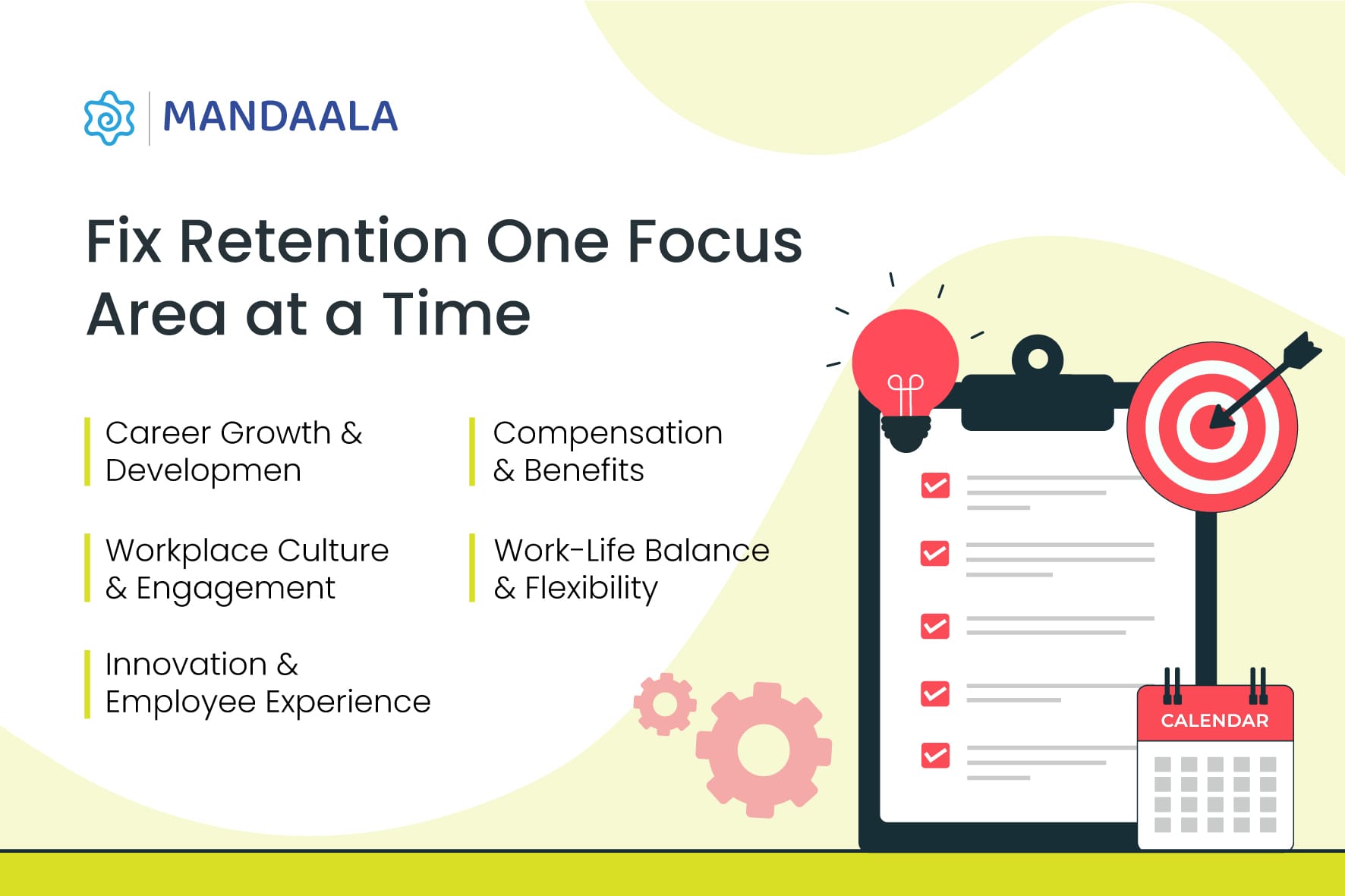
To immediately improve retention, conduct a Retention Audit. Review your turnover data by department and tenure to identify where the leaks are occurring. Once identified, schedule Stay Interviews with your top 20% of performers. Ask them specifically: "What is one thing about your current role that, if changed, would make you consider leaving?" Use this feedback to implement one structural change—such as a flexible Friday policy or a dedicated learning budget—within the next 30 days.
Image Gallery