The Infinitive Verb: Definition, Usage, and Its Evolution in Modern English
An infinitive verb is the base, unconjugated form of a verb, typically preceded by the particle "to," such as "to eat," "to think," or "to realize." It functions as the "name" of an action, allowing it to operate as a noun, adjective,...
An infinitive verb is the base, unconjugated form of a verb, typically preceded by the particle "to," such as "to eat," "to think," or "to realize." It functions as the "name" of an action, allowing it to operate as a noun, adjective, or adverb within a sentence while remaining untethered to a specific tense or subject.
Contents
Understanding the Fundamental Definition of Infinitive Verbs
In the landscape of English grammar, the infinitive is often referred to as the "pure" form of a verb. Unlike conjugated verbs—which change their spelling to reflect tense (past, present, future) or person (first, second, third)—the infinitive remains static. It does not indicate when an action happens or who is performing it. Instead, it presents the concept of the action itself.
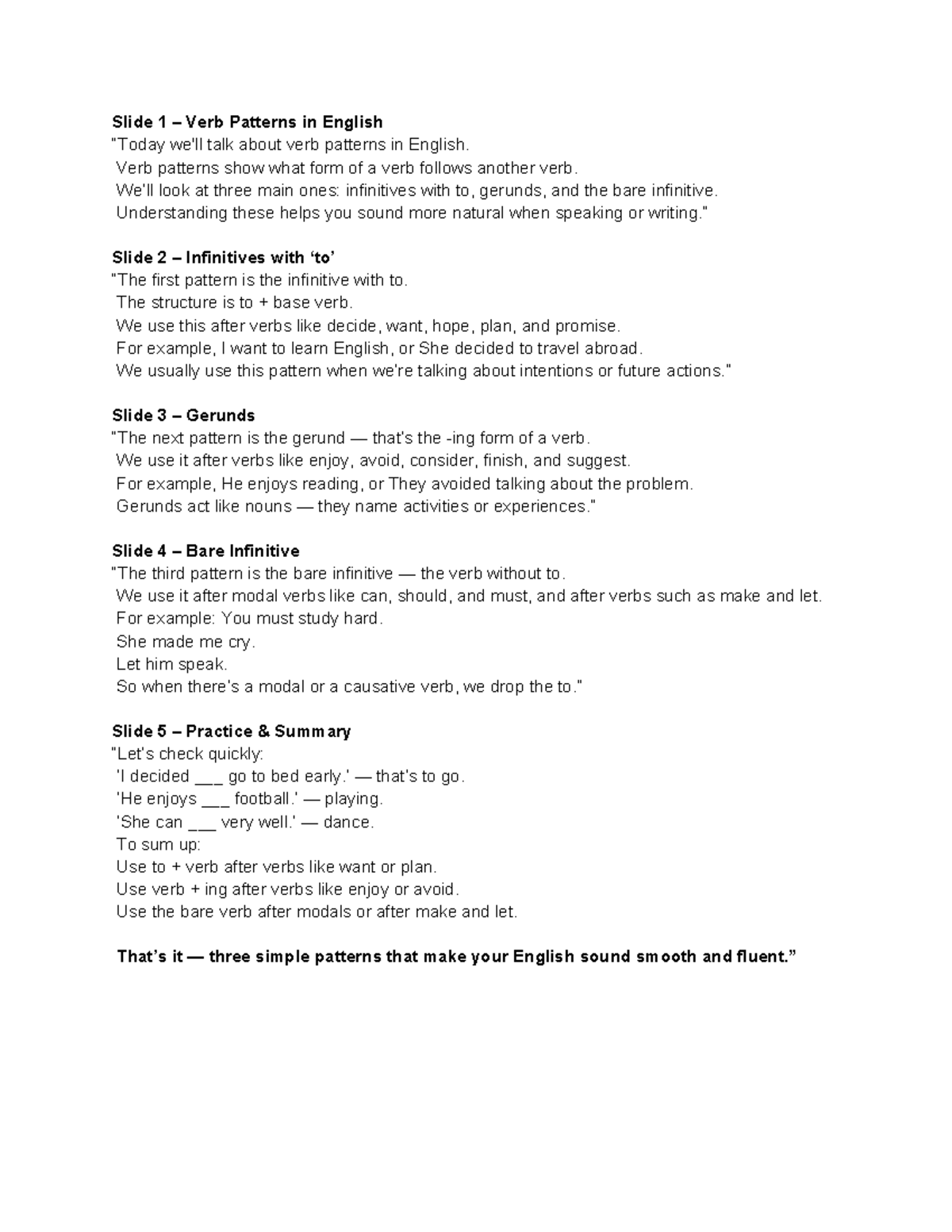
The English infinitive typically appears in two forms: the full infinitive (the "to-infinitive") and the bare infinitive. The full infinitive is the version most recognizable to learners, consisting of the word "to" plus the base verb. The bare infinitive consists of the verb alone, without the "to" particle, and is primarily used after modal auxiliary verbs (such as can, should, and might) or certain causative verbs.
By 2026, the linguistic consensus has moved firmly toward viewing the "to" in a full infinitive not as a preposition, but as a specialized grammatical marker. This marker signals that the verb following it is not the main action of the clause but is instead serving a secondary, descriptive, or nominal purpose. This flexibility is what makes the infinitive a powerhouse of modern English syntax.
The Syntactic Roles of Infinitives: Nouns, Adjectives, and Adverbs
One of the reasons the infinitive is so vital to the language is its ability to "shape-shift" into different parts of speech. While it is derived from a verb, its functional role in a sentence is frequently non-verbal.
The Infinitive as a Noun
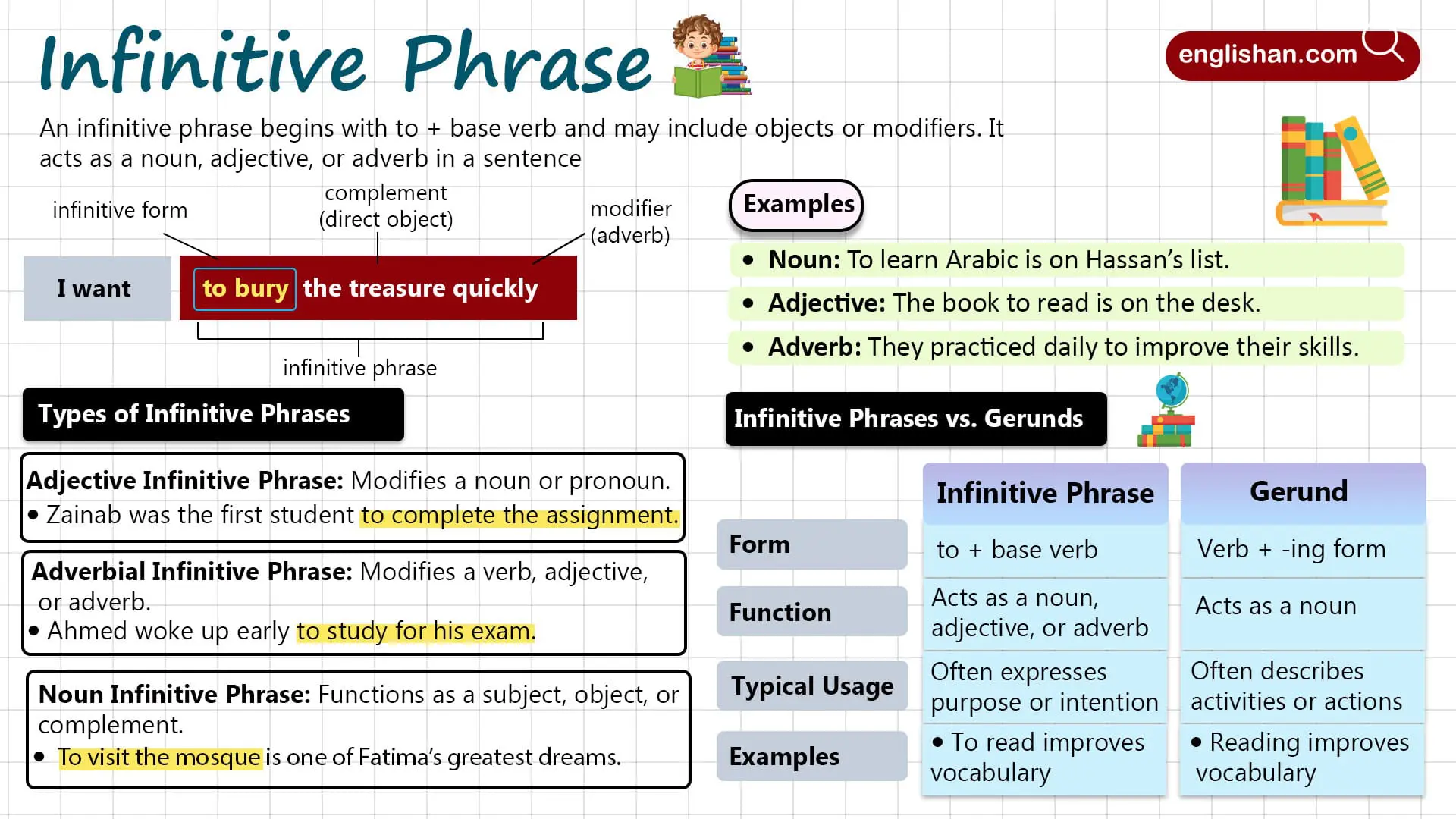
When an infinitive acts as a noun, it can occupy the position of a subject or an object. In the classic phrase "To err is human," the infinitive "To err" is the subject of the sentence. In modern 2026 usage, using an infinitive as a subject often lends a formal or philosophical tone to writing. More commonly, we see infinitives as direct objects, such as in the sentence, "She decided to study." Here, "to study" answers the question of what she decided, functioning exactly as a noun would.
The Infinitive as an Adjective
Infinitives can also modify nouns, thereby functioning as adjectives. This is often used to express the purpose or potential of an object. For example, in the phrase "a book to read," the infinitive "to read" describes the book. It tells us more about the noun's intended use. This construction is essential for expressing necessity or availability without requiring complex relative clauses like "a book that should be read."
The Infinitive as an Adverb
When an infinitive modifies a verb, an adjective, or an entire sentence, it acts as an adverb. This is most frequently seen when expressing purpose or intent. In the sentence "He ran to catch the train," the infinitive "to catch" explains why he ran. This is a significantly more efficient way of communicating intent than using longer phrases like "for the purpose of catching."
The Evolution and Modern Acceptance of the Split Infinitive
Perhaps no topic in English grammar has sparked more debate than the "split infinitive." A split infinitive occurs when an adverb or phrase is placed between the particle "to" and the base verb—for example, "to boldly go" or "to carefully examine."
Historically, 18th and 19th-century grammarians, influenced by Latin, argued that infinitives should never be split. Because Latin infinitives are a single word (e.g., amare), they physically cannot be split. These scholars attempted to impose Latin rules onto English, creating a "taboo" that persisted for over a century.
However, in 2026, the split infinitive is recognized as a standard and often necessary feature of the English language. Modern style guides, including those from major academic institutions and news organizations, acknowledge that splitting an infinitive is often the best way to avoid ambiguity. For instance, consider the difference between:
- "He decided to effectively monitor the situation." (Clear)
- "He decided effectively to monitor the situation." (Ambiguous: was the decision effective, or is the monitoring effective?)
By allowing the adverb to sit directly before the verb it modifies, the split infinitive enhances clarity and rhythmic flow, proving that English is a functional language that prioritizes communication over rigid, archaic rules.
Comparing Infinitive Forms and Usage
To understand how infinitives shape English, it is helpful to compare the two primary forms and their specific applications.
| Feature | Full Infinitive (To-Infinitive) | Bare Infinitive |
|---|---|---|
| Structure | "To" + Base Verb | Base Verb alone |
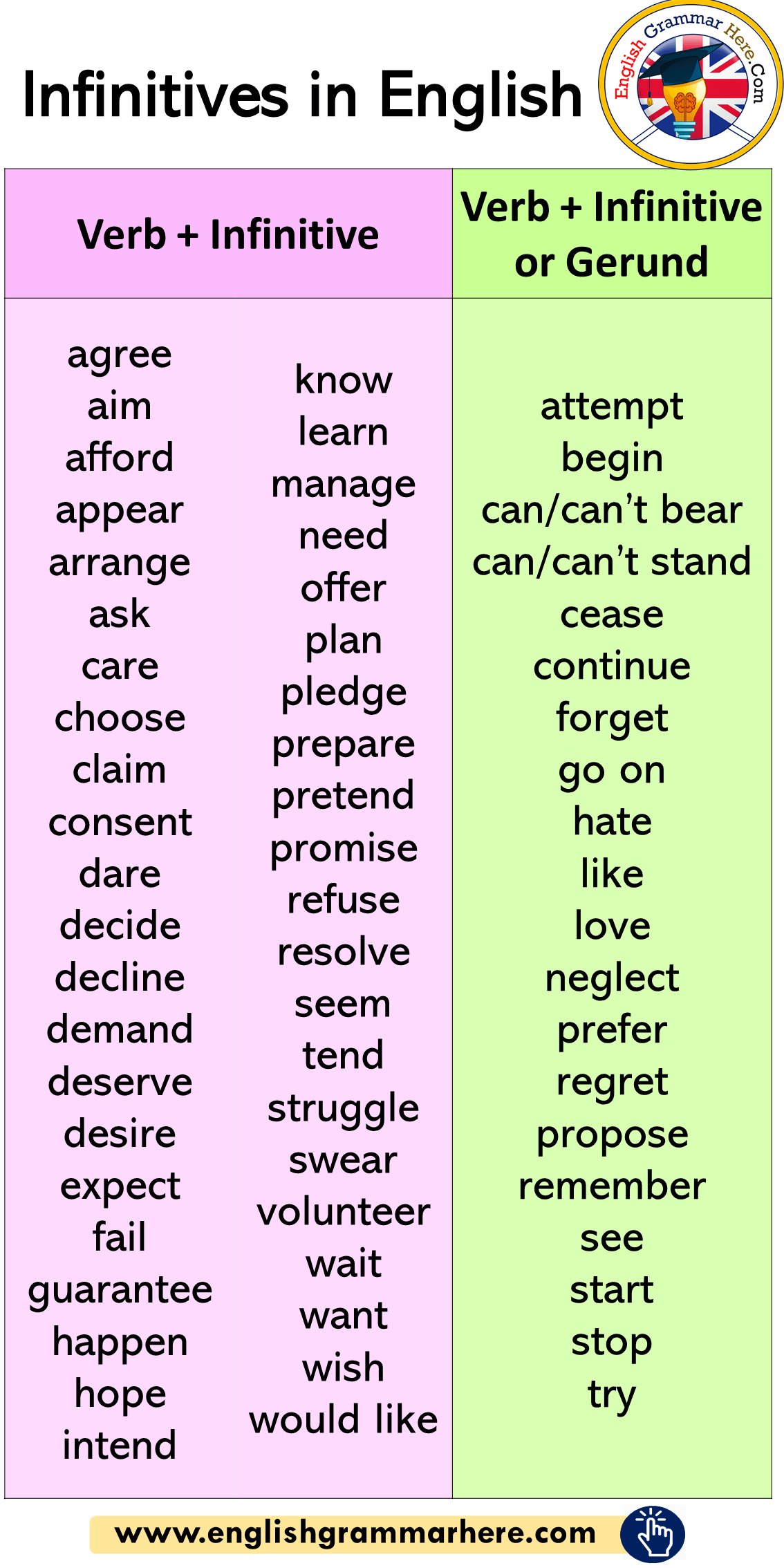
| Common Trigger | Following verbs like "want," "hope," "need" | Following modal verbs (can, will, must) |
| Syntactic Role | Can be Subject, Object, Adjective, or Adverb | Usually part of a verb phrase or after "make/let" |
| Example 1 | I need to leave. | I can leave now. |
| Example 2 | It is important to speak. | You must speak clearly. |
| Purpose | Often expresses intent or future possibility | Expresses ability, obligation, or permission |
Infinitives vs. Gerunds: The Nuance of Meaning
In modern English, many verbs can be followed by either an infinitive or a gerund (the "-ing" form). While they may seem interchangeable, the choice between them often shifts the meaning of the sentence entirely.
For example, consider the verb "stop":
- "He stopped to smoke." (He paused his current activity in order to begin smoking.)
- "He stopped smoking." (He quit the habit of smoking.)
The infinitive "to smoke" indicates a future intent or a purpose relative to the main verb. The gerund "smoking" treats the action as a completed concept or a general state. This distinction allows English speakers to communicate subtle temporal and intentional nuances without adding extra words. Understanding this relationship is crucial for technical writing and precise communication in 2026.
Bare Infinitives and Causative Verbs
The bare infinitive plays a critical role in causative constructions—sentences where one person or thing causes another to act. Verbs like "make," "let," and "have" (when used causatively) require a bare infinitive.
- "She made him clean his room." (Not "to clean")
- "They let us enter the building." (Not "to enter")
This structure streamlines the sentence. In many other languages, these expressions require complex "that" clauses or subjunctive moods. The English bare infinitive simplifies the relationship between the "causer" and the "actor," contributing to the directness and efficiency of the language.
Frequently Asked Questions
Can a sentence end with an infinitive?
Yes. It is perfectly grammatical to end a sentence with an infinitive, especially in casual or spoken English. For example, "I have so much work to do." The infinitive "to do" modifies "work" and naturally falls at the end of the thought. While older prescriptive rules discouraged ending sentences with "prepositions," the "to" in an infinitive is a marker, not a preposition, and even if it were, that rule is largely considered obsolete in 2026.
Is the "to" always necessary for an infinitive?
No. As discussed, the bare infinitive is used after modal verbs (except "ought to" and "used to"), causative verbs like "make" and "let," and after the verb "help" (though "help" can take both forms: "help me do" or "help me to do").
Why are infinitives called "non-finite" verbs?
They are "non-finite" because they are not limited (finiteness refers to being limited) by tense, person, or number. Finite verbs must agree with their subject (e.g., "He runs" vs. "They run"), whereas the infinitive "to run" remains the same regardless of who is performing the action or when it occurs.
How do infinitives help in forming the future tense?
While English uses the modal "will" + bare infinitive for the simple future, it also uses "be going" + full infinitive (e.g., "I am going to eat"). This construction allows for a distinction between a spontaneous decision ("I will eat") and a prior plan ("I am going to eat").
Can an infinitive be the subject of a sentence?
Absolutely. Using an infinitive as a subject is common in formal writing and proverbs. "To know her is to love her" uses infinitives as both the subject and the subject complement. In everyday speech, however, we often use the "dummy subject" (It) to move the infinitive to the end: "It is important to know her."
Final Recommendations for Using Infinitives
To master the use of infinitives in 2026, focus on the intended relationship between your verbs. If you are expressing a purpose, an unrealized goal, or a future intent, the full infinitive is likely your best tool. If you are working with modal verbs of ability or obligation, the bare infinitive is mandatory.
Do not fear the split infinitive; prioritize the proximity of your adverbs to the verbs they modify to ensure your reader understands your meaning immediately. When choosing between an infinitive and a gerund, ask whether the action is a "purpose" (infinitive) or a "result/state" (gerund). By applying these distinctions, you can leverage the infinitive to create clearer, more sophisticated, and more effective English prose.
Image Gallery