Why the Dental Digital Workflow Matters for Modern Clinics
Implementing a dental digital workflow is essential for modern clinics to achieve superior clinical precision, operational efficiency, and enhanced patient satisfaction. By replacing physical impressions with intraoral scans and integr...
Implementing a dental digital workflow is essential for modern clinics to achieve superior clinical precision, operational efficiency, and enhanced patient satisfaction. By replacing physical impressions with intraoral scans and integrating AI-driven diagnostics with in-house fabrication, practices reduce manual errors, shorten treatment times, and provide a high-tech patient experience that fosters long-term loyalty and growth.
Contents
The Evolution of the Dental Workflow: From Analog to Digital
The traditional dental workflow relied heavily on physical materials—alginate or PVS impressions, stone models, and manual laboratory communication. While functional for decades, this "analog" approach is prone to dimensional instability, shipping delays, and human error. In 2026, the digital workflow has matured into a seamless ecosystem where data moves at the speed of light from the patient's mouth to a design station or a laboratory.
A comprehensive digital workflow typically follows a three-stage architecture:
- Data Acquisition (Input): Capturing the patient's anatomy using intraoral scanners (IOS), Cone Beam Computed Tomography (CBCT), and extraoral 2D/3D photography.
- Design and Planning (Process): Utilizing Computer-Aided Design (CAD) software and Artificial Intelligence (AI) to plan restorations, surgical guides, or orthodontic movements.
- Fabrication (Output): Using Computer-Aided Manufacturing (CAM) technologies, such as 3D printers or milling machines, to create the final dental appliance.
This shift matters because it removes the "analog gap"—the phase where physical materials change shape or get lost—ensuring that the final restoration fits the patient's anatomy with micron-level accuracy.
Clinical Precision and Reduced Human Error
The primary clinical argument for a digital workflow is the elimination of material-related distortions. Traditional impression materials are subject to temperature changes, tray flex, and "pulls" during the setting process. Furthermore, stone models can chip or expand, leading to restorations that require significant chairside adjustment.
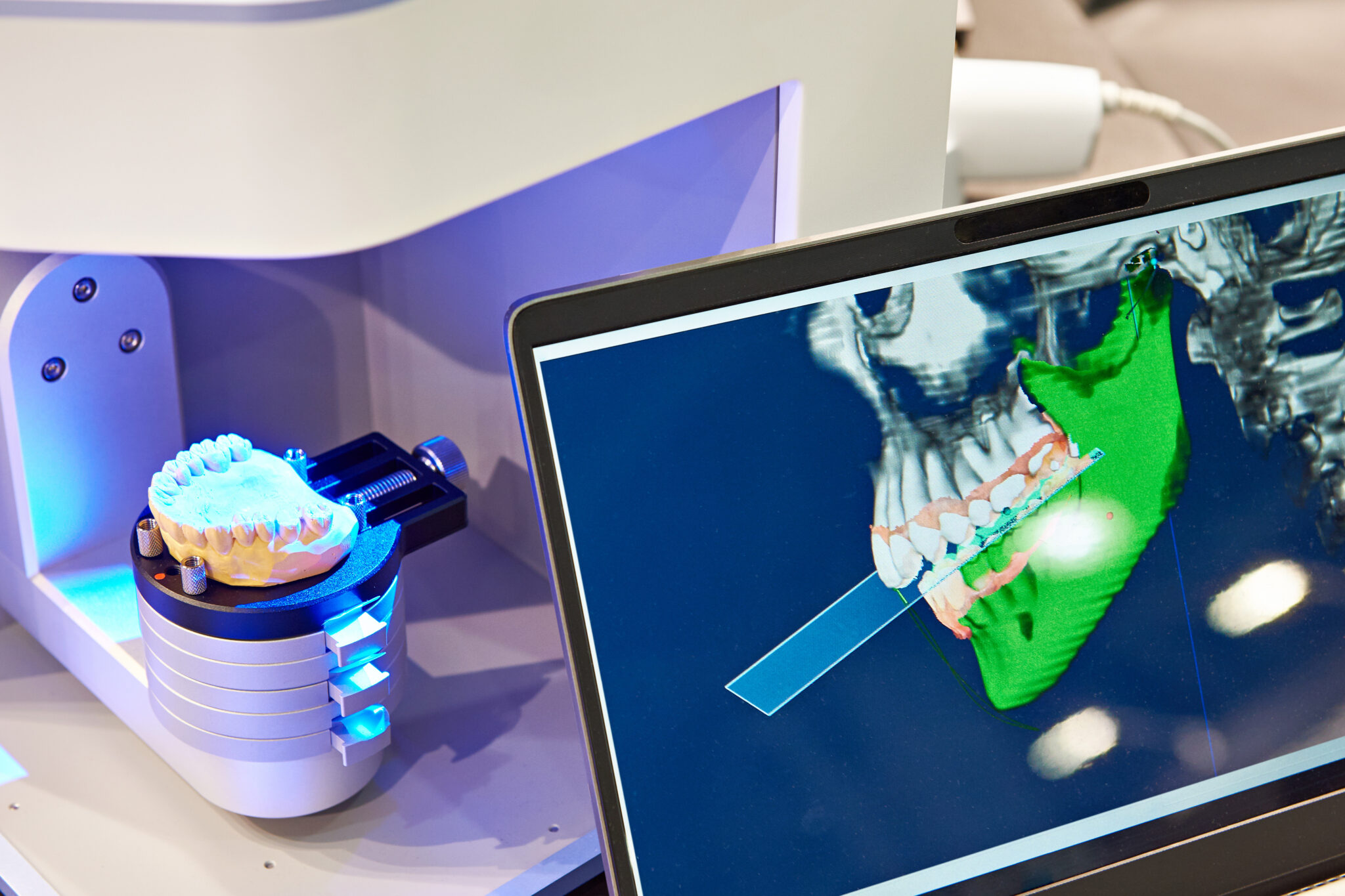
Digital impressions via intraoral scanners provide a "true-to-life" capture of the dentition. By 2026, the latest generation of scanners can capture full-arch scans in under 60 seconds with an accuracy range of 15 to 30 microns. This data is stored as STL (Standard Tessellation Language) or PLY files, which do not degrade over time.
When digital scans are combined with CBCT data—a process known as data merging or "stitching"—clinicians can view the relationship between the bone, roots, and soft tissue in a single 3D environment. This is particularly vital for:
- Guided Implant Surgery: Placing implants with robotic precision based on pre-determined bone density and prosthetic requirements.
- Endodontics: Mapping complex root canal systems to minimize invasive drilling.
- Orthodontics: Simulating tooth movement accurately before a single bracket or aligner is placed.
Operational Efficiency and Practice ROI
Modern clinics must balance high-quality care with a sustainable business model. The digital workflow directly impacts the bottom line by optimizing "chair time"—the most valuable asset in any dental practice.
Reducing Remakes and Adjustments
When a crown or bridge is designed digitally, the margins are defined on a high-definition monitor at 20x magnification. This leads to a superior fit, which significantly reduces the "remake rate." Every time a patient has to return because a crown doesn't fit, the clinic loses money on materials, labor, and the missed opportunity of a new patient in that time slot.
In-House vs. Laboratory Production
By 2026, the cost of 3D printing resins and milling blocks has stabilized, making in-house production more accessible. While not every clinic needs to mill their own zirconia crowns, having a 3D printer allows for the rapid production of:
- Surgical guides (costing pennies in resin compared to hundreds in lab fees).
- Night guards and occlusal splints.
- Diagnostic models and "wax-ups" for patient visualization.
Table: Analog vs. Digital Workflow Comparison
| Feature | Traditional (Analog) Workflow | Modern (Digital) Workflow |
|---|---|---|
| Impression Method | PVS/Alginate Putty | Intraoral Optical Scanning |
| Patient Comfort | High gag reflex risk; messy | Comfortable; non-invasive |
| Accuracy | Subject to material shrinkage/expansion | Micron-level digital precision |
| Turnaround Time | 2-3 weeks (including shipping) | Same-day or 3-5 days (digital transfer) |
| Data Storage | Physical stone models (take up space) | Cloud-based STL/DICOM files |
| Lab Communication | Physical mail and paper prescriptions | Instant digital file transfer |
The Role of Artificial Intelligence in 2026
AI is the "brain" of the modern digital workflow. In 2026, AI algorithms are integrated directly into Practice Management Software (PMS) and imaging suites to assist dentists in ways that were previously impossible.
AI currently assists in Automated Diagnostics, where the software flags potential caries, bone loss, or periapical lesions on radiographs with higher consistency than the human eye alone. This acts as a "second opinion" that increases patient trust and case acceptance. In the design phase, AI-driven CAD software can now suggest the ideal morphology for a crown based on the patient's existing teeth and bite patterns, reducing the time a dentist or technician spends on manual adjustments.
Furthermore, AI manages the Workflow Orchestration. It can predict when a milling machine needs maintenance or when resin supplies are running low, ensuring that the clinic's production line never experiences unexpected downtime.
Transforming the Patient Experience
In a competitive market, the "wow factor" of digital dentistry serves as a powerful marketing and retention tool. Patients in 2026 expect high-tech solutions that respect their time and comfort.
- Elimination of the Gag Reflex: For many patients, the worst part of a dental visit is the "goop" used for impressions. Digital scanning removes this barrier, making the practice more attractive to dental-phobic patients.
- Visual Education: When a patient sees a 3D model of their own mouth on a large screen, they understand their oral health issues more clearly. Seeing a "red zone" on an occlusal heat map or a fracture line in high definition makes the need for treatment undeniable.
- Speed of Care: The digital workflow enables "Same-Day Dentistry." A patient can walk in with a broken tooth and walk out two hours later with a permanent, high-strength ceramic crown. This convenience is a significant competitive advantage.
Security and Interoperability in a Connected Clinic
As clinics become more digital, data security becomes paramount. The 2026 digital workflow relies on secure, cloud-based platforms that comply with HIPAA (Health Insurance Portability and Accountability Act) and GDPR (General Data Protection Regulation) standards.
Modern systems use interoperable standards, meaning an intraoral scanner from one brand can easily send files to a 3D printer from another brand or a laboratory across the country. This "Open Architecture" is critical; it prevents clinics from being locked into a single manufacturer's ecosystem, allowing them to upgrade individual components as technology advances without replacing the entire system.
FAQs
Is the digital workflow too expensive for a small clinic?
While the initial capital investment for an intraoral scanner and CAD/CAM suite can be significant, the Return on Investment (ROI) is typically realized within 12 to 18 months through reduced lab fees and increased chairside efficiency. Many manufacturers now offer "entry-level" scanners that provide the core benefits without the high cost of a full chairside milling unit.
How steep is the learning curve for staff?
Modern digital tools are designed with "UI/UX" (User Interface/User Experience) at the forefront. Most dental assistants can become proficient in intraoral scanning within a few days of training. The transition is often more about changing the clinic's "mindset" and internal protocols than mastering complex software.
Does digital dentistry really provide better clinical outcomes?
Yes. Multiple studies published in journals such as the Journal of Prosthetic Dentistry have demonstrated that digital impressions are as accurate, if not more accurate, than traditional methods for tooth-supported restorations. The precision of digital margins leads to better periodontal health and longer-lasting restorations.
What happens if the internet or the system goes down?
Modern digital workflows often use a hybrid cloud-local approach. While data is backed up to the cloud, local servers allow the clinic to continue scanning and designing even if the internet connection is temporarily lost. Regular maintenance and a robust IT infrastructure are essential prerequisites.
Can I still use my favorite dental lab with a digital workflow?
Absolutely. Most dental laboratories in 2026 prefer digital files over physical impressions. Sending a digital scan to a lab is instantaneous, eliminates shipping costs, and allows the lab technician to begin work immediately, often resulting in a faster turnaround for the clinic.
Final Practical Recommendation
For clinics looking to transition, the most logical first step is the acquisition of a high-quality intraoral scanner. This single device replaces the most problematic part of the analog workflow and serves as the gateway to all other digital services. Start by sending digital files to your existing lab to refine your internal scanning protocols before investing in expensive in-house fabrication tools like mills or 3D printers. By 2026 standards, a clinic without at least a digital impression system risks obsolescence as patient expectations and industry benchmarks continue to rise.
Image Gallery