Mutual Fund Banks and Their Changing Role: Operational Shifts, Technology, and Market Structure
Mutual fund banks—specialized financial institutions providing custody, fund accounting, transfer agency, and administrative infrastructure for investment funds—are evolving from back-office record-keepers into technology-driven platfo...
Mutual fund banks—specialized financial institutions providing custody, fund accounting, transfer agency, and administrative infrastructure for investment funds—are evolving from back-office record-keepers into technology-driven platform providers. Today, these institutions are redesigning their operations to support accelerated T+1 settlement cycles, fund tokenization, private market asset integration, and automated cross-border regulatory reporting.
Contents
Disclaimer: This article is for informational purposes only and does not constitute financial, legal, or investment advice. Institutional asset managers and investors should consult qualified legal and financial advisers regarding operational and custodian bank selections.
Defining the Mutual Fund Bank and Its Infrastructure Role
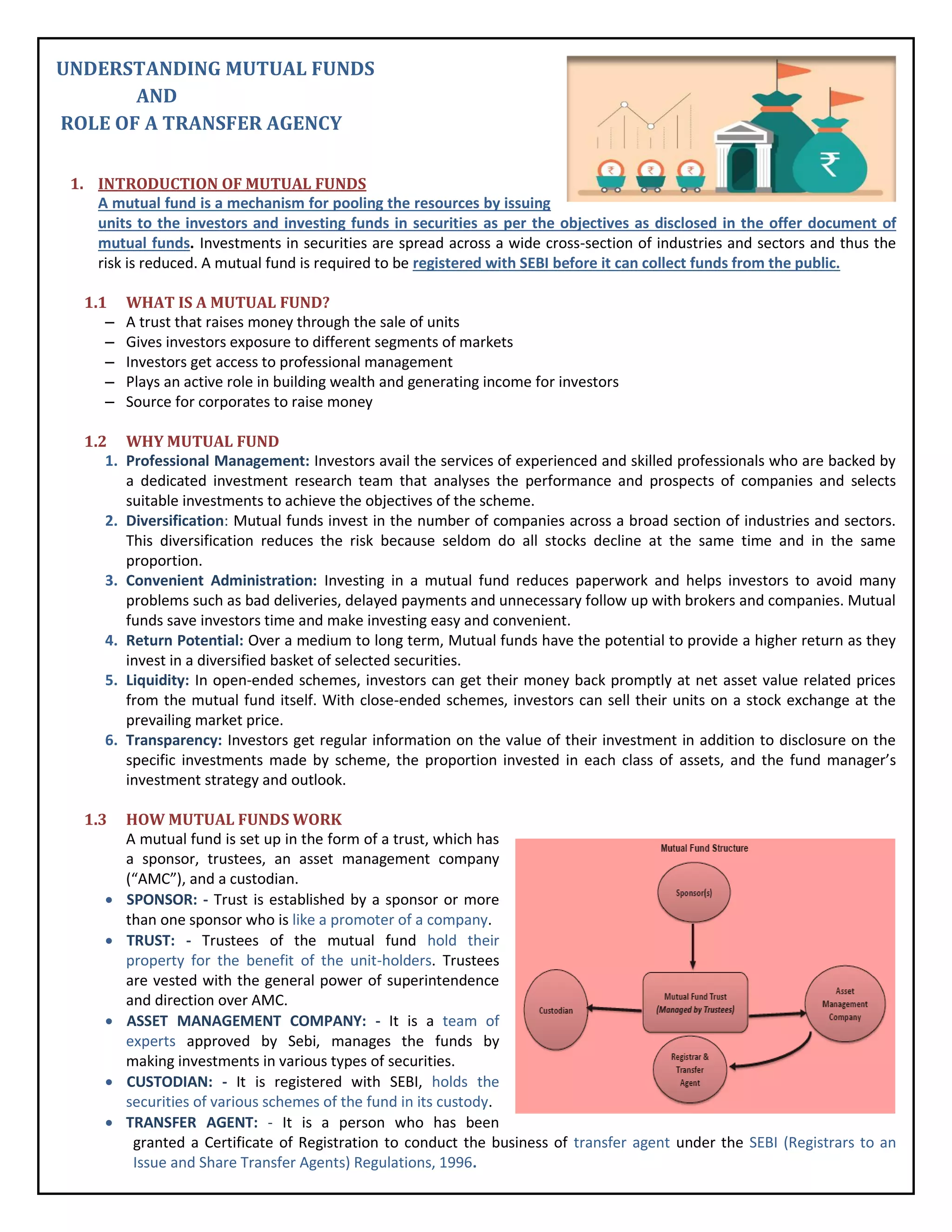
In institutional finance, a mutual fund bank (often referred to as a fund servicing bank, global custodian, or fund administration institution) acts as the backbone of the collective investment ecosystem. Unlike commercial retail banks that accept deposits and issue consumer loans, mutual fund banks specialize in holding portfolio assets in safekeeping, calculating net asset values (NAV), managing shareholder registries, and clearing trades.
In some regional markets, specialized entities like fund settlement banks or cooperative banking networks manage centralized processing hubs for mutual fund orders. In global capital markets, major custodians such as The Bank of New York Mellon (BNY), State Street, and Northern Trust perform these core infrastructure duties for thousands of open-end mutual funds, exchange-traded funds (ETFs), and institutional pooled vehicles.
Historically, the core duties of a mutual fund bank centered on three primary functions:
- Custody and Asset Safekeeping: Isolating fund assets from the asset management firm’s balance sheet to protect investors from fraud and operational failure.
- Fund Accounting and NAV Calculation: Valuing fund holdings daily, reconciling bank balances, and computing the official net asset value per share.
- Transfer Agency and Registrar Services: Processing investor subscriptions, redemptions, dividend distributions, and maintaining shareholder records.
While these core responsibilities remain legally mandated under regulatory frameworks such as the U.S. Investment Company Act of 1940 and Europe’s Undertakings for Collective Investment in Transferable Securities (UCITS) directives, the strategic position of the mutual fund bank has shifted dramatically.
Key Drivers Redefining Mutual Fund Banking Operations
The modern fund administration landscape is undergoing structural changes driven by regulatory mandates, compressed profit margins, and evolving investor expectations. Asset managers no longer evaluate fund banks solely on safekeeping capability; they demand real-time data accessibility, API-driven integration, and multi-asset operational support.
| Driver | Institutional Impact |
|---|---|
| Accelerated Settlement (T+1) | Compresses operational windows for FX, trade reconciliation, and cash liquidity management |
| Fund Tokenization & On-Chain Assets | Requires custody of digital assets, smart contract auditing, and DLT transfer agency |
| Private Asset Hybridization | Demands valuation models for illiquid credit, real estate, and private equity in open funds |
| Fee Compression & Automation | Shifts banks to AI-driven reconciliation, automated exception processing, and SaaS APIs |
Accelerated Settlement Cycles (T+1 and Beyond)
The global financial system’s transition to shorter settlement cycles has significantly altered fund banking workflows. Following the adoption of T+1 (trade date plus one business day) settlement in the United States, Canada, and Mexico, mutual fund banks had to compress trade processing, foreign exchange (FX) execution, and stock loan returns into a tight overnight window.
When underlying securities settle on a T+1 schedule while cross-border transactions or certain fund share classes operate on T+2, a liquidity mismatch occurs. Mutual fund banks have responded by deploying automated trade matching engines, real-time cash forecasting tools, and integrated FX execution protocols to prevent settlement fails and overdraft charges.
European and Asian markets continue to evaluate alignment with T+1 standards, placing ongoing demands on international fund banks to maintain dual-operational capabilities across varying regional settlement windows.
Fund Tokenization and Distributed Ledger Infrastructure
The tokenization of real-world assets (RWA) represents one of the most substantial architectural shifts in fund administration. Asset managers are increasingly issuing tokenized share classes of money market funds and mutual funds on public and private distributed ledger technology (DLT) networks.
Mutual fund banks are transforming their transfer agency models to accommodate on-chain minting, burning, and balance updates for fund shares. Rather than relying on batch-processed end-of-day ledger updates, fund banks are deploying API bridges and blockchain nodes to verify ownership in real time.
- Digital Asset Custodial Safeguards: Custodians are establishing cryptographic key management systems alongside traditional vault storage to protect tokenized fund assets.
- Smart Contract Transfer Agency: Automated smart contracts handle dividend reinvestment, whitelist verification (KYC/AML compliance), and instant peer-to-peer share transfers under the supervision of the fund bank.
Asset managers can research global policy approaches to tokenized assets through the Financial Stability Board, which publishes international supervisory recommendations for digital assets and financial innovation.
Convergence of Public Mutual Funds and Private Assets
Retail and institutional demand for alternative assets—such as private credit, infrastructure, real estate, and private equity—has led asset managers to launch hybrid product structures. Interval funds, tender-offer funds, and European Long-Term Investment Funds (ELTIFs) combine illiquid private investments with periodic liquidity features.
Traditional mutual fund accounting systems were engineered for daily-priced, liquid equities and fixed-income instruments. Fund banks have had to overhaul their administrative capabilities to handle non-standardized pricing, capital calls, complex fee structures (e.g., carry and hurdle rates), and specialized valuation inputs for private market assets.
Margin Pressure and AI-Driven Automation
Asset management fees have steadily declined due to the growth of passive indexing and low-cost ETFs. This pricing pressure extends directly to fund servicing banks, forcing them to reduce basis-point servicing fees while managing higher operational complexity.
To preserve operating margins, fund banks are replacing manual back-office tasks with machine learning algorithms and optical character recognition (OCR). Intelligent automation now handles corporate action processing, unstructured document ingestion, automated exception routing, and tax reclaiming. Consequently, staff roles within fund banks have shifted from manual data input to exception management and technical client consulting.
Comparative Analysis: Legacy vs. Next-Generation Mutual Fund Servicing
To understand how mutual fund banks are restructuring their business models, consider the operational contrasts between traditional fund servicing and modern, technology-enabled platforms.
| Functional Area | Traditional Mutual Fund Servicing Model | Next-Generation Mutual Fund Banking Platform |
|---|---|---|
| Settlement & Execution | T+2 or T+3 batch clearing; manual trade status updates | T+1 and instant atomic settlement; real-time event-driven trade status |
| Data Architecture | End-of-day batch files, mainframe ledgers, flat file transfers (SFTP) | Real-time event streams, RESTful APIs, cloud-native data warehouses |
| Transfer Agency | Closed database registries, end-of-day order aggregation | Hybrid registries supporting traditional accounts and DLT wallet addresses |
| Asset Class Support | Standard public equities, municipal and corporate bonds, cash equivalents | Multi-asset engines supporting public securities, private loans, real estate, and digital assets |
| Valuation & Accounting | Manual NAV reconciliation, delayed corporate action updates | Automated pricing feeds, AI-assisted exception handling, real-time intraday positions |
| Regulatory Compliance | Periodic manual audit reporting and static regulatory filings | Automated regulatory reporting pipelines (e.g., real-time SEC Form N-PORT data feeds) |
Regulatory and Operational Challenges Facing Modern Fund Custodians
As mutual fund banks expand their operational remits, they encounter complex regulatory constraints and heightened system risk.
Cross-Border Data Governance and Privacy
Fund servicing banks operate internationally, moving fund performance data, trade instructions, and investor identities across jurisdictions. Compliance with frameworks such as the European Union’s General Data Protection Regulation (GDPR) and regional cross-border data transfer restrictions requires localized data storage and strict access controls.
Banks must balance centralized processing efficiencies with localized legal compliance. This balance becomes critical during cross-border fund distribution, where investor data must be shared among distributors, transfer agents, and anti-money laundering (AML) monitoring systems.
Cybersecurity and Operational Resilience
As fund banks migrate their infrastructure to multi-cloud environments and open API architecture, their attack surface expands. Financial regulators worldwide have increased scrutiny of third-party tech risk.
- DORA Compliance in Europe: The European Union’s Digital Operational Resilience Act (DORA) obligates fund custodians, administrators, and their ICT providers to maintain robust cyber defenses, conduct threat-led penetration testing, and report major operational outages.
- SEC Cyber Disclosure Rules: Regulatory bodies, including the U.S. Securities and Exchange Commission, mandate strict operational disruption management and rapid incident reporting. Detailed regulatory guidelines and compliance updates can be reviewed on the official U.S. Securities and Exchange Commission website.
Fund banks must prove that a cyber incident targeting their cloud providers or third-party market data feeds will not compromise client assets or corrupt the master accounting ledger.
Mutual Fund Banking Operational Risks
- Data Privacy & Cross-Border Compliance
- Dynamic compliance with GDPR, local processing, cross-border privacy laws
- Operational Resilience & Cybersecurity
- DORA regulatory compliance, cloud failovers, real-time threat detection
- Liquidity & Settlement Disconnects
- Managing T+1/T+2 cross-currency friction and automated FX execution
Practical Recommendations for Asset Managers Selecting Fund Banking Partners
For asset management executives, selecting or reviewing a mutual fund bank partner requires evaluating technological capabilities alongside balance sheet strength. Legacy metrics like total assets under custody (AUC) are no longer sufficient on their own.
Evaluate API Maturity and Data Integration Capabilities
Asset managers should assess whether the fund bank offers cloud-native data platforms and well-documented APIs. Direct database connections eliminate reliance on outdated end-of-day file transfers, enabling real-time portfolio management, intraday risk checking, and faster investor reporting.
- Key Audit Point: Request access to the bank's developer portal and evaluate API documentation, uptime history, and data latency metrics.
Verify Multi-Asset and Private Market Servicing Expertise
If an asset manager plans to expand into private credit, interval funds, or tokenized vehicles, the fund bank must demonstrate established operational support for non-standard assets.
- Key Audit Point: Review the bank’s internal valuation methodologies, automated corporate action workflows, and experience managing capital calls and distributions for hybrid vehicle structures.
Assess T+1 and Liquidity Management Infrastructure
Ensure the fund bank maintains automated foreign exchange (FX) execution engines, automated trade matching integration (such as DTCC ITP services), and intraday credit facilities. These features help prevent settlement fails and cash drag in shortened settlement windows.
- Key Audit Point: Examine the bank's historic trade fail rates, automated FX processing rules, and cut-off times for multi-currency trade instructions.
Frequently Asked Questions
What is the primary difference between a mutual fund bank and a traditional retail bank?
A traditional retail bank accepts consumer deposits, offers personal checking accounts, and issues mortgages or commercial loans. A mutual fund bank (or institutional fund custodian) provides back-office institutional services—such as asset safekeeping, daily net asset value (NAV) calculation, transfer agency, and fund clearing—specifically for investment funds and asset management firms.
How does the shift to T+1 settlement affect mutual fund banks?
The shift to T+1 settlement compresses the time available to clear trades, manage foreign currency exchanges (FX), and reconcile asset positions from two days down to one. Mutual fund banks must deploy real-time trade matching, automated FX conversion tools, and continuous cash monitoring to prevent trade fails and avoid settlement overdraft fees.
What role do mutual fund banks play in fund tokenization?
In tokenized fund structures, mutual fund banks act as digital custodians and DLT-integrated transfer agents. They manage the private keys securing digital fund assets, oversee smart contracts that mint or burn fund shares, verify compliance (KYC/AML) on-chain, and reconcile on-chain shareholder registers with off-chain accounting records.
How do fund banks handle alternative assets within liquid fund structures?
For open-end hybrid funds that hold private credit or real estate alongside liquid stocks, fund servicing banks use specialized valuation models and asset administration systems. They manage non-standard pricing feeds, track manual capital calls, compute complex performance fee calculations, and coordinate quarterly or annual investor redemptions.
Are investor assets held at a mutual fund bank at risk if the bank fails?
Fund assets are held off the bank’s balance sheet in segregated custodial accounts under strict regulatory standards (such as the U.S. Investment Company Act of 1940 or European UCITS directives). Because these assets belong legally to the fund’s shareholders rather than the custodian bank, they are protected from general corporate creditor claims if the custodian encounters financial distress.
Operational Roadmap for Asset Managers and Financial Institutions
As mutual fund banks transform into modern financial technology hubs, asset managers must align their operational strategies accordingly. Organizations reviewing their custody, fund accounting, and administrative banking setups should execute the following next steps:
- Conduct an Infrastructure Integration Audit: Audit current operational interfaces with your fund bank to identify manual file transfers, spreadsheets, and batch processes that can be upgraded to continuous API data pipelines.
- Review Liquidity and FX Cut-Off Windows: Re-examine cash management policies and trade execution workflows with your fund bank to minimize liquidity gaps across varying international settlement schedules.
- Establish a Digital Asset and Hybrid Asset Evaluation Framework: Assess potential service providers using structured criteria, prioritizing established asset safekeeping standards, tokenization experience, and automated private asset administration.
Mutual fund banks remain essential guardians of capital market integrity. By upgrading legacy architectures into open, automated data platforms, these institutions ensure that collective investment products remain resilient, transparent, and scalable.
Image Gallery