The VXN Network and Its Role in Smart Home Security
The VXN network functions as a decentralized communication and data-routing infrastructure designed to optimize bandwidth, enhance data privacy, and secure device-to-device interactions within modern smart home ecosystems. By utilizing...
The VXN network functions as a decentralized communication and data-routing infrastructure designed to optimize bandwidth, enhance data privacy, and secure device-to-device interactions within modern smart home ecosystems. By utilizing advanced cryptographic tunneling and distributed ledger validation, it addresses critical vulnerabilities inherent in traditional cloud-dependent residential automation networks.
Contents
As the adoption of Internet of Things (IoT) devices accelerates across residential properties, the architecture protecting these environments must evolve. Traditional smart home security models rely heavily on centralized cloud servers to authenticate devices, process video feeds, and execute automation routines. This centralization creates single points of failure, exposing homeowners to data breaches, latency issues, and localized network outages. The VXN network emerges as an alternative paradigm, prioritizing decentralized edge computing and encrypted mesh topologies to safeguard connected households. Understanding how this infrastructure operates requires examining its core architecture, its specific mechanisms for threat mitigation, and its practical implementation challenges.
Core Architecture and Decentralized Principles
At its technical foundation, the VXN network departs from the conventional client-server model utilized by mainstream consumer smart home platforms. In a standard setup, a smart lock, camera, or thermostat communicates directly with a manufacturer’s cloud server over an encrypted internet connection. While secure in transit, this configuration exposes user metadata and access tokens to third-party infrastructure.
The VXN network introduces a peer-to-peer (P2P) mesh architecture where smart devices act as independent nodes capable of authenticating one another without routing routine telemetry through an external data center.
- Node Discovery and Identity: Each device on the network receives a unique cryptographic identifier based on public-key infrastructure (PKI). When a new appliance joins, it performs a zero-knowledge proof to verify its authenticity to the local hub or neighboring nodes.
- Encrypted Data Tunneling: Communications between nodes utilize ephemeral session keys derived via elliptic-curve Diffie-Hellman (ECDH) key exchanges, ensuring that even if local traffic is intercepted, the payload remains undecryptable.
- Distributed Ledger Verification: System configuration changes, permission updates, and critical security alerts are logged across a localized, append-only ledger maintained collaboratively by trusted devices within the home.
This decentralized approach minimizes external dependencies. If an internet service provider experiences an outage, internal automations and security monitoring protocols executed via the VXN network continue to function locally without degradation.
Threat Mitigation and Privacy Enhancement
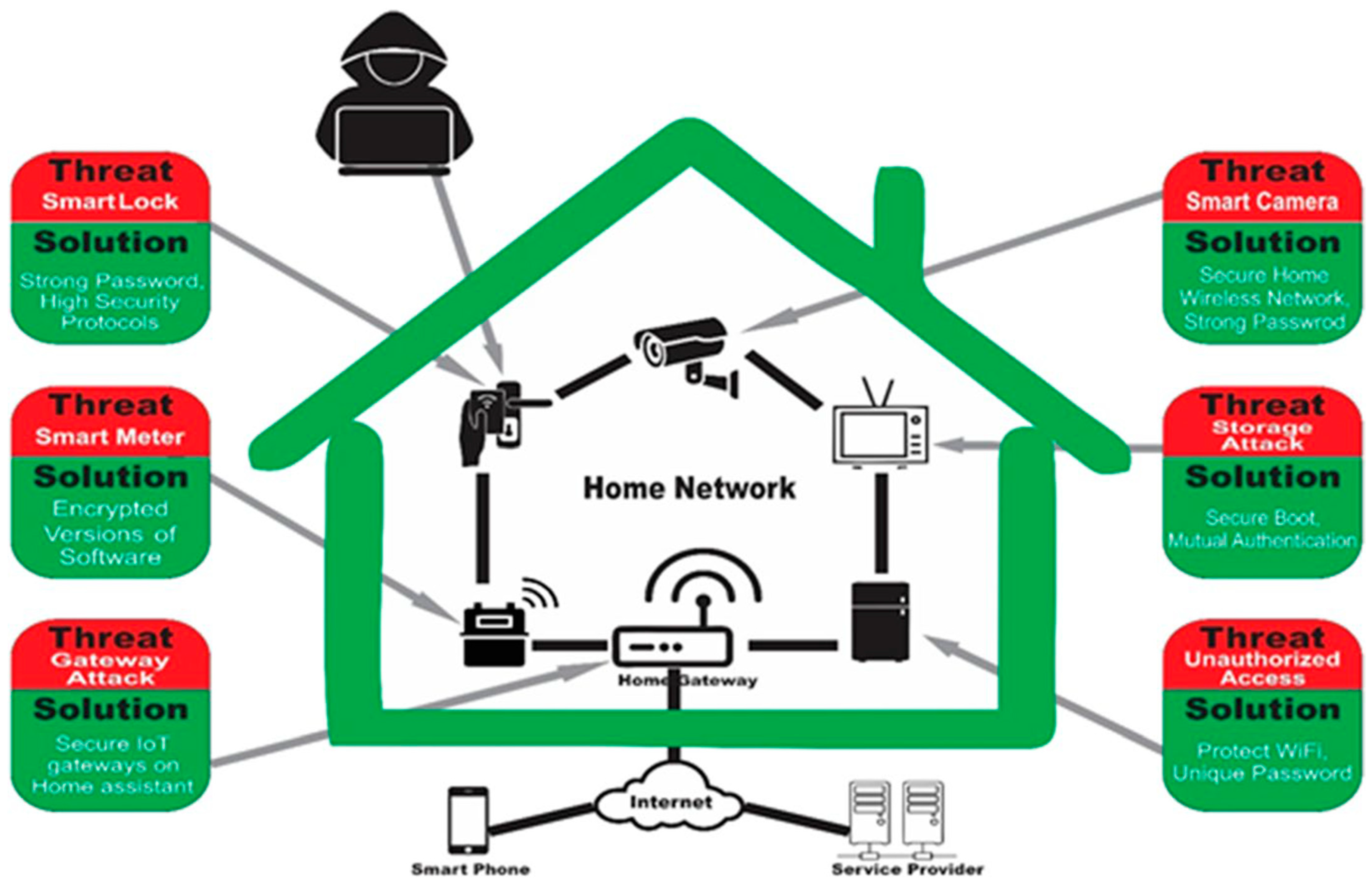
Residential smart home installations face a growing spectrum of cyber threats, ranging from credential stuffing and man-in-the-middle attacks to firmware exploitation and unauthorized remote access. The VXN network implements multi-layered defensive strategies to counteract these vectors.
Mitigating Eavesdropping and Man-in-the-Middle Attacks
Traditional Wi-Fi-enabled cameras and sensors often broadcast management frames in plain text or rely on standard WPA2/WPA3 protocols that can be vulnerable if a pre-shared key is compromised. The VXN network wraps all local device communication inside an independent cryptographic overlay. An intruder who gains access to the primary household Wi-Fi router still encounters an encrypted secondary layer that restricts device-to-device lateral movement.
Defending Against Cloud Compromises
When third-party cloud servers are breached, millions of user credentials and live video streams can be exposed. Because the VXN network minimizes reliance on centralized servers, user video feeds and motion-detection logs are stored locally or routed strictly between authorized endpoints, such as a local Network Attached Storage (NAS) device or encrypted personal vault. This architecture aligns with privacy-by-design principles, ensuring that homeowners retain absolute sovereignty over their telemetry data.
Comparative Analysis of Smart Home Network Models
Evaluating the role of the VXN network requires comparing its structural mechanics against legacy smart home paradigms. The table below outlines key operational differences between centralized cloud architectures, traditional local-only hubs, and decentralized VXN-enabled environments.
| Feature / Metric | Centralized Cloud Model | Local Hub (e.g., Zigbee/Z-Wave) | VXN Network Architecture |
|---|---|---|---|
| Primary Dependency | External cloud servers | Local hardware controller | Decentralized peer mesh nodes |
| Internet Requirement | Required for all operations and remote access | Required only for remote access or firmware updates | Optional for local operations; peer-to-peer routing |
| Data Privacy | Telemetry and media pass through third-party servers | Data remains local to the hub | End-to-end encrypted between verified local nodes |
| Single Point of Failure | High (Cloud provider infrastructure outage) | Moderate (Local hub hardware failure) | Low (Distributed consensus across multiple nodes) |
| Latency | Variable (Depends on external network congestion) | Low (Local execution) | Ultra-low (Direct edge-to-edge routing) |
Integration and Implementation Prerequisites
Deploying a VXN-supported security framework within an existing smart home requires careful planning regarding hardware compatibility, network topology, and administrative oversight. Unlike plug-and-play consumer ecosystems that abstract technical configurations behind simplified mobile applications, decentralized architectures demand strict adherence to setup protocols.
Hardware Compatibility and Edge Nodes
Not all commercial IoT devices support native VXN protocols. Integration typically requires:
- VXN-Compatible Gateways: Master nodes that bridge legacy Wi-Fi, Zigbee, or Thread devices into the decentralized mesh.
- Edge Processing Units: Dedicated hardware capable of running local cryptographic validation processes without introducing latency to time-sensitive actuators like motorized smart locks.
- Firmware Verification: Ensuring that connected appliances permit custom root certificates or secondary tunneling protocols.
Network Topology and Bandwidth Allocation
Because nodes within the mesh actively participate in routing traffic and verifying ledger updates, local Wi-Fi or wired Ethernet backbones must possess sufficient capacity. Network administrators should implement Virtual Local Area Networks (VLANs) to isolate IoT traffic from primary computing devices, establishing dedicated firewall rules that govern how the VXN overlay interacts with the broader internet.
Operational Limitations and Considerations
While decentralized security networks offer substantial privacy and resilience benefits, they introduce distinct trade-offs that users must evaluate before adoption.
- Steeper Learning Curve: Configuring cryptographic keys, managing node permissions, and troubleshooting decentralized routing tables require advanced technical literacy compared to conventional consumer applications.
- Interoperability Challenges: Proprietary ecosystems often resist open decentralized standards, requiring users to rely on custom integrations or specialized firmware flashes to incorporate mainstream hardware.
- Hardware Overhead: Running continuous cryptographic verification and maintaining a localized consensus ledger places higher demands on device processors and power consumption, potentially reducing battery life in remote sensors.
Frequently Asked Questions
What is the primary function of the VXN network in a smart home?
The VXN network provides a decentralized, encrypted communication layer that allows smart home devices to securely communicate, authenticate, and execute commands locally without relying on third-party cloud servers.
Does the VXN network require an active internet connection to function?
No. One of the core design benefits of the VXN network is its ability to operate entirely offline. Local automations, sensor communication, and security monitoring continue to function during internet service outages.
How does the VXN network protect privacy compared to standard smart home setups?
Standard setups route video feeds and telemetry through manufacturer-owned cloud servers, exposing data to potential corporate breaches. The VXN network uses peer-to-peer encryption and local storage, ensuring that private data never leaves the user's controlled environment.
Can legacy smart devices be integrated into a VXN-enabled network?
Integration depends on the device type. Legacy devices that support local API access or custom firmware can often be bridged into the network via a compatible gateway, though proprietary cloud-locked devices may present compatibility barriers.
Is technical expertise required to set up a VXN network?
Yes. Implementing a decentralized security network generally requires greater technical familiarity with networking concepts, cryptographic keys, and device provisioning than standard plug-and-play consumer smart home platforms.
Conclusion and Next Actions
Adopting a decentralized communication layer represents a significant shift in how residential security and data privacy are managed. By eliminating reliance on centralized cloud infrastructure, the VXN network mitigates widespread privacy risks and enhances system resilience against localized outages and cyber intrusions. Homeowners considering this architectural migration should begin by auditing their existing hardware inventory, assessing local network bandwidth capacity, and testing VXN-compatible gateway nodes in a controlled environment before transitioning critical security perimeters.
Image Gallery