Understanding the Complex World of Lumon Severance Characters
The characters in the psychological thriller series Severance drive its exploration of corporate control, memory, and identity, dividing their lives between their work selves (Ininnies) on the Macrodata Refinement floor and their outsi...
The characters in the psychological thriller series Severance drive its exploration of corporate control, memory, and identity, dividing their lives between their work selves (Ininnies) on the Macrodata Refinement floor and their outside selves (Outies).
Contents
Introduction to the Severance Procedure and Character Duality
At the center of the series Severance lies a radical neurosurgical procedure developed by the mysterious Lumon Industries. This procedure splits a person's consciousness into two distinct entities: the "Innie," whose memories are restricted entirely to the workplace, and the "Outie," who retains no knowledge of their labor or the environment inside the severed floor. This premise establishes a psychological duality where the Lumon severance characters must navigate two entirely different sets of motivations, traumas, and relationships.
For the viewer, understanding these characters requires examining how their workplace personas differ from their exterior lives. The corporate architecture of Lumon Industries enforces a strict psychological barrier, transforming everyday office workers into prisoners of their own biology. To fully grasp the narrative dynamics, one must analyze the primary employees of the Macrodata Refinement (MDR) department, upper management, and the external forces attempting to dismantle the corporation from the outside.
The Core Macrodata Refinement (MDR) Team
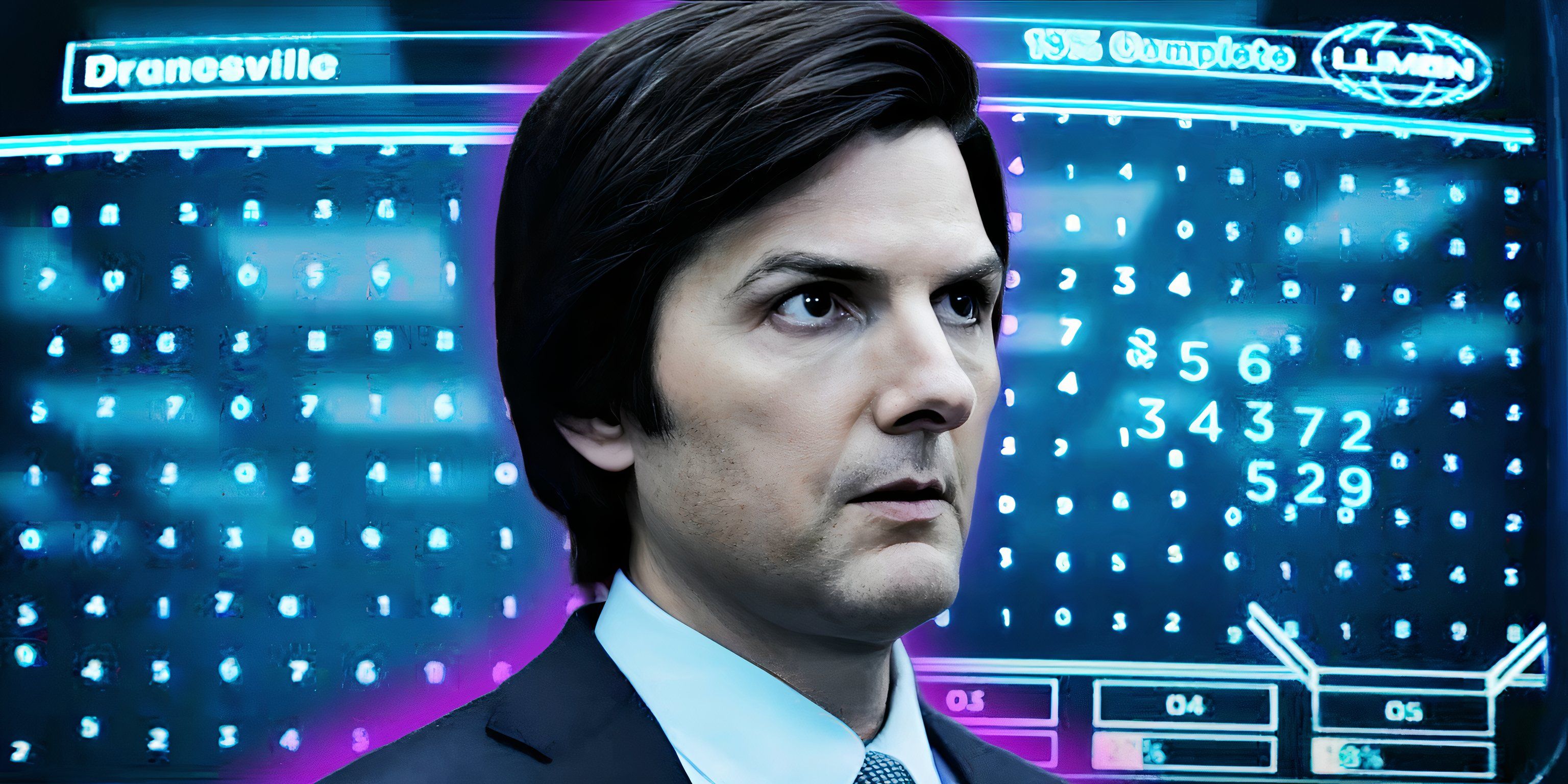
The narrative primarily follows the Macrodata Refinement department, a small team tasked with staring at computer monitors and sorting ominous digital numbers into bins based on vague emotional responses. Each member of this team plays a vital role in unraveling the corporate conspiracy.
Mark Scout (Mark S. / Mark Scout)
Mark Scout serves as the emotional anchor of the series. As an Outie, Mark is a grieving widower who chose the severance procedure to escape eight hours of grief daily following the apparent death of his wife, Gemma. Inside Lumon, his Innie—Mark S.—is a compliant, team-oriented worker who slowly evolves into a cautious rebel. Mark S. values his colleagues deeply, acting as a reluctant leader when changes occur within the department. His journey highlights the tragic flaw of the severance procedure: suppressing trauma does not heal it; it merely compartmentalizes it until the barrier begins to crack.
Helly R. (Helena Eagan)
Helly R. enters Lumon as a new hire, and her initial introduction immediately establishes the hostile nature of the Innie experience. Unlike Mark, Helly’s Innie exhibits an immediate, fierce rejection of her servitude, attempting to escape, resign, and even harm herself to force her Outie to quit. The twist regarding Helly’s true identity—she is actually Helena Eagan, a member of the family that owns Lumon Industries—redefines her character arc. Her Innie becomes a manifestation of pure defiance against the very dynasty her Outie represents, creating a fascinating internal contradiction regarding corporate power and self-determination.
Irving Bailiff (Irving B.)
Irving is the veteran of the MDR department, characterized by his rigid adherence to Lumon's handbook, deep reverence for company founder Kier Eagan, and traditional demeanor. However, Irving’s character subverts expectations through his secret nocturnal habits. While his Innie is a stoic rules-follower, his Outie is meticulously painting the same dark, red-lit hallway over and over again, driven by sleep deprivation tactics. When Irving discovers that his Innie is experiencing romantic feelings for Burt from the Optics and Design department, his steadfast loyalty to Lumon begins to fracture, leading to a desperate search for the truth about what happens to severed workers when they are "retired."
Dylan George (Dylan G.)
Dylan brings levity and skepticism to the MDR team. Initially fiercely competitive and motivated by corporate perks like finger traps, waffle parties, and pencil erasers, Dylan’s perspective shifts dramatically during the "Overtime Contingency" protocol. When his Innie wakes up in the outside world and discovers he has a son, his priorities instantly change. Dylan’s willingness to sacrifice his safety to keep the contingency switch held down makes him a critical catalyst for the rebellion within the severed floor.
Management and Enforcement at Lumon Industries
Lumon’s corporate control relies on a strict hierarchy of middle management and security personnel who enforce company policy with cult-like devotion to the Eagan family ethos.
Harmony Cobel (Mrs. Selvig)
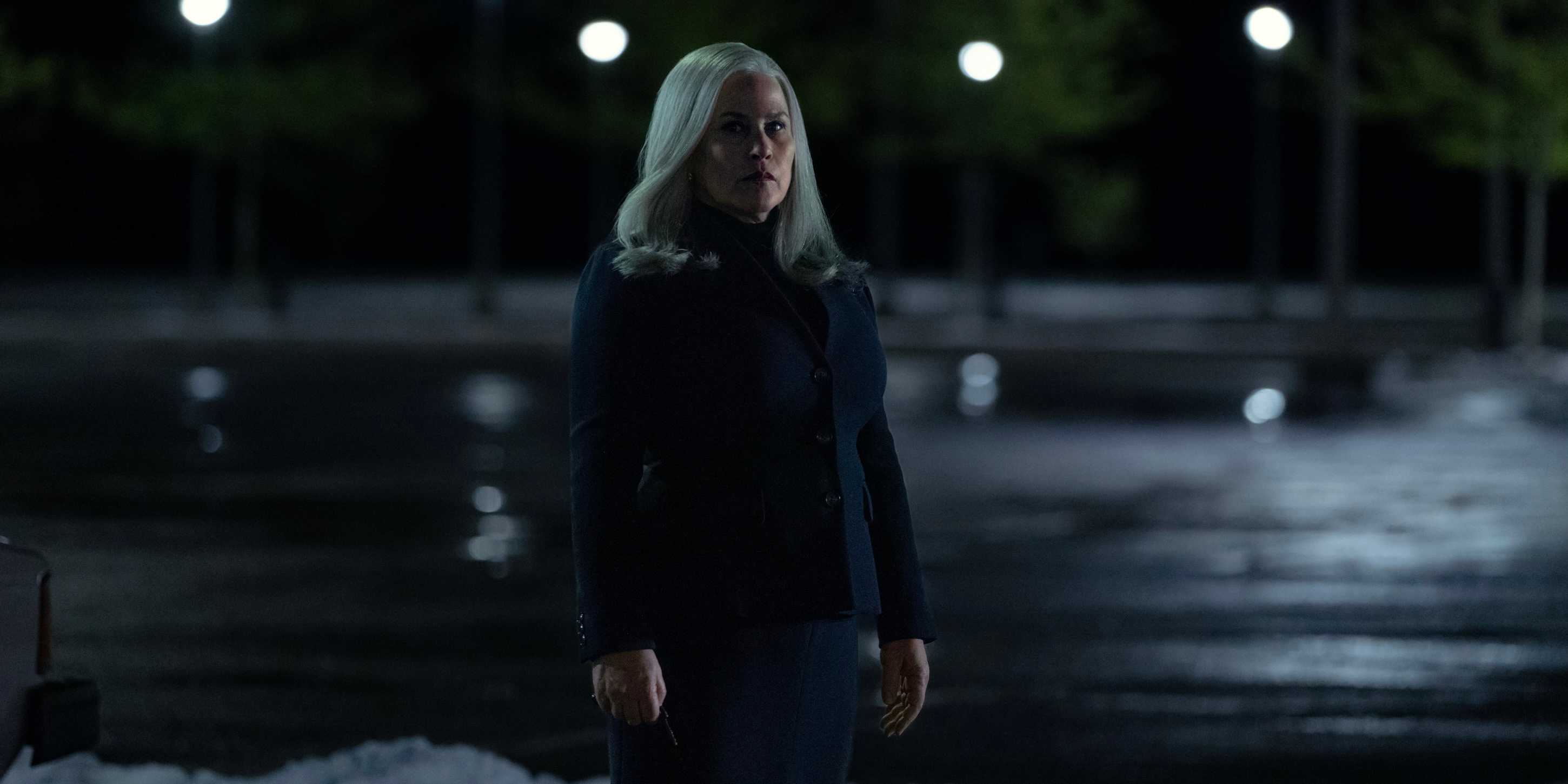
Harmony Cobel occupies a unique dual role as both the stern, omnipresent supervisor of the severed floor and Mark Scout’s seemingly innocuous next-door neighbor, Mrs. Selvig. Cobel exhibits an almost religious fanaticism toward Kier Eagan and closely monitors Mark for signs of integration failure. Unlike corporate higher-ups who view severance purely as a product, Cobel treats it as a spiritual crusade. Her intense personal interest in Mark’s progress ultimately leads to her dismissal by the board, highlighting the cold, bureaucratic ruthlessness of Lumon Industries.
Seth Milchick
Seth Milchick is the smiling, impeccably dressed enforcer of Lumon’s corporate culture. He orchestrates the office perks, manages disciplinary actions in the "Break Room," and handles crisis control with unsettling corporate cheer. Milchick represents the modern face of corporate exploitation—polite, well-spoken, and utterly devoid of empathy when enforcing protocol. His character demonstrates how psychological conditioning and administrative cheerfulness can be just as effective as physical coercion.
Graner
Graner serves as Lumon’s head of security, operating as a silent, intimidating presence who monitors employee compliance through surveillance and intimidation. His interactions with Harmony Cobel reveal the shadowy, coercive tactics the corporation employs to maintain absolute secrecy over its operations.
Key Supporting and External Characters
The world outside Lumon shapes the stakes for every Innie, providing the emotional context and external resistance necessary to challenge the corporation.
| Character Name | Affiliation / Role | Primary Motivation | Impact on the Narrative |
|---|---|---|---|
| Petey Kilmer | Former MDR Head (Outie/Innie) | Exposing Lumon's true nature | Triggers Mark's awakening by reintegrating |
| Gemma Scout / Ms. Casey | Wellness Counselor / Mark's Wife | Surviving Lumon's secret experiments | Bridges the gap between Mark's personal grief and corporate reality |
| Devon Hale | Mark's Sister (Outie) | Protecting Mark and exposing the board | Provides critical external skepticism toward severance |
| Burt G. Goodman | Optics & Design (Innie) | Navigating workplace connection | Sparks Irving's emotional awakening |
Petey Kilmer
Petey was Mark’s previous best friend on the severed floor before mysteriously disappearing. Having undergone an illegal "reintegration" procedure—which attempts to merge the memories of the Innie and Outie—Petey seeks out Mark in the outside world to warn him about Lumon. Though his body ultimately rejects the procedure, Petey’s actions serve as the primary catalyst for Mark’s awakening and investigation into the company.
Devon Hale and Ricken Hale
Devon is Mark’s protective sister, a new mother skeptical of the societal push toward severance. Her husband, Ricken, is an eccentric author whose self-help book accidentally becomes a revolutionary text for the Innies. Ricken’s philosophical musings on individuality and the dignity of labor provide the conceptual vocabulary the MDR team uses to question their enslavement.
Character Dynamics and Psychological Themes
The interaction between Lumon severance characters highlights central themes of autonomy, trauma, and identity. The central conflict of the series is not merely physical escape, but the philosophical question of whether an Innie constitutes a complete human being deserving of rights. While Lumon management views Innies as disposable intellectual property, the characters themselves demonstrate profound emotional depth, loyalty, and capacity for suffering.
The psychological weight of the narrative rests on the asymmetry of knowledge. Outies choose to enter the elevator each morning, unaware of the psychological torture their Innies endure during the workday. Conversely, Innies have no concept of a sun, a family, or a personal history outside the fluorescent-lit corridors of the fifth floor. This structural cruelty turns everyday office interactions into high-stakes moral dilemmas.
Frequently Asked Questions
What is the difference between an Innie and an Outie in Severance?
An Innie is the persona created inside the severed workplace whose memories are confined entirely to Lumon Industries. An Outie is the person in the outside world who retains no conscious memory of their time spent working on the severed floor.
Why did Helly R. try to escape Lumon?
Helly's Innie immediately rejects the servitude of the severed floor because she has no context for why she is there, experiencing the workplace as a sudden, involuntary imprisonment. She prioritizes her autonomy over company rules, leading to continuous acts of rebellion.
What is reintegration in Severance?
Reintegration is an experimental and dangerous medical procedure intended to heal the brain barrier created by the severance chip, allowing an individual's Innie and Outie memories to merge. Petey Kilmer undergoes this process, which serves as a major plot catalyst for the series.
Are Mark S. and Mark Scout the same person?
Technically yes, biologically and legally, but psychologically they function as two distinct individuals with separate memories and emotional states. Mark S. knows nothing of his sister or his grief over Gemma, while Mark Scout knows nothing of his work life inside MDR.
Who owns Lumon Industries?
Lumon Industries is owned and operated by the Eagan family, a corporate dynasty treated with religious reverence by company loyalists. Kier Eagan, the founder, is viewed as a visionary prophet whose teachings dictate corporate policy.
Next Actions and Exploration
To deepen your understanding of the series, rewatch the first season focusing specifically on the background monitors, security logs, and the subtle behavioral shifts in characters like Irving and Mark as their Outie trauma begins to bleed into their Innie existence. Pay close attention to the spatial layout of the severed floor, as the architecture itself plays a psychological role in maintaining character compliance.
Image Gallery