Has the Price of Silver Gone Up? A Comprehensive Market Analysis
The price of silver has experienced significant fluctuations driven by shifting macroeconomic conditions, rising industrial demand, and changing investor sentiment in precious metal markets. Whether silver has gone up depends entirely...
The price of silver has experienced significant fluctuations driven by shifting macroeconomic conditions, rising industrial demand, and changing investor sentiment in precious metal markets. Whether silver has gone up depends entirely on the specific historical timeframe, current economic pressures, and the monetary policies influencing global commodities.
Contents
Evaluating precious metal valuations requires examining more than just daily spot quotes. To understand whether silver prices have gone up, investors must look at structural supply deficits, industrial consumption trends in green technology, and macroeconomic indicators like inflation and interest rates. This guide breaks down the mechanics of silver pricing, historical drivers, and the factors that dictate market movement.
Understanding the Silver Market: Mechanics and Pricing
The global price of silver is determined continuously through international commodities exchanges, most notably the London Bullion Market Association (LBMA) and the COMEX division of the New York Mercantile Exchange. Unlike consumer goods where prices are fixed by retailers, silver functions as both a precious monetary metal and an essential industrial commodity. This dual identity makes its price notoriously volatile compared to other precious metals.
Market participants track the spot price—the current price at which silver can be bought or sold for immediate delivery. However, the price a retail buyer pays for physical silver bullion (coins and bars) or the price a seller receives will include a retail premium over the spot price. These premiums fluctuate based on retail demand, minting capacity, and wholesale dealer inventories.
When market analysts ask whether the price of silver has gone up, they typically evaluate performance across multiple horizons: short-term daily movements, medium-term multi-year cycles, and long-term inflation-adjusted valuations. Because silver markets are smaller in total market capitalization than gold markets, large capital inflows or outflows can trigger rapid, outsized price swings.
Key Drivers Behind Silver Price Movements
Precious metals do not move in a vacuum. Silver prices react dynamically to a complex ecosystem of economic, geopolitical, and industrial forces. Understanding these drivers clarifies why the metal gains or loses value over time.
Industrial Demand and Green Technology
Unlike gold, which is primarily held as a financial store of value or used in jewelry, over 50% of annual silver demand comes from industrial applications. Silver possesses the highest electrical and thermal conductivity of all metals, making it indispensable in modern manufacturing.
Key industrial sectors consuming silver include:
- Photovoltaics (Solar Energy): Solar panel manufacturing requires significant quantities of silver paste to conduct electricity generated by photovoltaic cells.
- Electronics: Printed circuit boards, switches, and high-reliability contacts rely on silver components.
- Healthcare: Antimicrobial silver nanoparticles and medical devices utilize the metal's unique chemical properties.
- Automotive: The transition toward electric vehicles (EVs) and autonomous driving systems increases the per-vehicle consumption of electronic components containing silver.
When industrial manufacturing expands globally, or when government policy accelerates the deployment of renewable energy infrastructure, industrial demand rises. If supply fails to keep pace, upward pressure on the price of silver naturally follows.
Macroeconomic Factors: Inflation, Interest Rates, and Currency
As a tangible asset, silver serves as a traditional hedge against currency devaluation and inflation. When fiat currencies lose purchasing power, investors frequently rotate capital into hard assets.
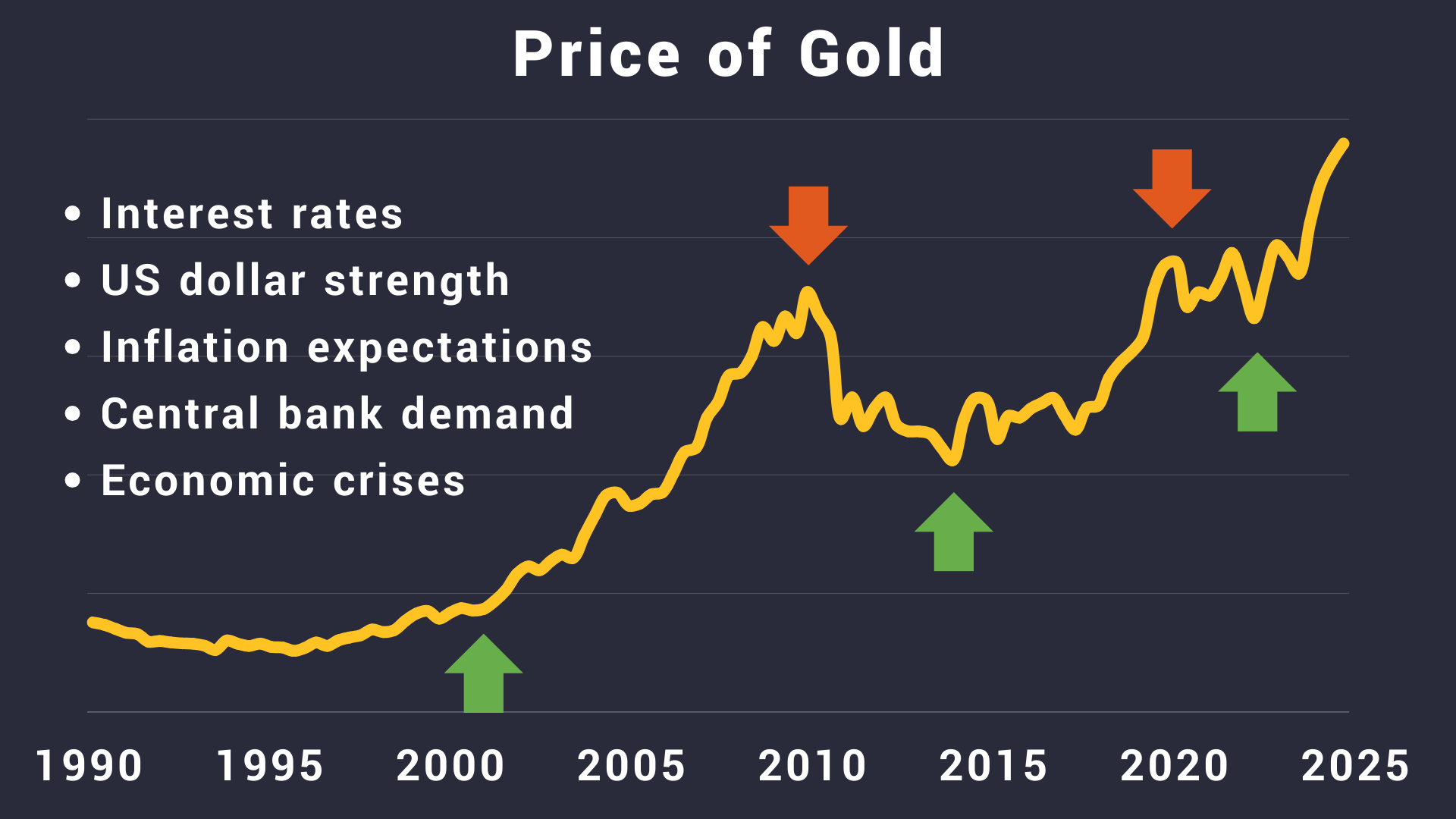
Interest rates established by central banks also play a critical role. Because silver does not yield cash flow like dividends or interest, rising real interest rates increase the opportunity cost of holding non-yielding assets, often weighing down prices. Conversely, falling interest rates or loose monetary policies tend to support higher silver valuations.
Additionally, the strength of the United States Dollar (USD) exerts an inverse relationship with silver. Because global silver is priced in US dollars, a weakening dollar makes silver cheaper for international buyers, stimulating demand and lifting prices.
Historical Context and Market Trends
To accurately assess price trajectories, market observers look at historical performance benchmarks. Silver has witnessed dramatic bull and bear markets over the decades.
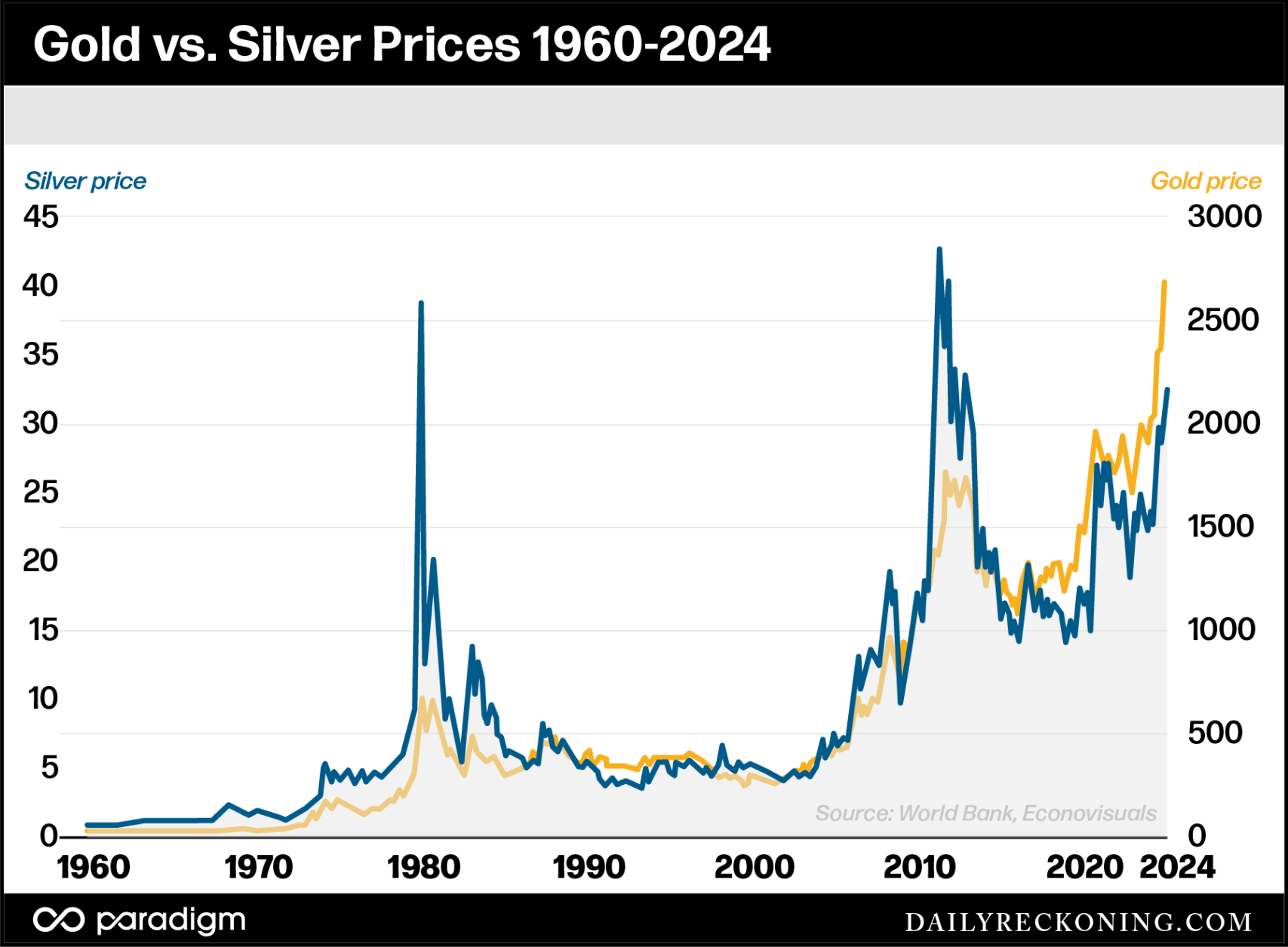
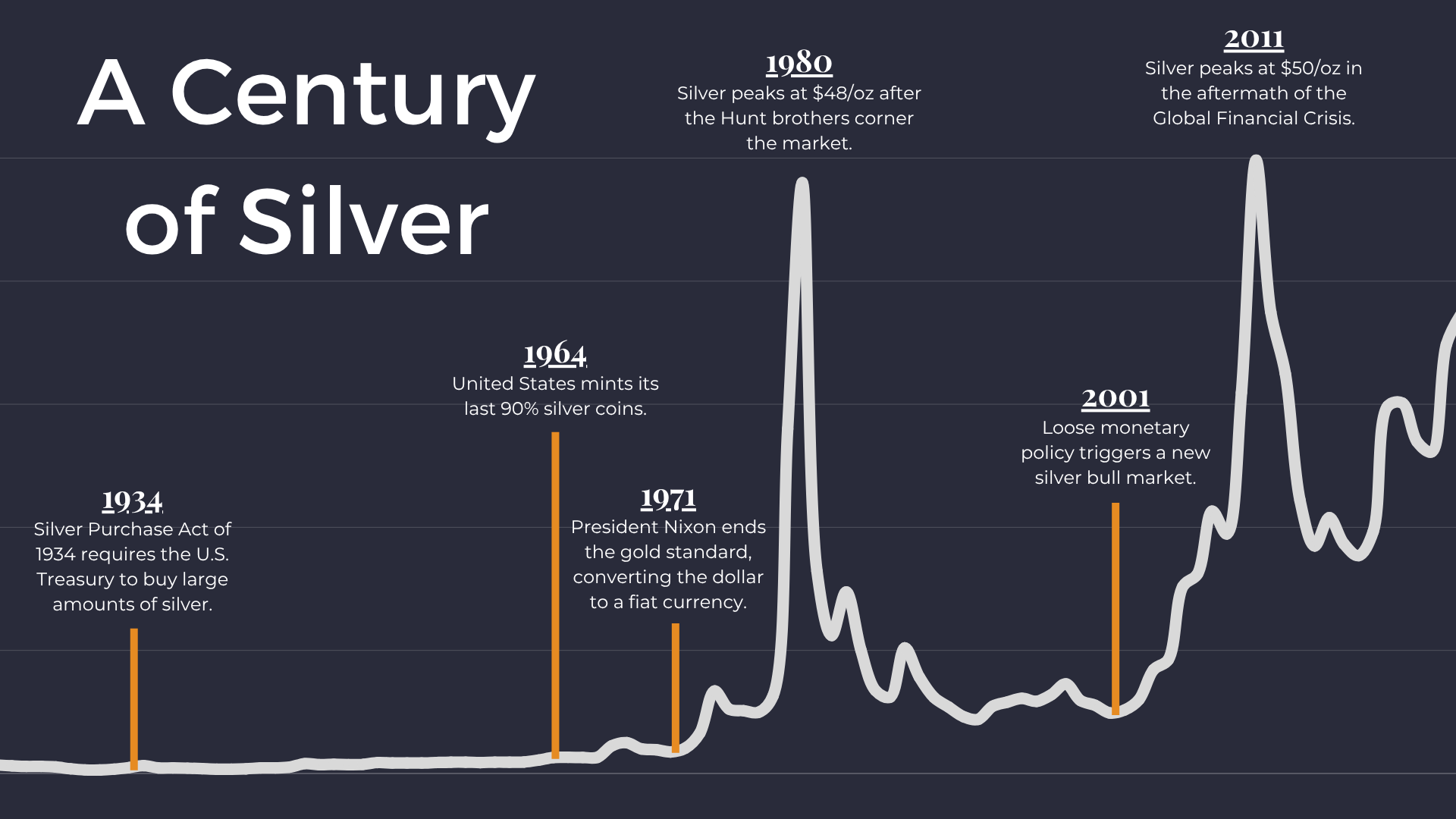
In the late 1970s and early 1980s, an attempt by the Hunt brothers to corner the silver market drove prices to historical nominal peaks near $50 per ounce. Decades later, following the 2008 global financial crisis, aggressive central bank stimulus and surging investment demand propelled silver to another massive peak in 2011, nearly matching those historic nominal highs.
Following these peaks, the market underwent prolonged consolidation phases where prices retreated before finding definitive structural floors. In more recent years, expanding photovoltaic demand colliding with stagnant global mine production has rekindled intense interest among both institutional and retail investors seeking protection against macroeconomic uncertainty.
| Market Factor | Primary Impact on Silver | Typical Market Response |
|---|---|---|
| Industrial Demand | Manufacturing consumption (Solar, EV) | Higher consumption supports structural price floors. |
| Real Interest Rates | Cost of holding non-yielding assets | Rising rates pressure prices downward; falling rates support rallies. |
| US Dollar Strength | Global currency exchange rates | Stronger dollar dampens prices; weaker dollar boosts international demand. |
| Investment Flows | Exchange-Traded Funds (ETFs) and bullion buying | Rapid inflows can cause sharp, short-term price spikes. |
Investment Vehicles: How to Gain Exposure to Silver
Investors looking to capitalize on silver price movements utilize several distinct financial and physical instruments. Each vehicle carries unique operational requirements, liquidity profiles, and counterparty risks.
Physical Silver Bullion
Purchasing physical silver in the form of government-issued coins (such as American Silver Eagles or Canadian Silver Maples) or private-mint bars provides direct ownership without counterparty risk. However, buyers must account for initial retail premiums, secure storage requirements, and potential liquidity delays when selling.
Silver Exchange-Traded Funds (ETFs)
Paper or digital instruments traded on major stock exchanges allow investors to track the spot price of silver without managing physical storage. While highly liquid and convenient for trading, ETF investors hold shares backed by physical silver stored in institutional vaults rather than possessing the metal directly.
Mining Equities and Streaming Companies
Investing in silver mining stocks or streaming and royalty companies offers leveraged exposure to silver prices. If the price of silver goes up, well-managed mining companies can see their profit margins and stock valuations expand faster than the metal itself. However, mining equities also carry operational risks, corporate mismanagement, and geopolitical hazards unrelated to the metal's spot price.
Common Mistakes When Evaluating Precious Metals
Navigating the precious metals market requires discipline. Investors often fall into predictable traps that distort their understanding of price movements and portfolio allocation.
- Confusing Nominal Highs with Inflation-Adjusted Values: Looking only at nominal dollar figures can be misleading. A price point reached in past decades may carry significantly higher purchasing power than the same nominal figure today due to cumulative inflation.
- Ignoring Retail Premiums: Assuming that buying physical silver matches the exact spot price quoted on financial news networks leads to miscalculations regarding immediate resale value.
- Overleveraging in Short-Term Speculation: Treating silver like a day-trading vehicle exposes investors to extreme volatility, particularly during periods of thin liquidity on commodities exchanges.
- Neglecting Storage and Security Costs: Physical bullion requires safe deposit boxes, home safes, or specialized depository storage, all of which incur ongoing expenses that impact overall returns.
Frequently Asked Questions
Does the price of silver always move in the same direction as gold?
While silver and gold share a high historical correlation as precious metals, silver is significantly more volatile. Because of its heavy industrial usage, silver can decouple from gold during periods of distinct industrial expansion or contraction. Market analysts frequently monitor the gold-to-silver ratio to evaluate whether silver is undervalued or overvalued relative to gold.
How does mine supply affect the price of silver?
Global mine supply is relatively inelastic; mines cannot easily ramp up production overnight when prices spike. Much of the world's silver is mined as a byproduct of copper, lead, and zinc extraction. Consequently, silver prices react strongly to supply deficits caused by declining ore grades or labor disruptions in major mining jurisdictions like Mexico and Peru.
Is physical silver a good hedge against inflation?
Physical silver acts as a traditional store of value and hard asset hedge against currency debasement over long horizons. However, over short holding periods, silver prices can experience severe drawdowns driven by interest rate shifts or macroeconomic liquidity crunches, making it less predictable than short-term inflation metrics.
What is the gold-to-silver ratio?
The gold-to-silver ratio represents the number of ounces of silver required to buy a single ounce of gold. Historically, this ratio has fluctuated widely. Investors often use it as a comparative valuation metric to determine whether silver offers better relative value than gold at any given point in the market cycle.
Where can I check real-time silver prices?
Real-time spot prices are published continuously by major financial platforms, commodities exchanges, and reputable bullion dealers. It is essential to distinguish between the global wholesale spot price and the retail purchase price, which includes fabrication and distribution markups.
Next Actions and Strategic Considerations
Evaluating whether the price of silver has gone up requires looking beyond daily market noise to examine underlying macroeconomic trends, industrial demand curves, and personal financial objectives. Before committing capital to precious metals, define your investment horizon, assess your risk tolerance, and determine whether physical bullion, ETFs, or mining equities best align with your portfolio strategy. For personalized guidance on asset allocation and tax implications, consult a qualified financial professional.
Image Gallery