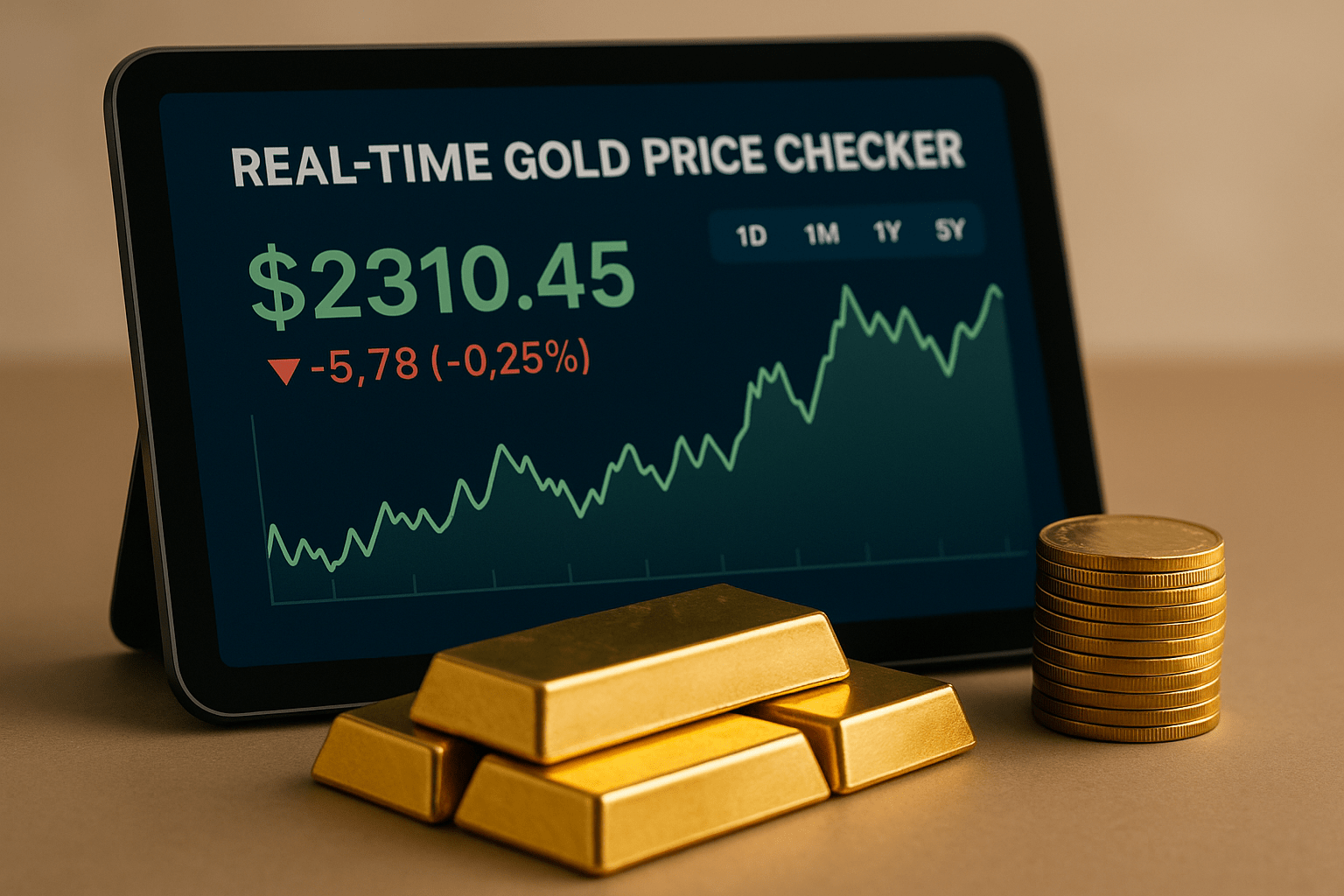
Livegold Real Time Gold Pricing and Market Context
Accessing livegold real time gold pricing and market context allows investors, jewelers, and financial analysts to track spot market fluctuations, evaluate macroeconomic drivers, and execute informed trades based on up-to-the-second pr...
Accessing livegold real time gold pricing and market context allows investors, jewelers, and financial analysts to track spot market fluctuations, evaluate macroeconomic drivers, and execute informed trades based on up-to-the-second precious metals data.
Contents
Navigating the modern precious metals market requires far more than simply glancing at a single headline number on a screen. Whether you are hedging an institutional portfolio, buying physical bullion, or tracking safe-haven assets during periods of geopolitical uncertainty, understanding how real-time pricing works is critical. The term "livegold" represents the continuous stream of global spot quotations, futures contracts, and over-the-counter (OTC) market activities that dictate the valuation of gold at any microsecond of the trading day.
To utilize this data effectively, market participants must look beyond surface-level figures. They need to comprehend the underlying plumbing of the London Bullion Market Association (LBMA) benchmarks, the COMEX futures exchange, and the global network of bullion dealers that translate international spot rates into local retail and wholesale prices. This guide explores the mechanics of real-time gold pricing, the macroeconomic context driving market sentiment, the technological infrastructure required to access live feeds, and practical considerations for evaluating your transactions.
The Mechanics of Real-Time Gold Pricing
Real-time gold pricing is not a single, centralized ticker tape originating from one specific exchange. Instead, it is an aggregated, continuous calculation derived from global trading venues, interbank transactions, and major pricing authorities operating across different time zones.
At the center of global spot pricing is the Over-the-Counter (OTC) market, dominated by the London bullion market. While London sets the benchmark via the LBMA Gold Price auctions twice daily, trading in physical and digital gold occurs 24 hours a day, five days a week. As markets transition from Asia-Pacific sessions (Sydney and Tokyo) to European hubs (London and Zurich) and finally to North American floors (New York and Chicago), liquidity flows seamlessly, driving continuous price adjustments.
Simultaneously, the COMEX division of the CME Group in New York acts as the primary global venue for gold futures contracts. Futures prices often lead the spot market during peak trading hours because of high-frequency trading, leveraged positioning, and immediate reaction to macroeconomic data releases. When market participants query real-time pricing feeds, platforms typically synthesize these streams, blending spot quotes with nearby futures month contracts to provide a comprehensive, weighted visual representation of current market value.
Spot Price Versus Futures and Physical Premiums
A common point of confusion for market newcomers is the distinction between spot prices, futures contracts, and retail physical prices.
- Spot Price: The current market price at which gold can be bought or sold for immediate delivery. This is the baseline number quoted on financial news networks.
- Futures Price: Agreements to buy or sell gold at a predetermined price on a specified future date. Futures prices incorporate the cost of carry, which includes storage, insurance, and interest rates (the cost of money).
- Physical Retail Price: The actual cost a retail buyer pays for physical bullion coins or bars. This price is calculated by taking the live spot price and adding a dealer premium, which covers manufacturing, distribution, and retailer profit margins.
| Pricing Metric | Primary Venue | Typical Use Case | Main Cost Drivers |
|---|---|---|---|
| Spot Price | Global OTC Markets (London/Zurich) | Institutional benchmarking, derivatives pricing | Interbank liquidity, supply-demand balance |
| Futures Price | COMEX / Multi-commodity exchanges | Speculation, hedging, forward planning | Interest rates, storage costs, expiry timelines |
| Physical Retail | Certified Bullion Dealers | Individual wealth preservation, tangible asset holding | Mint production costs, distribution, market scarcity |
Macroeconomic Context and Market Drivers
Gold does not exist in a vacuum. Its price movements reflect deep-seated macroeconomic currents, investor psychology, and monetary policy shifts. To interpret real-time price volatility correctly, you must examine the fundamental drivers that move institutional capital into and out of the asset class.
Interest Rates and Real Yields
The single most influential macroeconomic factor affecting gold prices is the trajectory of real interest rates—nominal interest rates adjusted for inflation. Because gold is a non-yielding asset that generates no interest, dividends, or cash flow, its opportunity cost rises when real interest rates climb. Conversely, when central banks lower interest rates or when inflation outpaces nominal yields, real interest rates drop into negative territory. In these environments, holding cash or bonds yields a negative return in purchasing power terms, making the zero-yield profile of gold much more attractive.
Real-time pricing feeds often react violently to scheduled economic data releases, such as the United States Consumer Price Index (CPI), Non-Farm Payrolls (NFP), and Federal Open Market Committee (FOMC) rate decisions. A higher-than-expected inflation print or a dovish central bank commentary typically triggers immediate upward momentum in live gold quotes.
Currency Fluctuations and the US Dollar Index (DXY)
Historically, gold has maintained an inverse relationship with the United States Dollar (USD). Because globally traded commodities, including gold, are denominated in US dollars, a weakening dollar makes gold cheaper for foreign buyers, boosting international demand and driving up prices. Conversely, a strengthening DXY (US Dollar Index) often exerts downward pressure on dollar-denominated gold valuations.
However, this inverse correlation is not absolute. During periods of acute global systemic stress or international conflict, both the US dollar and gold can rally simultaneously as investors seek ultimate liquidity and safe-haven assets.
Geopolitical Risk and Central Bank Accumulation
Geopolitical instability serves as a psychological catalyst for gold demand. Wars, trade sanctions, banking sector vulnerabilities, and sovereign debt crises frequently cause sudden spikes in safe-haven buying.
Furthermore, central banks—particularly in emerging markets such as China, Poland, India, and Singapore—have engaged in multi-year structural gold accumulation programs. By diversifying their foreign exchange reserves away from US dollar assets and into physical gold, central banks provide a robust underlying demand floor that cushions the market during cyclical downturns.
Evaluating Real-Time Data Feeds and Technology
For professional traders, algorithmic systems, and active retail investors, the latency and accuracy of a real-time data feed can dictate financial success. Delayed data can result in missed arbitrage opportunities or inaccurate execution metrics during high-volatility events.
Understanding Data Latency
Free public financial websites and consumer-facing apps often introduce data delays ranging from 10 to 20 minutes for spot commodities. While acceptable for long-term investors tracking generational trends, this delay is fatal for active swing traders or entities executing hedging strategies. Professional platforms utilize direct feeds from terminal providers (such as Bloomberg, Reuters, or specialized metals-focused data APIs) that deliver tick-by-tick updates with sub-second latency.
Bid-Ask Spreads and Liquidity Windows
When monitoring live gold pricing, pay close attention to the bid-ask spread—the difference between the highest price a buyer is willing to pay and the lowest price a seller is willing to accept. During normal trading hours, when London and New York markets overlap, liquidity is deep, and spreads are tight.
During the global market close on Friday evenings, or during holiday periods, liquidity dries up. In these low-liquidity environments, spreads widen significantly, and sudden news events can trigger flash volatility spikes that do not reflect true sustained market value.
Practical Considerations for Buyers and Sellers
Translating live market data into profitable or secure purchasing decisions requires operational discipline. Here are essential steps and considerations for interacting with the physical and digital gold markets:
- Verify the Reference Benchmark: Ensure that any dealer or platform you use ties its pricing directly to recognized international spot benchmarks (such as the LBMA) rather than arbitrary internal pricing models.
- Calculate Total Cost Over Spot: When purchasing physical bullion, do not focus solely on the spot price. Calculate the final out-the-door price per ounce, including premiums, shipping, insurance, and payment method fees (credit cards often incur higher processing surcharges than bank wires).
- Monitor Storage and Security: Decide whether you require allocated physical storage in secure, third-party vaults (such as those in Zurich, Singapore, or Salt Lake City) or unallocated digital fractional ownership. Each carries distinct counterparty risks and ongoing fee structures.
- Understand Tax Implications: Different jurisdictions treat gold taxation uniquely. In some regions, gold is classified as a collectible subject to higher capital gains tax rates, while others exempt sovereign bullion coins from value-added tax (VAT) or capital gains. Consult a certified financial planner or tax advisor regarding your specific jurisdiction.
Frequently Asked Questions
Why do different websites show slightly different live gold prices?
Discrepancies between websites usually stem from three factors: data feed latency, the specific benchmark referenced (spot versus futures), and whether the platform includes dealer markup or administrative fees in its default display. Professional trading terminals utilize direct feed aggregates, whereas consumer portals often pull delayed or cached data.
Can I buy physical gold at the exact live spot price?
No. The spot price represents the wholesale market value for large-scale, 400-ounce London Good Delivery bars. Retail buyers purchasing fractional, 1-ounce, or smaller bullion items must pay a manufacturer and dealer premium above spot to cover production, distribution, and retail overhead.
How do time zones affect real-time gold trading?
Gold trading is a 24-hour global market that follows the sun. It opens in Sydney on Sunday evening, moves through Asian centers, transitions to European hubs like London, and closes in New York on Friday afternoon. Liquidity and volatility typically peak when European and North American trading hours overlap between 8:00 AM and 12:00 PM Eastern Time.
What is the difference between allocated and unallocated gold?
Allocated gold means you hold specific, identifiable physical bars stored in a vault in your name, with no counterparty risk beyond the vault operator. Unallocated gold represents a claim on a pool of metal held by a bank or dealer; you are an unsecured creditor of that institution, meaning your holdings are part of their general balance sheet.
How does inflation directly impact real-time gold movements?
While gold is historically celebrated as an inflation hedge over long horizons, its real-time response depends on central bank reactions. If high inflation forces central banks to aggressively raise interest rates, gold may drop in the short term due to rising real yields, even if its long-term purchasing power preservation thesis remains intact.
Conclusion and Next Actions
Mastering livegold real time gold pricing and market context requires continuous observation of macroeconomic indicators, a clear understanding of market plumbing, and rigorous verification of pricing sources. Whether you are executing a strategic portfolio allocation or acquiring physical bullion, always verify your reference rates against recognized institutional benchmarks, account for all retail premiums and storage fees, and align your purchasing timeline with your broader financial objectives. Review your current portfolio allocation strategy, select a verified real-time data provider that matches your trading frequency, and consult a qualified financial advisor before deploying capital into precious metals.
Image Gallery