Comprehensive Guide to the Tools Used to Calculate Net Worth in Practice
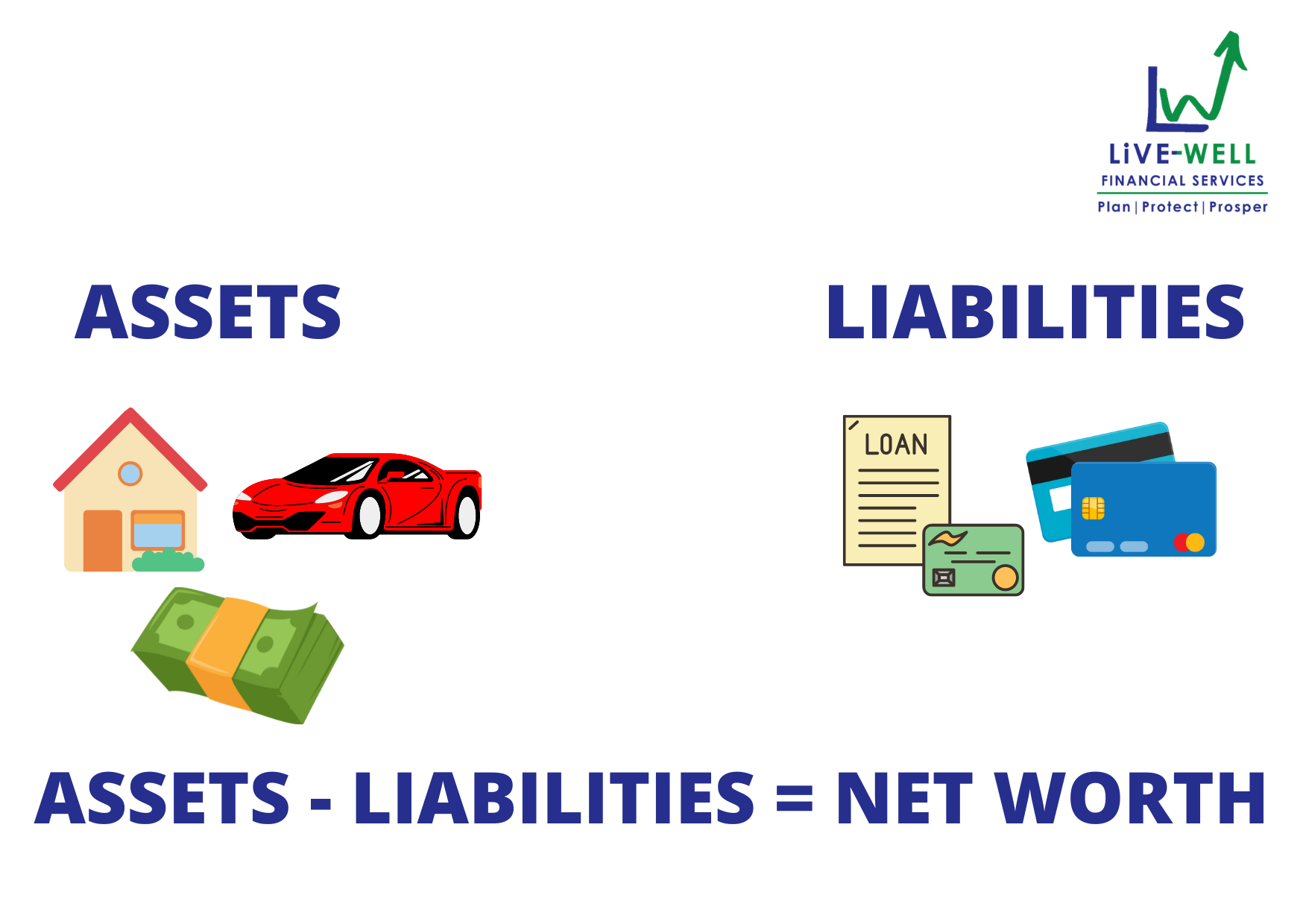
In practice, net worth is calculated by subtracting total liabilities from total assets using a variety of digital and manual tools. Most individuals and professionals utilize automated financial aggregators like Empower or Monarch Mon...
In practice, net worth is calculated by subtracting total liabilities from total assets using a variety of digital and manual tools. Most individuals and professionals utilize automated financial aggregators like Empower or Monarch Money, customized Excel or Google Sheets templates for granular control, or enterprise-grade wealth management platforms such as Addepar for complex, high-net-worth portfolios.
Contents
Calculating net worth is more than a simple subtraction exercise; it is a foundational practice in wealth management that provides a snapshot of financial health at a specific point in time. As of 2026, the landscape of tools available for this task has evolved to offer deep integration with global banking APIs, real-time valuation of volatile assets like cryptocurrency, and sophisticated projections for illiquid holdings such as real estate and private equity. Understanding which tool fits a specific financial profile requires an analysis of data security, automation capabilities, and the complexity of the underlying assets.
The Role of Manual Spreadsheets in Modern Net Worth Tracking
Despite the rise of automated fintech applications, manual spreadsheets remain a gold standard for financial professionals and disciplined DIY investors. Microsoft Excel and Google Sheets offer a level of customization that off-the-shelf software cannot match.
Granular Control and Privacy
The primary advantage of using a spreadsheet is the total control over data input and formula logic. For individuals with unique assets—such as minority stakes in private companies, intellectual property royalties, or collectibles—standardized apps often lack the necessary input fields. In a spreadsheet, an investor can create custom depreciation schedules or valuation models that reflect the true market value of niche assets. Furthermore, for the privacy-conscious, a local Excel file stored on an encrypted drive avoids the risks associated with linking sensitive bank credentials to third-party cloud aggregators.
Templates and Automation Add-ons
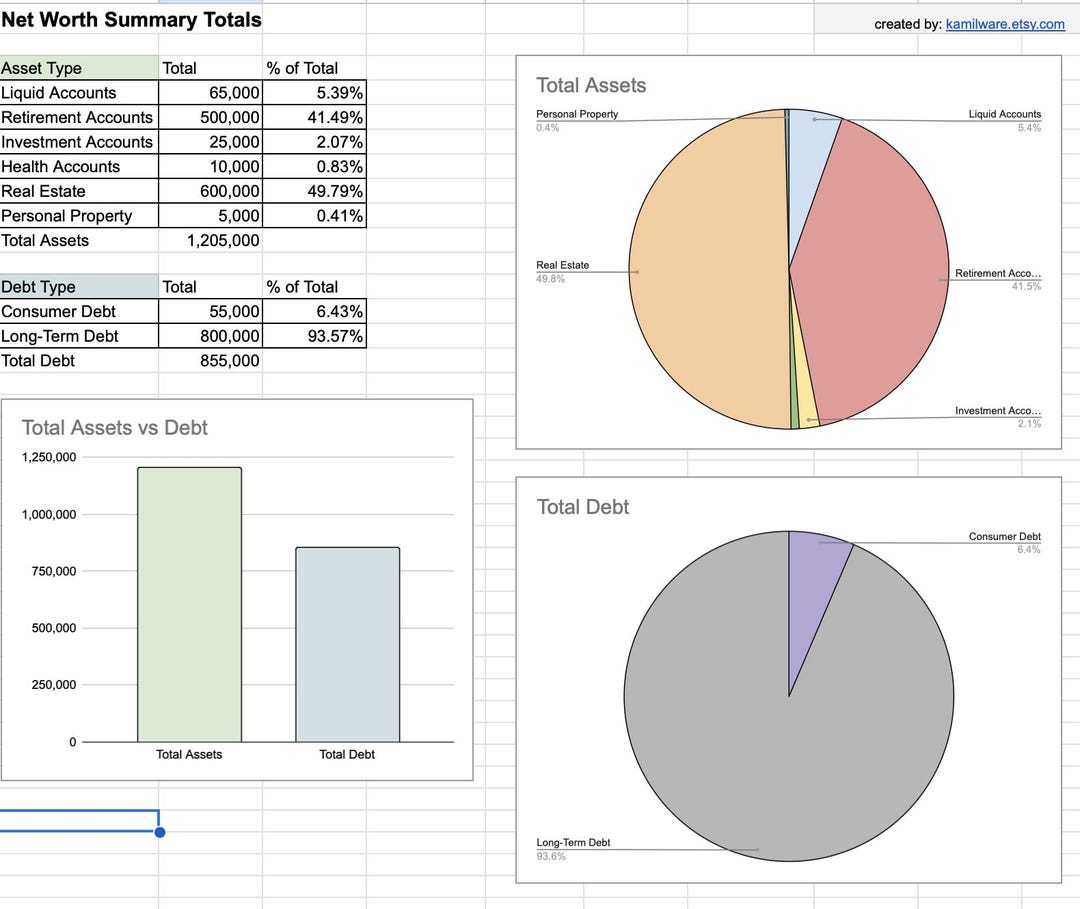
In 2026, the gap between manual entry and automation has narrowed through tools like Tiller. Tiller acts as a bridge, securely feeding transaction and balance data directly into Google Sheets or Excel. This allows users to maintain the flexibility of a spreadsheet while eliminating the tedious task of manual data entry. Additionally, resources like Vertex42 provide sophisticated net worth templates that include pre-built formulas for calculating debt-to-income ratios and asset allocation percentages, ensuring that the mathematical foundation of the calculation is sound.
Automated Personal Finance Management (PFM) Software
For the majority of users, automated PFM tools provide the most efficient way to track net worth. these platforms use "account aggregation" technology to pull data from various financial institutions into a single dashboard.
Leading Consumer Platforms
Several platforms have established themselves as industry leaders by 2026:
- Empower (formerly Personal Capital): Widely regarded as the premier tool for investment-focused net worth tracking. It excels at analyzing brokerage accounts, identifying hidden fees, and providing a "Retirement Planner" that uses Monte Carlo simulations based on the user's current net worth.
- Monarch Money and Copilot: These tools have gained significant market share by focusing on user experience and collaborative finance. They allow households to track joint net worth seamlessly, with AI-driven categorization that accurately distinguishes between an expense (which lowers net worth) and a transfer to an asset account (which keeps net worth neutral).
- Rocket Money: While primarily known for subscription management, its net worth features are robust for those whose portfolios consist mainly of traditional banking and credit products.
The Technology of Aggregation
These tools rely on service providers like Plaid or Yodlee to establish secure, read-only connections to financial institutions. This technology uses OAuth tokens where possible, meaning the software never actually stores the user's bank password. In practice, this automation ensures that the net worth figure is updated daily, reflecting market fluctuations in 401(k)s and brokerage accounts without user intervention.
Professional and Enterprise-Grade Wealth Management Tools
High-Net-Worth Individuals (HNWIs) and family offices require tools that go beyond simple account aggregation. Their "net worth" often involves complex legal structures, offshore accounts, and significant alternative investments.
Advisor-Led Platforms
Financial advisors typically use specialized software to provide clients with a holistic view of their wealth. eMoney Advisor and MoneyGuidePro are the industry standards. These platforms are not just trackers; they are "cash-flow centric" planning tools. They allow advisors to stress-test a client's net worth against potential long-term care costs, estate tax changes, or varied market returns. The net worth calculation here is part of a larger strategic roadmap.
High-End Asset Aggregators
For portfolios exceeding $10 million, tools like Addepar and Masttro are used. These platforms are designed to handle "alternative" assets that consumer apps cannot process effectively.
- Addepar: Provides deep data analytics for private equity and hedge fund performance. It allows users to see through complex ownership structures to understand their true exposure to different sectors.
- Masttro: Focuses on the "total wealth" picture for global families, including physical assets like art collections, aircraft, and yachts, integrating their estimated values into the live net worth report.
Specialized Tools for Specific Asset Classes
A comprehensive net worth calculation often requires secondary tools to value specific types of property that do not have a daily "ticker price."
Real Estate Valuation
Real estate is often the largest component of an individual's net worth. While many PFM apps pull "Zestimates" from Zillow, professionals often look for more conservative or detailed data. Tools like Redfin Estimate or realtor.com provide alternative data points. For commercial real estate, owners may use REIPro or specialized spreadsheets to calculate value based on Cap Rates and Net Operating Income (NOI) rather than just comparable sales.
Cryptocurrency and Digital Assets
The volatility of digital assets requires specialized tracking. CoinStats and Koinly link to wallets and exchanges via API to provide real-time valuation and, crucially, tax liability estimates. Since net worth should ideally be calculated on an "after-tax" basis, knowing the embedded capital gains liability in a crypto portfolio is essential for an accurate practical net worth figure.
Comparison of Net Worth Calculation Methods
The following table compares the primary methods used in practice as of 2026:
| Tool Category | Best For | Key Advantage | Major Limitation |
|---|---|---|---|
| Manual Spreadsheets | High customization; Privacy | Total control over formulas | High manual effort; no real-time updates |
| Consumer Apps (Empower/Monarch) | Everyday investors; Budgeting | Full automation; intuitive UI | Limited support for complex private assets |
| Professional (eMoney/Addepar) | HNWIs; Complex estates | Deep analytics; tax-aware planning | High cost; usually requires an advisor |
| Niche Trackers (CoinStats) | Crypto-heavy portfolios | Real-time API wallet syncing | Narrow focus on specific asset classes |
Practical Steps for Accurate Net Worth Calculation
To move from theory to practice, a systematic approach is required to ensure no liabilities are missed and assets are not overvalued.
- Identify All Accounts: List every checking, savings, brokerage, and retirement account. Use an aggregator like Plaid to see if your institutions are supported.
- Estimate Illiquid Asset Value: For home equity, use the average of at least two reputable valuation sites. For private businesses, use a conservative multiple of earnings or the book value.
- Document All Liabilities: This includes mortgages, auto loans, student debt, and credit card balances. Ensure that the "payoff amount" is used, rather than just the last statement balance.
- Account for "Hidden" Liabilities: Professionals calculate net worth with an eye toward liquidity. If a large portion of your wealth is in a traditional 401(k), remember that a portion of that "asset" belongs to the government in the form of future income taxes.
- Set a Reporting Cadence: In practice, net worth should be reviewed quarterly. Monthly reviews can lead to overreacting to market volatility, while annual reviews may miss significant shifts in financial health.
Security and Data Privacy in 2026
When using digital tools to calculate net worth, security is the paramount concern. By 2026, Multi-Factor Authentication (MFA) using hardware keys or biometrics has become the standard for all reputable financial platforms. Users should look for tools that carry SOC 2 Type II certification, which indicates that the company has undergone rigorous independent auditing of its data security protocols. Additionally, the use of "Read-Only" access is a critical safety feature; even if a net worth tracking account is compromised, the attacker cannot move funds out of the linked bank accounts.
Common Mistakes in Practice
Even with the best tools, errors in net worth calculation are common. One frequent mistake is including "lifestyle assets" that depreciate rapidly, such as furniture or mid-range vehicles, at their purchase price. In professional practice, these are often excluded or valued at a steep discount (liquidation value). Another error is failing to update the "liability" side of the ledger. For example, failing to account for accrued interest on a private loan can result in an inflated net worth figure. Finally, users often forget to reconcile "pending" transactions, which can lead to a discrepancy between the tool's reported balance and the actual available cash.
Frequently Asked Questions
What is the most accurate tool for calculating net worth?
The most accurate "tool" is often a combination of an automated aggregator (like Empower) for liquid assets and a manual spreadsheet for illiquid or private assets. Automation provides speed and real-time updates, while the spreadsheet allows for the nuanced valuation adjustments that software cannot automate.
How do I value a private business for my net worth?
In practice, most individuals use a conservative "Book Value" or a multiple of "Sellers Discretionary Earnings" (SDE). For a more formal calculation, the SEC and other regulatory bodies provide guidelines on asset valuation, but for personal tracking, a 2x to 4x multiple of annual profit is a common rule of thumb.
Should I include my primary residence in my net worth?
Yes, your primary residence is an asset. However, from a practical cash-flow perspective, many financial planners suggest tracking "Investable Net Worth" separately. This figure excludes your home and personal property, focusing only on assets that can be converted to cash to fund your lifestyle or retirement.
Are free net worth calculators safe to use?
Most reputable free tools, such as the one offered by Empower, make money by offering wealth management services rather than selling data. However, always read the privacy policy to ensure your data isn't being sold to third-party marketers. Look for 256-bit AES encryption as a minimum security standard.
How often should I update my net worth?
Updating your net worth once a month is sufficient for most people. This allows you to track the general trend of your wealth without becoming obsessed with daily market fluctuations. Professionals often perform a "deep dive" reconciliation quarterly or annually.
Recommended Action Plan
To begin, select a primary tool based on your portfolio complexity. If you have mostly liquid bank and brokerage accounts, sign up for a reputable PFM app like Monarch Money or Empower. For those with significant real estate or private holdings, download a high-quality Excel template and begin a manual audit. Regardless of the tool, the goal is consistency; the value of net worth tracking lies in the long-term trend, not the specific number on any given day.
Image Gallery