The Real Cost of Auto Insurance in Kalamazoo: 2026 Comprehensive Guide
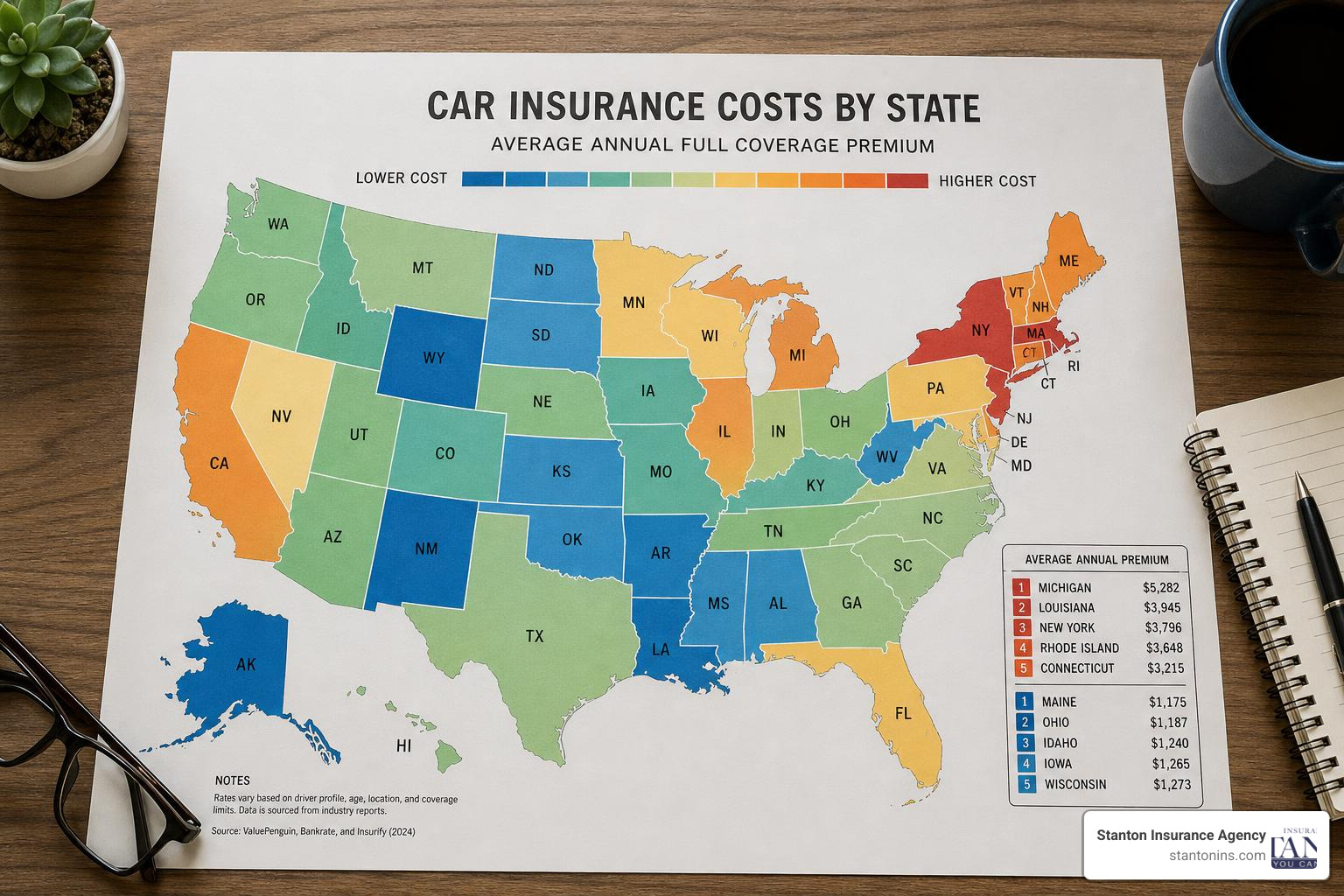
The average annual cost of full coverage auto insurance in Kalamazoo, Michigan, in 2026 is approximately $2,645, while a state-minimum policy averages around $970. However, the "real cost" involves more than just the monthly premium; i...
The average annual cost of full coverage auto insurance in Kalamazoo, Michigan, in 2026 is approximately $2,645, while a state-minimum policy averages around $970. However, the "real cost" involves more than just the monthly premium; it includes the Michigan Catastrophic Claims Association (MCCA) fee, chosen Personal Injury Protection (PIP) levels, and the financial exposure created by local driving conditions.
Contents
The Michigan No-Fault Framework in 2026
To understand the cost of insurance in Kalamazoo, one must first navigate the complexities of Michigan’s unique no-fault insurance system. Following the landmark reforms of 2020, Michigan moved away from a mandatory "unlimited" Personal Injury Protection (PIP) model to a tiered system. In 2026, these tiers remain the primary driver of your insurance expenses.
Drivers in Kalamazoo can choose from several PIP medical coverage levels:
- Unlimited Coverage: Provides lifetime medical benefits for accident-related injuries. This is the most expensive option but offers the highest level of financial security.
- $500,000 or $250,000 Limits: These mid-tier options reduce premiums by capping the insurer's liability for medical expenses.
- PIP Opt-Out/Exclusion: Available only to drivers with qualifying health coverage (such as Medicare Parts A & B or certain private plans). This significantly lowers the premium but shifts the medical risk to the driver's health insurance provider.
The choice of PIP level can fluctuate a Kalamazoo premium by as much as 40%. While the lower tiers appear cheaper on a monthly statement, the "real cost" manifests if a catastrophic accident occurs and medical expenses exceed the chosen limit. In such cases, the driver may be personally liable for costs beyond their policy's cap, or they may have to rely on their personal health insurance, which often carries its own high deductibles and co-pays.
Defining the "Real Cost" in Kalamazoo
In the insurance industry, the "real cost" is often defined as the total cost of ownership for a policy, including non-premium expenses. For a Kalamazoo resident, this includes the annual assessment from the Michigan Catastrophic Claims Association (MCCA).
As of 2026, the MCCA fee is a per-vehicle assessment applied to all policies that include unlimited PIP coverage. Even for those who opt for lower PIP limits, a portion of the fee may still apply to cover the MCCA’s existing deficit or legacy costs. This fee is non-negotiable and is passed directly from the insurer to the state association.
Furthermore, the real cost must account for the local economic environment. Kalamazoo’s cost of living, while generally lower than the national average, is balanced by Michigan’s high litigation environment. Even with no-fault laws, Michigan allows for "mini-tort" claims (up to $3,000 in 2026) to cover vehicle damage not covered by other insurance, which can add an unexpected layer of expense following a minor collision.
Local Variables: Why Kalamazoo Rates Differ from Detroit or Grand Rapids
Location is a powerful "rating factor" used by actuaries to determine risk. Kalamazoo (including zip codes like 49001, 49006, 49009, and 49048) occupies a middle ground in Michigan’s insurance landscape. It is significantly more affordable than the high-density, high-theft areas of Detroit or Flint, yet often slightly more expensive than more rural areas like Allegan or Van Buren counties.
Traffic Density and the I-94 Corridor
Kalamazoo sits directly on the I-94 corridor, a major logistical artery connecting Chicago and Detroit. The high volume of commercial trucking and commuter traffic increases the statistical probability of high-speed multi-vehicle accidents. Insurers account for this "corridor risk" when setting rates for residents who live within a certain radius of the highway. Increased accident frequency in these zones leads to higher localized claims, which in turn elevates premiums for everyone in the zip code.
The Influence of Western Michigan University (WMU)
The presence of Western Michigan University and Kalamazoo College introduces a high concentration of younger drivers (ages 18–24) into the city center. Statistically, younger drivers are involved in more frequent accidents. In areas like the 49006 zip code, which serves the WMU student population, premiums are often higher due to the sheer density of "high-risk" age groups. Even for older, safe drivers living in these student-heavy neighborhoods, the localized risk pool can put upward pressure on rates.
Detailed Breakdown of Coverage Options and Their Price Points
When shopping for a policy in Kalamazoo, residents must choose between "Full Coverage" and "Minimum Coverage." These terms are often misunderstood but have a massive impact on the real cost.
| Coverage Type | Estimated Annual Premium (Kalamazoo) | What it Protects |
|---|---|---|
| State Minimum | $970 - $1,150 | Only covers damages/injuries you cause to others; includes MCCA and PIP. |
| Standard Full Coverage | $2,450 - $2,800 | Includes Comprehensive/Collision with a $500 deductible. |
| High-Limit Unlimited | $3,200 - $3,600 | Unlimited PIP, high liability limits (250/500/100), and $0 glass deductible. |
| Student/Young Driver | $4,500 - $6,000 | Primary driver under age 21 with standard full coverage. |
Disclaimer: These figures are estimates based on 2026 market trends for a driver with a clean record and a mid-sized sedan. Actual rates vary significantly based on individual credit and vehicle specifics.
Liability Limits (BI/PD)
Michigan law requires Bodily Injury (BI) and Property Damage (PD) coverage. The default minimum is often 50/100/10 ($50,000 per person, $100,000 per accident for BI, and $10,000 for PD). However, in 2026, with the rising costs of vehicle repairs and medical care, these limits are often insufficient. A single accident involving a modern electric vehicle (EV) can easily exceed $10,000 in property damage. The "real cost" of an underinsured policy is the risk of personal bankruptcy if you are sued for damages exceeding your limits.
The Role of Credit Scores and Driving History in 2026
While some states have banned the use of credit scores in insurance pricing, Michigan currently allows "credit-based insurance scores." In Kalamazoo, a driver with an "Excellent" credit score may pay 50% less than a driver with a "Poor" credit score, even if both have identical driving records.
Insurers argue that credit history is a strong predictor of claim frequency. For Kalamazoo residents, this means that financial management is as much a part of their insurance cost as their driving habits. Furthermore, the 2026 market has seen an increase in "Telematics-based" pricing. Companies like State Farm, Progressive, and AAA now offer significant discounts to Kalamazoo drivers who allow a mobile app or plug-in device to monitor their braking, speed, and phone usage while driving.
The Impact of Infractions
A single speeding ticket on West Main Street or a "failure to yield" near the Kalamazoo Mall can increase premiums by 20% to 30% for up to three years. More serious offenses, such as a DUI, can lead to a premium doubling or the driver being forced into the "high-risk" market, where annual costs in Kalamazoo can exceed $5,000.
Hidden Costs: Deductibles and Out-of-Pocket Risks
The deductible is the amount you pay out-of-pocket before your insurance kicks in. In Kalamazoo, choosing a higher deductible (e.g., $1,000 instead of $500) can lower your annual premium by $200–$400.
However, the "real cost" of a high deductible must be measured against the local environment. Kalamazoo winters are notorious for lake-effect snow and ice, leading to a higher-than-average frequency of minor "fender benders" or sliding off the road. If a driver has a $1,000 deductible but only $500 in emergency savings, they are effectively underinsured.
Additionally, many Kalamazoo drivers overlook Uninsured/Underinsured Motorist (UM/UIM) coverage. Although Michigan is a no-fault state, UM/UIM coverage is vital for non-medical damages, such as "pain and suffering" or lost wages, if you are hit by a driver who lacks sufficient liability coverage. Given the high cost of insurance in Michigan, a significant percentage of drivers remain uninsured, making this "optional" coverage a practical necessity for the real-world Kalamazoo driver.
Practical Ways to Lower Your Kalamazoo Auto Insurance Bill
Reducing the cost of insurance in 2026 requires a proactive strategy. Beyond simply comparing quotes, Kalamazoo residents can leverage specific regional and behavioral adjustments:
- PIP Coordination: If you have high-quality employer-sponsored health insurance, you may be able to "coordinate" your medical benefits. This makes your health insurance the primary payer for auto injuries, which can slash the PIP portion of your premium by up to 50%.
- The "Kalamazoo Discount" (Bundling): Most major carriers offering coverage in the 490xx zip codes offer deep discounts (15% to 25%) if you bundle your auto policy with homeowners or renters insurance.
- Vehicle Choice: Insuring a vehicle with advanced safety features (Automatic Emergency Braking, Lane Assist) is cheaper in Kalamazoo because these features mitigate the risks of I-94 commuting.
- MCCA Optimization: Review your PIP choice annually. If you no longer need unlimited coverage because your health insurance situation has changed, switching to a capped limit can immediately remove or reduce the MCCA assessment.
Frequently Asked Questions
Does my zip code in Kalamazoo really change my rate?
Yes. Rates can vary by several hundred dollars between the City of Kalamazoo (49007) and Texas Township (49009). Higher population density and higher crime statistics in urban centers generally lead to higher premiums compared to the surrounding suburban or rural townships.
Is unlimited PIP coverage still worth it in 2026?
For most drivers, unlimited PIP remains the "gold standard." While it is the most expensive option, it provides a lifetime of medical care that private health insurance may not cover, such as long-term rehabilitation or home modifications. In Michigan, the real cost of saving $500 a year on premiums could be millions of dollars in medical debt if a catastrophic injury occurs.
How does the 2020 Michigan Reform affect my 2026 rates?
The reform introduced choice. Before 2020, everyone paid for unlimited coverage. In 2026, you have the power to lower your premium by choosing lower medical limits. However, the reform also changed how medical providers are reimbursed, which has had a complex impact on the overall "cost of care" included in your premium calculations.
Are there specific discounts for WMU or K-College alumni?
Many insurers, such as Liberty Mutual or Farmers, offer affinity discounts for alumni associations or employees of major local institutions like Western Michigan University, Bronson Healthcare, or Stryker. It is always worth asking an agent about "occupational" or "educational" discounts.
Final Recommendation for Kalamazoo Drivers
To find the most accurate "real cost" for your specific situation, you should obtain at least three quotes that compare different PIP levels. Do not simply look at the bottom-line premium; evaluate the deductible-to-savings ratio and the liability limits to ensure you aren't leaving your assets exposed. For most residents in the Kalamazoo area, a $500,000 PIP limit combined with 100/300/100 liability limits offers the best balance of cost-efficiency and meaningful protection against the unique risks of Southwest Michigan driving.
This guide is for informational purposes only. Auto insurance laws and rates are subject to change by the Michigan Department of Insurance and Financial Services (DIFS). Always consult with a licensed insurance professional for legal or financial advice regarding your specific policy.
Image Gallery