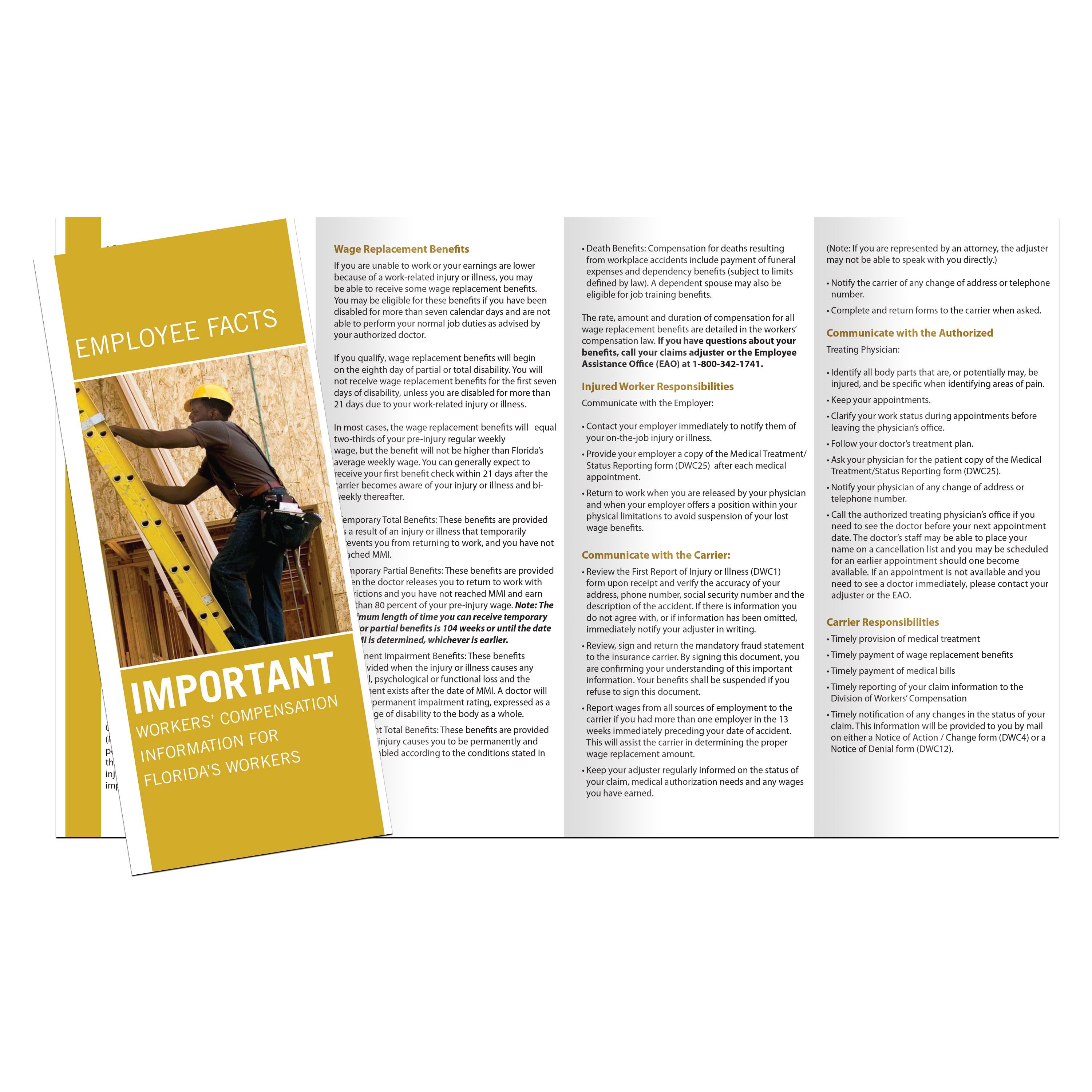
Maximum Compensation for Florida Officers in Workers' Comp Audits: Rules & Payroll Caps Explained
In Florida workers' compensation annual audits, corporate officers included in policy coverage have their reportable payroll capped at statutory maximums established by NCCI rules adopted by the Florida Office of Insurance Regulation....
In Florida workers' compensation annual audits, corporate officers included in policy coverage have their reportable payroll capped at statutory maximums established by NCCI rules adopted by the Florida Office of Insurance Regulation. For 2026 policies, non-construction and construction officer compensation is subject to mandatory minimum and maximum payroll caps—typically capped at $3,000 weekly ($156,000 annually) per officer—preventing excessive premium calculations on high executive earnings.
Contents
The Regulatory Framework for Florida Executive Payroll Caps
Workers' compensation insurance premiums are driven by two primary factors: classification codes (which represent operational risk) and payroll (which represents exposure). For standard employees, carriers calculate premium based on actual gross payroll without an upper limit. However, executive officers often earn salaries, bonuses, and equity compensation that far exceed operational exposure.
To create consistency and prevent prohibitive premiums for business owners, Florida regulates executive officer payroll exposure. Under Florida Statutes Chapter 440, the state establishes standard definitions for employment, corporate officers, and payroll auditing protocols. The financial mechanics governing maximum officer compensation in policy audits are maintained through rules approved by the Florida Office of Insurance Regulation and published by the National Council on Compensation Insurance (NCCI), which acts as Florida’s licensed rating organization.
During an annual workers' compensation audit, the insurance auditor does not simply take the gross W-2 income of a covered corporate officer. Instead, they must apply statutory minimum payroll floors and maximum payroll caps. If an officer's actual earnings exceed the designated maximum cap, the auditor must cap the reportable payroll at that upper limit. Conversely, if an officer earns less than the minimum payroll floor, the auditor must raise the reportable payroll to the minimum threshold.
Statutory Minimum and Maximum Payroll Limits in Florida
Florida handles corporate officer payroll differently based on whether the business operates within the construction industry or a non-construction industry. However, the payroll cap mechanisms follow uniform structure established by NCCI state special rules.
Non-Construction Industry Officers
In non-construction businesses, active corporate officers (such as Presidents, Vice Presidents, Secretaries, and Treasurers) are automatically included in workers' compensation coverage unless they explicitly elect to be exempt by filing a Certificate of Election to be Exempt with the state.
When a non-construction corporate officer is included on the policy:
- Maximum Payroll Cap: The reportable payroll for premium calculation is capped at $3,000 per week, which equals $156,000 per year for a full 52-week policy period. Even if an executive earns $500,000 in salary and bonuses, the auditor can only audit $156,000 of that compensation.
- Minimum Payroll Cap: The reportable payroll is subject to a statutory minimum floor, set at $1,000 per week ($52,000 annually). If an officer takes a nominal salary of $20,000, the carrier will still audit the officer at $52,000 for the policy year.
Construction Industry Officers
The construction sector in Florida operates under stricter statutory oversight due to higher inherent workplace risk. In construction, corporate officers are also automatically included in coverage unless a valid exemption is registered.
When a construction officer chooses to remain covered under the policy:
- Maximum Payroll Cap: The officer's payroll is subject to the state maximum payroll limit, capped at $3,000 per week ($156,000 annually) for audit rating purposes.
- Minimum Payroll Cap: The minimum weekly payroll floor applies ($1,000 per week / $52,000 annually), ensuring insurance carriers collect adequate baseline premium for high-risk field operations.
LLC Members and Partners
Limited Liability Company (LLC) members are treated differently under Florida law depending on industry trade:
- Non-Construction LLC Members: Automatically excluded from coverage, but may elect to be included by filing Form DFS-U4-1162. If included, standard officer minimum and maximum payroll caps apply.
- Construction LLC Members: Automatically included as employees under F.S. 440.02. To be excluded, eligible members must file for an exemption. If included, they are subject to the standard payroll min/max audit caps.
Corporate Officer Audit Rules Comparison
The following table outlines how corporate officer payroll limits, exemption rights, and audit rules apply across business structures in Florida.
| Entity Type & Industry | Default Coverage Status | Statutory Exemption Rights | Minimum Weekly Payroll Cap | Maximum Weekly Payroll Cap | Maximum Annual Payroll Cap |
|---|---|---|---|---|---|
| Non-Construction Corporation | Included | Unlimited officers; no ownership minimum required | $1,000 / week | $3,000 / week | $156,000 / year |
| Construction Corporation | Included | Max 3 officers; minimum 10% stock ownership | $1,000 / week | $3,000 / week | $156,000 / year |
| Non-Construction LLC | Excluded | May elect inclusion via Form DFS-U4-1162 | $1,000 / week | $3,000 / week | $156,000 / year |
| Construction LLC | Included | Max 3 members; minimum 10% ownership interest | $1,000 / week | $3,000 / week | $156,000 / year |
| Sole Proprietor / Partner (Non-Const.) | Excluded | May elect inclusion via Form DFS-U4-1162 | Set flat rate by NCCI | Set flat rate by NCCI | Fixed annual rate |
Note: Weekly caps are pro-rated when an officer is active on the policy for less than a full 52-week policy term.
Exemption Certificates and Their Direct Impact on Audit Payroll
Understanding how executive exemptions interface with annual payroll audits is critical to avoiding unexpected premium adjustments. Executive exemptions in Florida are administered by the Florida Division of Workers' Compensation.
- Corporate Officer Status Check: Is an Active Exemption Certificate on File with FL Division of WC?
- YES:
- Excluded from Audit
- $0 Payroll Assigned
- NO:
- Included in Audit
- Subject to Min/Max Caps:
- Min: $1,000/week ($52k/yr)
- Max: $3,000/week ($156k/yr)
- YES:
Exemption Criteria and Requirements
- Non-Construction Exemptions: Officers of non-construction corporations can apply for an exemption without paying a state filing fee. There is no minimum stock ownership requirement, and an unlimited number of corporate officers per corporation may exempt themselves.
- Construction Exemptions: Officers or LLC members in the construction industry must own at least 10% of the corporate stock or equity to qualify. A maximum of three officers per corporation or LLC may hold an exemption at any given time. Construction exemption certificates carry a mandatory state filing fee and must be renewed every two years.
Mid-Term Exemption Filing and Pro-Rating
If an officer holds a valid Exemption Certificate (Form DFS-U4-1161) active for the entire 12-month policy period, the auditor must assign $0 payroll to that officer.
However, if an officer files an exemption or revokes an exemption mid-term, the auditor must pro-rate both the coverage period and the statutory payroll caps:
- Example Calculation: If a non-construction officer earning $200,000 per year is covered for exactly 26 weeks (half the policy year) before obtaining a certified exemption, the maximum payroll cap is pro-rated.
- Pro-Rated Maximum Cap: $3,000 per week × 26 weeks = $78,000 audited payroll.
- Result: The carrier levies premium on $78,000 of officer payroll rather than the full annual $156,000 cap or the officer's full $200,000 actual earnings.
Audit Mechanics: What Compensation Counts Toward the Cap?
When an insurance auditor reviews executive payroll, they begin with total gross compensation reported on Form W-2, IRS Form 941, or state unemployment filings (RT-6). However, not all forms of executive compensation are treated identically under NCCI audit rules.
Included Compensation Elements
The following earnings count toward the officer’s minimum and maximum payroll cap calculations:
- Base salary and wages.
- Bonuses and incentive pay.
- Commissions.
- Holiday, vacation, and sick pay.
- Executive draw (for active working officers).
- Profit-sharing payments paid directly as payroll wages.
Excluded Compensation Elements
Auditors must exclude specific payments from the officer’s payroll calculation prior to applying the maximum cap:
- Distributions / K-1 Profits: Pass-through S-corporation distributions or LLC profit distributions that represent return on investment rather than reasonable compensation for services rendered.
- Qualified Severance Pay: Post-termination payments.
- Fringe Benefits: Employer contributions to qualified retirement plans (e.g., 401k match), group health insurance, and life insurance premiums.
- Reimbursed Business Expenses: Documented business expenses reimbursed under an accountable plan.
If an executive receives $100,000 in base W-2 salary and $120,000 in qualified S-corp K-1 distributions, the auditor must evaluate only the $100,000 W-2 salary. Because $100,000 is between the statutory floor ($52,000) and cap ($156,000), the reportable audited payroll for that officer is exactly $100,000.
Classification Code Assignment for Officers
Applying the correct maximum compensation cap is only half of the audit calculation; the second critical component is assigning the officer's capped payroll to the correct classification code.
Under NCCI rules applicable in Florida:
- Operational vs. Clerical Duties: A corporate officer who performs operational oversight, jobsite supervision, sales, or direct labor cannot simply be assigned to Code 8810 (Clerical Office Employees).
- Governing Code Rule: In most instances, an included corporate officer’s capped payroll is assigned to the governing classification code of the enterprise—the code reflecting the primary operational exposure of the business—unless the officer's duties qualify strictly for a separate office or sales classification under NCCI rules.
- Construction Industry Rule: In construction, an officer who spends any time supervising field operations or performing manual labor must be assigned to the highest-rated operational construction code applicable to their work, capped at the statutory $3,000 weekly limit.
Audit Defense: Avoiding Common Executive Payroll Overcharges
Policyholders frequently overpay on annual workers' compensation audits due to missing documentation or incorrect application of officer caps. Business owners and financial executives can prevent overcharges by following strategic audit preparations:
1. Maintain Active Exemption Proof
Auditors require proof of exemption issued by the state. Maintain physical and digital copies of all active Exemption Certificates (DFS-U4-1161). Ensure that certificates were valid on the effective date of the policy period being audited.
2. Separate Wages from Distributions in Accounting Systems
Ensure your general ledger clearly differentiates between W-2 officer compensation and S-corporation shareholder distributions or equity draws. Conflating distributions with payroll on ledger reports often leads auditors to improperly include distributions toward the payroll cap.
3. Verify Pro-Rated Calculations for Mid-Year Officers
If an officer was hired, retired, or exempted mid-policy year, review the auditor’s payroll calculation sheet. Ensure the auditor calculated the statutory cap using the exact number of active covered weeks rather than applying the full $156,000 annual maximum indiscriminately.
4. Review Audit Statements Prior to Payment
When the final audit bill arrives, inspect the audit statement detail. Compare the audited officer payroll numbers against your internal calculations. If an auditor applied $200,000 of earnings for a single officer instead of applying the $156,000 Florida maximum cap, request an immediate audit revision.
5. Utilize Formal Dispute Rights
If a dispute with an insurance carrier regarding officer payroll caps or classification cannot be resolved directly, policyholders can file a formal audit dispute under Florida administrative procedures or petition the Florida Workers' Compensation Appeals Board managed through NCCI.
Frequently Asked Questions
What is the maximum payroll cap for a corporate officer in a Florida workers' comp audit?
For policies rated under Florida NCCI rules, the statutory maximum payroll cap for an included corporate officer is $3,000 per week, which equals $156,000 per year for a full 52-week policy term. Any actual gross payroll earned above $156,000 is excluded from premium calculations.
What is the minimum payroll cap for a corporate officer in Florida?
The statutory minimum payroll floor for an included corporate officer in Florida is $1,000 per week ($52,000 per year). If an active officer earns less than $52,000 during a 12-month policy period, the carrier will adjust the audited payroll up to $52,000.
Do S-Corporation distributions count toward the officer payroll cap?
No. Legitimate S-corporation profit distributions (reported on Schedule K-1) are excluded from workers' compensation payroll calculations, provided they represent capital distributions rather than direct wage substitution for operational services. Only W-2 wages and direct executive compensation are evaluated against the payroll cap.
How are officer caps calculated if an exemption is filed mid-term?
When an officer files an exemption mid-policy year, the minimum and maximum payroll caps are pro-rated based on the actual number of days or weeks the officer was included in coverage. For example, if an officer was covered for 13 weeks prior to exemption approval, the maximum payroll cap for that period is $39,000 ($3,000 × 13 weeks).
Are corporate officers in construction allowed to exempt themselves?
Yes. Corporate officers and LLC members in the construction industry can elect to be exempt if they meet statutory criteria: they must own at least 10% of the entity's equity, pay the required state fee, and be one of no more than three officers exempted per business entity.
How does the officer payroll cap apply if an executive owns multiple corporations?
The statutory minimum and maximum payroll caps apply per officer, per legal entity policy. If an executive is an active included corporate officer for two separate corporations holding separate workers' compensation policies, each policy's audit will separately apply the statutory minimum and maximum caps based on the payroll earned under each entity.
Strategic Guidance for Business Executives
Managing executive exposure in workers' compensation requires active tracking of corporate ownership, exemption statuses, and payroll ledger structures. Business owners should review executive coverage choices prior to each annual policy renewal:
- Conduct an Annual Exemption Audit: Verify that all corporate officers who intend to be exempt hold valid, unexpired exemption certificates on the state portal.
- Review Executive Compensation Structure: Work with your CPA and commercial insurance broker to ensure executive draws, salaries, and distributions are recorded distinctly in accounting software prior to the carrier audit.
- Audit the Auditor: Never pay an audit billing adjustment without requesting the auditor's detailed audit workpapers to confirm officer caps ($3,000/week) were applied accurately.
Disclaimer: Workers' compensation audit rules and statutory caps are governed by Florida statutory law and regulatory administrative codes. Business owners should consult with a licensed Florida insurance agent, legal counsel, or certified public accountant to address specific operational and audit circumstances.
Image Gallery