Evaluating the Worst Engineering Degrees: Career Outlook and ROI in 2026
In 2026, the "worst" engineering degrees are defined by high educational costs paired with low job growth, extreme industry volatility, or hyper-niche applications that limit geographic mobility. While engineering remains a prestigious...
In 2026, the "worst" engineering degrees are defined by high educational costs paired with low job growth, extreme industry volatility, or hyper-niche applications that limit geographic mobility. While engineering remains a prestigious field, disciplines like Petroleum, Nuclear, and certain Biomedical paths often face significant challenges regarding long-term job security and career flexibility compared to broader disciplines.
Contents
Selecting an engineering major is no longer just about a passion for mathematics or design; it is a high-stakes financial decision. As we navigate the economic landscape of 2026, the "worst" degrees are not necessarily those with the most difficult curriculum, but those that offer the lowest Return on Investment (ROI) and the highest risk of skill obsolescence. To determine which degrees fall into this category, we must analyze them through the lenses of market saturation, salary-to-debt ratios, and the impact of automation and the global energy transition.
Defining "Worst" in the Engineering Context
Before examining specific majors, it is vital to establish the metrics used for this evaluation. In the engineering world, a "bad" degree is rarely about the quality of the science. Instead, it refers to a mismatch between the effort required to earn the degree and the professional rewards available upon graduation.
Return on Investment (ROI) and Student Debt
With tuition costs continuing to rise into 2026, the ratio of starting salary to total student debt is the primary metric for success. A degree that requires four to five years of rigorous study but results in a starting salary barely above the national average for non-technical roles can be considered a poor financial choice.
Job Growth and Market Saturation
Some engineering fields are seeing their total workforce shrink due to consolidation or technological shifts. If a degree produces 5,000 graduates a year for a market that only adds 500 new roles, the resulting "buyer’s market" for employers drives down wages and increases job insecurity for entry-level candidates.
Versatility and "Pigeonholing"
The most dangerous engineering degrees are those that are so specialized that their skills do not translate to other industries. If the primary industry for a specific degree—such as the paper or textile industry—declines, the engineer may find themselves needing a second degree just to pivot into a related field like Mechanical or Chemical engineering.
Petroleum Engineering: The Volatility Trap
For decades, Petroleum Engineering was the "gold standard" for high starting salaries. However, in 2026, it frequently tops the list of the worst engineering degrees for new students due to extreme volatility and the accelerating global shift toward renewable energy.
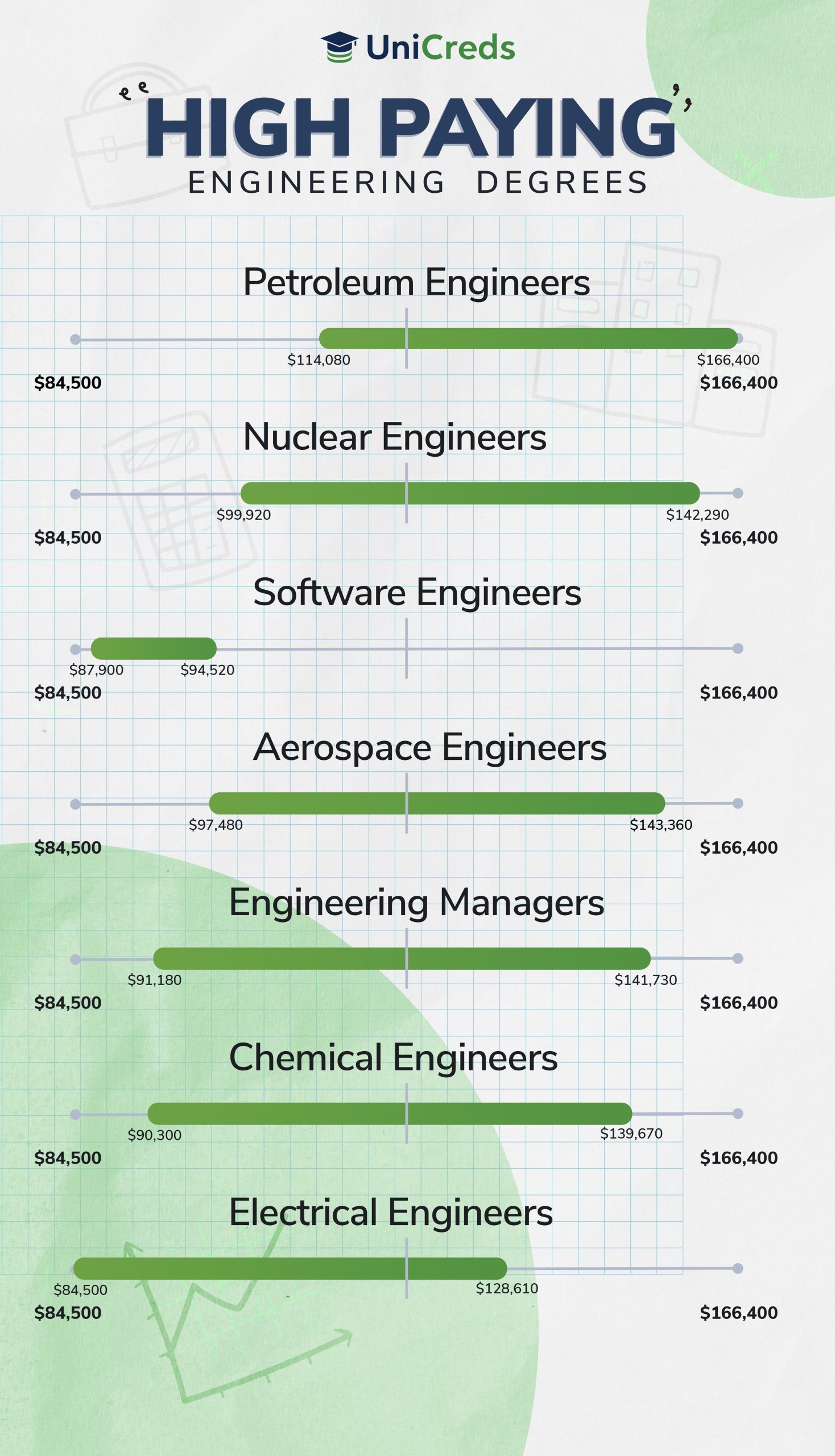
While the median salary for Petroleum Engineers remains high, the industry is notorious for "boom and bust" cycles. Graduates often find themselves entering a market that is either hiring aggressively or undergoing massive layoffs with no middle ground. Furthermore, as Environmental, Social, and Governance (ESG) mandates become more stringent in 2026, capital investment is increasingly diverted away from traditional extraction and toward green hydrogen and carbon capture—fields that often favor Chemical or Mechanical engineers over pure Petroleum specialists.
The risk of being "pigeonholed" is highest here. A Petroleum Engineer's skill set is deeply focused on reservoir simulation, drilling fluids, and petrophysics. If the oil and gas sector undergoes a structural downturn, these engineers struggle to convince recruiters in the tech or manufacturing sectors that their skills are transferable.
Biomedical Engineering: The Entry-Level Paradox
Biomedical Engineering (BME) is often cited as a "dream" degree for those who want to help people. Unfortunately, in 2026, it remains one of the most frustrating degrees for undergraduate students. The primary issue is the "Jack of all trades, master of none" problem.
Undergraduate BME programs provide a broad overview of biology, chemistry, and mechanical/electrical engineering. However, when medical device companies like Medtronic or Siemens hire for hardware roles, they often prefer Mechanical Engineers who have a deeper understanding of classical mechanics. When they hire for sensors or circuitry, they prefer Electrical Engineers.
Most high-paying roles in the biomedical sector now require a Master’s degree or a PhD. For a student graduating in 2026 with only a Bachelor's degree, the competition is fierce, and the pay is often lower than what a standard Mechanical Engineer earns in the same industry. Unless a student is committed to graduate school, BME represents a significant risk at the undergraduate level.
Nuclear Engineering: The Niche Constraint
Nuclear Engineering is a fascinating field that is currently experiencing a slight resurgence due to the development of Small Modular Reactors (SMRs). However, it remains a "worst" choice for many due to the extremely limited number of employers.
If you are a Nuclear Engineer, your career is almost entirely dependent on government policy and a handful of utility companies. Unlike a Civil Engineer, who can find work in almost any city in the world, a Nuclear Engineer is geographically tethered to specific regions with nuclear facilities or research laboratories. This lack of mobility can be a significant "hidden cost" to a career, making it difficult to switch jobs for better pay or to accommodate a spouse's career.
Civil Engineering: The Wage-to-Workload Gap
Civil Engineering is the backbone of society, and the demand for these professionals in 2026 is higher than ever due to aging infrastructure. However, it is often ranked poorly by graduates due to the salary-to-responsibility ratio.
Civil Engineers are responsible for public safety on a massive scale. They must obtain Professional Engineer (PE) licensure, which requires years of experience and passing rigorous exams. Despite this high level of liability and expertise, Civil Engineering consistently has one of the lowest median salaries of all major engineering disciplines. When compared to the salaries of Software Engineers or even Industrial Engineers—who often have lower professional liability—the financial "reward" for the stress involved in Civil Engineering can feel inadequate.
Comparative Analysis of Engineering Disciplines in 2026
The following table summarizes the key metrics for these "at-risk" degrees compared to a high-performing baseline like Computer Engineering.
| Engineering Major | 2026 Median Starting Salary | 10-Year Growth Outlook | Career Versatility | Risk Factor |
|---|---|---|---|---|
| Petroleum | $115,000 | Declining/Volatile | Low | High (Market Shift) |
| Biomedical (BS) | $72,000 | Moderate | Medium | High (Competition) |
| Nuclear | $92,000 | Stagnant | Low | Medium (Niche) |
| Civil | $78,000 | High | High | Low (Salary Gap) |
| Environmental | $74,000 | Moderate | Medium | Medium (Funding-based) |
| Computer (Baseline) | $108,000 | High | Very High | Low |
Note: Data represents 2026 projections based on current industry trends and historical Bureau of Labor Statistics data.
The Stigma of Industrial and Systems Engineering
Industrial Engineering (IE) is frequently mocked by other engineering students as "Imaginary Engineering" or "Engineering Lite." While the salaries are actually quite competitive, it lands on this list for a different reason: Role Ambiguity.
In 2026, many of the traditional roles for Industrial Engineers—such as supply chain optimization and manufacturing workflow analysis—are being aggressively targeted by AI and data science professionals. An IE graduate often finds themselves competing with Data Scientists who have stronger coding skills and Business Analytics majors who have lower salary expectations. Without a strong focus on data engineering or specific technical certifications, an IE degree can leave a graduate in a "no man's land" between management and technical engineering.
How to Avoid a "Bad" Engineering Degree
If you are currently enrolled in or considering one of these majors, it does not mean your career is doomed. Success in engineering often depends on how you supplement your formal education.
- Prioritize ABET Accreditation: Regardless of the major, a degree from a non-ABET accredited program is effectively useless for professional licensure. You can verify the status of a program at the ABET official website.
- Focus on "Minor" Skills: If you are a Civil Engineer, gain expertise in data analytics or project management software. If you are a Biomedical major, consider a minor in Mechanical Engineering or Computer Science to ensure you have "hard" technical skills that recruiters value.
- Geography Matters: If you choose a niche degree like Nuclear or Petroleum, you must be willing to move where the work is. If you want to stay in your hometown, a versatile degree like Mechanical or Electrical Engineering is always a superior choice.
- The Master’s Pivot: Many students use a broad undergraduate degree (like Physics or Mechanical Engineering) and then specialize with a Master’s degree in a niche field like Biomedical or Aerospace. This provides a "safety net" if the niche industry collapses.
Frequently Asked Questions
Which engineering degree has the highest unemployment rate in 2026?
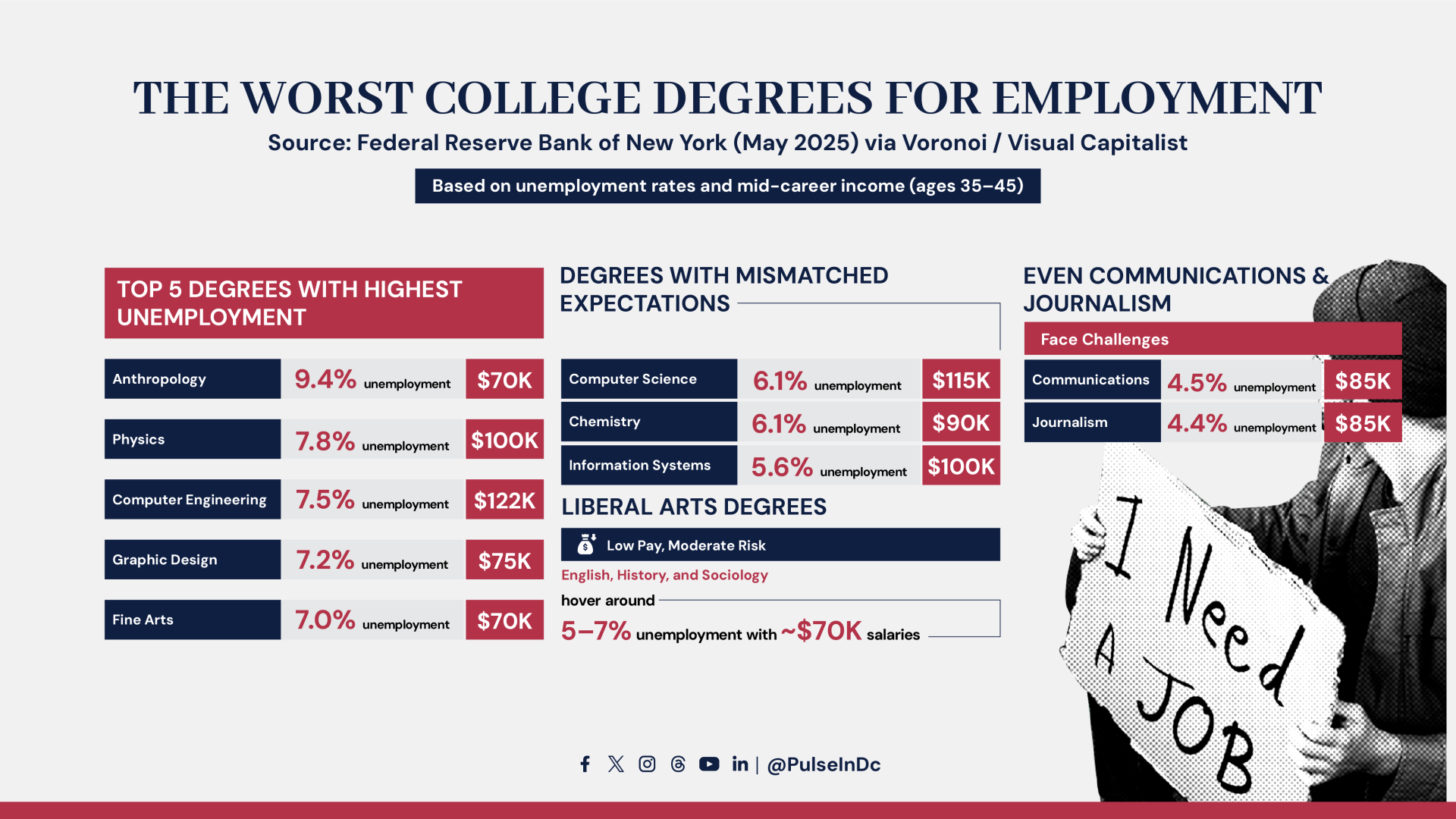
Currently, specialized degrees like Petroleum and Environmental Engineering see higher fluctuating unemployment rates compared to Electrical or Software Engineering. This is largely due to their dependence on specific government regulations and commodity prices.
Is Civil Engineering still a safe career choice?
Yes, it is very safe in terms of job availability. However, it is often categorized as "worse" only in terms of the ROI compared to the high level of stress and the technical requirements for licensure.
Can I switch from Biomedical Engineering to Mechanical Engineering easily?
The first two years are usually very similar. However, by the junior year, the paths diverge significantly. It is generally easier to switch from Mechanical to Biomedical than the other way around because Mechanical covers a broader range of fundamental physics.
Are there any engineering degrees that are becoming "obsolete"?
No degree is becoming entirely obsolete, but "Paper Engineering" and "Textile Engineering" have become so niche that they are now usually absorbed into Chemical or Materials Engineering departments at most major universities.
Does the prestige of the university matter for these "worst" degrees?
Yes. For niche fields like Nuclear or Petroleum Engineering, coming from a top-tier "feeder" school (like Texas A&M for Petroleum) is critical. Graduates from lower-ranked schools in these niche fields face much higher hurdles in a competitive market.
Practical Recommendation
If you are entering the university system in 2026, the safest path is to pursue a broad foundational degree (Mechanical, Electrical, or Chemical) for your Bachelor's. These disciplines provide the versatility to survive economic downturns. You can always specialize in a niche field through internships, electives, or a one-year Master’s program. Avoid hyper-specializing too early unless you have a guaranteed pipeline into a specific industry or a high tolerance for career volatility.
Image Gallery