The Juvenile Toilet Dilemma in Schools: Solutions for Health, Safety, and Privacy in 2026
The juvenile toilet dilemma in schools refers to the complex intersection of deteriorating facilities, student safety concerns, and health risks that lead many children to avoid using school restrooms. Solving this requires a multi-fac...
The juvenile toilet dilemma in schools refers to the complex intersection of deteriorating facilities, student safety concerns, and health risks that lead many children to avoid using school restrooms. Solving this requires a multi-faceted approach combining modern architectural design, improved monitoring technology, and policies that prioritize student dignity, hygiene, and accessibility.
Contents
Understanding the Scope of the School Restroom Crisis
As of 2026, the "juvenile toilet dilemma" has moved beyond simple plumbing issues to become a significant administrative and public health challenge. For decades, school restrooms were designed as utilitarian spaces, often tucked away in secluded corners of the building. This isolation, while intended to provide privacy, has inadvertently created "dead zones" where supervision is difficult, leading to a rise in antisocial behaviors such as vaping, bullying, and vandalism.
The dilemma is twofold: students need safe, clean, and private spaces to attend to their biological needs, yet school administrators struggle to maintain these spaces against the backdrop of limited budgets and evolving social pressures. Research from the National Center for Education Statistics (NCES) indicates that restroom facilities are among the most frequently cited areas for student dissatisfaction and safety concerns. When students do not feel comfortable using the restroom, the resulting "holding behavior" can lead to significant long-term health consequences.
The Impact on Physical and Mental Health
When students avoid using the bathroom for the duration of the school day—a practice known as "toilet avoidance"—it triggers a cascade of physiological issues. Chronic suppression of the urge to urinate or defecate can lead to urinary tract infections (UTIs), constipation, and bladder dysfunction. In many cases, students also restrict their fluid intake to avoid the need to use the restroom, leading to dehydration, which negatively impacts cognitive function and classroom performance.
From a mental health perspective, the restroom can be a source of intense anxiety. For students who are victims of bullying or those struggling with body image and privacy concerns, the school bathroom represents a site of vulnerability. The rise of "vape culture" has further complicated this, as restrooms often become crowded with groups of students, making the space inaccessible or intimidating for those who simply need to use the facilities.
Modern Infrastructure and Design Solutions
To resolve the juvenile toilet dilemma, architectural standards in 2026 are shifting toward "Environmental Design for Safety." Traditional gang-style restrooms with large gaps in stall doors and communal sink areas are being phased out in favor of more transparent yet private configurations.
The Open-Plan Model
One of the most effective solutions being implemented in modern school construction is the open-plan or "airport-style" restroom. In this configuration, the communal hand-washing area is located in an open hallway or is visible through a large, doorless entryway. This allows for natural "passive supervision" by staff and passing students, significantly reducing the likelihood of vaping or bullying in the sink area.
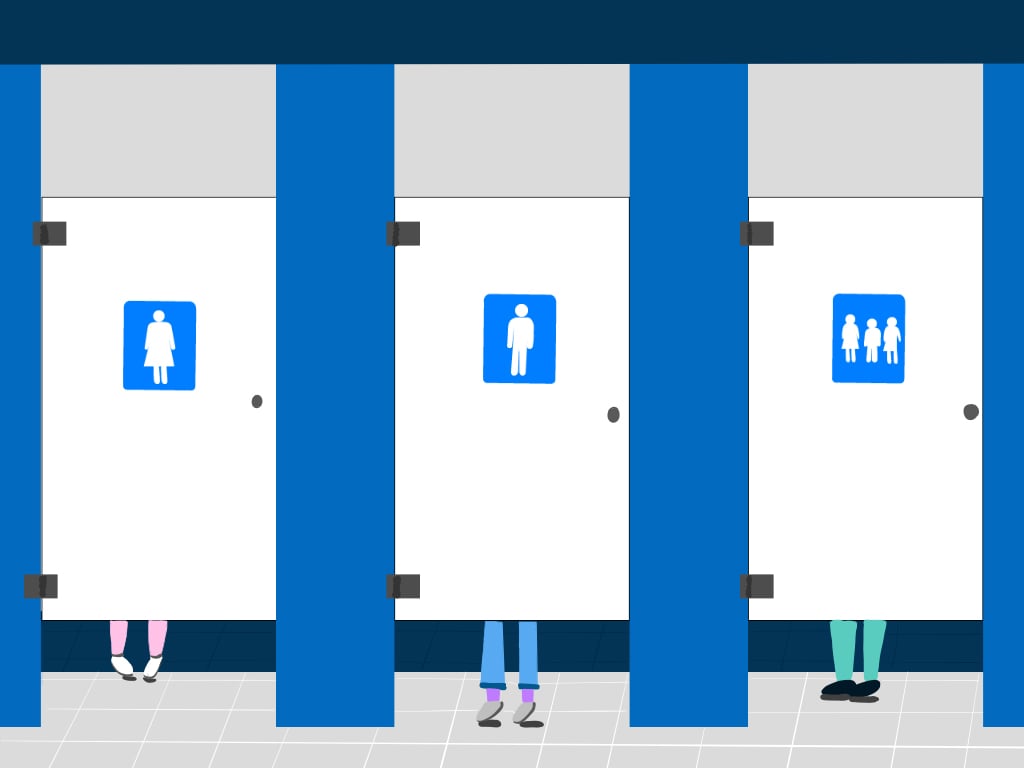
Privacy for the actual use of the toilet is maintained through the use of floor-to-ceiling stalls. These individual compartments feature solid doors with no gaps, ensuring total visual privacy for the user. This design effectively balances the need for security in the common area with absolute privacy in the individual cubicle.
Smart Technology Integration
Technology plays a pivotal role in managing school facilities in 2026. Many districts have adopted "Smart Restroom" systems that utilize Internet of Things (IoT) sensors. These sensors can monitor:
- Air Quality: Detecting chemical signatures from e-cigarettes and THC vapes without invading visual privacy.
- Consumable Levels: Notifying custodial staff in real-time when soap, paper towels, or toilet paper are running low.
- Occupancy Patterns: Identifying "hot spots" where overcrowding occurs, allowing administrators to adjust supervision schedules.
Navigating Legal and Inclusivity Requirements
The dilemma is further complicated by the need to accommodate a diverse student population, including those with disabilities and students requiring gender-neutral facilities. Under Title IX and the Americans with Disabilities Act (ADA), schools are legally mandated to provide accessible and equitable facilities.
Gender-Neutral and Single-User Facilities
The shift toward individual, floor-to-ceiling stalls often resolves much of the tension surrounding gender-neutral restrooms. By providing private compartments that open into a shared, supervised sink area, schools can offer a solution that is inclusive of all students while maintaining safety. This approach reduces the "segregated" feeling of older designs and ensures that LGBTQ+ students feel safe and respected.
Menstrual Equity and Hygiene
In 2026, menstrual equity has become a standard requirement in many jurisdictions. This involves providing free menstrual products in all restrooms (including male and gender-neutral restrooms to support trans and non-binary students) and ensuring that disposal bins are present in every individual stall. Failure to provide these basic necessities is a major contributor to school absenteeism among menstruating students.
Comparison of School Restroom Models
The following table compares traditional restroom designs with the modern solutions currently being implemented to address the juvenile toilet dilemma.
| Feature | Traditional Gang Restrooms | Modern Open-Plan Restrooms | Single-User Universal Pods |
|---|---|---|---|
| Supervision | Difficult; hidden corners | High; open to hallways | Moderate; locking indicators |
| Privacy | Low; gaps in stall doors | High; floor-to-ceiling doors | Maximum; fully enclosed room |
| Vandalism Risk | High; unmonitored spaces | Low; high-visibility sinks | Low; limited occupancy |
| Cost | Baseline | Moderate (Retrofit required) | High (New construction) |
| Inclusivity | Limited; gender-segregated | High; inherently inclusive | Maximum; universal access |
| Maintenance | Scheduled checks only | IoT-enabled real-time alerts | Individual unit tracking |
Overcoming Maintenance and Vandalism Challenges
Vandalism remains a primary hurdle in solving the juvenile toilet dilemma. Trends such as the "Devious Licks" social media challenges of previous years demonstrated how quickly facilities can be rendered unusable. To combat this, schools are turning to high-durability materials and "vandal-resistant" fixtures.
- Stainless Steel Fixtures: While more expensive initially, stainless steel toilets and sinks are much harder to break than porcelain alternatives.
- Recessed Dispensers: Paper towel and soap dispensers are being built into the walls to prevent them from being ripped off.
- Epoxy Flooring: Seamless flooring prevents the buildup of bacteria and odors, making deep cleaning more efficient and effective.
Beyond hardware, schools are finding success in "student ownership" programs. When students are involved in the design or mural-painting of restroom common areas, the rates of vandalism typically drop. Treating the restroom as a respected part of the school environment, rather than a neglected utility, changes the psychological relationship students have with the space.
Recommended Action Plan for School Administrators
To effectively resolve the juvenile toilet dilemma, school boards and administrators should follow a structured approach to assessment and renovation.
- Audit Current Facilities: Conduct a thorough inspection of all restrooms. Identify broken locks, lack of supplies, and areas where lighting is insufficient.
- Gather Student Feedback: Use anonymous surveys to ask students if they feel safe in the restrooms and if they are avoiding them. This data is crucial for justifying budget allocations.
- Prioritize "Privacy First" Retrofitting: If a full renovation isn't possible, prioritize replacing standard stall doors with full-length doors and fixing all locking mechanisms.
- Implement IoT Monitoring: Install air quality and vape sensors to regain control over the environment without the need for intrusive physical policing.
- Establish a Cleaning Gold Standard: Ensure restrooms are cleaned multiple times a day during peak usage hours, not just once after school ends.
Frequently Asked Questions
Why do students avoid using school restrooms?
Students primarily avoid school restrooms due to concerns about safety, cleanliness, and privacy. Issues such as bullying, the presence of students vaping, broken stall locks, and a lack of basic hygiene supplies like soap and paper towels make these spaces uninviting and stressful.
What are the health risks of "holding it" during the school day?
Chronic avoidance of the restroom can lead to urinary tract infections (UTIs), bladder dysfunction, and severe constipation. Additionally, students often stop drinking water to avoid needing the restroom, which causes dehydration, headaches, and decreased concentration in the classroom.
Are gender-neutral bathrooms safer than traditional ones?
When designed correctly—using the open-plan model with communal sinks and floor-to-ceiling private stalls—gender-neutral bathrooms can actually be safer. The increased visibility in the common areas reduces the opportunities for bullying and vaping, while the enclosed stalls provide superior privacy for all students.
How can schools stop vaping in restrooms without cameras?
Schools use specialized IoT environmental sensors that detect the chemical particulates and vapor density associated with e-cigarettes. These sensors alert administrators via a mobile app or dashboard in real-time, allowing them to intervene without violating student privacy through video surveillance in sensitive areas.
Does the law require schools to provide free menstrual products?
As of 2026, many states and international jurisdictions have passed "Menstrual Equity" laws requiring public schools to provide free menstrual products in restrooms. This is increasingly recognized as a fundamental necessity for equal access to education.
Moving Forward
The juvenile toilet dilemma is a solvable problem that requires shifting from a "policing" mindset to a "design and dignity" mindset. By investing in modern infrastructure that prioritizes visibility in common areas and absolute privacy in stalls, schools can reclaim these spaces. The goal is to ensure that no student’s health or education is compromised by the state of their school’s restrooms.
For further guidance on facility standards, administrators should consult the U.S. Environmental Protection Agency (EPA) guidelines on healthy school environments.
Image Gallery