How to Play Redemption Song Chords by Bob Marley
To play "Redemption Song" by Bob Marley, you primarily need to master five basic open chords: G Major, E Minor, C Major, A Minor, and D Major. The song is performed in the key of G Major using a standard 4/4 time signature. Its signatu...
To play "Redemption Song" by Bob Marley, you primarily need to master five basic open chords: G Major, E Minor, C Major, A Minor, and D Major. The song is performed in the key of G Major using a standard 4/4 time signature. Its signature sound relies on a combination of a monophonic bassline intro and a steady, rhythmic folk-style strumming pattern.
Contents
Understanding the Musical Significance of Redemption Song
As we look at "Redemption Song" in 2026, it remains one of the most culturally significant and technically accessible tracks for guitarists of all levels. Released in 1980 on the album Uprising, it was a departure from Bob Marley's typical reggae-roots production. Instead of the "one-drop" drum beat or the syncopated "skank" guitar rhythm, this track is a raw, acoustic folk ballad. This simplicity is precisely what makes it a staple for anyone learning the instrument.
The song was inspired by a speech by Marcus Garvey and was written at a time when Marley was facing his own mortality. This weight is carried by the minor-key transitions (the Em and Am chords) that punctuate the otherwise bright G Major key. Understanding this emotional context helps a player approach the dynamics of the song with the necessary gravity and precision.
Prerequisites and Guitar Setup
Before diving into the chords, ensure your instrument is properly prepared. "Redemption Song" is traditionally played on a steel-string acoustic guitar, which provides the percussive "snap" heard on the original recording.
- Tuning: The song uses standard EADGBE tuning. While some live versions might feature Marley tuning slightly flat or sharp depending on the day, the studio recording is grounded in standard pitch.
- String Choice: Lighter gauge strings (11s or 12s) are recommended for beginners to handle the hammer-ons and pull-offs in the intro riff without excessive finger fatigue.
- Posture and Grip: Because the song requires transitioning between the low E-string for the intro and full chords for the verse, a relaxed "C-shape" hand position is vital.
The Essential Chord Inventory
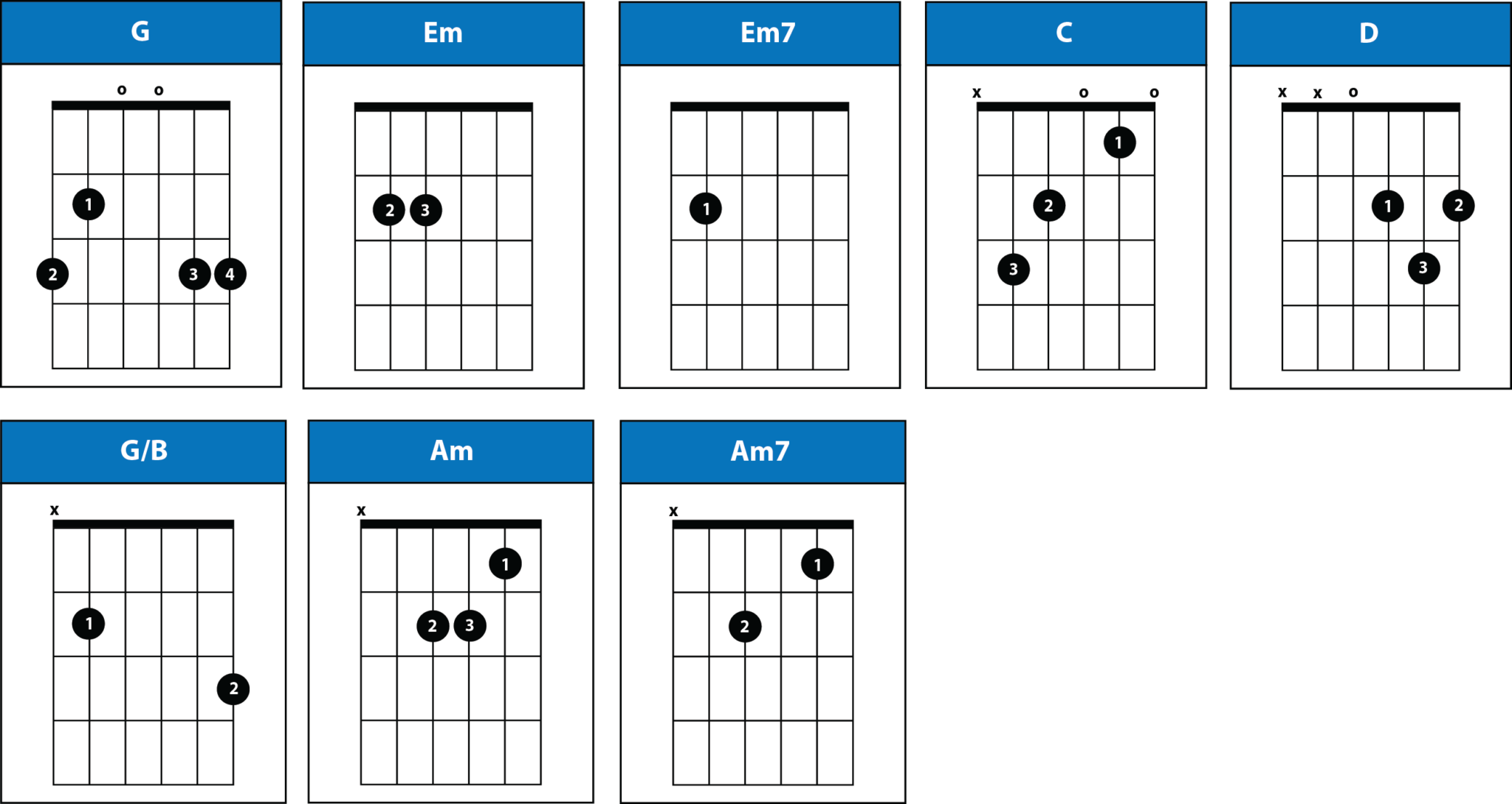
To play the full song, you must be comfortable with the following open-position chords. While these are basic shapes, the way they are voiced and connected is what defines the track.
G Major (G)
The tonal home of the song. You can play this using the standard three-finger shape (320003) or the "four-finger" version (320033). Marley often used the three-finger version to allow for easier movement to the C Major chord.
E Minor (Em)
This provides the "sad" or reflective tone in the verses. It is played as 022000. It is crucial to let all the strings ring clearly, particularly the open G, B, and high E strings, to maintain the song's airy feel.
C Major (C)
Played as x32010. The transition from G to C is one of the most common movements in the song. Focus on keeping your thumb behind the neck to ensure the high E string isn't muted.
A Minor (Am)
Played as x02210. This chord is used sparingly but effectively to create tension before returning to the D Major or G Major.
D Major (D)
The "dominant" chord (xx0232). It serves as the bridge that pulls the melody back to the G Major root.
The D/F# Passing Chord
In the verse, as the song moves from G Major to E Minor, there is a "walk-down" in the bass. This is often played by hitting an F# note on the 2nd fret of the low E string while playing a variation of a D chord (2x0232). This adds a sophisticated, professional melodic movement to the progression.
The Iconic Intro Riff: A Step-by-Step Guide
The intro to "Redemption Song" is arguably as famous as the chords themselves. It is a monophonic line played on the lower strings (E, A, and D).
- Start on the G: Begin by plucking the open G string, then the low E string at the 3rd fret.
- The Walk-up: Move from the open A string to the 2nd fret (B) and then the 3rd fret (C).
- The Return: The melody then descends back to the G.
- Technique: Use your index and middle fingers for the fretting. In 2026, many instructors suggest using "hammer-ons" for the A to B transition to give it the fluid, legato sound found on the original Uprising track.
The riff essentially outlines the G Major scale but emphasizes the "blue" notes and folk inflections that Marley was known for. Practicing this with a metronome at a slow tempo (around 60 BPM) before speeding up to the song's actual tempo (~116 BPM) is the best way to ensure rhythmic accuracy.
Verse and Chorus Progressions
Once you have mastered the shapes, you must arrange them in the correct sequence. The song follows a fairly standard structure, but the timing of the chord changes is specific.
Verse Progression
The verse follows this pattern: G | Em | C | G/B | Am G | Em | C | D | G
The "G/B" is a "passing" chord where you play a C Major shape but lift your ring finger to play the B note (2nd fret) on the A string. This creates a smooth descending bassline from C to A.
Chorus Progression
The chorus is where the "redemption" theme soars: G | C | D | G G | C | D | Em C | D | G
Notice how the second line of the chorus ends on an E Minor. This creates a temporary "lift" and unresolved feeling that keeps the listener engaged before finally resolving back to G Major in the final line.
Rhythmic Feel and Strumming Patterns
A common mistake when learning "Redemption Song" is strumming it like a standard pop song. While it is folk-based, it carries a subtle Caribbean "swing."
The primary strumming pattern is: Down - Down - Up - Up - Down - Up
However, the "Down" on the first beat should focus more on the bass strings (E, A, D), while the "Up" strokes should highlight the higher strings (G, B, E). This mimics the sound of a thumb picking the bass and fingers brushing the treble strings, which was Marley's natural acoustic style.
| Feature | Specification | Detail for Players |
|---|---|---|
| Key | G Major | Standard key; no capo required for original pitch. |
| Tempo | ~116 BPM | Moderate folk tempo with a slight "swing" feel. |
| Time Signature | 4/4 | Four beats per measure. |
| Primary Chords | G, Em, C, Am, D | Basic open-position "Cowboy Chords." |
| Intro Technique | Single-note picking | Focuses on the G Major scale on the low strings. |
| Difficulty Level | Beginner | Accessible for those who know basic open chords. |
Common Mistakes and Troubleshooting
Even with simple chords, "Redemption Song" has nuances that can be tricky for beginners.
- Rushing the Intro: Many players tend to play the intro too fast. It should be soulful and deliberate. Listen to the way Marley lingers slightly on the low G note.
- Muting the Strings: During the C Major and Am chords, ensure your palm isn't touching the high E string. These "top-end" frequencies are essential for the song's acoustic brilliance.
- Neglecting the Bass Walk-down: Skipping the G to Em transition (the D/F# or G/B walk-down) makes the song sound "blocky." Taking the time to learn these transitions is what separates an amateur performance from a faithful one.
- Over-Strumming: Don't hit all six strings with every strum. Varying your attack between the bass and treble strings creates the "conversation" between the rhythm and the melody.
Advanced Variations for 2026
For intermediate players looking to add more flavor to their performance in 2026, consider these additions:
- Percussive Slapping: On the 2nd and 4th beats, lightly slap the strings with your picking hand palm. This adds a "drum" element to the solo guitar performance, which is very effective in a live setting.
- Suspended Chords: Use a Dsus4 (adding your pinky to the 3rd fret of the high E string) during the chorus transitions to add melodic interest.
- Hammer-ons within Chords: While holding a C Major chord, try lifting your middle finger and "hammering" it back onto the 2nd fret of the D string. This is a classic folk embellishment used by artists like Bob Dylan and adapted by Marley.
Frequently Asked Questions
Do I need a capo to play Redemption Song?
No, the original studio version is played in standard tuning without a capo. However, if G Major is too high for your vocal range, you can place a capo on the 2nd fret and play the same shapes to move the song into the key of A Major, or tune your guitar down a half-step to reach a lower register.
Is there a reggae version of the chords?
While the Uprising version is acoustic, you can apply a reggae "skank" to these chords. To do this, use barre chord versions of G, Em, C, and D, and play short, staccato down-up strokes on the 2nd and 4th beats of each measure. This is how the song is often performed by full tribute bands.
What is the hardest part of the song for beginners?
The transition from the single-note intro riff into the first G Major chord of the verse is usually the biggest hurdle. It requires a quick shift from melodic picking to rhythmic strumming without losing the beat.
Can I play this on an electric guitar?
Yes, but it sounds best with a clean tone and a bit of reverb. To match the acoustic warmth, use the neck pickup on your electric guitar and roll off a bit of the tone knob to reduce the sharp "treble" bite.
What scale is the intro based on?
The intro is strictly based on the G Major Pentatonic scale (G, A, B, D, E) with the addition of the 4th (C). Understanding this scale will allow you to improvise your own fills between the verses.
Final Recommendation
To truly master "Redemption Song," start by practicing the intro riff until it is fluid and second nature. Once the riff is mastered, focus on the transition into the G Major chord. The "soul" of the song lies in the dynamics—start softly in the verses and increase your strumming intensity during the chorus ("Won't you help to sing..."). For the best results, record yourself playing along to the original 1980 track to ensure your timing and "swing" match Bob Marley’s timeless performance.
Image Gallery