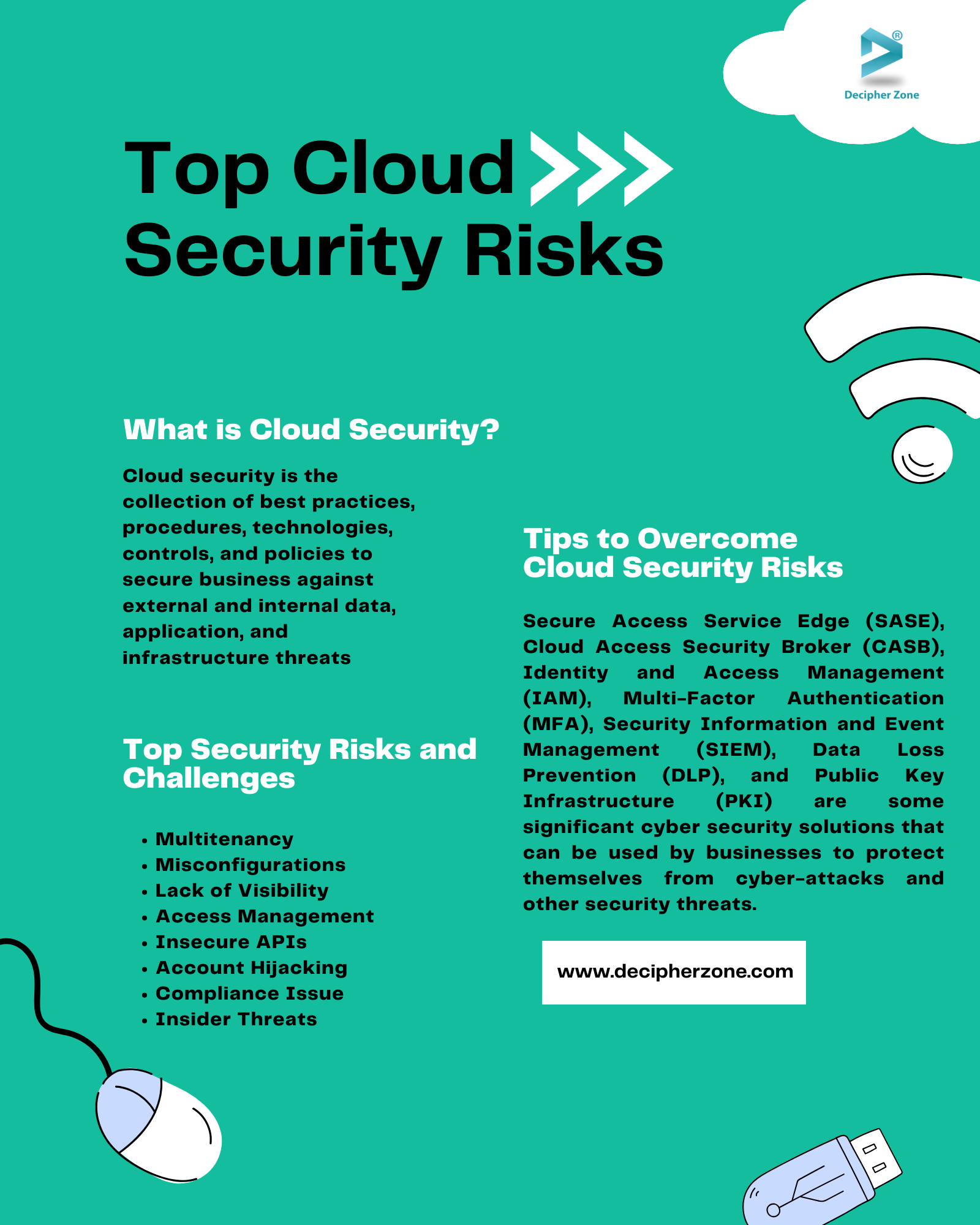
Comprehensive Guide to Security Risks in IaaS Cloud Computing for 2026
Security risks in IaaS cloud computing primarily stem from misconfigurations, inadequate identity management, and a misunderstanding of the shared responsibility model. While providers secure the underlying hardware, customers remain r...
Security risks in IaaS cloud computing primarily stem from misconfigurations, inadequate identity management, and a misunderstanding of the shared responsibility model. While providers secure the underlying hardware, customers remain responsible for securing operating systems, applications, and data, making proactive governance and automated security posture management essential for preventing breaches.
Contents
Infrastructure as a Service (IaaS) remains the foundational layer of modern enterprise architecture in 2026. By providing virtualized computing resources—such as servers, storage, and networking—over the internet, IaaS allows organizations to scale rapidly without the capital expenditure of physical hardware. However, this flexibility introduces a complex threat landscape. Because users have significant control over the virtualized environment, the "attack surface" is determined largely by the user's configuration choices rather than the provider’s infrastructure.
The Shared Responsibility Model: The Foundation of IaaS Security
The most significant risk in IaaS is not a technical flaw but a conceptual one: the failure to understand the Shared Responsibility Model. This framework defines the security obligations of the Cloud Service Provider (CSP) and the customer.
In an IaaS environment, the CSP (such as AWS, Microsoft Azure, or Google Cloud) is responsible for "security of the cloud." This includes the physical security of data centers, the hardware, the virtualization layer (hypervisor), and the global infrastructure. The customer is responsible for "security in the cloud." This encompasses the guest operating system, network firewall configurations, identity and access management (IAM), and the data itself.
When organizations migrate to IaaS, they often erroneously assume the provider handles all security. This leads to "responsibility gaps" where critical patches are ignored, or ports are left open, providing easy entry points for attackers. According to the Cloud Security Alliance (CSA), the vast majority of cloud breaches through 2026 continue to result from customer misconfigurations rather than provider-side vulnerabilities.
Primary Security Risks in IaaS Environments
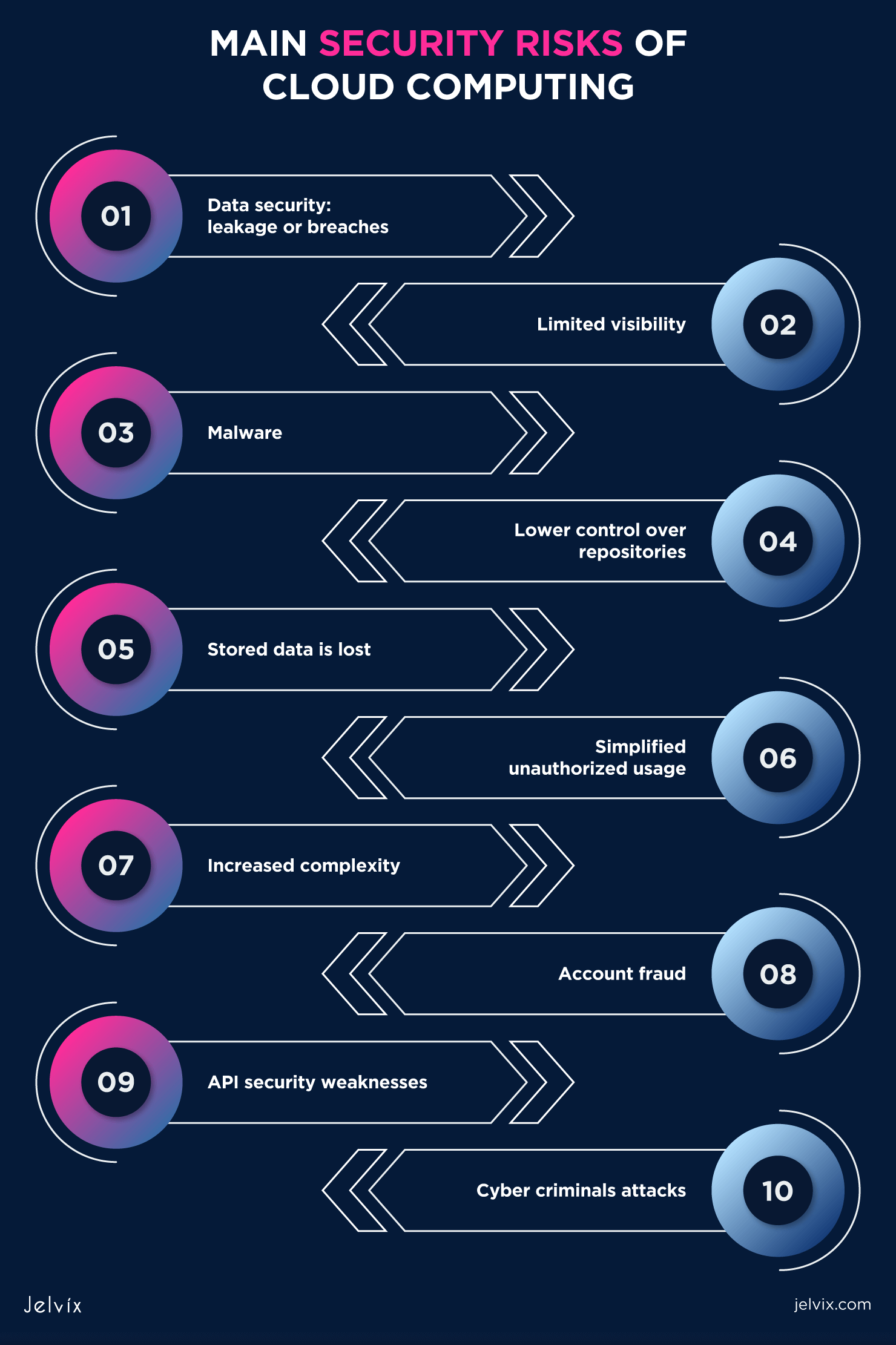
As we navigate the technological landscape of 2026, several core risks dominate the IaaS sector. Understanding these in detail is the first step toward building a resilient infrastructure.
1. Misconfiguration and Inadequate Change Control
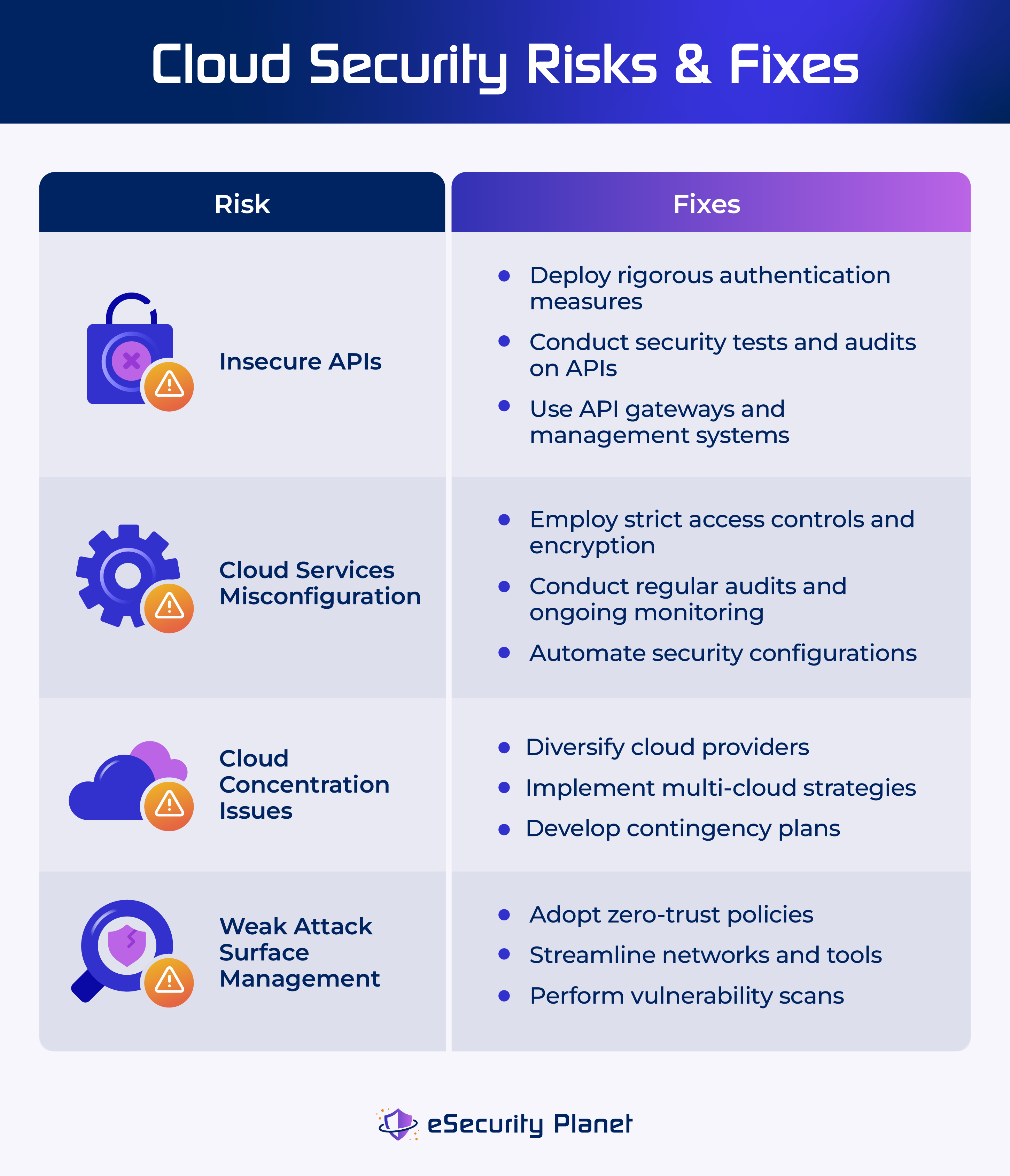
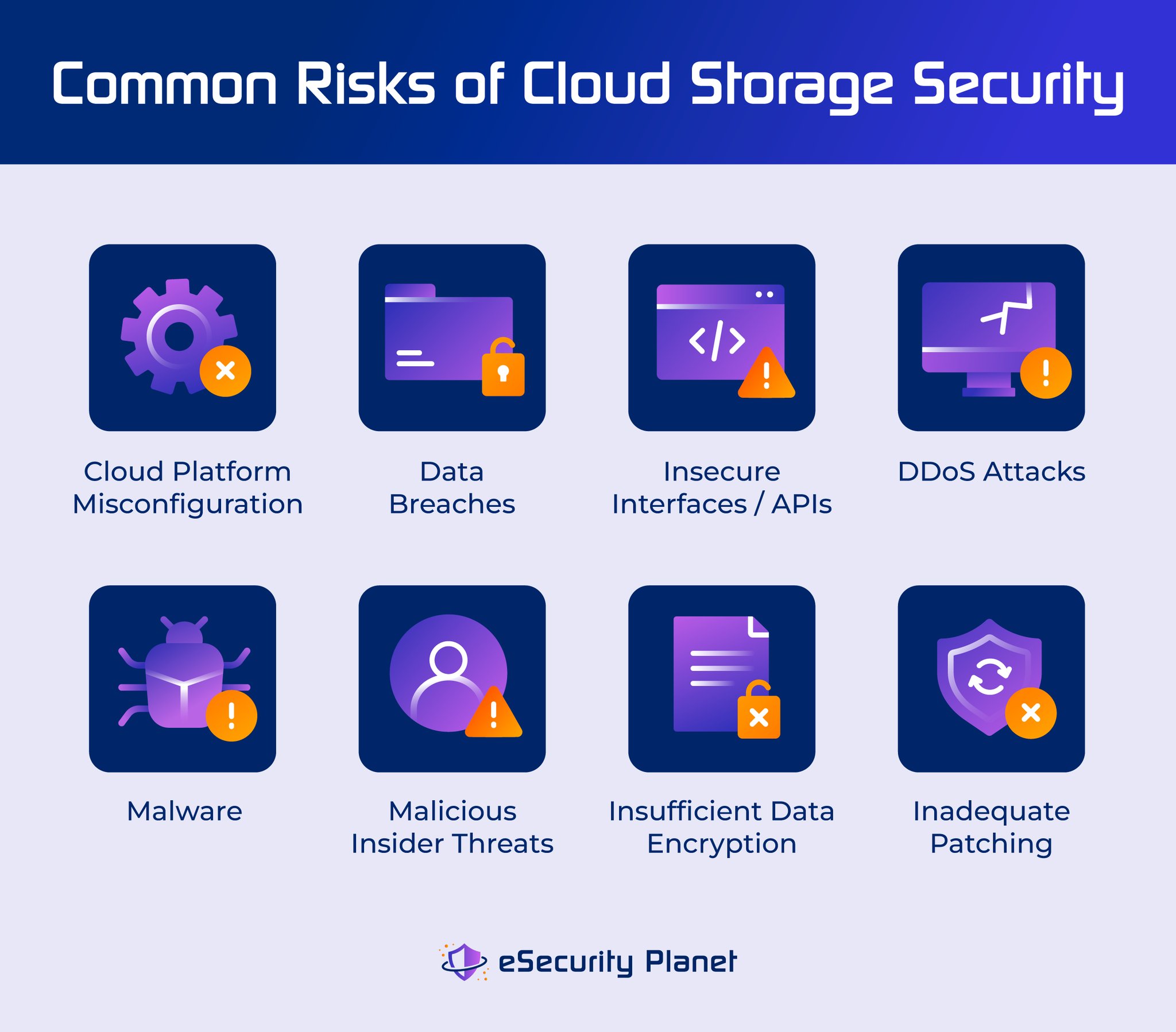
Misconfiguration remains the leading cause of data breaches in IaaS. Because cloud resources can be provisioned and modified via APIs or web consoles, it is remarkably easy for a developer or administrator to make a small error with massive consequences. Common examples include:
- Unsecured Storage Buckets: Leaving cloud storage (like Amazon S3 or Azure Blobs) open to the public internet.
- Permissive Security Groups: Opening RDP (Remote Desktop Protocol) or SSH (Secure Shell) ports to the entire internet (0.0.0.0/0) rather than specific IP ranges.
- Disabled Logging: Failing to enable CloudTrail or similar auditing services, which leaves security teams blind during an incident.
2. Identity and Access Management (IAM) Failures
In IaaS, identity is the new perimeter. If an attacker gains access to a privileged administrative account, they effectively control the entire virtual data center. Risks in this category include:
- Over-privileged Accounts: Users or services granted "Administrator" access when they only require read-only permissions.
- Lack of Multi-Factor Authentication (MFA): Relying solely on passwords, which are easily compromised through phishing or credential stuffing.
- Hardcoded Credentials: Developers embedding API keys or secret tokens directly into source code, which are then pushed to public or private repositories.
3. Insecure API Interfaces
Cloud providers expose APIs that customers use to manage and interact with their cloud resources. These APIs are the "front door" to the environment. If these interfaces are not properly secured, attackers can exploit them to bypass authentication, exfiltrate data, or shut down services. The OWASP API Security Project highlights that broken object-level authorization and improper asset management are frequent targets for IaaS-focused exploits.
4. Shadow IT and Proliferation of Resources
The ease of spinning up IaaS instances often leads to "Shadow IT," where departments or individual employees create cloud accounts and resources outside the purview of the central IT and security teams. These "orphaned" resources often lack security patches, use default passwords, and do not follow corporate compliance standards, creating invisible vulnerabilities within the organization’s ecosystem.
Emerging Threats and the 2026 Landscape
The year 2026 has introduced more sophisticated threats, many of which leverage automation and artificial intelligence to find and exploit IaaS weaknesses faster than human teams can respond.
AI-Driven Automated Exploitation
Attackers now use AI models to scan the global IP space for IaaS misconfigurations in real-time. Once a vulnerable S3 bucket or an open database port is found, automated scripts can exfiltrate data or inject ransomware within seconds. This has shortened the "window of exposure" significantly, making manual security audits obsolete.
Supply Chain and Image Vulnerabilities
IaaS users frequently rely on pre-configured virtual machine images (Amazon Machine Images or Azure Marketplace images). If these images are sourced from unverified third parties, they may contain pre-installed malware, backdoors, or outdated software with known vulnerabilities. In 2026, "poisoning" the supply chain of cloud images is a primary tactic for gaining a foothold in enterprise environments.
Side-Channel and Cross-Tenant Attacks
While rare due to the robust isolation provided by modern hypervisors, the theoretical risk of cross-tenant attacks—where one customer accesses the data of another customer on the same physical server—remains a concern for high-security organizations. Risks like speculative execution vulnerabilities (the evolution of Spectre and Meltdown) require constant microcode and hypervisor updates from the CSP.
Mitigation Strategies and Best Practices
To combat these risks, organizations must shift from a reactive security posture to a proactive, automated one.
| Risk Category | Primary Impact | Recommended Mitigation |
|---|---|---|
| Misconfiguration | Data exposure, unauthorized access | Implement Cloud Security Posture Management (CSPM) tools. |
| IAM Failures | Account takeover, lateral movement | Enforce Phishing-resistant MFA and Just-in-Time (JIT) access. |
| Insecure APIs | Service disruption, data theft | Use API Gateways with rate limiting and robust authentication. |
| Shadow IT | Compliance violations, hidden costs | Use Cloud Access Security Brokers (CASB) and centralized billing. |
| Vulnerable Images | Malware infection, backdoors | Scan all images for vulnerabilities before deployment. |
Implementing Zero Trust Architecture
The "Zero Trust" model operates on the principle of "never trust, always verify." In an IaaS context, this means that even if a user is inside the corporate network, their access to a specific virtual machine or database must be authenticated and authorized based on their identity, device health, and context. Micro-segmentation is a key technical component here, as it limits "east-west" movement within the cloud environment.
Infrastructure as Code (IaC) Scanning
To prevent misconfigurations from reaching production, security must be integrated into the DevOps pipeline. By using tools like Terraform or CloudFormation, security teams can scan "Infrastructure as Code" templates for security flaws (e.g., an open port or unencrypted disk) before the resources are ever provisioned.
Automated Remediation
In 2026, manual response is often too slow. Leading organizations use automated remediation where, if a configuration drift is detected (such as a storage bucket becoming public), the system automatically reverts the change to a secure state and alerts the security operations center (SOC).
Technical Requirements for a Secure IaaS Deployment
For an enterprise-grade IaaS deployment to be considered secure in 2026, it must meet several technical prerequisites:
- Encryption at Rest and in Transit: All data volumes and database instances must use AES-256 encryption. Data moving between the user and the cloud, or between cloud instances, must be protected by TLS 1.3 or higher.
- Centralized Logging and SIEM Integration: All resource logs (e.g., VPC Flow Logs, IAM logs) must be aggregated into a Security Information and Event Management (SIEM) system for real-time analysis and long-term retention.
- Regular Penetration Testing: Automated scanning is necessary but not sufficient. Periodic manual penetration testing is required to identify complex logic flaws that automated tools might miss.
- Sovereign Cloud Compliance: Organizations operating in multiple jurisdictions must ensure their IaaS provider can support data residency requirements, ensuring that data does not leave specific geographic boundaries (e.g., EU data staying within the EU as per GDPR mandates).
Frequently Asked Questions
What is the single biggest security risk in IaaS cloud computing?
The single biggest risk is customer misconfiguration. This includes leaving data storage publicly accessible or failing to restrict network access. Because IaaS provides deep control over virtualized hardware, a single incorrect setting can expose an entire organization's data to the public internet.
Who is responsible for patching the OS in an IaaS model?
Under the Shared Responsibility Model, the customer is responsible for patching the guest operating system (e.g., Windows Server or Linux) installed on their virtual machines. The Cloud Service Provider is only responsible for patching the physical host and the hypervisor.
How does Zero Trust apply to IaaS security?
Zero Trust applies to IaaS by removing the assumption that anything inside the virtual private cloud (VPC) is safe. It requires every access request—whether from a human user or another software service—to be verified. This involves using identity-based access controls and micro-segmentation to prevent lateral movement by attackers.
Can IaaS providers see my data?
Reputable IaaS providers use strong logical isolation and encryption to ensure they cannot access customer data. However, customers should use "Bring Your Own Key" (BYOK) encryption models to ensure that even if the provider’s employees were compromised, the data would remain unreadable without the customer-managed keys.
Is IaaS more or less secure than an on-premises data center?
IaaS is generally more secure than on-premises environments because CSPs invest billions in physical security, specialized security staff, and advanced hardware protections that most individual companies cannot afford. However, the overall security depends entirely on how the customer configures and manages their portion of the shared responsibility.
Final Recommendations for Organizations
As you manage or expand your IaaS footprint in 2026, the transition from manual oversight to automated governance is non-negotiable. Begin by performing a thorough audit of your current Identity and Access Management (IAM) policies, ensuring the principle of least privilege is strictly enforced. Following this, implement a Cloud Security Posture Management (CSPM) solution to provide continuous visibility into your environment and automatically catch misconfigurations before they can be exploited. Security in IaaS is not a one-time setup but a continuous cycle of monitoring, hardening, and evolving alongside the threat landscape.
Image Gallery