What Catalyst Clinical Research Does in Oncology: A Comprehensive Guide to Specialized CRO Services
Catalyst Clinical Research is a specialized contract research organization (CRO) that manages early- to late-phase oncology clinical trials for biotechnology and pharmaceutical companies. Through its dedicated oncology division, Cataly...
Catalyst Clinical Research is a specialized contract research organization (CRO) that manages early- to late-phase oncology clinical trials for biotechnology and pharmaceutical companies. Through its dedicated oncology division, Catalyst Oncology, the organization delivers end-to-end trial management, regulatory strategy, site selection, biometrics, patient recruitment, and clinical monitoring customized for complex cancer therapies.
Contents
Overview of Catalyst Clinical Research and Catalyst Oncology
Clinical trial execution in oncology requires specialized therapeutic knowledge, complex protocol management, and rapid trial startup capabilities. Catalyst Clinical Research addresses these demands by offering niche, highly focused trial execution services designed primarily for small to mid-sized biotechnology sponsors. Unlike generalist mega-CROs that manage high-volume, standard trials across dozens of non-oncology disease areas, Catalyst concentrates its infrastructure on cancer research and agile operational delivery.
The company operates through two distinct delivery models tailored to biopharma client needs:
- Catalyst Oncology: A full-service, niche CRO solution dedicated exclusively to planning, managing, and executing Phase I through Phase IV oncology trials.
- Catalyst Flex: A Functional Service Provider (FSP) model that supplies biopharma sponsors with specialized talent and functional teams—such as clinical monitors, biostatisticians, or data managers—to embed within existing sponsor-led clinical operations.
By maintaining a dedicated focus on cancer therapeutics, Catalyst provides clinical operations teams, medical monitors, and site networks that possess deep familiarity with modern oncology endpoints, specialized diagnostic criteria, and patient safety requirements.
Core Oncology Clinical Trial Services Provided by Catalyst
Managing a cancer clinical trial involves managing strict regulatory frameworks, complex biological mechanisms, and vulnerable patient populations. Catalyst Clinical Research provides operational support across every stage of the clinical development lifecycle.
CATALYST ONCOLOGY TRIAL SERVICES
- Study Design & Protocol Strategy
- Endpoint definition, translational medicine alignment, safety frameworks
- Site Identification & Feasibility
- Academic medical centers & specialized community network profiling
- Global Clinical Trial Execution
- CRA monitoring, site management, patient recruitment & retention
- Medical Monitoring & Safety
- Pharmacovigilance, toxicity grading (CTCAE), DSMB advisory coordination
- Biometrics & Regulatory Management
- CDISC-compliant data pipelines, adaptive study statistics, regulatory filings
1. Study Design and Protocol Feasibility
Before enrolling patients, biopharma sponsors must establish protocols that balance scientific rigor with operational feasibility. Catalyst assists sponsors in reviewing draft protocols against real-world clinical site capacity, patient eligibility criteria, and competing trials.
Key protocol feasibility activities include:
- Refining patient inclusion and exclusion criteria to prevent restrictive enrollment bottlenecks.
- Mapping biomarker requirements and tissue acquisition logistics to ensure local laboratories and central diagnostic hubs can process samples efficiently.
- Selecting appropriate primary and secondary endpoints, such as overall response rate (ORR), progression-free survival (PFS), duration of response (DoR), and patient-reported outcomes (PROs).
2. Global Site Identification, Activation, and Feasibility
Oncology trials depend on selecting clinical investigator sites that possess both the qualified patient population and the necessary infrastructure (such as specialized pharmacies for handling hazardous chemotherapies or cellular therapy processing facilities).
Catalyst evaluates potential trial sites across North America, Europe, and Asia-Pacific. The organization maintains relationships with major academic medical centers, specialized cancer institutes, and high-performing community oncology networks. By analyzing site startup timelines, historical recruitment performance, and competing clinical trials, Catalyst shortens trial startup schedules and accelerates Institutional Review Board (IRB) and Ethics Committee (EC) approvals.
3. Clinical Trial Management and Field Monitoring
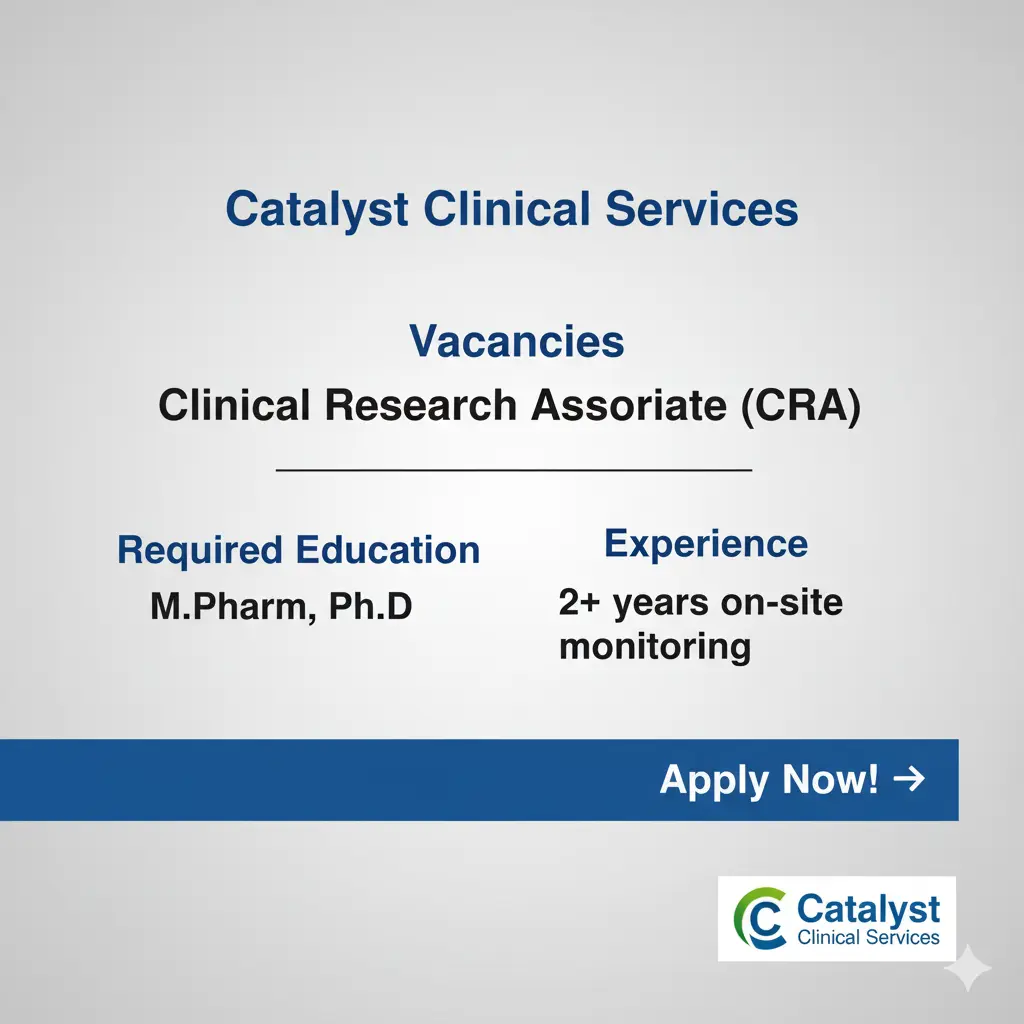
Clinical Research Associates (CRAs) assigned to oncology studies must possess specific training to interpret complex oncology medical records, evaluate radiological imaging reports, and monitor toxicity levels accurately.
Catalyst provides oncology-trained CRAs who conduct:
- Source Data Verification (SDV): Cross-referencing patient records, lab values, and imaging reports against the Electronic Case Report Form (eCRF).
- Investigator Site Support: Assisting principal investigators and study coordinators with protocol compliance and regulatory binder documentation.
- Remote and Risk-Based Monitoring (RBM): Implementing central data monitoring strategies consistent with U.S. Food and Drug Administration (FDA) Guidance for Industry on Risk-Based Monitoring to identify protocol deviations early.
4. Medical Monitoring and Pharmacovigilance
Safety oversight in oncology is complex due to high rates of adverse events associated with systemic therapies, targeted agents, and immunotherapies. Catalyst provides 24/7 medical monitoring staffed by experienced oncology physicians.
These medical monitors review real-time laboratory updates, assist investigators with dose-limiting toxicity (DLT) assessments, guide dose escalation decisions in Phase I trials, and oversee reporting of Serious Adverse Events (SAEs) to global regulatory bodies in accordance with international pharmacovigilance standards.
5. Biostatistics and Data Management
Trial outcomes rely on clean, auditable data structures. Catalyst's biometrics team designs electronic data capture (EDC) systems, implements CDISC-compliant (SDTM and ADaM) data models, and performs statistical analysis for interim safety reviews and final regulatory filings.
Therapeutic Focus and Advanced Modalities
Oncology research has expanded beyond broad-spectrum chemotherapy into highly targeted, biomarker-driven, and cell-based interventions. Catalyst Clinical Research focuses its operational capabilities on managing trials involving modern therapeutic modalities.
Immuno-Oncology (IO) and Cellular Therapies
Immuno-oncology therapies—including immune checkpoint inhibitors, cancer vaccines, bispecific antibodies, and adoptive cell therapies such as CAR-T (Chimeric Antigen Receptor T-cell) and TIL (Tumor-Infiltrating Lymphocytes)—present unique operational challenges. Catalyst manages trials requiring specialized chain-of-identity (COI) and chain-of-custody (COC) workflows for patient-derived biological materials, as well as strict safety monitoring protocols for immune-related adverse events (irAEs), cytokine release syndrome (CRS), and immune effector cell-associated neurotoxicity syndrome (ICANS).
Targeted Therapies and Precision Medicine
Modern oncology trials frequently utilize biomarker stratification, requiring next-generation sequencing (NGS) or immunohistochemistry (IHC) screening prior to enrollment. Catalyst designs clinical operations pathways that incorporate rapid central laboratory turnaround times, enabling sites to screen and enroll patients based on specific genetic mutations (such as EGFR, KRAS, BRAF, or ALK rearrangements).
Novel Modalities: ADCs and Radiopharmaceuticals
Catalyst executes clinical studies involving emerging drug classes such as Antibody-Drug Conjugates (ADCs) and radiopharmaceutical therapy (RPT). These trials require specialized site logistics, including radiation safety approvals, specialized handling by nuclear medicine departments, and stringent investigational product accountability.
Service Models: Catalyst Oncology vs. Catalyst Flex
Biotechnology companies require operational flexibility depending on their internal clinical infrastructure. Catalyst offers two core delivery frameworks: full-service CRO trial execution and functional service provider (FSP) embedded staffing.
| Operational Feature | Catalyst Oncology (Full-Service CRO) | Catalyst Flex (FSP Model) |
|---|---|---|
| Primary Scope | End-to-end management of entire clinical trials from protocol to study report. | Provision of specific functional teams or individual specialists to augment sponsor teams. |
| Sponsor Management Load | Low; Catalyst manages project teams, vendors, sites, and operational deliverables. | High; Sponsor leads oversight and integrates Catalyst staff into internal workflows. |
| Best Fit For | Small-to-midsize biopharmas lacking internal global clinical operations teams. | Established biopharmas requiring flexible scale in data management, CRAs, or biostatistics. |
| Governance Structure | Joint steering committee with project-based milestone governance. | Functional-level management integrated into sponsor organizational charts. |
| Pricing Structure | Milestone-based or fixed-fee per study module. | Time-and-materials, FTE-based rates, or unit-based functional pricing. |
| Vendor Selection | Catalyst selects and manages central labs, imaging vendors, and EDC platforms. | Sponsor selects vendors; Catalyst staff operate within sponsor-preferred platforms. |
Why Biotech Sponsors Choose Niche Oncology CROs
Selecting the right CRO partner is a critical strategic decision for biopharmaceutical firms. Small to mid-sized biotechnology companies frequently encounter operational friction when contracting with mega-sized CROs, where smaller trial budgets may not receive high-level executive attention or dedicated, senior-level clinical research staff.
Dedicated Oncology Expertise
Generalist CROs often rotate clinical project managers and monitors across disparate therapeutic fields, such as moving a CRA from a cardiovascular trial directly to a complex lung cancer study. Catalyst assigns dedicated oncology teams who possess routine experience evaluating tumor response criteria—such as RECIST 1.1 (Response Evaluation Criteria in Solid Tumors), iRECIST for immunotherapy, and Lugano classification for non-Hodgkin lymphoma.
Operational Agility and Direct Access
Biotech sponsors require rapid decision-making, particularly during early-phase dose-escalation cohorts where safety data must be reviewed quickly to authorize subsequent dosing cohorts. Catalyst's flatter organizational structure provides sponsor executives with direct access to project directors, medical monitors, and senior corporate leadership, reducing decision delays.
Tailored Site Relationships
Sites participating in oncology clinical trials are often overburdened by administrative overhead from multiple competing trials. Catalyst maintains active communication channels with investigator sites, providing targeted investigator support, simplified site contracting, and responsive CRA support that helps maintain site engagement and patient retention.
Managing Common Operational Challenges in Oncology Trials
Executing oncology studies involves navigating distinct logistical and clinical hurdles. Catalyst incorporates specific operational strategies to overcome common obstacles:
| CHALLENGE | SOLUTION |
|---|---|
| • Complex inclusion/exclusion criteria leading to slow patient recruitment | • Site-level feasibility screening and pre-screening log integration |
| • High protocol amendment frequency | • Adaptive study design architecture and agile regulatory submission pipelines |
| • Severe adverse event (SAE) management and complex safety profiles | • 24/7 dedicated medical monitor coverage and real-time eCRF alerts |
| • Biomarker and tissue sample collection logistics and decay risks | • Centralized lab tracking logistics and chain-of-custody protocols |
1. Slow Patient Recruitment and Eligibility Screening
Strict biomarker sub-typing and extensive treatment history requirements can reduce the pool of eligible patients. Catalyst addresses recruitment delays by deploying pre-screening tools, utilizing patient advocacy networks, and engaging secondary community practices that refer qualified patients to primary clinical sites.
2. Frequent Protocol Amendments
As early-phase trial data emerges, sponsors frequently modify dosing schedules, add expansion cohorts, or alter inclusion criteria. Catalyst's clinical operations teams utilize standardized amendment workflows to update regulatory documentation, IRB submissions, and clinical site manuals rapidly, minimizing trial suspension periods.
3. Intricate Biospecimen Logistics
Translational research relies heavily on tissue biopsies, serial blood draws, and pharmacodynamic samples collected at precise time points post-dose. Catalyst coordinates specialized central laboratory collection kits, temperature-controlled courier logistics, and biobank tracking systems to maintain specimen integrity from clinical site to analytical laboratory.
Steps to Evaluate Catalyst for Your Clinical Program
If your clinical development team is selecting a CRO partner for an upcoming oncology trial, follow this structured evaluation process:
- Define Therapeutic and Phase Requirements: Outline your drug's target mechanism of action, development phase (e.g., Phase I dose-escalation vs. Phase III pivotal trial), required patient count, and target geographical locations.
- Request a Detailed Scope of Work (SOW): Evaluate whether your team requires a turnkey solution (Catalyst Oncology) or targeted functional support (Catalyst Flex).
- Conduct a Technical Capability Assessment: Request details on Catalyst’s specific experience in your indication (e.g., solid tumors, hematologic malignancies, rare cancers) and modality (e.g., ADCs, bispecifics, CAR-T).
- Review Proposed Key Personnel: Assess the background of assigned Medical Monitors, Lead CRAs, and Project Directors to confirm past performance in relevant clinical protocols.
- Examine Site Network Compatibility: Compare Catalyst's suggested site list against your historical site performance data and targeted principal investigator lists.
- Assess Regulatory Strategy Integration: Verify Catalyst’s ability to interface effectively with regulatory bodies like the FDA, European Medicines Agency (EMA), and localized ethics committees for global trial submissions.
Frequently Asked Questions
What types of oncology trials does Catalyst Clinical Research handle?
Catalyst Clinical Research manages Phase I through Phase IV oncology trials, with particular expertise in early-phase (Phase I/II) dose-escalation and cohort-expansion studies, biomarker-driven precision medicine trials, immuno-oncology protocols, targeted therapies, cell therapies, and novel modalities like antibody-drug conjugates.
How does Catalyst Oncology differ from generalist CROs?
Unlike multi-therapeutic CROs that support diverse medical specialties, Catalyst Oncology focuses exclusively on cancer trials. This specialization ensures that trial managers, clinical research associates, and medical monitors possess direct oncology experience, familiar with specialized response criteria (such as RECIST 1.1), toxicity management, and cancer center workflows.
What is the difference between Catalyst Oncology and Catalyst Flex?
Catalyst Oncology offers full-service CRO trial execution, taking operational responsibility for the study from design to final report. Catalyst Flex operates as a Functional Service Provider (FSP), delivering specialized individual experts or functional units (such as biostatisticians, data managers, or CRAs) to integrate directly into a sponsor’s internal clinical team.
Does Catalyst Clinical Research support global oncology trials?
Yes, Catalyst operates globally, managing trials across North America, Europe, and select Asia-Pacific regions. They coordinate local regulatory submissions, manage international investigator sites, and navigate region-specific ethics committee requirements.
How does Catalyst support specialized biotech sponsors?
Catalyst tailors its governance structure to support small-to-midsize biotech companies that need agile communication, rapid decision-making, direct access to medical monitoring leadership, and flexible operational scaling without the administrative overhead typical of larger CRO providers.
How does Catalyst manage trial site selection for rare oncology indications?
Catalyst utilizes historical enrollment performance data, biomarker prevalence mapping, and existing network relationships with both academic medical centers and specialized community research sites to identify investigators with access to qualified patient populations for rare cancer subtypes.
Conclusion and Next Actions
Selecting an oncology clinical research organization requires matching your therapeutic modality and trial scope with a team that understands cancer research dynamics. Catalyst Clinical Research provides biopharma sponsors with specialized therapeutic depth, flexible delivery frameworks through full-service or FSP models, and clinical teams capable of navigating complex protocols.
To advance your trial planning process:
- Finalize your Target Product Profile (TPP) and draft protocol synopsis.
- Request a capability presentation and preliminary feasibility evaluation from Catalyst's clinical operations team.
- Audit potential CRO partners against your required geographic reach, site network requirements, and specialized lab coordination capabilities.
For broader regulatory context on structuring clinical development plans, consult official guidance from the U.S. Food and Drug Administration's Oncology Center of Excellence and global trial registry requirements on ClinicalTrials.gov.
Image Gallery