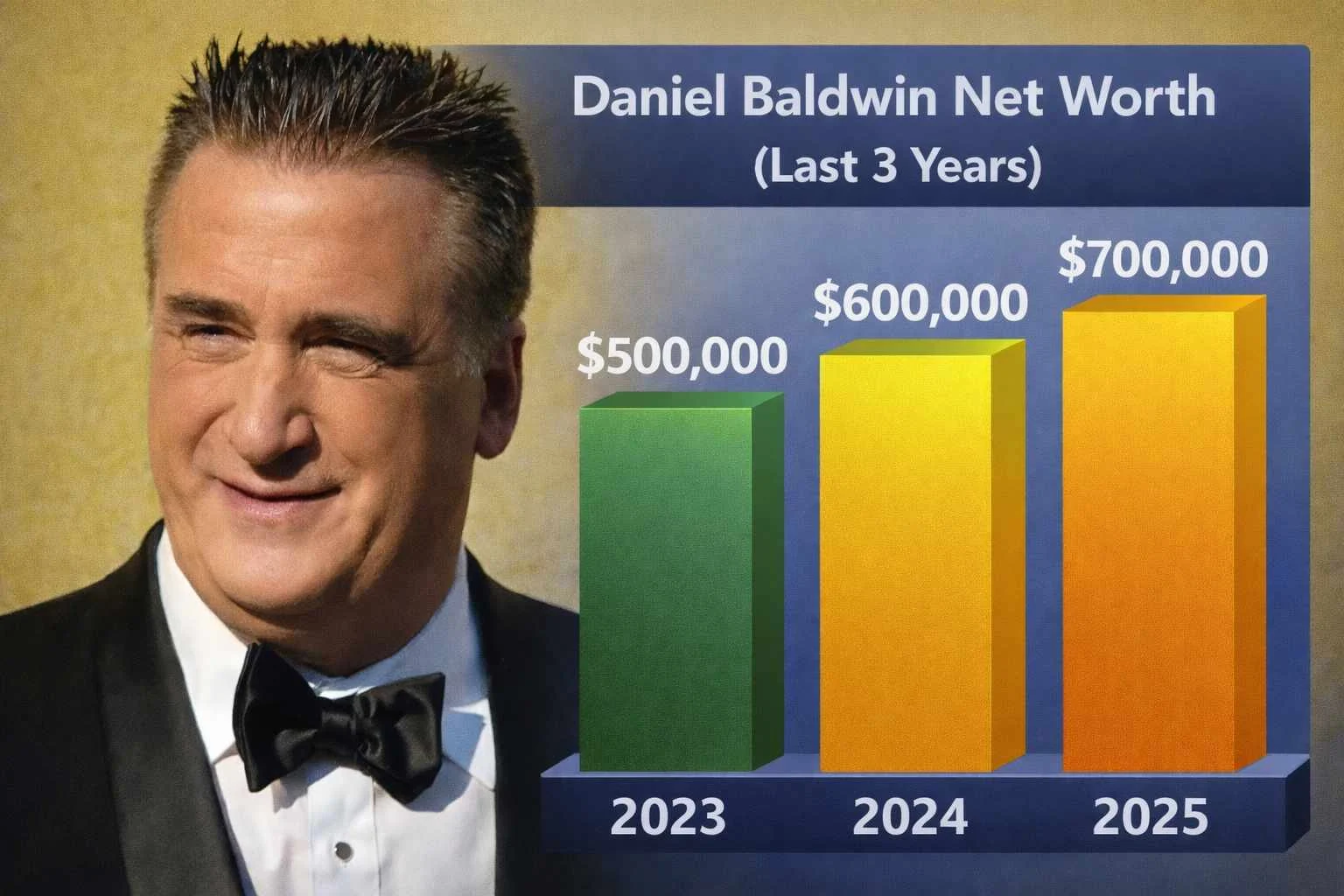
Understanding the Financial Standing and Career Trajectory of Daniel Van Starrenburg
Daniel Van Starrenburg is a prominent figure in the Australian business landscape, best recognized for his leadership and co-founding role within the infrastructure and civil engineering sector. While his net worth is frequently a subj...
Daniel Van Starrenburg is a prominent figure in the Australian business landscape, best recognized for his leadership and co-founding role within the infrastructure and civil engineering sector. While his net worth is frequently a subject of public interest, precise figures are not publicly disclosed by regulatory bodies, as he operates primarily within private corporate structures.
Contents
The Professional Profile of Daniel Van Starrenburg
To understand the scale of Daniel Van Starrenburg’s professional success, one must look at his foundational contribution to the infrastructure industry. As a co-founder of Diona, a firm specializing in utility infrastructure, he played a pivotal role in scaling a specialized contracting business. Diona grew to become a major player in the Australian market, delivering complex projects for water, gas, electricity, and telecommunications sectors.
The primary driver of Van Starrenburg’s financial profile is the strategic development and eventual exit of his business interests. In the world of private equity and civil engineering, net worth is rarely static; it is tied to the valuation of business entities, asset holdings, and the liquidity events that occur during corporate mergers or acquisitions. When Diona was acquired by Broadspectrum—and subsequently integrated into broader global infrastructure portfolios—the transaction represented a significant milestone in the valuation of his career efforts.
The Role of Private Enterprise in Wealth Valuation
One of the greatest challenges in assessing the net worth of private business owners is the absence of public shareholdings. Unlike executives at publicly traded companies whose compensation packages, stock options, and ownership stakes are filed with national regulators such as the Australian Securities and Investments Commission (ASIC), private owners maintain financial confidentiality.
For individuals like Van Starrenburg, the "net worth" figure often conflated in media reports is usually an estimation based on:
- Historical Exit Multiples: The value at which a company was sold relative to its annual earnings at the time of acquisition.
- Post-Acquisition Roles: Continued involvement in the infrastructure sector through senior management or consultancy roles.
- Asset Diversification: Personal investments in real estate, private equity portfolios, and other ventures that operate outside of the immediate view of the public record.
Key Factors Influencing Infrastructure Entrepreneurship
The infrastructure sector is capital-intensive and requires high levels of operational expertise. Van Starrenburg’s success is a case study in niche specialization. By focusing on critical utility infrastructure, Diona established a "moat"—a competitive advantage that made the business highly attractive to larger multinational conglomerates looking to expand their footprint in the Australian civil works market.
The lifecycle of such wealth typically follows a three-stage progression:
- The Growth Phase: Focusing on operational efficiency, securing government and utility contracts, and building a workforce capable of executing high-risk engineering projects.
- The Maturity Phase: Scaling the business to a size where it is optimized for acquisition by a major Tier-1 contractor.
- The Liquidity Phase: The sale of the enterprise, which converts "paper wealth" (equity in the company) into liquid capital, enabling future investments or retirement planning.
Comparative Analysis: Public vs. Private Business Valuations
When evaluating the financial standing of private entrepreneurs, it is useful to compare how different business models impact valuation. The table below outlines how various factors contribute to the difficulty of verifying net worth for individuals in the private sector.
| Feature | Publicly Traded Executives | Private Business Founders |
|---|---|---|
| Transparency | High (Annual Reports/Proxy Statements) | Low (Confidential/Private) |
| Asset Valuation | Marked-to-market (Stock Price) | Book Value or Independent Audit |
| Liquidity | Highly Liquid (Easily sold) | Illiquid (Requires M&A activity) |
| Disclosure | Regulated by ASX/SEC | Private contract law |
Navigating Wealth Estimation and Public Records
It is important for readers to distinguish between verifiable facts and speculative reporting. As of 2026, there is no official financial statement or audited report that dictates a specific net worth for Daniel Van Starrenburg. Publicly available "net worth" trackers often rely on estimations derived from company revenue and industry standard exit multipliers. These trackers frequently ignore debt obligations, tax liabilities, and the structure of family trusts, which are standard in the management of high-net-worth individuals in Australia.
When researching executive backgrounds, investors and analysts should look to the following sources for the most accurate information regarding corporate activities:
- ASIC Registers: These provide insight into company directorships and the current status of corporate entities.
- Corporate Press Releases: These offer the most accurate timing and context regarding mergers, acquisitions, and executive transitions.
- Industry Trade Journals: These sources provide context on the competitive standing of the firms managed by the individual.
Infrastructure Sector Trends in 2026
The environment in which Van Starrenburg built his reputation continues to evolve. In 2026, the Australian infrastructure market is heavily influenced by the transition to renewable energy grids and the upgrading of aging urban utility networks. Leaders who established successful firms in the 2010s and early 2020s are often seen as the architects of the current industry standards.
The financial success of individuals in this space is inextricably linked to the "infrastructure boom." As government spending on national projects increases, the demand for specialized contractors remains high. This ensures that those who exited their businesses during the height of the consolidation period are often positioned as high-value assets for boards of directors, advisory firms, or as private investors in new startup ventures.
Frequently Asked Questions
What is the current net worth of Daniel Van Starrenburg? There is no publicly confirmed or audited net worth for Daniel Van Starrenburg. As a private individual, his financial status is not a matter of public record, and any figures found in online "net worth" calculators are estimates based on secondary, often unverified, data.
Is Daniel Van Starrenburg still involved in Diona? Diona was acquired by Broadspectrum (which was later acquired by Ventia) some years ago. While founders often move on to new ventures or board roles following such acquisitions, specific details regarding his current operational role are maintained within private corporate or family investment records.
Why is it difficult to track the wealth of private business owners? Private companies are not required to disclose executive compensation or ownership stake valuations to the public. Unlike public companies listed on the Australian Securities Exchange (ASX), private enterprises do not produce annual reports that detail the financial health of the business to the general public.
How does the sale of a private business affect the founder's net worth? The sale typically results in a liquidity event. The founder trades their equity in the company for cash or shares in the acquiring firm. This transition allows the founder to diversify their wealth into other asset classes, which are rarely publicized or tracked by financial news outlets.
Where can I find verified information on Australian business leaders? The most reliable source for information on business leaders is the Australian Securities and Investments Commission (ASIC) registers, which record directorships and company registrations. For industry-specific achievements, major financial news publications often provide context on mergers and acquisitions.
Concluding Guidance
For those seeking to understand the financial trajectories of entrepreneurs like Daniel Van Starrenburg, it is best to focus on the corporate history and the market sectors in which they operate rather than seeking a singular, speculative net worth figure. His legacy is defined by the growth and successful exit of Diona, a milestone that underscores the importance of operational excellence in the civil engineering and utility infrastructure sector. If you are conducting research for investment or business benchmarking purposes, prioritize reviewing historical transaction data and ASIC filings for the entities in question.
Image Gallery