What is Federal Tax on Life Insurance Payout? Understanding the Rules for 2026
In most cases, the federal government does not impose an income tax on life insurance death benefits. Under Internal Revenue Code Section 101(a)(1), proceeds paid to a beneficiary due to the death of the insured are generally excluded...
In most cases, the federal government does not impose an income tax on life insurance death benefits. Under Internal Revenue Code Section 101(a)(1), proceeds paid to a beneficiary due to the death of the insured are generally excluded from gross income. However, exceptions exist regarding interest, estate taxes, and policies sold for profit.
Contents
The General Rule: Why Most Payouts Are Tax-Free
For the vast majority of Americans, a life insurance payout is a tax-free financial lifeline. The IRS views these proceeds not as "income" in the traditional sense, but as a replacement for the economic loss suffered by the beneficiaries. Whether the policy is a term life, whole life, or universal life contract, the lump-sum death benefit arrives in the beneficiary's hands without a federal income tax haircut.
This tax-exempt status applies regardless of the size of the policy. Whether the benefit is $50,000 or $5,000,000, the core principal remains protected from income tax. This fundamental principle allows families to use the full face value of a policy to cover funeral costs, pay off mortgages, or replace a breadwinner's lost wages without worrying about a significant portion being diverted to the Treasury.
However, "tax-free" does not mean "outside the scope of all tax law." While the principal payout is generally exempt from income tax, there are specific scenarios involving interest, the manner of distribution, and the total value of the decedent's estate that can trigger federal tax liabilities.
Taxable Exceptions: When the IRS Takes a Cut
Understanding the nuances of life insurance taxation requires looking beyond the initial death benefit. There are four primary scenarios where federal taxes may apply to a life insurance payout or the policy itself.
1. Interest Earned on the Death Benefit
Life insurance companies do not always pay the benefit immediately upon the death of the insured. There is often a processing period. If the insurer holds the funds for a period of time before disbursement, they are usually required to pay interest on that balance.
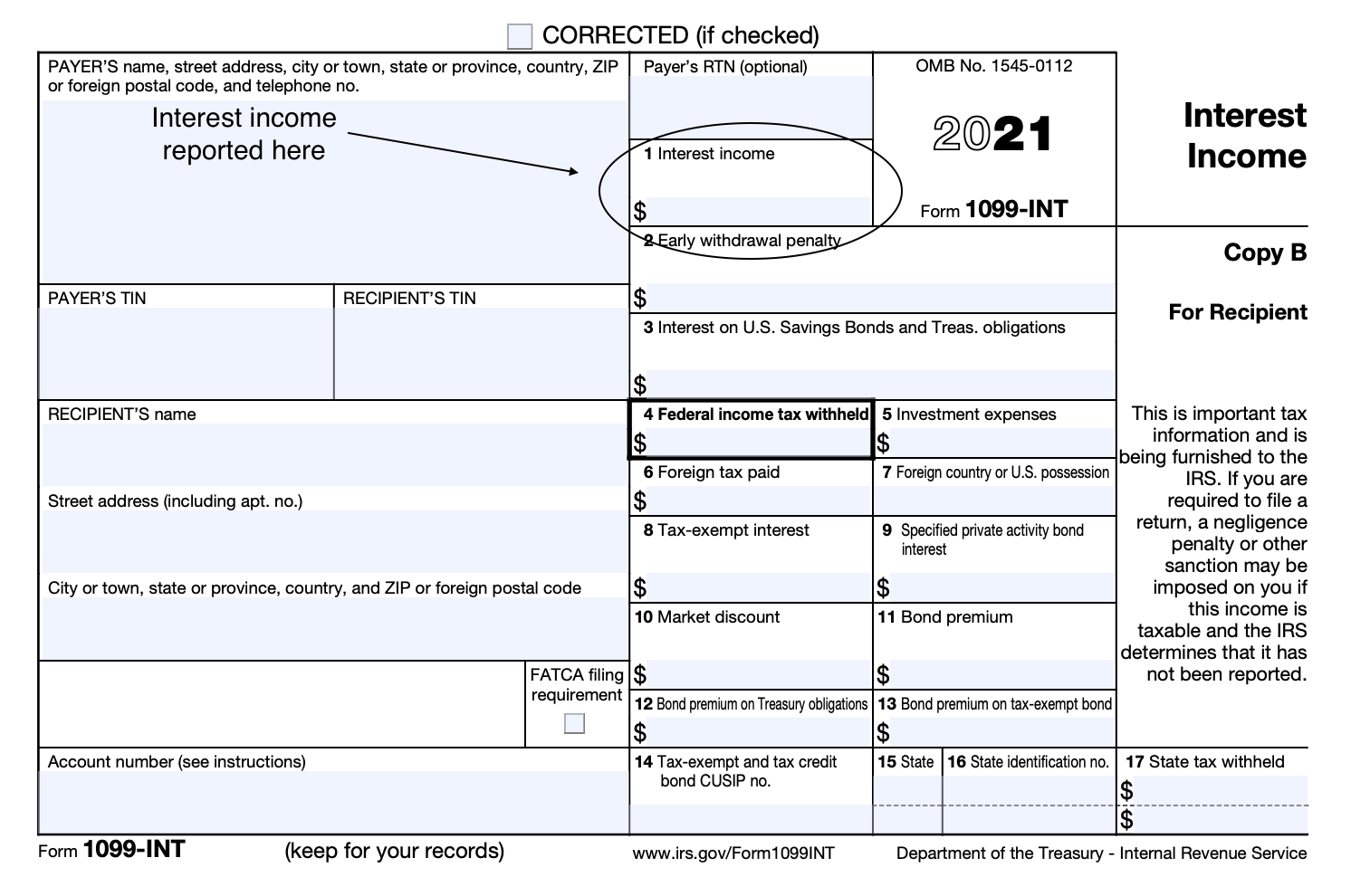
While the death benefit principal is tax-free, any interest earned on that principal is considered taxable income. For example, if a $500,000 policy earns $1,200 in interest while the claim is being processed, the beneficiary must report that $1,200 as interest income on their federal tax return. The insurance company will typically issue a Form 1099-INT detailing this amount.
2. Installment Payouts and Annuities
Some beneficiaries choose to receive the death benefit in installments rather than a single lump sum. This is often referred to as a "settlement option." When a payout is structured as an annuity or periodic payment, each check consists of two parts: a portion of the tax-free principal and a portion of the interest earned on the remaining balance.
The IRS uses an "exclusion ratio" to determine how much of each payment is taxable. Only the interest portion is subject to federal income tax. Because the money remains with the insurance company and is invested, the growth it experiences over time is treated as regular income.
3. The Transfer-for-Value Rule
If a life insurance policy is sold or transferred to another party for "valuable consideration" (money or something of value), it may lose its tax-exempt status. This is known as the Transfer-for-Value Rule under IRC Section 101(a)(2).
In such cases, the death benefit is taxable to the extent that it exceeds the amount paid for the policy plus any subsequent premiums paid by the new owner. This often occurs in "life settlement" transactions, where a policyholder sells their policy to a third-party investor. There are exceptions for transfers to the insured, a partner of the insured, or a corporation in which the insured is an officer or shareholder, but professional tax advice is critical in these complex business transfers.
4. Federal Estate Taxes in 2026
While income tax is rarely an issue, federal estate tax is a significant consideration, especially in 2026. Life insurance proceeds are included in the deceased person's "gross estate" if they held "incidents of ownership" in the policy at the time of death.
As of 2026, the federal estate tax landscape has shifted. The historically high exemptions provided by the Tax Cuts and Jobs Act (TCJA) of 2017 have sunset. The exemption amount, which was over $13 million per individual in 2025, has effectively reverted to roughly $7 million (adjusted for inflation) for 2026. If the total value of an individual's assets—including their life insurance payouts—exceeds this threshold, the estate may owe federal estate taxes at rates as high as 40%.
Comparison of Tax Treatments by Scenario
| Scenario | Federal Income Tax Status | Federal Estate Tax Status | Key Reporting Document |
|---|---|---|---|
| Lump Sum Death Benefit | Generally Tax-Free | Taxable if owned by deceased | None (for principal) |
| Interest on Payout | Taxable as Ordinary Income | N/A | Form 1099-INT |
| Installment Payments | Interest Portion is Taxable | Taxable if owned by deceased | Form 1099-R or 1099-INT |
| Policy Surrender | Taxable above "Cost Basis" | N/A (Insured is alive) | Form 1099-R |
| Sold Policy (Settlement) | Taxable as Ordinary Income/Cap Gains | N/A (New owner) | Form 1099-LS |
Incidents of Ownership: Avoiding the Estate Tax Trap
To keep life insurance proceeds from being taxed as part of an estate, the insured individual must not have "incidents of ownership" in the policy. This legal term refers to the right to:
- Change the beneficiary.
- Borrow against the policy's cash value.
- Surrender or cancel the policy.
- Assign the policy to another party.
If the insured owns the policy, the payout is added to their total estate value. In 2026, with the lower estate tax exemptions, many middle-to-high-net-worth individuals may find that their life insurance pushes them over the taxable threshold.
One common strategy to avoid this is the use of an Irrevocable Life Insurance Trust (ILIT). By having the trust own the policy, the insured individual gives up all control and ownership. Upon death, the proceeds are paid to the trust and distributed to beneficiaries without being included in the taxable estate. However, the "three-year rule" (IRC Section 2035) states that if a policy is transferred into a trust within three years of death, the IRS will still include it in the estate.
Living Benefits: Taxation of Cash Value
Life insurance taxation isn't limited to the death benefit. Permanent policies (Whole Life, Universal Life) accumulate a cash value component that the owner can access while still alive.
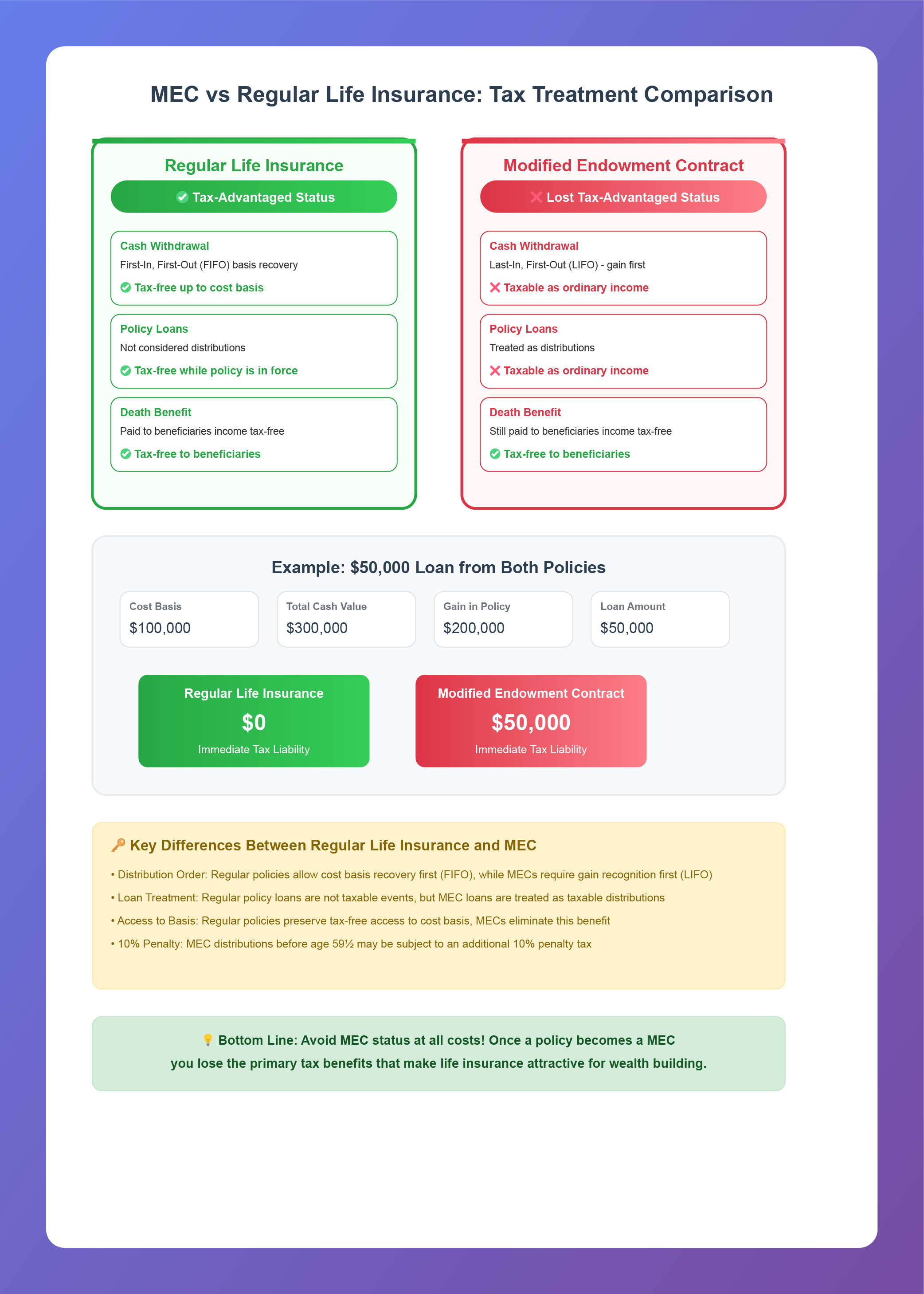
- Policy Loans: Generally, taking a loan against the cash value is not a taxable event, provided the policy remains in force. If the policy lapses or is surrendered while a loan is outstanding, the loan balance may be treated as a taxable distribution.
- Partial Withdrawals: Withdrawals are typically tax-free up to the "cost basis"—the total amount of premiums paid into the policy. This is known as the "First-In, First-Out" (FIFO) accounting method. Any amount withdrawn above the cost basis is taxed as ordinary income.
- Full Surrender: If you cancel the policy for its cash value, any amount received that exceeds the total premiums paid is taxable as ordinary income.
Specialized Tax Rules: Group and Modified Endowment Contracts
There are two specific types of life insurance scenarios that involve unique federal tax rules:
Group Life Insurance (Section 79)
Many employers provide group term life insurance as a benefit. Under IRS Section 79, the first $50,000 of employer-provided coverage is a tax-free fringe benefit. However, the "imputed cost" of any coverage exceeding $50,000 must be included in the employee's taxable income, based on an IRS table of costs (Table I). While this affects the employee's yearly income tax, it usually does not change the tax-free status of the death benefit for the beneficiary.
Modified Endowment Contracts (MEC)
If a policy is funded too quickly (exceeding the "seven-pay test"), the IRS reclassifies it as a Modified Endowment Contract. While the death benefit remains tax-free, the taxation of living benefits changes. Withdrawals and loans from a MEC are taxed on a "Last-In, First-Out" (LIFO) basis, meaning gains are taxed first. Additionally, withdrawals before age 59½ may incur a 10% federal tax penalty.
Frequently Asked Questions
Do I need to report a life insurance payout on my 1040?
In most cases, no. Since the lump-sum death benefit is not considered gross income, you do not need to report it to the IRS. However, if the payment included interest, that interest must be reported on Schedule B of your Form 1040.
Can the IRS seize a life insurance payout for back taxes?
Yes. If the beneficiary owes federal back taxes, the IRS can place a levy on the life insurance proceeds once they are paid out. Furthermore, if the deceased owed back taxes and the estate is the beneficiary, the IRS will collect from the estate before any funds are distributed to heirs.
Does the 2026 estate tax change affect my term life policy?
Yes, if you own the policy. Even though term life has no cash value, the face value (the death benefit) is included in your gross estate calculation. With the 2026 exemption drop to roughly $7 million, individuals with large term policies and significant home equity or retirement accounts may need to reconsider their ownership structure.
Is the payout taxable if I am a business partner?
If a business owns a "key person" policy and receives the payout, the proceeds are generally tax-free under Section 101(a). However, for C-corporations, these proceeds might increase the company's "Alternative Minimum Tax" (AMT) liability in certain complex accounting scenarios.
What happens if I inherit a policy that was sold previously?
If you are the beneficiary of a policy that was subject to a life settlement (transfer-for-value), the portion of the death benefit that exceeds the buyer's cost basis and premiums paid will likely be taxed as ordinary income.
Practical Recommendation for 2026
Given the reduction in federal estate tax exemptions starting in 2026, the most critical action for policyholders is to review policy ownership. If your total estate—including life insurance—is valued near or above $7 million ($14 million for married couples), consult with a tax attorney or estate planner about an Irrevocable Life Insurance Trust (ILIT). This can effectively "remove" the death benefit from your taxable estate, ensuring your beneficiaries receive the full amount intended without a 40% federal estate tax reduction. Additionally, always keep records of "cost basis" (total premiums paid) for any permanent life insurance policies to simplify tax calculations should you choose to access the cash value.
Image Gallery