Why the Global Help Desk Matters: The Strategic Foundation of Modern Enterprise Support
The global help desk is the backbone of modern enterprise continuity, providing unified technical support across diverse time zones, languages, and geographic borders. By centralizing IT services, organizations ensure operational consi...
The global help desk is the backbone of modern enterprise continuity, providing unified technical support across diverse time zones, languages, and geographic borders. By centralizing IT services, organizations ensure operational consistency, eliminate expensive regional silos, and maintain 24/7 productivity for a borderless workforce. In 2026, it serves as a critical strategic asset for competitive global operations.
Contents
Defining the Modern Global Help Desk
In the current landscape of 2026, the global help desk has evolved far beyond a simple call center. It is a sophisticated, multi-tiered support ecosystem designed to provide a "Single Point of Contact" (SPOC) for employees and customers regardless of their physical location. Unlike a traditional local help desk, which may operate only during standard business hours in a single time zone, a global help desk utilizes a "Follow-the-Sun" model or a centralized 24/7 hub to ensure that a hardware failure in Singapore or a software glitch in London receives immediate attention.
This infrastructure integrates advanced Information Technology Service Management (ITSM) tools, AI-driven automation, and a diverse workforce capable of navigating linguistic and cultural nuances. The primary objective is to minimize Downtime and maximize the "Digital Employee Experience" (DEX), which has become a key performance indicator for successful multinational corporations.
The Core Drivers of Global Help Desk Necessity
Several factors have converged to make the global help desk an essential component of the corporate framework. As businesses expand into emerging markets and embrace remote-first or hybrid work models, the limitations of localized support become glaringly apparent.
1. The Reality of the Borderless Workforce
By 2026, the concept of a "headquarters" has shifted. Large enterprises now employ talent across every continent. A developer in Brazil might be collaborating with a product manager in Germany on a server hosted in North America. When a technical roadblock occurs, waiting for a local support team to clock in six hours later is no longer an option. The global help desk ensures that support is always "awake," maintaining the momentum of asynchronous global workflows.
2. Standardization of IT Governance
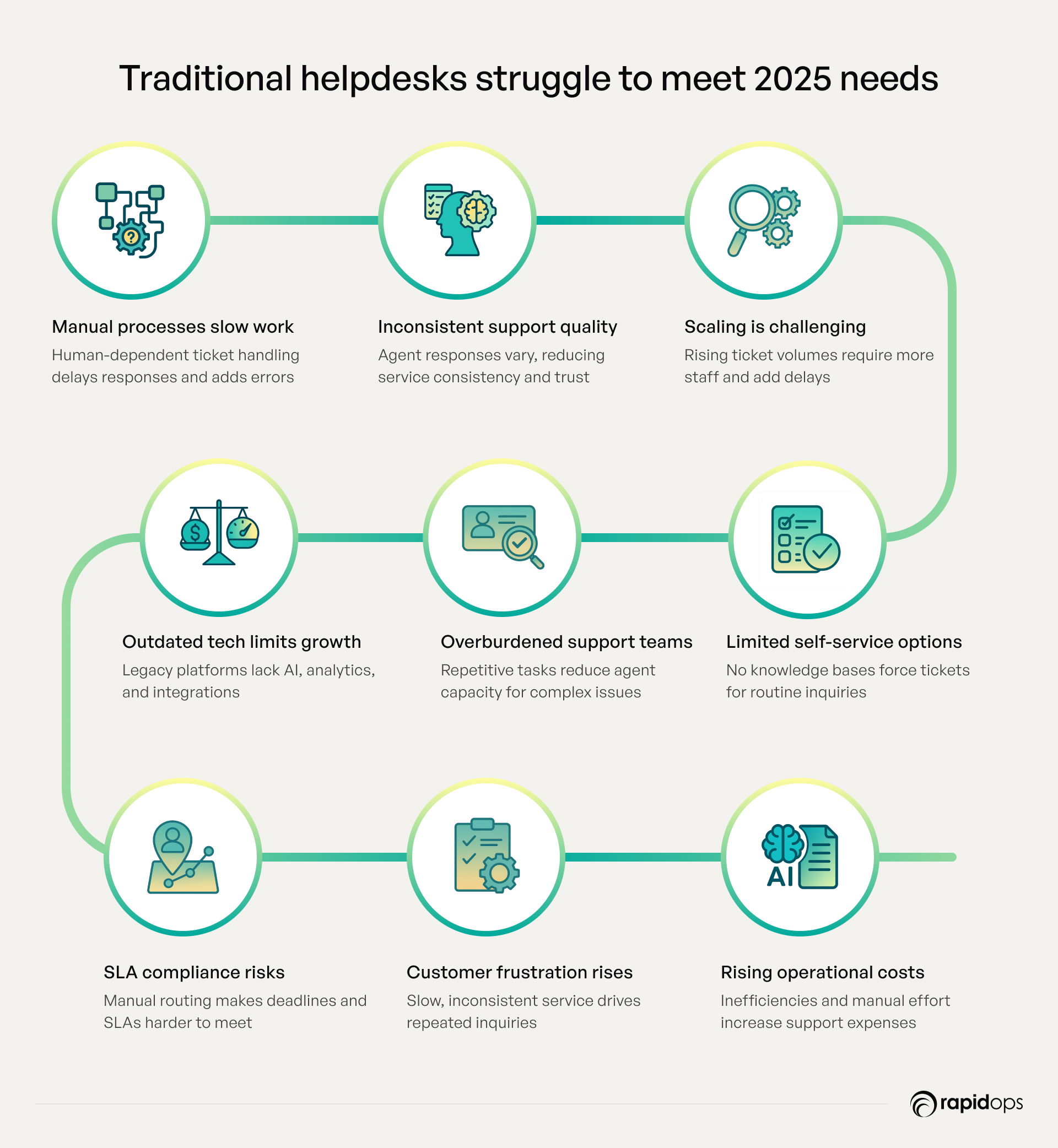
One of the most significant risks in global expansion is "Shadow IT" and fragmented governance. When regional offices manage their own support, they often implement localized tools, different security protocols, and inconsistent troubleshooting steps. A global help desk enforces a unified standard of excellence. It ensures that every ticket is logged in the same system, every security patch is applied uniformly, and every user receives the same high-quality service, regardless of their office’s size or location.
3. Business Continuity and Disaster Recovery
Global disruptions—whether cyberattacks, natural disasters, or regional infrastructure failures—require a coordinated response. A global help desk provides the redundancy necessary for resilience. If a support hub in one region goes offline, the ticketing system and responsibilities can instantly shift to another hub in a different part of the world. This level of redundancy is nearly impossible to achieve with isolated, local support structures.
Strategic Advantages of a Centralized Global Support System
The decision to implement a global help desk is often driven by the need for cost optimization, but the qualitative benefits to brand reputation and operational intelligence are equally compelling.
Cost Optimization and Scalability
Managing twenty different IT support contracts in twenty different countries is administratively burdensome and financially inefficient. Centralizing these functions into a global help desk allows for significant economies of scale. Organizations can negotiate better enterprise-level software licenses, streamline training programs, and optimize staffing levels based on global ticket volume rather than local office hours. This transition from a Capex-heavy local model to a more streamlined Opex-oriented global model provides the financial flexibility needed in today’s volatile market.
Enhanced Data Analytics and Trend Recognition
When all support data flows through a single global funnel, leadership gains a "bird's-eye view" of the organization’s technical health. Global help desks allow for sophisticated trend analysis. For instance, if a specific software update is causing issues in both Tokyo and Toronto, the global team can identify the pattern within minutes and issue a proactive fix. This proactive stance prevents minor regional issues from escalating into global outages.
Improved Security and Compliance
In 2026, regulatory environments such as the General Data Protection Regulation (GDPR) and the California Consumer Privacy Act (CCPA) require strict data handling practices. A global help desk ensures that all support interactions comply with these regulations. By centralizing data storage and access controls, organizations can more easily audit their support processes and ensure that sensitive user data is not being mishandled in a rogue regional office.
Technical and Operational Requirements for Success
Building an effective global help desk requires a sophisticated blend of technology and human expertise. It is not enough to simply hire people in different time zones; the underlying infrastructure must support seamless collaboration.
1. Advanced ITSM Stack
The foundation of any global help desk is a robust ITSM platform (such as ServiceNow, Jira Service Management, or Freshservice). These platforms must support multi-language interfaces, automated ticket routing based on expertise and language, and real-time collaboration tools. In 2026, these systems are increasingly integrated with AI to provide "Level 0" support through intelligent chatbots that can resolve common issues like password resets or VPN configuration without human intervention.
2. Language Support and Cultural Intelligence
While English remains the primary language of global business, true support excellence requires linguistic flexibility. A global help desk must offer support in the native languages of its primary regions to ensure clear communication and user satisfaction. Furthermore, "Cultural Intelligence" is vital. Understanding local holidays, communication styles, and regional business practices ensures that the help desk is viewed as a partner rather than a distant, bureaucratic obstacle.
3. Integrated Knowledge Management
A global help desk is only as good as its knowledge base. A centralized, frequently updated repository of solutions allows agents in any region to solve complex problems. This knowledge base should be "living," with agents from all over the world contributing localized insights that benefit the entire network.
Comparison of Support Models
Choosing the right structure is essential for aligning IT goals with business objectives. The following table compares the three most common approaches to enterprise support.
| Feature | Localized Support Model | Decentralized Regional Model | Global Help Desk Model |
|---|---|---|---|
| Availability | Local business hours only | Regional hours (limited 24/7) | 24/7/365 (Follow-the-Sun) |
| Consistency | Low (Varies by office) | Moderate (Varies by region) | High (Unified standards) |
| Cost Efficiency | Lowest (High duplication) | Moderate | Highest (Economies of scale) |
| Language Support | Single language focus | Multi-language (Regional) | Comprehensive Multi-language |
| Data Visibility | Fragmented/Siloed | Limited regional view | Global "Single Pane of Glass" |
| Scalability | Difficult and slow | Moderate | Rapid and seamless |
Challenges and Mitigation Strategies
Despite the clear benefits, transitioning to a global help desk model presents several hurdles that must be managed with precision.
Managing Latency and Technical Infrastructure
Providing support across the globe requires a high-performance network. If the help desk's ticketing system is hosted in a US-based data center, agents in Australia may experience lag that hampers productivity. Using edge computing and globally distributed cloud instances ensures that the tools used by the help desk are as fast as those used by the employees they support.
Navigating Local Labor Laws
Staffing a global help desk involves navigating diverse labor regulations. Shift differentials, holiday pay, and remote work laws vary significantly between jurisdictions like France, India, and Brazil. Organizations must work closely with HR and legal teams to ensure that their "Follow-the-Sun" staffing model is compliant with local statutes while still providing seamless coverage.
Bridging the "Distance Gap"
There is a risk that a global help desk can feel "disconnected" from the local employees it serves. To mitigate this, organizations should implement a "Hybrid Support" strategy where a global help desk handles the majority of remote and software-related issues, while a small footprint of local "On-site" technicians remains available for physical hardware repairs and high-touch executive support.
Frequently Asked Questions
What is the difference between a global help desk and a global service desk?
While the terms are often used interchangeably, a help desk typically focuses on "break-fix" solutions and immediate troubleshooting. A global service desk is broader in scope, encompassing the entire lifecycle of IT services, including request fulfillment, change management, and strategic service improvement aligned with ITIL 4 frameworks.
How does AI impact the global help desk in 2026?
AI has shifted the help desk from reactive to proactive. Modern AI tools analyze system telemetry to predict hardware failures before they happen and use Natural Language Processing (NLP) to provide instant, high-quality support in dozens of languages simultaneously, allowing human agents to focus on complex, high-value tasks.
Is a global help desk suitable for small businesses?
While the term "global" implies a large enterprise, even small businesses with remote employees in two or three countries can benefit from the principles of a global help desk. Utilizing a "Managed Service Provider" (MSP) that offers global support allows smaller firms to enjoy the benefits of 24/7 coverage without the overhead of building an in-house team.
How do you measure the success of a global help desk?
Success is measured through several Key Performance Indicators (KPIs), including First Contact Resolution (FCR), Average Resolution Time (ART), and Customer Satisfaction (CSAT) scores. In 2026, "Time to Productivity"—how quickly a user is back to work after a disruption—is considered the most critical metric.
Does a global help desk replace local IT staff?
Not necessarily. It redefines their role. A global help desk handles the volume of routine tickets and remote support, allowing local IT staff to focus on high-impact projects, physical infrastructure maintenance, and building personal relationships with regional business leaders.
Next Steps for Enterprise Leaders
To transition toward a successful global help desk model, organizations should begin by auditing their current IT support silos and identifying common pain points across regions. The first practical step is often the consolidation of disparate ticketing systems into a single, cloud-based ITSM platform. Following this, leadership must define clear Service Level Agreements (SLAs) that apply globally while allowing for regional nuances.
Ultimately, the global help desk is more than a technical utility; it is a commitment to providing every employee, regardless of their location, with the tools and support they need to succeed. In a world that never stops moving, having a support system that never sleeps is the ultimate competitive advantage.
Image Gallery