What the Weber State Respiratory Therapy Program Offers Today: Degree Tracks, Curriculum, and Career Pathways
Weber State University’s Respiratory Therapy Program offers three comprehensive educational tracks: an entry-level Bachelor of Science (BS), an online RRT-to-BSRT degree completion pathway, and a Master of Science in Respiratory Therap...
Weber State University’s Respiratory Therapy Program offers three comprehensive educational tracks: an entry-level Bachelor of Science (BS), an online RRT-to-BSRT degree completion pathway, and a Master of Science in Respiratory Therapy (MSRT). Offered through the Dr. Ezekiel R. Dumke College of Health Professions, the program delivers accredited hands-on clinical training, high-fidelity simulation, and flexible online learning options for practicing respiratory care practitioners.
Contents
Overview of Weber State’s Respiratory Therapy Department
Housed within the Dr. Ezekiel R. Dumke College of Health Professions in Ogden, Utah, the Department of Respiratory Therapy at Weber State University (WSU) has established itself as one of the premier respiratory care educational providers in the United States. The program caters to both traditional pre-licensure students entering cardiopulmonary healthcare and seasoned Registered Respiratory Therapists (RRTs) seeking leadership, educational, or advanced clinical roles.
The curriculum balances fundamental biological sciences with advanced cardiopulmonary diagnostics, mechanical ventilation strategies, neonatal and pediatric critical care, and healthcare management. Whether students attend full-time on campus or complete coursework remotely through online learning platforms, WSU emphasizes evidence-based clinical practice, high board-exam pass rates, and strong clinical partnerships across regional and national health systems.
Available Degree Tracks and Educational Pathways
Weber State University structures its respiratory therapy offerings into three primary degree pathways. Each track addresses specific professional goals, baseline qualifications, and learning preferences.
- Weber State Respiratory Therapy Educational Tracks:
- Entry-Level BSRT (Pre-Licensure)
- Campus/Hybrid
- Clinical Rotations
- Prepares for RRT
- Online RRT-BSRT (Advancement)
- 100% Online
- For Active RRTs
- Flexible Pace
- Master of Science (MSRT)
- Online/Hybrid
- Leadership/Ed
- Adv Practice
- Entry-Level BSRT (Pre-Licensure)
1. Entry-Level Bachelor of Science in Respiratory Therapy (BSRT)
The entry-level BSRT pathway is designed for students who have completed prerequisite general education and foundational science courses and wish to become licensed respiratory care practitioners.
- Format: On-campus lectures, interactive laboratory sessions, and supervised clinical rotations at regional medical centers.
- Target Audience: Traditional undergraduate students and career-changers seeking initial credentialing as a Registered Respiratory Therapist (RRT).
- Core Focus: Cardiopulmonary anatomy and physiology, pharmacology, mechanical ventilation, diagnostic patient assessment, arterial blood gas analysis, neonatal/pediatric care, and critical care management.
- Outcome: Graduates earn a Bachelor of Science degree and satisfy all educational requirements to sit for the National Board for Respiratory Care (NBRC) Therapist Multiple-Choice (TMC) Examination and the Clinical Simulation Examination (CSE).
2. Online RRT-to-BSRT Degree Completion Program
For practicing respiratory therapists who already hold an Associate Degree (AS or AAS) in Respiratory Therapy and the credential of Registered Respiratory Therapist (RRT), WSU offers a dedicated online BSRT degree completion program.
- Format: 100% online coursework structured asynchronously to accommodate shift work and professional clinical schedules.
- Target Audience: Credentialed RRTs seeking a bachelor's degree to enhance clinical competence, fulfill employer degree requirements, or qualify for promotion.
- Core Focus: Advanced cardiopulmonary diagnostics, community health, research methods, disease management, ethics, and leadership in healthcare environments.
- Outcome: Advanced academic standing and broader career options in clinical management, education, research, and specialized diagnostics.
3. Master of Science in Respiratory Therapy (MSRT)
Weber State University stands out as one of a select group of institutions offering a dedicated Master of Science in Respiratory Therapy (MSRT). This graduate program prepares advanced practitioners, educators, department directors, and clinical researchers.
- Format: Online course delivery combined with targeted practical capstone projects or research theses.
- Target Audience: Practicing RRTs holding a bachelor’s degree who wish to attain leadership positions in healthcare systems, academic institutions, or clinical trial management.
- Core Focus: Advanced physiology and pathophysiology, educational methodology, executive healthcare management, health policy, pulmonary rehabilitation, and clinical research design.
- Outcome: Master’s-level credentialing suited for university-level instruction, administrative director positions, clinical specialist roles, or preparatory work for doctoral studies.
Accreditation, Board Pass Rates, and Institutional Quality
Academic accreditation and credentialing outcomes directly influence the value of a healthcare degree. The respiratory therapy programs at Weber State University hold full accreditation from the Commission on Accreditation for Respiratory Care (CoARC).
CoARC Accreditation & Industry Standards
CoARC assesses respiratory care programs on student retention, job placement, and graduate pass rates on national board exams. WSU consistently meets or exceeds national benchmark standards across all categories. Furthermore, the program has repeatedly received the CoARC Distinguished RRT Credentialing Success Award, which honors programs that demonstrate 90% or higher RRT credentialing success among their graduates.
NBRC Licensing Examination Performance
To practice as a Registered Respiratory Therapist in almost all US jurisdictions, graduates must pass two national examinations administered by the National Board for Respiratory Care (NBRC):
- Therapist Multiple-Choice (TMC) Examination: Assesses entry-level and advanced knowledge. Passing at the higher cut-score qualifies candidates for the clinical simulation exam.
- Clinical Simulation Examination (CSE): Evaluates clinical decision-making, patient assessment, and emergency management in real-time simulated scenarios.
WSU entry-level graduates routinely achieve first-time pass rates on both the TMC and CSE that exceed national averages, reflecting the depth of WSU’s didactic preparation and laboratory simulations.
Curriculum Structure and Clinical Experience
Weber State University’s respiratory therapy curriculum integrates classroom instruction, laboratory skills development, and real-world clinical rotations.
- WSU Clinical Training Ecosystem:
- Simulation Labs (High-Fidelity)
- Mannequins
- ICU Ventilators
- Airway Scenarios
- Adult Intensive Care Units
- Trauma/Surgical
- Medical ICU
- ECMO Monitoring
- Neonatal/Pediatric ICUs
- Level IV NICU
- PICU Rotations
- High-Risk Birth
- Simulation Labs (High-Fidelity)
High-Fidelity Simulation Laboratories
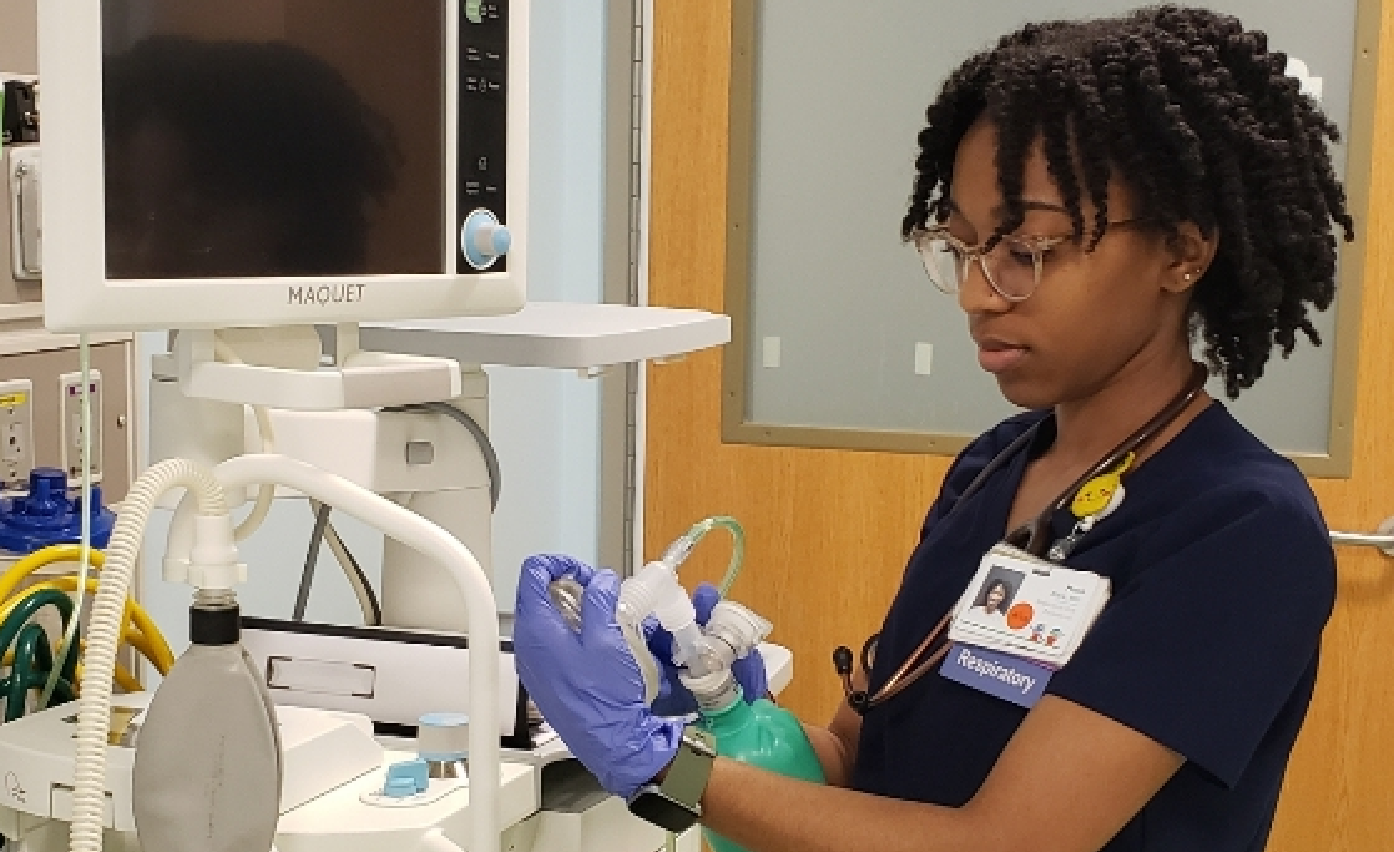
On-campus students train in state-of-the-art simulation centers configured like actual hospital intensive care units (ICUs) and emergency rooms. These labs feature:
- High-Fidelity Patient Simulators: Mannequins capable of simulating complex pulmonary pathologies, altered breathing patterns, cardiac arrhythmias, and adverse pharmacological reactions.
- Modern ICU Mechanical Ventilators: Industry-standard invasive and non-invasive ventilators, high-frequency oscillatory ventilators, and airway management tools.
- Diagnostic Equipment: Arterial blood gas analyzers, bedside spirometry units, bronchoscopy simulators, and hemodynamic monitoring systems.
Clinical Affiliations and Fieldwork
Practical clinical training is conducted across top-tier health systems in Utah and surrounding regions, including:
- Intermountain Health (including Intermountain Medical Center and Primary Children's Hospital)
- University of Utah Health (academic medical center and regional burn center)
- VA Salt Lake City Health Care System
- HCA MountainStar Healthcare Facilities
Students gain hands-on exposure across diverse clinical environments: adult intensive care units (ICU), surgical ICUs, pediatric ICUs (PICU), neonatal intensive care units (NICU), emergency departments, pulmonary function testing (PFT) laboratories, and pulmonary rehabilitation centers.
Admissions Requirements and Application Sequence
Admissions requirements vary based on the specific degree track. Prospective applicants must meet foundational criteria prior to consideration.
Entry-Level BSRT Prerequisites
To apply for the entry-level BSRT program, applicants must complete general education coursework alongside specific science pre-requisites with a competitive grade point average (typically a cumulative GPA of 2.5 or higher, with higher emphasis on science GPA):
- Human Anatomy & Physiology (with laboratory components)
- General College Chemistry (with laboratory components)
- Introductory Microbiology
- College Algebra or Introductory Statistics
- Introductory Psychology or Sociology
- English Composition
In addition to academic courses, applicants must pass a background check, complete a drug screening, provide immunization records, and complete mandatory healthcare provider CPR/BLS certification prior to clinical placement.
Online RRT-to-BSRT Admission Requirements
Candidates applying to the online degree completion program must meet the following criteria:
- Graduation from an accredited (CoARC) associate degree respiratory therapy program.
- Active Registered Respiratory Therapist (RRT) credential issued by the NBRC.
- Current unencumbered state license to practice respiratory care (where applicable).
- Cumulative college GPA meeting university transfer thresholds (typically 2.5+).
Master of Science (MSRT) Admission Requirements
Applicants to the graduate program must demonstrate strong professional and academic qualifications:
- Bachelor’s degree from a regionally accredited college or university (BSRT preferred).
- Active RRT credential from the NBRC.
- Minimum undergraduate GPA (typically 3.0 or higher on a 4.0 scale).
- Professional resume/CV detailing clinical experience.
- Personal statement outlining professional career goals, research interests, and leadership potential.
- Letters of recommendation from clinical supervisors or academic mentors.
Program Track Comparison
The following table summarizes key features across the three respiratory therapy tracks at Weber State University to help applicants evaluate their options:
| Feature / Program Track | Entry-Level BSRT | Online RRT-to-BSRT Completion | Master of Science (MSRT) |
|---|---|---|---|
| Primary Target Student | Pre-licensure students entering healthcare | Active RRTs holding an associate degree | Credentialed RRTs with a bachelor's degree |
| Delivery Format | On-campus & Clinical Rotations | 100% Online (Asynchronous) | Online with Hybrid/Capstone options |
| Typical Duration | 2 years (after prerequisites) | 1 to 2 years (flexible pacing) | 1.5 to 2 years |
| Key Curriculum Focus | Cardiopulmonary care, ICU ventilation, therapeutics | Leadership, diagnostics, community health, research | Advanced physiology, education, health policy, research |
| Clinical Requirement | Extensive hospital clinical rotations | Practicum/Project-based work | Capstone research or educational project |
| Primary Career Outcome | Initial RRT Credential, Staff RT | Senior RT, Clinical Lead, Department Supervisor | Clinical Specialist, Educator, Admin Director |
Career Opportunities and Industry Outlook
Graduates of Weber State University’s respiratory therapy programs enter a robust job market driven by an aging population, rising rates of chronic respiratory illnesses (such as COPD, asthma, and pulmonary fibrosis), and advances in critical care medicine.
According to data from the U.S. Bureau of Labor Statistics, employment for respiratory therapists is projected to grow faster than the average for all occupations. The standard compensation reflects technical expertise and clinical responsibility, with advanced degrees opening doors to higher-tier pay scales and administrative roles.
Career Pathways by Credentials and Degree Level
- Staff Respiratory Therapist (BSRT): Delivers direct patient care in ICUs, emergency departments, general medical floors, and sub-acute care facilities.
- Flight & Transport Therapist: Specializes in critical care transport via air or ground ambulance for neonates, pediatric patients, or critically ill adults.
- ECMO Specialist: Operates Extra-Corporeal Membrane Oxygenation circuits for patients experiencing severe cardiopulmonary failure.
- Pulmonary Diagnostic / Sleep Specialist: Conducts advanced pulmonary function testing, polysomnography (sleep studies), and arterial blood gas analysis.
- Clinical Educator / Academic Faculty (MSRT): Teaches in clinical simulation labs, coordinates hospital staff education, or serves as university faculty in accredited RT programs.
- Department Manager / Healthcare Administrator (MSRT): Manages clinical operations, staffing, budgeting, regulatory compliance, and quality assurance in major health systems.
Frequently Asked Questions
Is Weber State’s Respiratory Therapy program available entirely online?
The entry-level BSRT program requires on-campus laboratory sessions and in-person hospital clinical rotations in Utah and affiliated sites. However, both the RRT-to-BSRT Completion Program and the Master of Science in Respiratory Therapy (MSRT) are offered online, allowing working professionals to complete coursework remotely.
What is the difference between a CRT and an RRT credential?
The Certified Respiratory Therapist (CRT) credential represents entry-level competency achieved by passing the NBRC TMC exam at the lower cut-score. The Registered Respiratory Therapist (RRT) credential is the advanced standard achieved by scoring higher on the TMC exam and passing the Clinical Simulation Exam (CSE). Weber State prepares all entry-level students to achieve the full RRT credential.
Can I work full-time while enrolled in the entry-level BSRT program?
The entry-level BSRT is an intensive full-time program combining heavy course loads, laboratory hours, and multi-shift clinical rotations. While some students maintain part-time employment, full-time work is generally difficult to balance with clinical schedules. Conversely, the online RRT-to-BSRT and MSRT tracks are designed specifically for full-time working therapists.
Does WSU accept transfer credits from other institutions for prerequisites?
Yes, Weber State University accepts transfer credits from regionally accredited colleges and universities. Prospective students should submit official transcripts to WSU’s admissions office for credit evaluation against specific science and general education requirements.
Does the program prepare students for specialty credentials?
Yes. In addition to RRT preparation, WSU coursework provides educational foundations relevant to NBRC specialty credentials, such as Neonatal/Pediatric Specialist (NPS), Adult Critical Care Specialist (ACCS), and Registered Pulmonary Function Technologist (RPFT).
Recommended Next Steps for Prospective Students
- Determine the Right Track: Assess whether your background matches the Entry-Level BSRT, Online RRT-to-BSRT, or Master of Science (MSRT) track.
- Review Prerequisites: Request an unofficial transcript evaluation through Weber State’s Department of Respiratory Therapy to confirm completed prerequisite coursework and identify remaining prerequisites.
- Attend an Information Session: Register for a virtual or on-campus information session hosted by the Dr. Ezekiel R. Dumke College of Health Professions.
- Submit Formal Applications: Apply to Weber State University through the central admissions portal, and subsequently submit the specialized department application before published deadline dates.
Image Gallery