How to Place the Apostrophe When a Name Ends in S
To indicate possession for a singular proper noun ending in "s," such as "Charles" or "Jones," standard style guides generally recommend adding an apostrophe followed by an "s" (e.g., "Charles’s book"). While many writers prefer the si...
To indicate possession for a singular proper noun ending in "s," such as "Charles" or "Jones," standard style guides generally recommend adding an apostrophe followed by an "s" (e.g., "Charles’s book"). While many writers prefer the simpler apostrophe-only approach ("Charles’ book"), both are grammatically acceptable, provided you remain consistent throughout your writing.
Contents
Understanding the Rule of Possessive Proper Nouns
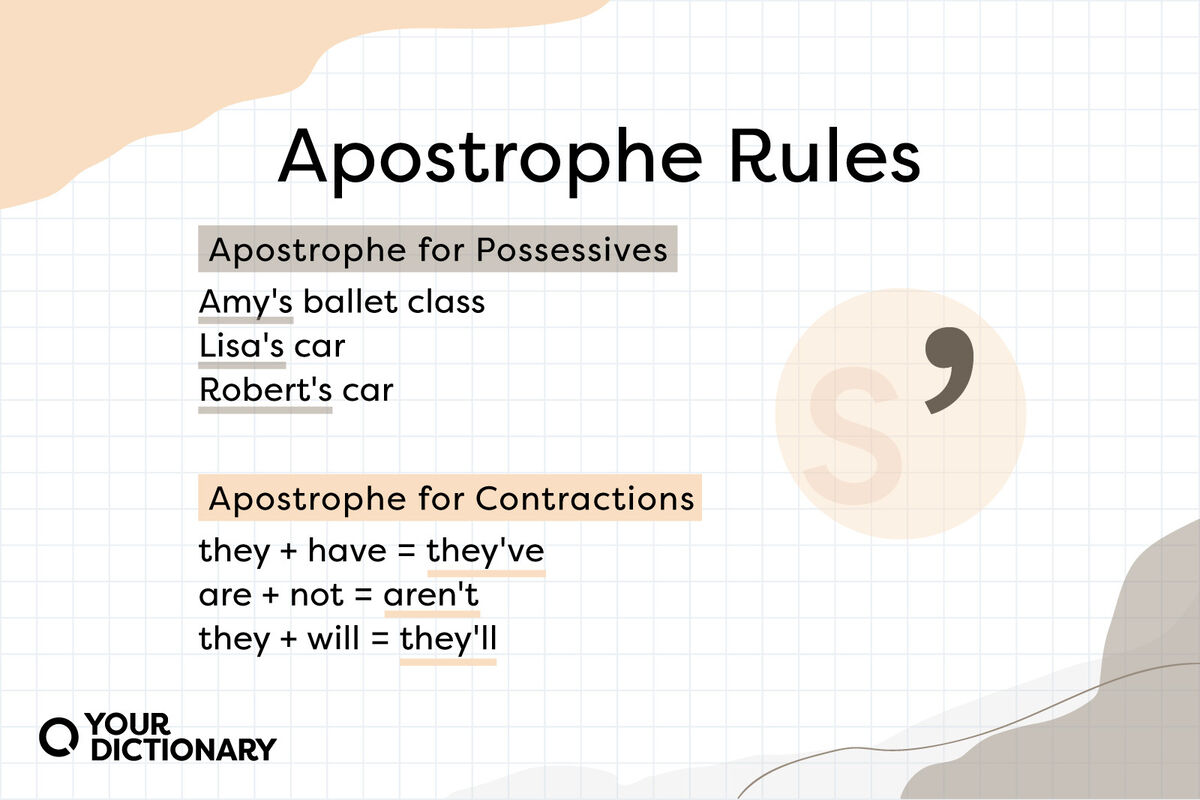
The confusion surrounding the placement of an apostrophe with names ending in "s" stems from the evolution of English grammar and the variation between major style guides. When you transform a noun into a possessive form, you are signaling ownership or a specific relationship between the owner and the object. With common nouns ending in "s" (like "boss"), the rule is almost universally to add an apostrophe and an "s" ("boss’s"). However, when applied to proper nouns—specifically personal names—language experts have historically disagreed on the best approach.
The debate centers on phonetics versus visual consistency. If you pronounce a name like "James" as two syllables in the possessive form ("James-ez"), it feels natural to write "James’s." If you treat the name as a single syllable, adding an extra "s" can feel redundant or clumsy.
Style Guide Perspectives: Where Experts Differ
Different professional organizations dictate specific rules for their publications. Understanding these nuances is essential for maintaining professional standards in your writing.
- The Associated Press (AP) Style: Primarily used in journalism, the AP Stylebook historically advocated for using only an apostrophe after names ending in "s." For instance, it would be "James' car." However, even AP makes exceptions for names that do not end in an "iz" sound.
- The Chicago Manual of Style (CMOS): Widely used in book publishing, CMOS is more inclusive. It dictates that you should almost always add an apostrophe plus an "s," regardless of the final syllable of the name. Under this rule, you would write "Jones’s office" and "Jesus’s teachings."
- MLA and APA Styles: Academic styles used in humanities and social sciences generally align with the Chicago approach, favoring the inclusion of the final "s" to maintain consistency across the text.
Practical Application: Making the Decision
Because multiple standards are technically correct, your primary goal as a writer is consistency. Choosing a style and sticking to it prevents your writing from appearing erratic or unpolished. To determine which method works best for your specific project in 2026, consider the intended audience and the publication’s requirements.
If you are drafting professional communications, legal documents, or academic papers, check the style guide provided by your organization. If you are writing creatively or for a general blog, you may choose the method that best reflects the cadence of your prose.
Comparison of Possessive Approaches
The table below illustrates how different styles treat singular names ending in "s."
| Name | Chicago/MLA (Add ’s) | AP Style (Add ’) | Pronunciation |
|---|---|---|---|
| Charles | Charles’s | Charles’ | Char-lez-ez |
| Jones | Jones’s | Jones’ | Jones-ez |
| Williams | Williams’s | Williams’ | Will-yam-zez |
| Louis | Louis’s | Louis’ | Loo-ee-zez |
Common Pitfalls and Troubleshooting
A frequent mistake occurs when writers conflate singular possessives with plural possessives. If you are describing a family named "Jones," you are dealing with a plural proper noun.
- The Plural Rule: If you are talking about the entire family, you do not use an apostrophe to make it plural. You add "-es." Example: "The Joneses are coming to dinner."
- The Plural Possessive Rule: If you are describing something owned by the entire family, you make the word plural first, then add the apostrophe. Example: "The Joneses’ house is at the end of the street."
- The Apostrophe Placement Check: Always identify if the subject is singular or plural before adding the punctuation. Placing an apostrophe before the "s" in a name like "Jones" can accidentally turn a name into a plural possessive when you only intended to indicate a singular owner.
Handling Ancient or Classical Names
A unique exception exists for certain classical, biblical, or historical names. In some traditional academic circles, names such as "Jesus," "Moses," or "Hercules" are treated differently. Because these names already end in an "eez" sound, adding another "s" (e.g., "Jesus’s") can be considered stylistically clunky. In these specific instances, most style guides—even those that usually mandate the extra "s"—allow for just the apostrophe at the end of the name to avoid phonetic awkwardness.
Best Practices for Professional Writing
If you are currently working on a manuscript or a technical document in 2026, establish your "style sheet" early. A style sheet is a simple document where you record your choices regarding punctuation, capitalization, and formatting.
- Consistency: If you write "Thomas’s dog" in the first paragraph, do not switch to "Thomas’ dog" in the third.
- The "Read-Aloud" Test: If a possessive construction makes your sentence difficult to read or sounds unnatural, consider rewriting the sentence. Using an "of" construction can often resolve the issue entirely. Instead of "Mr. Harris’s office," consider "the office of Mr. Harris." While this adds word count, it eliminates any ambiguity regarding apostrophe placement.
- Audience Awareness: Academic and formal audiences often prefer the "’s" (e.g., "Charles’s"). General audiences often find the standalone apostrophe (e.g., "Charles’") visually cleaner.
Frequently Asked Questions
Does the rule change if the name is an acronym or a title? No. The rule regarding the final letter remains the same. If the name ends in an "s" sound, follow your chosen style guide’s recommendation for proper nouns. If the acronym ends in a non-"s" letter, such as "IBM," the rule for standard nouns applies: "IBM’s policy."
What if I am unsure which style guide to follow? If no style guide is provided, the safest route for professional writing is to follow the Chicago Manual of Style. It is widely respected and provides the most comprehensive rules for English punctuation, making your work look authoritative.
Is it wrong to use the apostrophe without the extra "s"? It is not grammatically wrong; it is merely a stylistic choice. As long as you are consistent throughout your document, you are adhering to standard English usage. The only way to be "wrong" is to alternate between the two methods within the same text.
Does this rule apply to plural names that end in "s"? Yes, but the apostrophe placement changes. For plural possessives ending in "s," the apostrophe always goes after the final "s." For example, "The Johnsons’ car" refers to the car owned by the Johnson family.
Final Recommendation
For most writers in 2026, the most robust approach is to adopt the Chicago Manual of Style convention: always add an apostrophe and an "s" to singular names ending in "s." This choice provides maximum clarity and minimizes the risk of your text being perceived as inconsistent. If you find the extra "s" creates a pronunciation you dislike, simply rephrase the sentence to use "of" to bypass the possessive punctuation entirely. Maintain a style sheet for longer projects to ensure that every possessive name in your document follows the same rule from start to finish.
Image Gallery