How Freytag’s Pyramid Shapes Storytelling: A Guide to Narrative Architecture
Freytag’s Pyramid shapes storytelling by providing a five-act structural framework—exposition, rising action, climax, falling action, and denouement—that systematically maps emotional tension and dramatic conflict over time. Developed...
Freytag’s Pyramid shapes storytelling by providing a five-act structural framework—exposition, rising action, climax, falling action, and denouement—that systematically maps emotional tension and dramatic conflict over time. Developed by 19th-century German playwright and novelist Gustav Freytag, this classic narrative arc helps storytellers pace plot developments, escalate narrative stakes, and engineer emotionally resonant resolutions across literature, theater, screenwriting, and digital media.
Contents
The Origins and Evolution of Freytag’s Dramatic Structure
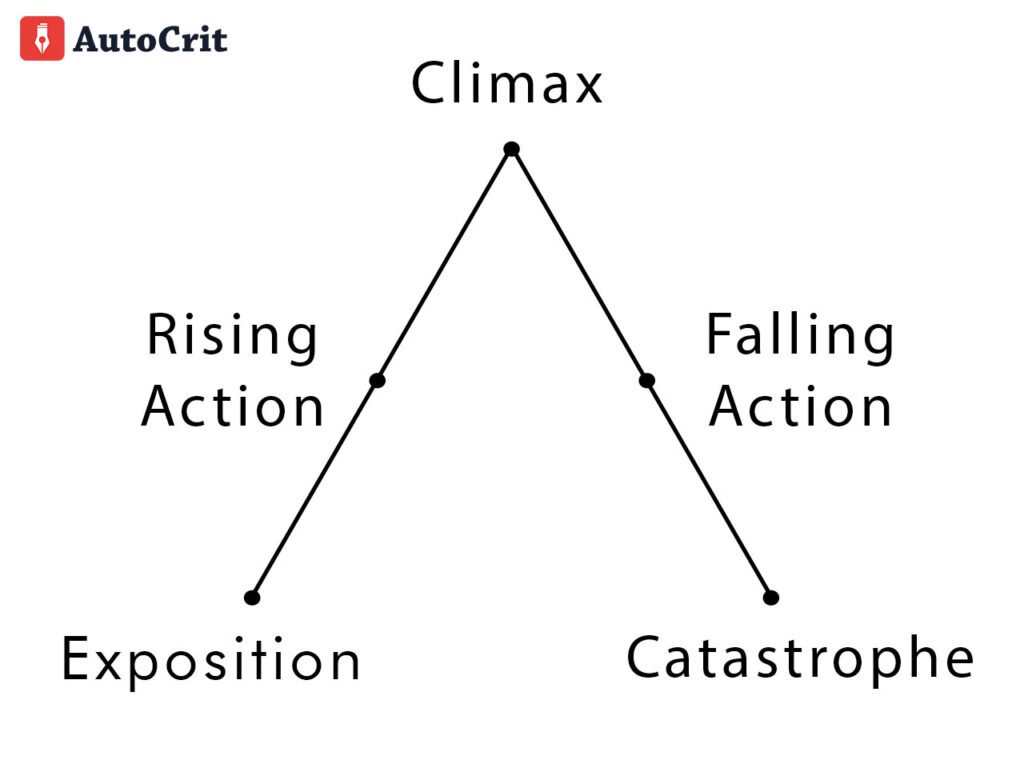
In his 1863 treatise Die Technik des Dramas (Technique of the Drama), German scholar Gustav Freytag analyzed the structural patterns of classical Greek tragedy and Shakespearean drama. Freytag observed that compelling dramatic works possessed a symmetrical shape reminiscent of a pyramid or rising triangle. He mapped this shape into five distinct structural acts punctuated by pivotal turning points, creating a graphic framework designed to analyze dramatic intensity.
[Climax] /\ / \ [Rising Action] / \ [Falling Action] / \ [Exposition] _/ \_ [Denouement / Catastrophe]
Originally, Freytag intended his model specifically for five-act tragic plays. In the original 19th-century formulation, the trajectory was unforgiving: the protagonist ascends toward a zenith of power or realization at the climax, followed by an irreversible decline leading to a catastrophic resolution.
As narrative forms evolved through the 20th and 21st centuries, writers adapted Freytag’s structural framework beyond classic tragedy. Today, narrative designers, novelists, screenwriters, and brand storytellers use an expanded interpretation of Freytag’s model. Modern adaptations modify the final stage from guaranteed ruin into a flexible resolution—allowing for heroic triumphs, open endings, or tragic defeats while retaining the underlying mechanics of escalating stakes and deliberate emotional pacing.
The Core Mechanics: Deconstructing the Five Stages and Key Turning Points
Freytag’s framework breaks narrative progression into five sequential acts connected by critical plot catalysts. Understanding how these stages interlock allows writers to build stories that maintain narrative momentum without sacrificing character depth or world-building context.
[3. Climax] / \ (Inciting \ (Force of the Incident) \ Reversal) / \ [2. Rising [4. Falling Action] Action] / \ [1. Exposition] [5. Denouement / Catastrophe]
1. Exposition (The Baseline Reality)
The story opens in the exposition, establishing the protagonist’s ordinary world, setting, psychological state, and baseline relationships. Rather than dumping raw background information, effective exposition illustrates what is at stake by showing the character within their existing normal environment before conflict arrives.
- Key Function: Establishes context, mood, thematic foundation, and character motivations.
- The Transition Catalyst (Inciting Incident): The exposition ends when an external or internal disruption occurs. This inciting incident shatters the status quo, forcing the protagonist out of passive existence and demanding an initial response.
2. Rising Action (Escalation of Conflict)
The rising action constitutes the longest sequence of the narrative pyramid. Once the inciting incident disrupts the protagonist’s baseline reality, they attempt to solve the problem or pursue a new goal. Each attempt introduces unforeseen obstacles, secondary conflicts, complications, and higher stakes.
- Key Function: Builds dramatic tension incrementally. Characters face escalating tests of competence and conviction, forming relationships, suffering minor setbacks, and revealing underlying flaws.
- Narrative Physics: Tension must steadily trend upward. If obstacles become easier or secondary subplots distract from core stakes, narrative momentum stalls.
3. The Climax (The Turning Point / Apex)
The climax represents the absolute peak of emotional intensity and dramatic conflict. Positioned near the center or upper third of the narrative structure, the climax is the moment where opposing forces collide in direct confrontation.
- Key Function: Serves as the ultimate point of no return. The protagonist must make a definitive choice or confront their central flaw.
- Dramatic Reversal (Peripeteia): In Freytag’s framework, the climax is defined by a reversal of fortune. In classic tragedy, the hero’s fate shifts from good to bad; in modern positive arcs, it shifts from vulnerability to mastery or triumph.
4. Falling Action (The Force of Reversal and Suspense)
Following the climax, the narrative enters the falling action. Contrary to common misconception, falling action is not a passive cool-down phase; it details the immediate consequences of the climax. Unresolved subplots begin to wrap up, and antagonist forces execute final desperate maneuvers.
- Key Function: Explores the systemic and psychological aftermath of the main confrontation.
- Moment of Final Suspense: Freytag emphasized that just before the absolute end, storytellers often introduce a brief moment of final suspense where ultimate success or failure remains momentarily in doubt, heightening final narrative tension.
5. Denouement or Catastrophe (The New Equilibrium)
The final phase settles the story into a permanent new baseline reality. In traditional tragic theater, this is the catastrophe, marked by death or unrecoverable loss. In broader modern storytelling, this stage is known as the denouement (French for "untying").
- Key Function: Releases remaining narrative tension, clarifies the thematic lesson, and demonstrates how characters have been permanently changed by their journey.
How Freytag’s Pyramid Regulates Narrative Pacing and Tension
Freytag’s Pyramid functions fundamentally as a graphic map of narrative tension. On a two-dimensional graph, the horizontal axis represents story progression (time or page count), while the vertical axis represents dramatic tension, emotional investment, and conflict intensity.
High Tension ^ [3. Climax] | /\ | / \ | [2. Rising / \ [4. Falling | Action] / \ Action] | (Inciting / \ | Incident) / \ Low Tension | [1. Exposition] __/ \__ [5. Denouement] +--------------------------------------------------> Beginning Middle End
By visualising tension as an upward and downward slope, Freytag’s model highlights three essential pacing rules:
- Symmetrical Weighting: Every action must have an equivalent reaction. The effort spent escalating stakes in the rising action must correspond to the magnitude of consequences resolved during the falling action.
- Controlled Rate of Rise: Dramatic tension must increase progressively rather than spiking prematurely. A early climax leaves subsequent chapters feeling hollow and anticlimactic.
- Proportional Resolution: The denouement must provide enough structural space for the audience to process emotional payoffs. Abrupt endings without proper falling action leave readers feeling cheated, while overly drawn-out resolutions drain dramatic energy.
Comparing Freytag’s Pyramid with Alternative Narrative Frameworks
While Freytag’s Pyramid remains foundational, storytellers frequently contrast it with other structural paradigms such as Syd Field’s Three-Act Structure, Joseph Campbell’s Hero’s Journey (Monomyth), and Dan Harmon’s Story Circle.
| Feature / Metric | Freytag’s Pyramid | Three-Act Structure | Hero’s Journey (Monomyth) | Harmon’s Story Circle |
|---|---|---|---|---|
| Primary Origin | 19th-Century Dramatic Theory (Gustav Freytag, 1863) | Screenwriting Theory (Syd Field, 1979) | Comparative Mythology (Joseph Campbell, 1949) | Modern Television Writing (Dan Harmon, 2000s) |
| Structural Stages | 5 Acts / 7 Pivotal Steps | 3 Acts (Setup, Confrontation, Resolution) | 12 Stages (3 Major Thresholds) | 8 Circular Steps |
| Primary Lens | Dramatic Tension & Pacing Curve | Plot Beats & Screenplay Page Counts | Mythic Archetypes & Character Growth | Psychological Need & Character Change |
| Climax Position | Near the Center / Top Apex | Late Act III (85–90% mark) | Stage 11 (Resurrection) | Step 7 (Return to World) |
| Resolution Focus | Catastrophe or New Baseline Realized | Clear Resolution & Ties to Act I Setup | Integration of Elixir into Community | Protagonist Changed Having Paid Price |
| Best Suited For | Tragedies, Dramas, Classical Plays | Feature Films, Mainstream Fiction | Epic Fantasy, Mythic Action, Sci-Fi | Episodic TV, Character-Driven Shorts |
Key Structural Differences
Unlike Syd Field’s Three-Act Structure—which places the climax late in the story—Freytag’s original model places the emotional apex roughly in the middle or upper-middle section of the narrative. This structural emphasis gives equal weight to the consequences of choices made at the peak (falling action), making Freytag’s model exceptionally strong for character-driven stories where internal flaws drive external downfall or systemic collapse.
Applying Freytag’s Pyramid to Modern Storytelling Across Genres
Although developed for 19th-century theater, Freytag's structural framework adapts effectively to modern mediums including novels, feature films, serialized television, and interactive media.
[Climax: Major Boss Encounter / Critical Plot Twist] /\ / \ [Rising Action: / \ [Falling Action: Secondary Quests / Leveling] / \ Escape Sequence / Aftermath] / \ [Exposition: Tutorial Area] / \ [Denouement: Epilogue / Credit Scene]
1. Literary Fiction and Drama
In literary novels, Freytag's Pyramid structures psychological arcs. The exposition establishes internal conflicts; the rising action builds moral complications; the climax forces an ethical choice; and the falling action illustrates the inevitable emotional fallout on the character’s life and relationships.
2. Screenwriting and Serialized Television
Feature film writers often combine Freytag’s 5-act rhythm with 3-act pacing.
- Episodic TV: Individual television episodes frequently utilize Freytag’s 5-act structure to maintain mini-arcs within standard broadcast commercial breaks.
- Serialized Seasons: An entire television season can be mapped to Freytag's curve, where early episodes build rising action toward a dramatic mid-season or penultimate episode climax, followed by seasonal falling action and resolution.
3. Interactive Media and Game Design
In video game narrative design, Freytag’s Pyramid helps match gameplay difficulty to storytelling tension:
- Exposition: Mechanics tutorials and starting zone world-building.
- Rising Action: Escalating quest chains, unlocking abilities, and encountering stronger enemies.
- Climax: High-stakes final boss battles or critical branching choices.
- Falling Action: Narrative fallout, escape sequences, or post-battle dialogue.
- Denouement: End-game epilogues and credit sequences.
Common Pitfalls When Using Freytag’s Pyramid (and How to Avoid Them)
Applying structural models without understanding their underlying dramatic mechanics can lead to rigid, predictable storytelling. Writers should watch out for several common implementation errors.
Mistake A: Premature Climax Tension ^ /\ <-- Climax occurs too early! | / \_________________ | / \ (Flat, boring falling action) +----------------------------------> Mistake B: Truncated Falling Action Tension ^ /\ | / | <-- Abrupt cliff drop! (No cool-down/denouement) | / | +---------------------------------->
1. The Premature Climax
If the conflict peaks too early in the narrative, the subsequent falling action drags on, exhausting audience interest.
- Fix: Ensure the rising action contains multiple escalations with rising stakes so the climax occurs at the true summit of narrative conflict.
2. Truncated Falling Action
Modern storytellers often rush from the climax straight to the end, skipping the falling action entirely. This leaves subplots dangling and robs emotional moments of proper weight.
- Fix: Dedicate sufficient structural space after the climax to process consequences, tie up secondary plotlines, and show the world adjusting to the new reality.
3. Symmetrical Rigidity
Forcing every story into a perfectly symmetrical triangle can make pacing feel mechanical or artificial.
- Fix: Treat Freytag’s Pyramid as a flexible guide to emotional tension rather than a rigid visual template. Adjust the length of rising and falling action to fit the needs of your specific genre and story style.
Frequently Asked Questions
What is the main difference between Freytag’s Pyramid and the Three-Act Structure?
Freytag’s Pyramid uses five distinct acts with a central apex climax followed by detailed falling action, emphasizing cause-and-effect consequences. The Three-Act Structure compresses storytelling into three phases (Setup, Confrontation, Resolution), typically placing the climax much later in the narrative timeline.
Can Freytag’s Pyramid be used for stories with happy endings?
Yes. Although Gustav Freytag originally designed the model around classical tragedies ending in catastrophe, modern narrative theory applies the five stages to positive arcs as well. In positive arcs, the falling action details how obstacles are overcome, leading to a constructive denouement rather than ruin.
What is the difference between the Inciting Incident and the Climax?
The inciting incident occurs near the beginning of the story within or immediately following the exposition; it disrupts the protagonist's ordinary world and initiates the plot. The climax occurs at the peak of dramatic tension, where the central conflict reaches its direct, unavoidable confrontation.
Why do some modern stories have very short Falling Action phases?
Modern thrillers, action films, and fast-paced novels often compress falling action to maintain high narrative momentum right up to the end credits or final page. However, completely eliminating falling action risks leaving subplots unresolved and emotional arcs incomplete.
How does character arc interact with Freytag's dramatic arc?
Character arcs mirror the structural points of Freytag’s Pyramid. A character's internal flaws and beliefs are established in the exposition, tested during the rising action, fundamentally challenged at the climax, processed during the falling action, and permanently transformed in the denouement.
Designing Your Narrative Arc: Practical Next Steps
To effectively integrate Freytag’s Pyramid into your writing process without sacrificing creative spontaneity, follow this practical workflow:
- Map Your Baseline and Disruption: Write out your story's starting status quo (exposition) and identify the precise event that disrupts it (inciting incident).
- Chart Three Escalating Obstacles: Outline at least three distinct steps in your rising action. Ensure each obstacle carries higher personal, physical, or emotional stakes than the previous one.
- Define the Climactic Choice: Determine the central confrontation of your story. Identify the core belief, flaw, or external threat your protagonist must directly confront at this peak moment.
- Draft the Aftermath Sequences: Plan the immediate consequences of the climax. Ensure secondary subplots are systematically resolved during the falling action before establishing the final new status quo.
- Review the Pacing Curve: Read through your outline or draft to evaluate dramatic tension. Adjust scene lengths to ensure the rise feels earned and the resolution delivers a satisfying emotional release.
Image Gallery