Workers’ Compensation for New Hampshire Firefighter Survivors: A 2026 Comprehensive Guide
Survivors of New Hampshire firefighters who lose their lives due to work-related injuries or occupational diseases are entitled to significant financial support through the state’s workers' compensation system. These benefits, governed...
Survivors of New Hampshire firefighters who lose their lives due to work-related injuries or occupational diseases are entitled to significant financial support through the state’s workers' compensation system. These benefits, governed by RSA 281-A, provide weekly indemnity payments, funeral expense coverage, and specialized medical benefits. Understanding the "presumptive" laws regarding cancer and heart disease is essential for families navigating the claims process in 2026.
Contents
Losing a family member in the line of duty is a devastating experience. In New Hampshire, the workers' compensation system is designed to provide a financial safety net for the spouses, children, and legal dependents of fallen firefighters. Whether the death resulted from a traumatic event on the fireground or a long-term occupational illness like cancer, the state’s statutes recognize the unique risks inherent in the fire service.
As of 2026, the complexity of these claims often stems from the distinction between "line-of-duty deaths" (LODDs) caused by accidents and those caused by occupational diseases. This guide provides a detailed roadmap for survivors to understand their eligibility, the presumptive clauses that favor first responders, and the specific steps required to secure long-term benefits.
Eligibility for Survivor Benefits in New Hampshire
The New Hampshire Workers’ Compensation Law (RSA 281-A:26) defines who is eligible to receive death benefits. Eligibility is strictly categorized to ensure that those who were financially dependent on the deceased firefighter are prioritized.
Eligible Dependents
- Surviving Spouses: A widow or widower is generally entitled to benefits until they remarry. In New Hampshire, if a surviving spouse remarries, they may receive a final lump-sum payment (often equivalent to a specific number of weeks of benefits), after which periodic payments cease.
- Children: Biological children, adopted children, and stepchildren who were dependent on the firefighter are eligible. These benefits typically continue until the child reaches age 18, or age 23 if they are enrolled as a full-time student in an accredited educational institution. If a child is physically or mentally incapacitated and was dependent on the firefighter, benefits may continue indefinitely.
- Other Dependents: In the absence of a spouse or child, other family members (such as parents or siblings) may be eligible if they can prove actual financial dependency on the firefighter at the time of death.
Definition of "Employee" for Firefighters
New Hampshire law explicitly includes full-time, part-time, and volunteer/call firefighters under workers' compensation coverage. For the purpose of calculating benefits, volunteer and call firefighters are often treated as having a "deemed" wage if their actual earnings are low, ensuring their survivors receive a meaningful benefit regardless of the firefighter's primary civilian income.
Presumptive Clauses: Cancer, Heart, and Lung Disease
One of the most critical protections for New Hampshire firefighter survivors is the "Presumptive Clause" found in RSA 281-A:17. This law acknowledges that certain health conditions are inherently linked to the toxic exposures and physical stresses of firefighting.
The Heart and Lung Presumption
If a firefighter dies from heart disease or a lung condition (such as a pulmonary embolism or chronic respiratory failure), the law presumes the condition was work-related. To qualify for this presumption in 2026, the firefighter must have:
- Passed a pre-employment physical that showed no evidence of such a condition.
- Served a required period of time (typically five years) in the fire service.
The Cancer Presumption
New Hampshire has one of the more robust cancer presumption laws in the United States. If a firefighter dies from a covered cancer, it is legally presumed to be an occupational disease. This is vital for survivors because proving the exact fire scene where a carcinogen was inhaled is scientifically impossible.
Covered cancers often include, but are not limited to:
- Brain cancer
- Bladder cancer
- Kidney cancer
- Non-Hodgkin’s lymphoma
- Leukemia
- Colorectal and prostate cancer
- Testicular and breast cancer
To trigger this presumption, the firefighter must typically have served for at least 20 years (or a specific duration based on the latest legislative updates) and have been exposed to known carcinogens. If these criteria are met, the burden of proof shifts to the insurance carrier or the municipality to prove that the cancer was not caused by firefighting—a very high legal bar to clear.
Calculation of Weekly Death Benefits
In New Hampshire, workers' compensation death benefits are not a flat rate; they are calculated based on the deceased firefighter's Average Weekly Wage (AWW).
Determining the Benefit Amount
Survivors generally receive 60% of the deceased firefighter's AWW, subject to the state's minimum and maximum limits. The state sets a maximum weekly compensation rate annually based on the state’s average weekly wage. For 2026, these caps are adjusted to reflect current economic conditions.
- Maximum Benefit: Survivors cannot receive more than the state-mandated maximum, even if the firefighter was a high-earning officer.
- Minimum Benefit: There is a "floor" to ensure that survivors of lower-paid or volunteer firefighters receive a subsistence level of support.
Impact of Multiple Dependents
If there is a surviving spouse and multiple children, the total benefit is shared among them. If the spouse passes away or remarries while the children are still minors, the children’s portion may be adjusted to ensure the full available benefit is utilized for their support.
Additional Financial Support and Funeral Expenses
Beyond weekly indemnity payments, the New Hampshire workers' compensation system provides for immediate costs associated with a line-of-duty death.
Burial Expenses
Under RSA 281-A:26, the employer or their insurance carrier is responsible for paying burial expenses. In 2026, this amount is capped (historically around $10,000, but subject to statutory increases). This payment is made directly to the funeral home or as a reimbursement to the person who paid the expenses.
Medical Expenses
Any medical bills incurred between the time of the injury/diagnosis and the time of death are covered 100% by workers' compensation. This includes hospital stays, surgeries, medications, and hospice care. Survivors should ensure that these bills are submitted to the workers' compensation carrier rather than a private health insurance provider to avoid co-pays and deductibles.
Comparison of Survivor Benefit Components
| Benefit Type | Description | Duration/Limit (2026 Guidelines) |
|---|---|---|
| Weekly Indemnity | 60% of the Average Weekly Wage (AWW). | Until spouse remarries or child reaches 18 (23 if student). |
| Burial Benefit | Reimbursement for funeral and interment costs. | Statutory cap (approx. $10,000). |
| Medical Coverage | Payment for all injury-related medical care prior to death. | Unlimited for reasonable and necessary care. |
| Education Benefit | Potential tuition waivers for children of fallen responders. | Available at New Hampshire public colleges/universities. |
| Cost of Living (COLA) | Annual adjustments to the weekly benefit amount. | Based on NH Department of Labor yearly calculations. |
The Claims Process for Survivors
Navigating the bureaucratic requirements while grieving can be overwhelming. The following steps are necessary to secure benefits in New Hampshire.
1. Notice of Death
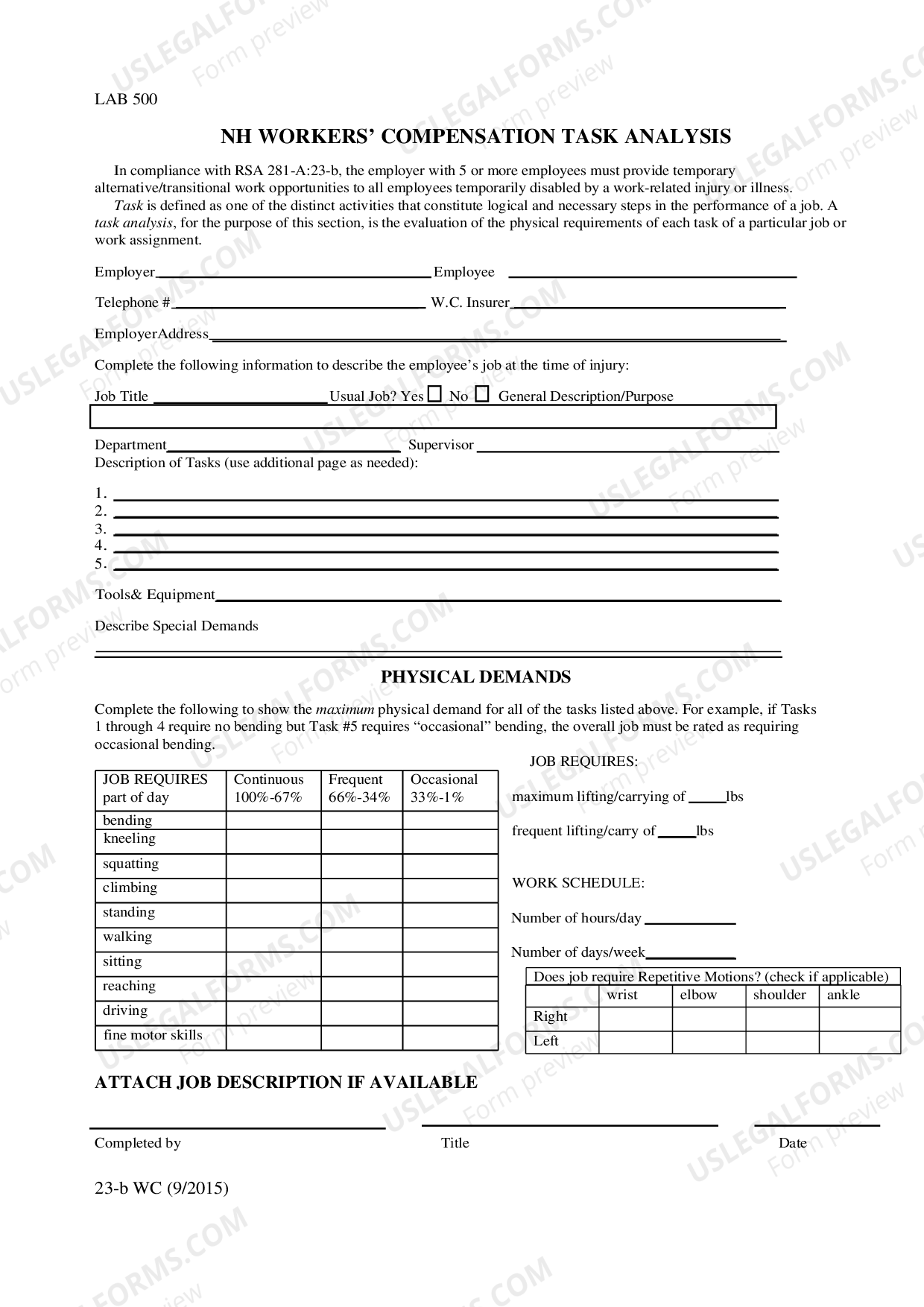
The fire department (the employer) must be notified of the death immediately, though in LODD cases, the department is usually the first to know. The employer is then required to file a "First Report of Injury or Occupational Disease" with the New Hampshire Department of Labor.
2. Filing the Claim
Survivors or their legal representatives should file a Claim for Substituted Benefit or a formal claim for death benefits. This initiates the insurance company's investigation. In New Hampshire, insurance carriers have 21 days to either accept the claim, deny it, or request more information (payment under "memo of payment").
3. Gathering Documentation
Survivors will need to provide:
- A certified copy of the death certificate.
- Marriage certificates.
- Birth certificates for all dependent children.
- Medical records linking the death to the occupation (especially in cancer or heart disease cases).
4. Resolving Disputes
If a claim is denied—which often happens in complex cancer cases—the survivor has the right to a hearing before a Department of Labor Hearing Officer. These hearings are formal, and testimony from medical experts is often required to support the link between the firefighter's service and their cause of death.
Interaction with the New Hampshire Retirement System (NHRS)
It is important to distinguish between Workers' Compensation and the New Hampshire Retirement System (NHRS). Most full-time New Hampshire firefighters are members of the NHRS (Group II).
If a firefighter dies in the line of duty, survivors may be eligible for an Accidental Death Benefit through the NHRS. This is a separate benefit from workers' compensation. However, New Hampshire law often requires an "offset" or coordination of benefits. Generally, the total amount received from both sources cannot exceed 100% of the firefighter’s base salary at the time of death. Survivors should consult with both the NH DOL and the NHRS to ensure they are maximizing their total support package.
Common Pitfalls and Challenges
Despite the protections of the law, survivors may face hurdles:
- The "Rebuttal" of Presumption: Insurance companies may try to argue that a firefighter’s lifestyle (e.g., smoking, diet) was the primary cause of a heart attack or cancer, rather than the job.
- Statutes of Limitation: Claims must generally be filed within three years of the date the survivor knew or should have known the death was work-related.
- Remarriage Issues: Survivors often fail to realize that remarriage stops the weekly indemnity payments, which can lead to overpayment issues that the state may later seek to recoup.
Frequently Asked Questions
What happens if the firefighter was a volunteer? In New Hampshire, volunteer and call firefighters are covered. For benefit calculation, the law uses a "deemed" average weekly wage if their actual earnings are too low to provide a fair benefit. This ensures that the family of a volunteer is not penalized for the firefighter’s unpaid service.
Can I sue the fire department for a wrongful death? Generally, no. Workers' compensation is a "no-fault" system. In exchange for providing guaranteed benefits regardless of who was at fault, the law grants employers "immunity" from civil lawsuits. However, if a third party (such as an equipment manufacturer) was responsible for the death, a separate lawsuit may be possible.
How long do these benefits last for a spouse? For a surviving spouse, benefits continue until death or remarriage. If the spouse remarries, they may be eligible for a final lump-sum payment, but the ongoing weekly checks will cease.
Does workers' compensation pay for the firefighter's outstanding debts? No. Workers' compensation is intended to replace lost income and cover medical/funeral costs. It does not pay off mortgages, credit cards, or other personal debts of the deceased, though the weekly indemnity payments can be used by the survivor for any purpose.
What if the cancer is not on the "presumed" list? If a firefighter dies from a cancer not explicitly listed in the presumptive statute, the survivor can still file a claim. However, the "burden of proof" remains on the survivor to provide medical evidence that the cancer was more likely than not caused by occupational exposure.
Next Steps for Survivors
If you are a survivor of a New Hampshire firefighter, your first step should be to contact the local fire chief or the union representative (such as the Professional Fire Fighters of New Hampshire). They often have resources and experienced legal counsel who specialize in RSA 281-A claims.
Next, ensure that the "First Report of Injury" has been filed with the New Hampshire Department of Labor. Keep meticulous records of all medical expenses and funeral costs. Because of the technical nature of presumptive laws and the potential for offsets with the NHRS, consulting with a workers' compensation attorney who has specific experience with first responder claims is highly recommended to protect your family’s long-term financial security.
Image Gallery