Comprehensive Guide to the Isomers of Pentanol: Structures, Properties, and Industrial Applications
Pentanol, with the molecular formula $\text{C}5\text{H}{12}\text{O}$, exists in eight distinct structural and stereoisomeric forms, which are important organic compounds widely utilized as solvents, chemical intermediates, and flavorin...
Pentanol, with the molecular formula $\text{C}5\text{H}{12}\text{O}$, exists in eight distinct structural and stereoisomeric forms, which are important organic compounds widely utilized as solvents, chemical intermediates, and flavoring agents. These isomers vary significantly in their boiling points, densities, and chemical reactivities due to differences in their carbon skeletons and the position of their hydroxyl ($\text{-OH}$) functional groups.
Contents
Introduction to Pentanol Isomers
Pentanol, commonly referred to historically as amyl alcohol, comprises a family of eight structural and optical isomers. Every isomer shares the exact same molecular formula ($\text{C}5\text{H}{12}\text{O}$) and a molecular weight of approximately $88.15\text{ g/mol}$, yet their physical and chemical behaviors diverge substantially. Understanding these differences is crucial for industrial chemical synthesis, laboratory extraction processes, and safety management.
In organic chemistry, constitutional isomerism and stereoisomerism dictate how molecules interact with one another. While straight-chain primary alcohols like 1-pentanol exhibit relatively high boiling points and linear intermolecular hydrogen bonding, highly branched isomers such as tert-pentanol experience steric hindrance, altering their solubility, acidity, and reactivity profiles. Below is an exploration of the structural diversity, classification, physical properties, and practical applications of these eight distinct chemical entities.
Classification and Structural Diversity
To systematically understand the isomers of pentanol, chemists divide them into three primary categories based on the substitution pattern of the carbon atom bearing the hydroxyl group: primary ($1^\circ$), secondary ($2^\circ$), and tertiary ($3^\circ$) alcohols. Furthermore, the carbon backbone may be linear (normal) or branched (iso, neo, or secondary structures).
Primary Pentanols ($1^\circ$)
Primary pentanols feature a hydroxyl group attached to a terminal carbon atom ($\text{-CH}_2\text{-OH}$). There are four primary structural isomers in this category:
- 1-Pentanol (n-amyl alcohol): The straight-chain parent compound, $\text{CH}_3\text{CH}_2\text{CH}_2\text{CH}_2\text{CH}_2\text{OH}$.
- 2-Methyl-1-butanol (active amyl alcohol): A branched primary alcohol containing a chiral center, $\text{CH}_3\text{CH}_2\text{CH}(\text{CH}_3)\text{CH}_2\text{OH}$.
- 3-Methyl-1-butanol (isopentyl alcohol or isoamyl alcohol): A widely produced industrial isomer, $(\text{CH}_3)_2\text{CHCH}_2\text{CH}_2\text{OH}$.
- 2,2-Dimethyl-1-butanol (neopentyl alcohol variant): A heavily branched primary alcohol, $(\text{CH}_3)_3\text{CCH}_2\text{OH}$.
Secondary Pentanols ($2^\circ$)
Secondary pentanols feature the hydroxyl group attached to a carbon atom bonded to two other carbon atoms. This category includes three structural isomers, one of which exhibits optical activity:
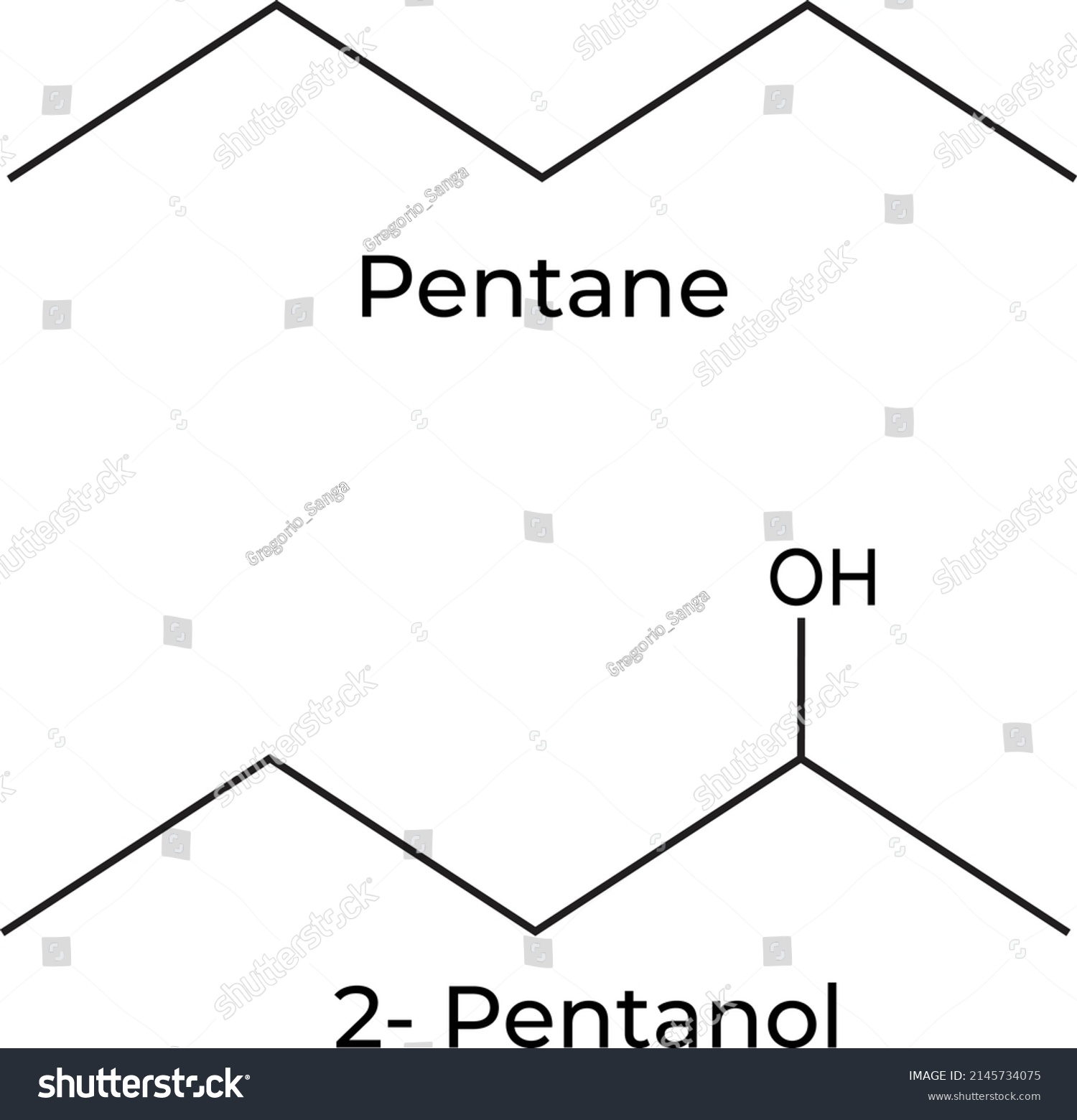
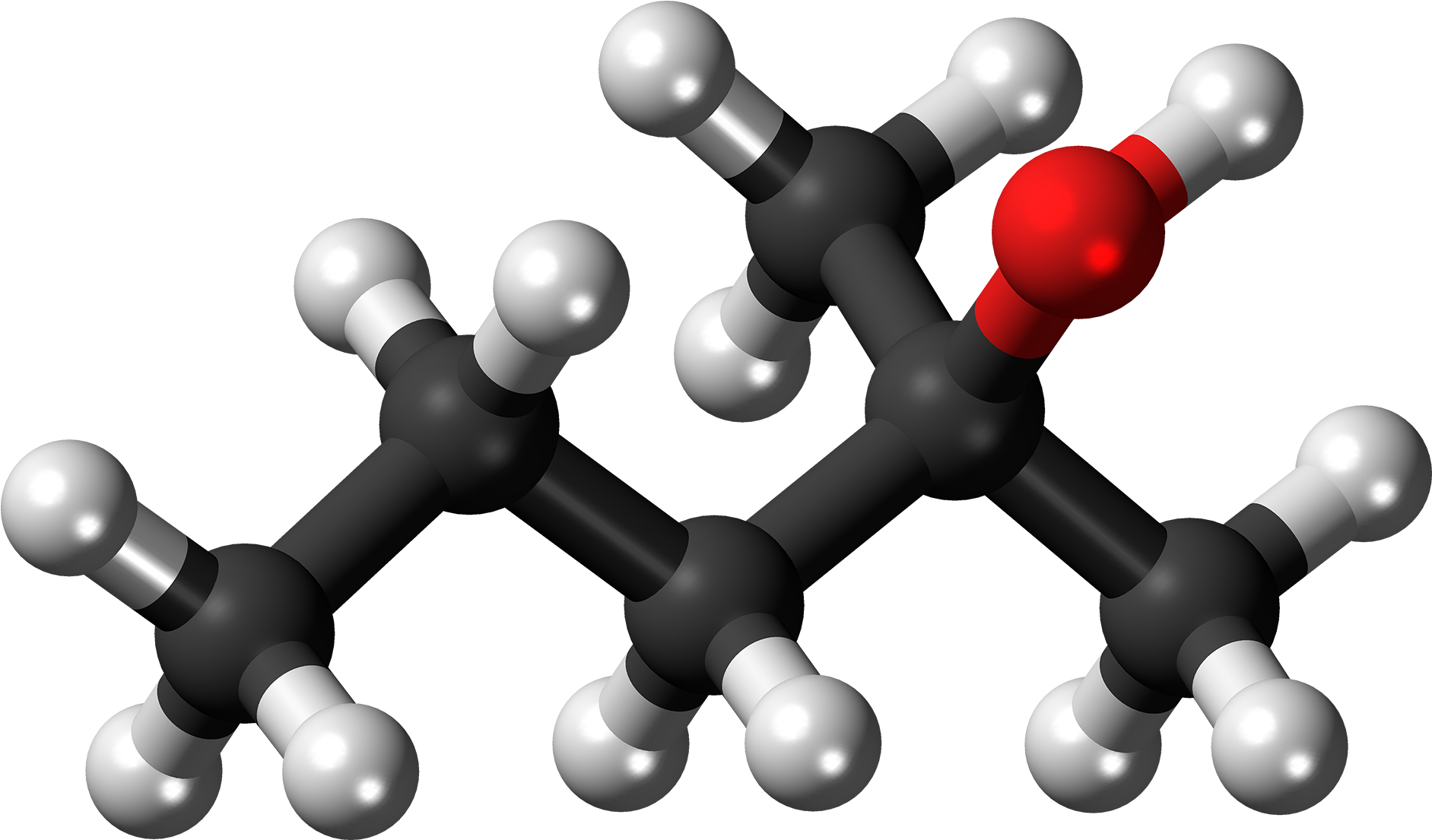
- 2-Pentanol (sec-amyl alcohol): $\text{CH}_3\text{CH}_2\text{CH}_2\text{CH}(\text{OH})\text{CH}_3$, featuring a chiral center.
- 3-Pentanol: A symmetrical secondary alcohol, $\text{CH}_3\text{CH}_2\text{CH}(\text{OH})\text{CH}_2\text{CH}_3$.
- 3-Methyl-2-butanol: $\text{CH}_3\text{CH}(\text{CH}_3)\text{CH}(\text{OH})\text{CH}_3$.
Tertiary Pentanols ($3^\circ$)
Tertiary pentanols feature the hydroxyl group attached to a carbon atom bonded directly to three other carbon atoms, resulting in maximum steric hindrance around the oxygen atom:
- 2-Methyl-2-butanol (tert-amyl alcohol or TAA): $(\text{CH}_3)_2\text{C}(\text{OH})\text{CH}_2\text{CH}_3$.
Detailed Comparison of Physical Properties
The physical properties of the pentanol isomers depend heavily on molecular branching and symmetry. Linear chains allow for maximum intermolecular surface contact, strengthening London dispersion forces and raising boiling points. Branching introduces steric hindrance, which disrupts the packing efficiency of the molecules and weakens intermolecular hydrogen bonding networks.
| IUPAC Name | Common Name | Structural Type | Boiling Point ($^\circ\text{C}$) | Density ($\text{g/cm}^3$ at $20^\circ\text{C}$) | Water Solubility ($\text{g/100 mL}$) |
|---|---|---|---|---|---|
| 1-Pentanol | n-Amyl alcohol | Primary ($1^\circ$) | 138.5 | 0.814 | 2.7 |
| 2-Methyl-1-butanol | Active amyl alcohol | Primary ($1^\circ$) | 128.7 | 0.819 | 3.0 |
| 3-Methyl-1-butanol | Isoamyl alcohol | Primary ($1^\circ$) | 130.0 | 0.810 | 2.5 |
| 2,2-Dimethyl-1-butanol | Neopentyl derivative | Primary ($1^\circ$) | 137.0 | 0.828 | 1.8 |
| 2-Pentanol | sec-Amyl alcohol | Secondary ($2^\circ$) | 119.3 | 0.808 | 4.2 |
| 3-Pentanol | Diethylcarbinol | Secondary ($2^\circ$) | 115.4 | 0.815 | 5.2 |
| 3-Methyl-2-butanol | Methylisopropylcarbinol | Secondary ($2^\circ$) | 113.6 | 0.819 | 4.9 |
| 2-Methyl-2-butanol | tert-Amyl alcohol (TAA) | Tertiary ($3^\circ$) | 102.0 | 0.805 | 12.0 |
As demonstrated in the table, 1-pentanol has the highest boiling point ($138.5^\circ\text{C}$) due to its unhindered linear structure, whereas tertiary amyl alcohol boils significantly lower ($102.0^\circ\text{C}$) because the bulky alkyl groups shield the hydroxyl moiety. Conversely, aqueous solubility tends to increase with moderate branching and structural compactness, as seen in the higher solubility of tertiary and secondary isomers.
Chemical Reactivity and Oxidation Pathways
The chemical behavior of pentanol isomers is largely governed by the class of alcohol they represent. Reactions typically involve the cleavage of either the $\text{C-O}$ bond or the $\text{O-H}$ bond, alongside elimination and substitution reactions.
Oxidation Reactions
Primary pentanols readily oxidize in two stages. Using strong oxidizing agents like chromic acid ($\text{H}_2\text{CrO}_4$) or potassium permanganate ($\text{KMnO}_4$), primary isomers oxidize first to form aldehydes (e.g., pentanal from 1-pentanol), and subsequently into carboxylic acids (pentanoic acid).
Secondary pentanols undergo oxidation to form ketones. For instance, 2-pentanol oxidizes to 2-pentanone. Tertiary pentanols, such as 2-methyl-2-butanol, resist standard oxidation because the carbon atom bonded to the hydroxyl group lacks an attached hydrogen atom. Severe oxidative conditions result in carbon-carbon bond cleavage rather than smooth conversion to carbonyl compounds.
Dehydration to Alkenes
When treated with concentrated sulfuric acid ($\text{H}_2\text{SO}_4$) or phosphoric acid ($\text{H}_3\text{PO}_4$) at elevated temperatures, pentanols undergo acid-catalyzed dehydration via an $\text{E1}$ or $\text{E2}$ mechanism to yield a mixture of pentene isomers. Zaitsev's rule generally dictates the major alkene product, favoring the most highly substituted and thermodynamically stable double bond.
Esterification
Pentanols react with carboxylic acids in the presence of an acid catalyst (Fischer esterification) to produce pleasant-smelling ester derivatives. For example, the reaction of 3-methyl-1-butanol with acetic acid produces isoamyl acetate, a chemical compound widely recognized for its strong banana scent used in artificial flavorings and fragrances.
Industrial Production and Synthesis Methods
Commercial production of pentanol isomers relies heavily on petrochemical refining, oxo synthesis, and fractional distillation of fusel oils—a byproduct of agricultural ethanol fermentation.
Fractional Distillation of Fusel Oils
Fusel oil is a mixture of higher alcohols formed as a byproduct during the yeast fermentation of grains, potatoes, and molasses. Industrial refiners utilize fractional distillation to separate fusel oil fractions, isolating major components such as 3-methyl-1-butanol and 2-methyl-1-butanol. This bio-based route remains vital for producing specialty fragrance and food-grade ingredients.
The Oxo Process (Hydroformylation)
Petrochemical synthesis of pentanols often utilizes the oxo process. Butenes are reacted with carbon monoxide ($\text{CO}$) and hydrogen ($\text{H}_2$) in the presence of a rhodium or cobalt catalyst at high pressures to form a mixture of C5 aldehydes. Subsequent catalytic hydrogenation yields a complex mixture of primary pentanol isomers, which are then separated via high-efficiency fractional distillation columns.
Hydration of Alkenes
Pentenes derived from cracking petroleum fractions can be hydrated directly in the presence of strong acid catalysts following Markovnikov's rule. This route is particularly effective for producing secondary and tertiary pentanols, such as 2-pentanol and 2-methyl-2-butanol.
Practical Applications Across Industries
Pentanol isomers serve critical roles across diverse commercial sectors, functioning as solvents, extraction agents, chemical precursors, and specialty additives.
- Solvents and Extraction: Higher alcohols like 1-pentanol and isoamyl alcohol are valued as medium-boiling, water-immiscible solvents in pharmaceutical extractions, fat processing, and specialized coating formulations.
- Plasticizers and Polymer Additives: Esters derived from pentanols are utilized as plasticizers to increase the flexibility and durability of polyvinyl chloride (PVC) and other industrial polymers.
- Flavors and Fragrances: Isoamyl alcohol and its acetate ester are foundational components in the formulation of artificial fruit flavorings, perfumes, and cosmetics due to their potent aromatic profiles.
- Pharmaceutical Intermediates: Tertiary amyl alcohol and related isomers serve as precursors in the synthesis of pharmaceutical active ingredients, local anesthetics, and specialized agrochemicals.
Safety, Handling, and Environmental Considerations
While pentanols are vital industrial chemicals, proper safety protocols are mandatory during handling, storage, and disposal.
Health Hazards
Inhalation of pentanol vapors can irritate the mucous membranes, eyes, and upper respiratory tract. High vapor concentrations can cause central nervous system depression, leading to headaches, dizziness, vertigo, and nausea. Prolonged or repeated dermal contact strips natural skin oils, resulting in contact dermatitis. Direct eye contact causes severe irritation and potential corneal damage.
Flammability and Storage
Pentanols are classified as flammable liquids (Flash points generally range between $33^\circ\text{C}$ and $45^\circ\text{C}$ depending on the specific isomer). They must be stored in cool, well-ventilated, spark-proof environments away from strong oxidizing agents, ignition sources, and concentrated acids.
Environmental Impact
Pentanol isomers exhibit low to moderate acute toxicity to aquatic organisms. They are readily biodegradable under aerobic conditions in soil and water systems, minimizing the risk of long-term environmental bioaccumulation, though accidental industrial spills require immediate containment to prevent groundwater contamination.
Frequently Asked Questions
What are the main differences between primary, secondary, and tertiary pentanols?
The classification depends on the substitution of the carbon atom attached to the hydroxyl ($\text{-OH}$) group. Primary pentanols have the $\text{-OH}$ group on a terminal carbon, secondary pentanols have it attached to a carbon bonded to two other carbons, and tertiary pentanols have it attached to a carbon bonded to three other carbons. This structural difference dictates their oxidation behavior, boiling points, and chemical reactivity.
Why do pentanol isomers have different boiling points?
Boiling points vary based on molecular branching and symmetry. Straight-chain isomers like 1-pentanol have maximum surface area contact, facilitating strong intermolecular hydrogen bonding and Van der Waals forces, leading to higher boiling points. Branched isomers experience steric hindrance, which disrupts molecular packing and lowers the boiling point.
How is isoamyl alcohol related to pentanol?
Isoamyl alcohol is the common industrial name for 3-methyl-1-butanol, one of the eight structural isomers of pentanol. It is a primary alcohol widely used in the chemical industry for producing flavor esters and as a solvent.
Are pentanol isomers soluble in water?
Solubility decreases as the hydrocarbon chain lengthens compared to lower alcohols like ethanol or propanol. Pentanols have limited water solubility, typically ranging from $1.8\text{ g}$ to $12.0\text{ g}$ per $100\text{ mL}$ of water at room temperature, with tertiary and secondary isomers showing slightly higher miscibility than straight-chain primary isomers.
What safety equipment is required when handling pentanols?
Personnel handling pentanols should wear chemical-resistant nitrile gloves, safety goggles or face shields, and laboratory coats or aprons. Work must be conducted inside a certified chemical fume hood to prevent vapor inhalation, and appropriate fire suppression equipment must be readily available.
Conclusion and Operational Recommendations
The eight isomers of pentanol represent a diverse group of organic compounds characterized by unique structural variations that directly influence their boiling points, chemical reactivity, and industrial utility. Whether selecting an isomer for selective organic synthesis, pharmaceutical extraction, or fragrance formulation, chemists and engineers must carefully evaluate the specific physical and toxicological profile of each isomer. Always consult current material safety data sheets (MSDS) and ensure strict adherence to local environmental and occupational safety regulations when storing, utilizing, or disposing of pentanol derivatives.
Image Gallery