The Shell Norco Manufacturing Complex: A Critical Pillar of Louisiana’s Energy Infrastructure
The Shell Norco Manufacturing Complex, located in St. Charles Parish, Louisiana, is one of the United States' largest and most integrated petrochemical facilities. Comprising both a high-capacity crude oil refinery and a sophisticated...
The Shell Norco Manufacturing Complex, located in St. Charles Parish, Louisiana, is one of the United States' largest and most integrated petrochemical facilities. Comprising both a high-capacity crude oil refinery and a sophisticated chemical plant, the site produces essential transportation fuels and chemical feedstocks that power global supply chains.
Contents
Located approximately 25 miles west of New Orleans along the east bank of the Mississippi River, the Norco facility serves as a cornerstone of Shell’s Gulf Coast operations. As of 2026, the complex remains a vital economic engine for the region, balancing the demands of traditional energy production with increasingly stringent environmental standards and the broader industry transition toward lower-carbon intensities. Understanding Norco requires an analysis of its dual-role infrastructure, its logistical advantages, and its ongoing relationship with the surrounding River Parish communities.
The Dual Architecture: Refining and Chemicals Integration
The Norco facility is unique due to its high degree of integration between refining and chemical manufacturing. Unlike standalone refineries that focus solely on fuels, Norco operates as a symbiotic ecosystem where the outputs of one process frequently serve as the inputs for another.
The Refining Segment
The refinery portion of the complex has a nameplate crude oil processing capacity of approximately 230,000 to 250,000 barrels per day (bpd). It is designed to process a variety of crude oil grades, including heavy sour crudes from offshore Gulf of Mexico production and international imports. Key units within the refinery include:
- Fluid Catalytic Cracking Unit (FCCU): Often referred to as the "heart" of the refinery, this unit uses heat and catalysts to break down heavy oil fractions into high-value products like gasoline and heating oil.
- Hydrocrackers: These units use hydrogen to remove impurities like sulfur and nitrogen while converting heavy feedstocks into high-quality diesel and jet fuel.
- Catalytic Reformers: These are essential for producing high-octane components that ensure modern internal combustion engines operate efficiently.
The Chemical Plant
The chemical side of the Norco complex is one of the largest producers of olefins in the world. Using feedstocks provided by the refinery—such as ethane, propane, and refinery off-gas—the chemical plant produces:
- Ethylene and Propylene: The fundamental building blocks for plastics, packaging, and medical supplies.
- Butadiene: A primary component in the production of synthetic rubber for tires and automotive parts.
- Aromatics: Chemicals used in the manufacture of everything from clothing fibers to dyes and detergents.
By co-locating these facilities, Shell achieves significant "synergy credits." The shared utility systems (steam, electricity, and water treatment) and the direct pipeline transfers of feedstocks reduce transportation costs and energy loss, making the Norco complex more resilient to market fluctuations than isolated plants.
Strategic Logistical Advantages
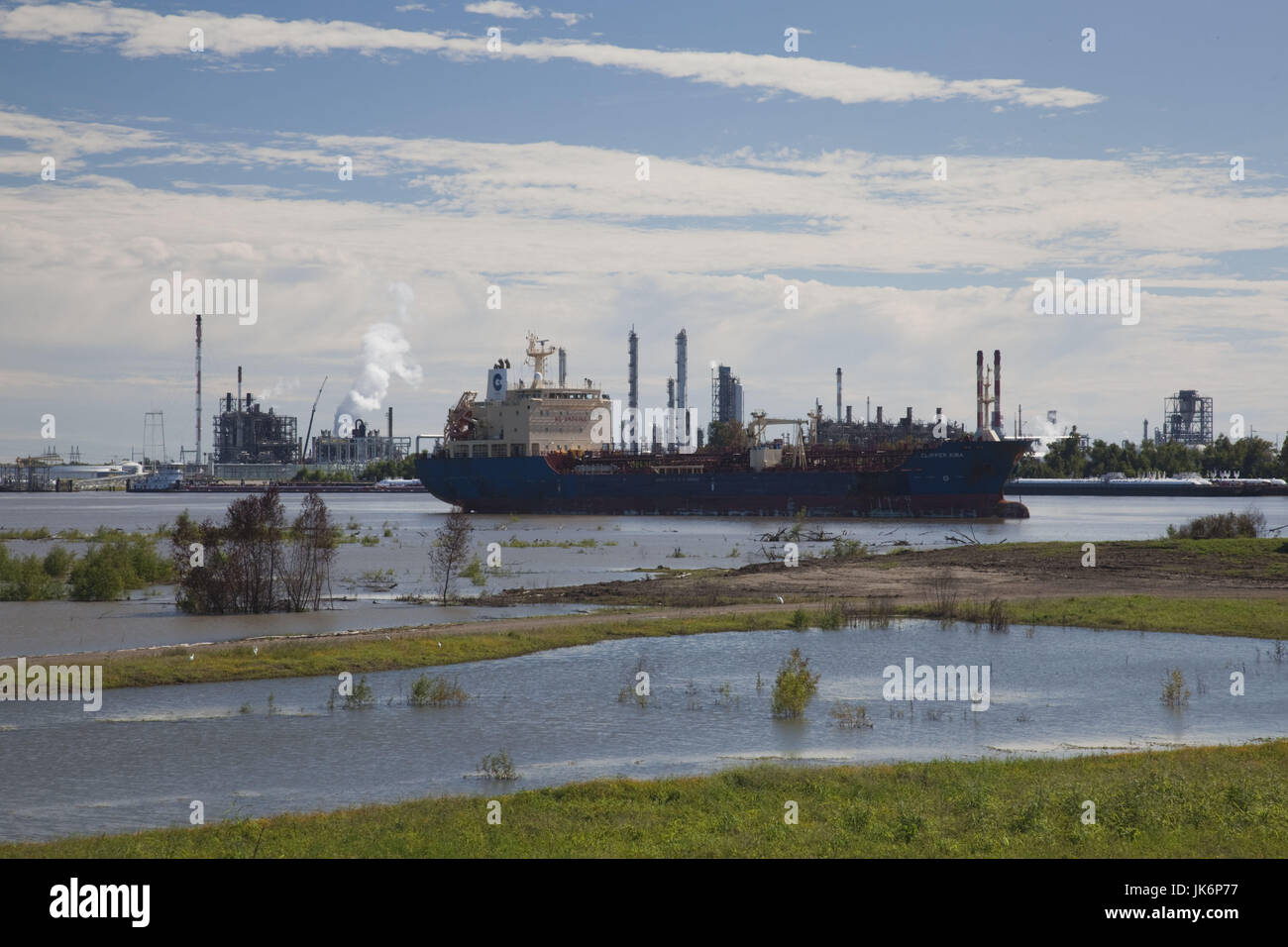
The location of the Norco refinery is not accidental; it is situated at a global crossroads of energy logistics. Its position on the Mississippi River provides a deep-water gateway for Aframax and Suezmax tankers, allowing Shell to receive global crude shipments and export finished products to international markets.
Beyond maritime access, Norco is a nexus for pipeline infrastructure. It is connected to the Capline pipeline system, which historically moved oil from the Gulf to the Midwest but has since been reversed to bring crude from northern basins down to the Gulf Coast. Additionally, the facility sits near the Henry Hub, the most significant pricing point for natural gas in North America, ensuring a steady and cost-effective supply of the gas needed for high-heat industrial processes and hydrogen production.
Operational Standards and Safety Protocols in 2026
Operating a facility of this magnitude in a hurricane-prone region requires extraordinary engineering and safety measures. Since the significant impacts of Hurricane Ida in 2021, Shell has invested heavily in "hardening" the Norco site. As of 2026, the facility employs advanced flood mitigation systems, reinforced power grids, and decentralized control rooms designed to maintain stability during extreme weather events.
Safety Management
Safety at Norco is governed by Federal OSHA Process Safety Management (PSM) standards. The facility utilizes a multi-layered protection system, including:
- Automated Emergency Shutdown Systems (ESD): Sensors that can isolate units in milliseconds if pressure or temperature deviations are detected.
- Fenceline Monitoring: In compliance with EPA regulations, Norco maintains a sophisticated array of air quality monitors along its perimeter. These sensors track volatile organic compounds (VOCs) and benzene, providing real-time data to both regulators and the public to ensure transparency regarding emissions.
- Regular Turnarounds: Periodic, planned maintenance "turnarounds" are conducted to inspect every vessel and pipe. These events are massive logistical undertakings, often bringing in thousands of specialized contractors to ensure the long-term integrity of the equipment.
Economic and Community Impact
The Norco refinery is the largest employer in St. Charles Parish. The economic footprint extends beyond its direct headcount of approximately 1,000 employees and hundreds of full-time contractors.
Local Employment and Tax Base
The facility provides high-wage industrial jobs that sustain the local middle class. Furthermore, through property and sales taxes, the complex contributes a substantial portion of the revenue used to fund local schools, emergency services, and infrastructure projects in the River Parishes.
Community Relations
The relationship between the refinery and the town of Norco (an acronym for New Orleans Refining Company) is historic and complex. Shell has faced scrutiny over the decades regarding the proximity of industrial units to residential neighborhoods. In response, the company has engaged in various voluntary buy-out programs and community investment initiatives. In 2026, the Shell Norco Community Advisory Panel (CAP) continues to serve as a formal bridge between residents and plant leadership, allowing for direct dialogue regarding noise, flaring, and environmental concerns.
Technical Specifications and Output Summary
The following table outlines the core operational metrics and primary outputs of the Norco Manufacturing Complex as of the current 2026 operational cycle.
| Feature/Metric | Specification (Approx.) | Primary Significance |
|---|---|---|
| Crude Capacity | 230,000 - 250,000 bpd | Core fuel production volume for the US Southeast. |
| Ethylene Capacity | 3.0+ Billion lbs/year | Essential for the global polymer and plastics industry. |
| Primary Fuels | Gasoline, Ultra-Low Sulfur Diesel (ULSD), Jet A | Powers regional aviation and ground transportation. |
| Logistics Access | Mississippi River, Pipeline, Rail | Enables global export and domestic distribution. |
| Workforce | ~1,000 Employees | Key economic driver for St. Charles Parish. |
| Major Units | FCCU, Hydrocracker, Olefins Unit | High-complexity configuration for maximum yield. |
Decarbonization and the Future of Norco
As the energy industry moves toward "Net Zero" goals, the Norco refinery is evolving. By 2026, Shell has integrated several carbon-reduction strategies into the site’s operations. These are not merely for compliance but are part of a long-term strategy to ensure the facility remains viable in a carbon-constrained economy.
- Carbon Capture and Storage (CCS): Shell has explored and implemented carbon capture technologies at Norco to trap CO2 emissions from high-intensity units like the hydrogen plant. This captured carbon is often sequestered in deep geological formations in the Gulf Coast region.
- Renewable Feedstocks: The facility has begun trialing the co-processing of bio-feedstocks. By introducing vegetable oils or waste fats into existing hydrotreating units, Norco can produce "renewable diesel," which has a significantly lower carbon footprint than traditional petroleum diesel.
- Energy Efficiency Upgrades: Modernization of furnaces and the installation of high-efficiency heat exchangers have reduced the overall energy intensity per barrel of oil processed.
Frequently Asked Questions (FAQ)
What is the significance of the name "Norco"?
The name "Norco" is an acronym for the New Orleans Refining Company, which originally established the site in the early 20th century. Over time, the surrounding community adopted the name as its own, and it remains one of the few instances where a town is named after an industrial entity.
Does the Norco refinery produce plastic?
While the refinery itself produces fuels, the integrated chemical plant produces the raw materials (ethylene, propylene) that are shipped to other factories to be turned into plastic pellets and eventually consumer goods. Norco is a "feeder" for the global plastics industry.
How does Shell Norco monitor its environmental impact?
The facility is required by the Environmental Protection Agency (EPA) and the Louisiana Department of Environmental Quality (LDEQ) to perform continuous emissions monitoring. This includes fenceline monitoring for benzene and the use of Forward-Looking Infrared (FLIR) cameras to detect and repair leaks in real-time.
What happens to the refinery during a major hurricane?
In the event of a predicted landfalling hurricane, the refinery undergoes a "controlled shutdown." This involves safely removing hydrocarbons from the units and securing the equipment. The site maintains its own emergency response teams and backup power to protect the facility and prevent environmental releases during the storm.
Can the public access air quality data from the refinery?
Yes. Under the EPA’s Petroleum Refinery Sector Rule, data from fenceline monitors is reported to the EPA and made available through their public databases. Additionally, Shell often shares high-level safety and environmental performance data through its annual sustainability reports and community meetings.
Practical Recommendations for Stakeholders
For those interacting with or affected by the Shell Norco Manufacturing Complex, the following actions are recommended:
- For Job Seekers: Focus on obtaining certifications in Process Technology (PTEC) or specialized craft skills (welding, electrical, instrumentation). Shell heavily recruits from local community colleges that offer NCCC-aligned programs.
- For Residents: Enroll in the St. Charles Parish Emergency Alert System. While Shell has internal alarms, the parish system is the primary method for communicating community-wide instructions during industrial incidents or weather emergencies.
- For Investors and Analysts: Monitor the facility’s "Energy Intensity Index" (EII) and its progress on carbon capture projects. In 2026, the long-term value of refining assets is increasingly tied to their ability to decarbonize while maintaining high operational availability.
The Shell Norco Manufacturing Complex remains a vital, high-functioning asset within the American energy landscape. By balancing its historical role as a fuel provider with modern demands for environmental accountability and technical innovation, it continues to define the industrial character of Louisiana’s River Parishes.
Image Gallery