Understanding the "Presidential Alert h" Meme: Origins and Internet Culture Impact
The Presidential Alert h meme is a surrealist internet joke originating from the October 3, 2018, nationwide test of the Integrated Public Alert and Warning System (IPAWS). It typically consists of a screenshot of the emergency notific...
The Presidential Alert h meme is a surrealist internet joke originating from the October 3, 2018, nationwide test of the Integrated Public Alert and Warning System (IPAWS). It typically consists of a screenshot of the emergency notification edited to display only the lowercase letter "h," satirizing the intrusion of government alerts into private digital spaces.
Contents
The Historical Context: The 2018 Nationwide Test
To understand how a single letter became a cultural touchstone, one must first look at the event that triggered the phenomenon. On October 3, 2018, at 2:18 PM EDT, the Federal Emergency Management Agency (FEMA), in coordination with the Federal Communications Commission (FCC), conducted the first-ever nationwide test of the Wireless Emergency Alerts (WEA) system's "Presidential" category.
While emergency alerts for weather and AMBER alerts were already common, the "Presidential Alert" was unique. It was designed for use during a national emergency and, at the time, was the only category of alert that mobile phone users could not opt out of via their device settings. The alert was broadcast to nearly every cell phone in the United States, accompanied by a loud, distinctive tone and a vibration pattern.
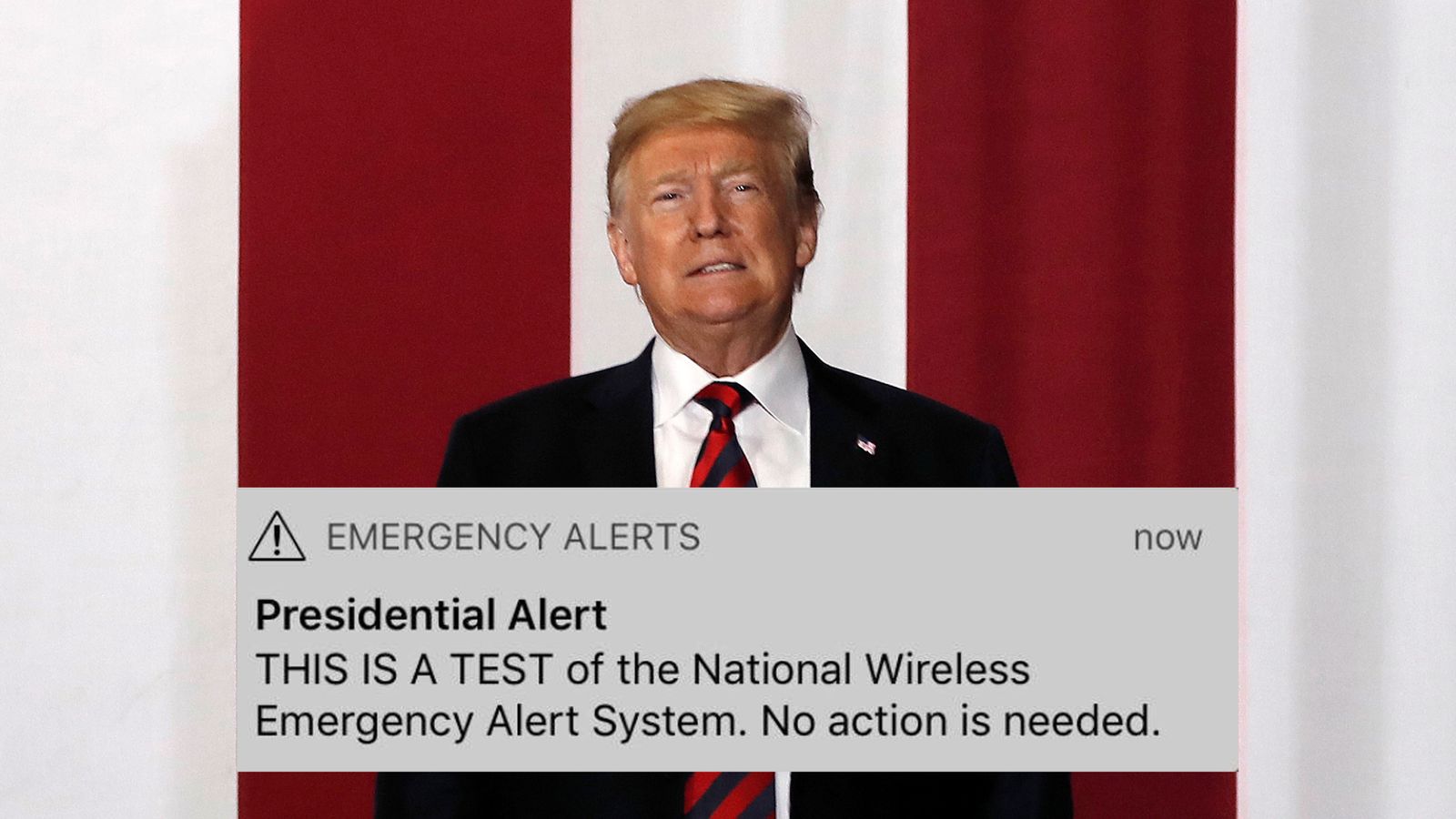
The message actually read: "Presidential Alert: THIS IS A TEST of the National Wireless Emergency Alert System. No action is needed." However, because the alert appeared simultaneously on millions of screens, it became an immediate subject of social media discussion. The timing—during the administration of President Donald Trump—added a layer of political polarization and high-intensity engagement that acted as a catalyst for meme creation.
The Evolution into a Meme
The "Presidential Alert" meme didn't start with the letter "h." In the minutes following the test, social media platforms like Twitter (now X) and Reddit were flooded with "Inspect Element" edits and Photoshop jobs. Users replaced the official text with humorous alternatives, ranging from "Presidential Alert: Your Uber is here" to more political satires.
The meme evolved through several stages:
- Reactionary Humor: Photos of people looking startled or "phone-free" zones being interrupted.
- The Template Stage: Users created blank templates of the notification box for others to fill in.
- Surrealism and Minimalism: This is where the "h" variant emerged.
The transition to surrealist humor is a hallmark of Gen Z and late-Millennial internet culture. In this phase, humor is derived from the complete lack of context or the subversion of high-stakes situations with mundane or nonsensical content.
The "h" Phenomenon Explained
The specific use of the letter "h" is not random. It draws from a deep-seated internet subculture centered around r/TheLetterH, a community dedicated to the reverence of the eighth letter of the alphabet. In the world of surreal memes, certain letters (like "E" or "h") are treated as self-contained punchlines.
Why the Letter "h"?
The letter "h" is often viewed by meme enthusiasts as the "funniest" letter because of its visual simplicity and its perceived "neutrality." When placed inside the framework of a "Presidential Alert"—the most urgent and mandatory form of communication the government can send to a citizen—the contrast is stark.
- The Contrast: A government system designed for nuclear war or national catastrophe is used to deliver a single, lowercase consonant.
- The Absurdity: It mocks the "un-opt-out-able" nature of the alert. If the government is going to force a message onto your screen, the meme suggests, it might as well be something completely useless.
- Deep-Fried Aesthetic: Many "h" alert memes are "deep-fried," meaning they have been excessively compressed, saturated, and sharpened to the point of visual degradation. This aesthetic signals that the content is part of the "ironic" or "post-ironic" layer of the internet.
Technical Infrastructure of the Alert System
While the meme is lighthearted, the system it mocks is a sophisticated piece of national infrastructure. Understanding the technical side explains why the alert felt so intrusive to users in 2018 and why it remains a potent subject for memes in 2026.
WEA and IPAWS
The Wireless Emergency Alert (WEA) system is a component of the Integrated Public Alert and Warning System (IPAWS). Unlike a standard SMS text message, WEA uses a point-to-multipoint broadcast system. This ensures that the alert does not congest the cellular network, which is vital during a real emergency when millions of people might be trying to make calls simultaneously.
The "Presidential" Designation
The term "Presidential Alert" was actually a technical label within the WEA protocol. It did not mean the President personally typed the message. Following the 2018 test and the subsequent memes, the terminology was updated in later years. Under the READI Act (part of the 2021 National Defense Authorization Act), the category was renamed to "National Alerts" to clarify the purpose and reduce the perceived personal connection to the sitting president.
| Feature | 2018 Presidential Alert Test | 2023/2024 National Alert Tests |
|---|---|---|
| Primary Label | Presidential Alert | National Alert |
| Opt-Out Capability | No (Mandatory) | No (Mandatory) |
| Primary Agency | FEMA / FCC | FEMA / FCC |
| Protocol | WEA 2.0 | WEA 3.0 (Enhanced Character Support) |
| Meme Status | Viral Peak ("h" meme origin) | Moderate (Standardized humor) |
Psychology of the Notification Tone
A major factor in the "Presidential Alert h" meme's success is the psychological impact of the alert’s audio-visual signature. The WEA tone is a combination of two frequencies (853 Hz and 960 Hz) that create a harsh, dissonant sound intended to grab attention even in noisy environments.
When a user sees the lowercase "h" accompanied by this jarring sound in a video or a GIF, the humor stems from the cognitive dissonance. The brain is wired to react to that sound with "fight or flight" urgency, but the visual input—a harmless, meaningless letter—shuts down that response, resulting in laughter or a sense of the absurd.
How the Meme was Created and Spread
The "Presidential Alert h" was rarely a "real" photo of a phone. It was primarily created using three methods:
- Inspect Element: On desktop versions of social media where people posted "web previews" of what the alert looked like, users would use browser developer tools to change the text.
- Meme Generators: Within hours of the 2018 test, sites like imgflip and Kapwing had templates where users could overlay text onto a screenshot of an iPhone or Android lock screen.
- Photoshop/PicsArt: Advanced users would "deep-fry" the image, adding motion blur or digital artifacts to the letter "h" to make it look like a corrupted or "forbidden" image.
The meme found its primary homes on Reddit (r/dankmemes, r/TheLetterH), Tumblr, and later TikTok, where creators would use the emergency alert sound as a "jump scare" followed by the "h" image.
The Cultural Legacy in 2026
Standing in 2026, the "Presidential Alert h" meme is viewed as a classic example of "Early-Era Chaotic Internet" humor. It represents a time when the digital and the physical worlds were becoming inextricably linked through mandatory government technology.
The meme served a social function: it allowed the public to "reclaim" a sense of agency over their devices. By turning a mandatory government intrusion into a nonsensical joke, users psychologically neutralized the stress associated with the emergency system. Even as the system has evolved and the "Presidential" label has been phased out in favor of "National Alert," the "h" meme persists as a shorthand for any time technology forces itself upon the user without consent.
FAQs
What does the "h" in the Presidential Alert meme mean?
The "h" has no literal meaning. It is a piece of surrealist humor that relies on the absurdity of using a high-priority national emergency system to broadcast a single, lowercase letter. It is closely tied to the r/TheLetterH community, which treats the letter as a meme in itself.
Was there ever an actual alert that just said "h"?
No. The official test on October 3, 2018, contained a full paragraph explaining that it was a test of the National Wireless Emergency Alert System. All "h" versions are digitally edited images or videos created by users.
Can you opt out of Presidential Alerts now?
As of 2026, you can opt out of AMBER alerts and Extreme Threat alerts in your phone's settings, but "National Alerts" (formerly Presidential Alerts) remain mandatory for all compatible mobile devices. This is to ensure that in a true national crisis, the government can reach the entire population.
Why is the letter "h" considered funny on the internet?
The humor of "h" falls under the category of "post-ironic" or "E" style humor. It is funny because it is mundane, random, and lacks any traditional comedic structure. It is the digital equivalent of an "inside joke" shared by millions of people who find minimalism amusing.
Did the 2018 alert cause any real damage?
There were no reports of systemic damage, but the alert did cause issues in specific environments, such as quiet classrooms, theaters, and for individuals hiding "secret" phones for safety reasons (e.g., people in domestic violence situations). This led to increased awareness and "safety planning" for subsequent tests.
Practical Recommendation for 2026
While the "h" meme is an entertaining piece of internet history, it is important to remain aware of the actual functionality of your device's emergency settings. As we move further into 2026, ensure your phone's OS is updated to the latest version to support enhanced WEA 3.0 features, which allow for more detailed maps and links in actual emergency messages. If you find the alert tones distressing, remember that they are designed to be intrusive for your safety, but you can always revisit the memes to lighten the mood after a successful test.
Image Gallery