Why a Laser for Sideburns Beats the Razor: Precision and Permanent Results in 2026
Choosing a laser for sideburn maintenance over a traditional razor provides a permanent reduction in hair growth, eliminates the risk of chronic skin irritation like razor burn and ingrown hairs, and ensures a perfectly symmetrical, pr...
Choosing a laser for sideburn maintenance over a traditional razor provides a permanent reduction in hair growth, eliminates the risk of chronic skin irritation like razor burn and ingrown hairs, and ensures a perfectly symmetrical, professional aesthetic. While razors require daily upkeep, laser technology offers a long-term solution that saves time and improves skin texture.
Contents
The sideburns are a focal point of facial grooming for both men and women. For men, they frame the face and transition into the beard; for women, they define the hairline and can influence how hair looks when pulled back. However, the traditional method of managing this area—the razor—is increasingly being viewed as an outdated, high-maintenance tool. As we move through 2026, laser hair removal has matured into the gold standard for facial hair grooming.
The Mechanical Limitation of the Razor
To understand why laser technology is superior, one must first analyze the fundamental flaws of the razor. Shaving is a mechanical process that involves dragging a sharp metal blade across the skin’s surface to sever hair shafts at the level of the epidermis.
Surface-Level Results and the "Five O'Clock Shadow"
Because a razor only cuts the hair at the skin's surface, the follicle remains intact and healthy beneath. For individuals with dark or thick hair, the "root" of the hair is often visible through the skin immediately after shaving, creating a persistent shadow. In the sideburn area, this often results in a "muddy" or unrefined look that lacks the crispness of a professional groom. Furthermore, depending on the individual's hair growth rate, stubble can reappear in as little as six to twelve hours, necessitating a daily, repetitive cycle of shaving.
Epidermal Trauma and Micro-tears
Every time a razor passes over the skin, it doesn't just cut hair; it also scrapes away the top layer of the stratum corneum (the skin’s protective barrier). This leads to micro-tears, redness, and a condition known as irritant contact dermatitis. In the delicate area of the sideburns, which is often subjected to friction from glasses, phone screens, or pillowcases, this irritation can become chronic.
The Science of Laser Hair Removal for Sideburns
Laser hair removal operates on the principle of selective photothermolysis. Unlike the mechanical "hacking" of a razor, a laser uses specific wavelengths of light to target the pigment (melanin) within the hair follicle.
How the Process Works
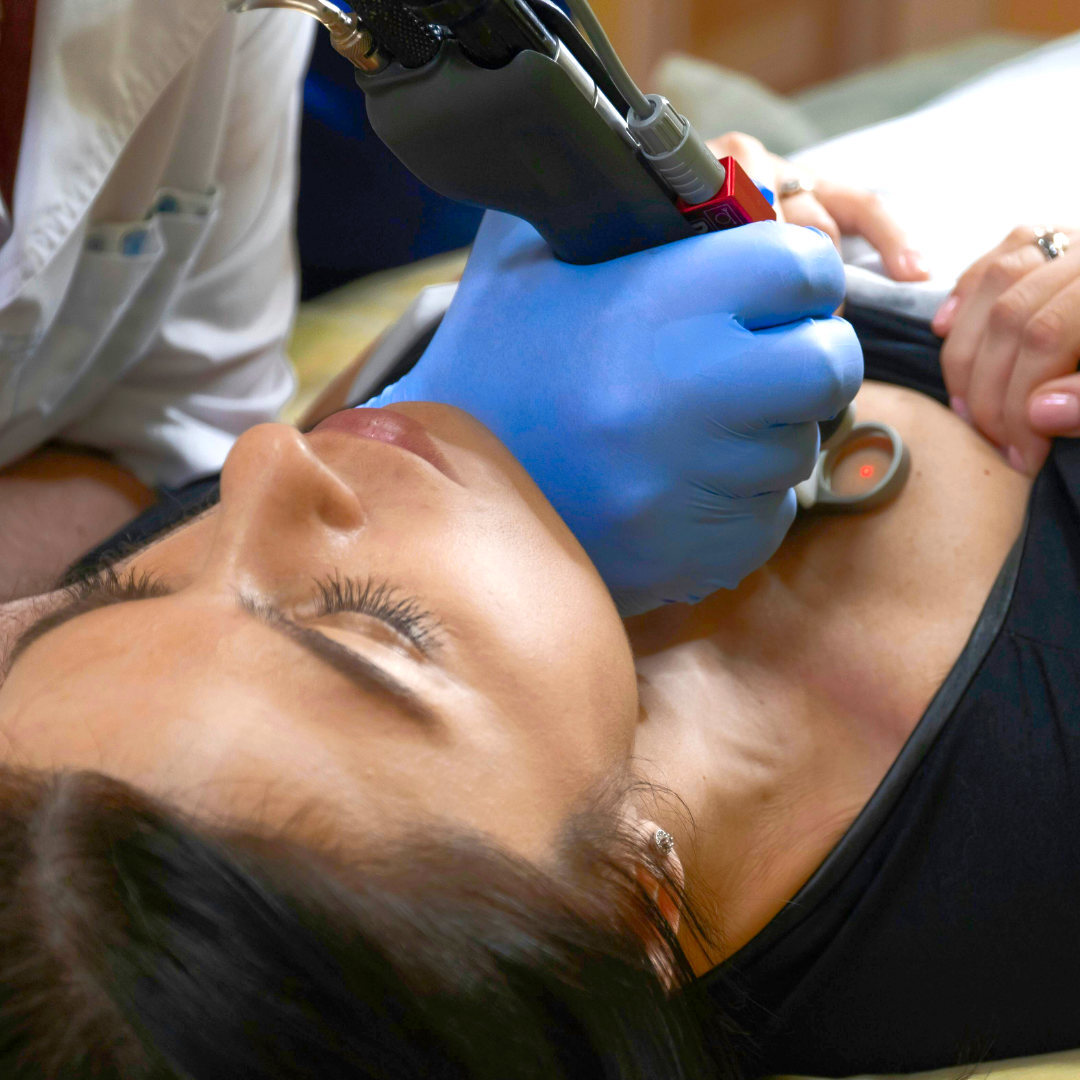
When the laser is applied to the sideburn area, the light energy is absorbed by the melanin in the hair. This energy is converted into heat, which travels down the hair shaft to the follicle. The heat selectively destroys the hair bulb and the germinative cells responsible for new growth without damaging the surrounding skin tissue.
In 2026, modern laser systems like the Diode (810 nm) or the Nd:YAG (1064 nm) allow for extreme precision. Practitioners can "sculpt" the sideburn line with mathematical accuracy. Once the follicle is sufficiently damaged, it stops producing hair. This results in a permanent reduction of hair density and thickness, rather than just a temporary trim.
The Biological Impact
Because the laser addresses the hair at the root, it eliminates the "shadow" effect entirely. The skin appears clearer and more uniform because there is no dark hair shaft sitting just beneath the surface. For those seeking a clean-cut look, the results of laser treatment are physically impossible to replicate with a blade.
Eliminating Ingrown Hairs and Pseudofolliculitis Barbae
One of the most compelling reasons to switch from a razor to a laser is the elimination of Pseudofolliculitis barbae (PFB), commonly known as razor bumps.
The Mechanism of an Ingrown Hair
When a razor cuts a hair at an angle, the sharpened tip can sometimes curl back and grow into the skin or fail to exit the follicle properly. The body treats this "ingrown" hair as a foreign object, triggering an inflammatory response. This leads to painful, red, and sometimes infected bumps that can scar the sideburn and cheek area.
How Laser Solves the Problem
Laser hair removal is actually a primary medical recommendation for treating chronic ingrown hairs. By thinning the hair and eventually stopping its growth, the laser removes the source of the inflammation. Within just two or three sessions, most patients see a total cessation of new ingrown hairs. The skin is allowed to heal, and the post-inflammatory hyperpigmentation (dark spots) caused by previous bumps begins to fade.
Economic and Time Efficiency Analysis
While the upfront cost of laser hair removal is higher than a pack of disposable razors, the long-term economic and time-saving benefits are significant.
The Hidden Costs of Shaving
Consider the cumulative cost of high-quality razors, shaving creams, aftershave balms, and the time spent on daily maintenance. Over a five-year period, a person can easily spend hundreds of dollars on shaving supplies. Furthermore, the 5 to 10 minutes spent daily on facial grooming adds up to approximately 30 to 60 hours per year.
The Laser Investment
In 2026, a standard package for sideburn laser hair removal typically consists of 6 to 8 sessions, spaced several weeks apart. Once the initial series is complete, most individuals only require a "touch-up" once a year, if at all.
| Feature | Shaving (Razor) | Laser Hair Removal |
|---|---|---|
| Frequency | Daily or every other day | 6-8 sessions total (initially) |
| Skin Impact | High risk of cuts and irritation | Low risk (when performed by pros) |
| Ingrown Hairs | Common and recurring | Eliminated after 2-3 sessions |
| Precision | Difficult to maintain symmetry | Computer/Expert-guided precision |
| Long-term Cost | Recurring indefinitely | One-time major investment |
| Results | Temporary (hours/days) | Permanent hair reduction |
Technological Advancements in 2026
The landscape of laser technology in 2026 has expanded to be more inclusive and effective than ever before. Historically, laser hair removal was most effective for those with light skin and dark hair. However, current technologies have bridged this gap.
Inclusivity for All Skin Tones
The use of the Nd:YAG laser has become the standard for individuals with darker skin tones (Fitzpatrick scales IV-VI). Because the Nd:YAG has a longer wavelength, it bypasses the melanin in the skin and focuses exclusively on the hair root, making it safe and effective for everyone.
Cooling Systems and Comfort
Modern lasers are equipped with advanced sapphire cooling tips or "cryogen" cooling bursts that happen milliseconds before the laser pulse. This significantly reduces the discomfort associated with the procedure. Many patients describe the sensation as a light snap of a rubber band, which is far less painful than the persistent sting of a bad razor burn.
The Procedure: What to Expect
If you are considering making the switch, it is important to understand the protocol for a professional laser treatment.
- Consultation: A technician assesses your skin type, hair color, and medical history to determine the correct laser settings.
- Preparation: Unlike waxing, you should shave the sideburn area 24 hours before your laser appointment. This ensures the laser energy is focused on the follicle rather than burning the hair above the skin.
- The Session: The treatment for sideburns is incredibly fast, often taking less than 10 minutes. The technician will follow the desired hairline carefully.
- Aftercare: Post-treatment, you may experience slight redness similar to a mild sunburn. The use of a broad-spectrum SPF 30+ is mandatory, as the skin becomes temporarily more sensitive to UV rays.
Addressing Common Concerns
Is it Permanent?
The FDA clears lasers for "permanent hair reduction." This means that while some fine, light-colored hairs might eventually return over years due to hormonal changes, the vast majority of the treated follicles are permanently disabled. For most people, the results are life-changing in terms of grooming requirements.
Can I Shape My Sideburns?
Yes. One of the greatest advantages of laser for sideburns is the ability to define a specific shape. Whether you prefer a "tapered" look, a "squared-off" end, or a complete removal of the "mutton chop" area, the technician can precisely follow a mapped-out line that remains consistent forever.
Practical Recommendations for 2026
For those looking to transition away from the razor, the first step is to seek a consultation at a reputable medical spa or dermatology clinic. Avoid "at-home" laser devices for the sideburn area; the proximity to the eyes and the need for perfect facial symmetry make professional-grade equipment and expertise essential for safety and aesthetic success.
When choosing a provider, ensure they utilize 2026-standard cooling technologies and have specific experience with facial hair sculpting. The precision of the laser is its greatest asset, but it requires a skilled hand to ensure the sideburns complement your facial structure.
Professional Advice Limitation: This information is for educational purposes and does not constitute medical advice. Laser hair removal is a medical procedure with potential risks, including skin discoloration or burns if performed incorrectly. Always consult with a licensed dermatologist or certified laser technician to determine if you are a candidate for treatment, especially if you have underlying skin conditions or are taking photosensitizing medications.
Image Gallery