Why a Call Option In the Money Matters: Impact on Value, Delta, and Strategy
An in-the-money (ITM) call option matters because it possesses intrinsic value, representing a legal right to purchase an asset below its current market price. This status significantly alters the option's price sensitivity (Delta), re...
An in-the-money (ITM) call option matters because it possesses intrinsic value, representing a legal right to purchase an asset below its current market price. This status significantly alters the option's price sensitivity (Delta), reduces the relative impact of time decay (Theta), and provides a higher probability of profit compared to out-of-the-money contracts.
Contents
Understanding In-the-Money (ITM) Call Options
In the world of derivatives trading, the term in-the-money (ITM) describes a specific relationship between an option’s strike price and the current market price of the underlying security. For a call option—which grants the holder the right, but not the obligation, to buy a stock—the contract is ITM when the strike price is lower than the prevailing market price.
As of 2026, the mechanics of options remain a cornerstone of sophisticated portfolio management. When an option is ITM, it has "intrinsic value." This is the tangible, "real-world" value the option would have if it were exercised immediately. For example, if a trader holds a call option for a technology company with a strike price of $150, while the stock is trading at $165, that option is $15 in-the-money. This $15 represents the immediate profit per share (before accounting for the premium paid) that could be realized by exercising the right to buy at the lower price.
Understanding why this matters requires looking beyond the simple math. ITM options behave fundamentally differently than at-the-money (ATM) or out-of-the-money (OTM) options. They represent a "deep-seated" position in the market, often used by institutional investors to gain exposure to an asset with more certainty and less "hope" than speculative OTM bets.
The Core Components: Intrinsic vs. Extrinsic Value
To grasp why ITM status is critical, one must dissect the components of an option's premium. The premium—the total price of the option—is composed of two parts: intrinsic value and extrinsic value (also known as time value).
Intrinsic Value: The "Real" Worth
Intrinsic value is exclusive to ITM options. It is a calculation of the difference between the strike price and the stock price. If the stock is at $100 and the call strike is $90, the intrinsic value is $10. If the stock drops to $90 or below, the intrinsic value vanishes instantly. This value provides a "floor" for the option's price; an option can never trade for significantly less than its intrinsic value without creating an immediate arbitrage opportunity.
Extrinsic Value and Time Decay
Extrinsic value represents the "possibility" of the option becoming even more valuable before it expires. Because ITM options already have intrinsic value, they often carry less extrinsic value as a percentage of their total price compared to OTM options. This is vital for traders because extrinsic value is subject to Theta, or time decay.
As an option approaches expiration, its extrinsic value erodes. Since a larger portion of an ITM option's price is made of "hard" intrinsic value, it is often less sensitive to the rapid time decay that destroys the value of OTM "lottery ticket" style options in their final weeks. This makes ITM calls a preferred vehicle for traders who want to be "right" about the direction of a stock without being as heavily penalized by the clock.
Why ITM Matters for Delta and Price Sensitivity
In technical terms, the most significant reason an ITM call option matters is its Delta. Delta is one of the "Greeks" in options trading, measuring how much an option's price is expected to change for every $1 move in the underlying stock.
- Delta as a Proxy for Probability: Historically, traders have used Delta as a rough estimate of the probability that an option will expire in the money. An ITM option typically has a Delta of 0.50 to 1.00. A "deep" ITM option might have a Delta of 0.90, suggesting a 90% theoretical probability of remaining ITM at expiration.
- High Sensitivity: A call option with a Delta of 0.80 will gain $0.80 in value for every $1 the stock rises. This high sensitivity allows the trader to capture the majority of the stock's upside movement.
- Stock Replacement: Because high-Delta ITM options move almost in lockstep with the stock, they are often used in "stock replacement" strategies. Instead of spending $20,000 to buy 100 shares of a stock, a trader might spend $4,000 on a deep ITM call option that captures 90% of the stock's gains with significantly less capital at risk.
By choosing ITM over OTM, the trader is prioritizing "directional exposure" over "leverage." While OTM options offer higher percentage returns if a massive move occurs, ITM options offer a more reliable way to profit from moderate, steady increases in the stock price.
Strategic Reasons to Trade ITM Call Options
Why would an investor pay a higher premium for an ITM option when they could buy a "cheaper" OTM option? The answer lies in the balance of risk and probability.
Higher Probability of Profit
The primary reason ITM options matter to professional traders is the higher win rate. For an OTM option to be profitable at expiration, the stock must not only move in the right direction but move far enough to surpass the strike price plus the premium paid. An ITM option, however, already has "meat on the bone." Even if the stock stays flat or moves slightly against the trader, the ITM option may still retain significant value.
Lower Break-Even Point
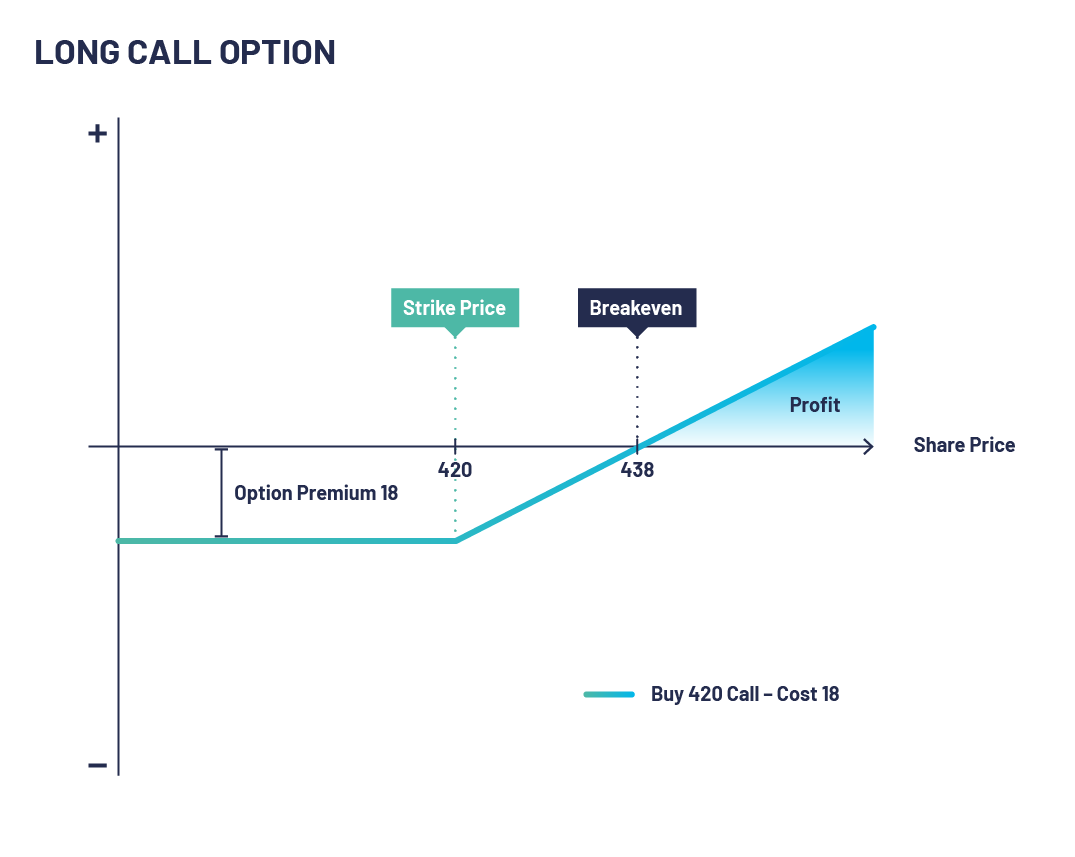
The break-even point for a call option is the strike price plus the premium paid. While the premium for an ITM option is higher, the "distance" the stock needs to travel to reach the break-even point is often much smaller than it is for an OTM option. In many cases, the stock is already trading above or very near the break-even point the moment the trade is opened.
Reduced Volatility Impact
Options prices are heavily influenced by Vega, which measures sensitivity to changes in implied volatility. OTM options are extremely sensitive to "volatility crush"—a situation where the option price drops because market uncertainty decreases, even if the stock price doesn't move. ITM options, being anchored by intrinsic value, are generally more resilient to these shifts in market sentiment.
The Significance of Exercise and Assignment
For many retail traders, options are a way to speculate on price moves without ever intended to own the underlying stock. However, ITM status matters immensely because it triggers the possibility of exercise and assignment.
As of 2026, the Options Clearing Corporation (OCC) maintains rules regarding the automatic exercise of options. Generally, any call option that is ITM by as little as $0.01 at the time of expiration is automatically exercised by the brokerage firm on behalf of the holder.
- For the Buyer: If you hold an ITM call at expiration, you will be required to buy the shares at the strike price. If you do not have the cash in your account to cover the purchase, your broker may sell the option on your behalf shortly before the market closes or issue a margin call.
- For the Seller: If you have sold (written) a call option and it moves ITM, you face the risk of "assignment." This means you will be forced to sell your shares (if you own them) or go short the stock at the strike price.
This mechanical aspect of ITM options is why they are often closed out or "rolled" to a future date before expiration. Ignoring an ITM position can lead to unexpected tax consequences or significant changes in portfolio composition due to the forced acquisition of shares.
Comparing Call Option States
The table below illustrates the fundamental differences between the three primary states of a call option to clarify why ITM status is a distinct category for risk management.
| Feature | In-the-Money (ITM) | At-the-Money (ATM) | Out-of-the-Money (OTM) |
|---|---|---|---|
| Strike vs. Stock Price | Strike < Stock Price | Strike ≈ Stock Price | Strike > Stock Price |
| Intrinsic Value | Present | Minimal/None | None |
| Delta Range | 0.50 to 1.00 | Approx. 0.50 | 0.00 to 0.50 |
| Premium Cost | Highest | Moderate | Lowest |
| Theta (Time Decay) Risk | Lower (relative to price) | Highest | High |
| Main Use Case | Stock replacement, high-probability trades | Volatility plays | Speculation, hedging |
Common Mistakes and Risks of ITM Options
While ITM options are often viewed as "safer" due to their intrinsic value, they are not without risks.
Liquidity and Bid-Ask Spreads
ITM options, particularly those that are "deep" in the money, often have lower trading volume than ATM or OTM options. This lack of liquidity can result in wider bid-ask spreads. A wide spread means it costs more to enter and exit the trade, which can eat into profits. Traders must be careful not to "overpay" by using market orders; limit orders are essential when dealing with ITM contracts.
Higher Capital Requirements
Because ITM options include intrinsic value, the "sticker price" (premium) is much higher. For an investor with a small account, buying ITM calls limits the number of positions they can take. This concentration of capital can be risky if the underlying stock experiences a catastrophic drop. If the stock falls below the strike price, the entire intrinsic value can evaporate, leading to a high percentage loss of the premium paid.
The Dividend Trap
In 2026, dividend-capture strategies remain popular. Holders of ITM call options often forget that they do not receive dividends; only the owner of the actual shares does. If a stock is about to pay a large dividend, ITM call holders may need to exercise their options early to capture that payment, or they may see the value of their option drop as the stock price is adjusted downward on the ex-dividend date.
Expert Practical Recommendation
When trading call options, your choice of "moneyness" should align with your specific market thesis. If you are highly confident in a stock's long-term growth but want to limit your total dollar risk compared to buying shares outright, deep ITM call options (Delta of 0.80 or higher) are often the most efficient tool. They provide the most "stock-like" behavior with the added benefit of a defined maximum loss (the premium paid).
However, always check the open interest and volume before entering an ITM position. If the spread is more than 5% of the total premium, you may find it difficult to exit the position at a fair price during periods of market volatility.
Financial Advice Limitation: The information provided in this article is for educational purposes only and does not constitute financial, investment, or legal advice. Options trading involves significant risk and is not suitable for all investors. Consult with a certified financial advisor or a qualified tax professional before engaging in derivatives trading. Market data and regulatory rules mentioned reflect the environment as of 2026 and are subject to change.
Frequently Asked Questions
Do I have to exercise an ITM call option to make money?
No, the majority of traders do not exercise their options. Instead, they sell the option contract back into the market before it expires. If the stock price has risen, the value of the ITM call will have increased, allowing the trader to "sell to close" and pocket the difference between the buying and selling premiums.
Is an ITM call always better than an OTM call?
It depends on your goal. If you are looking for a "home run" with a small amount of money and expect a massive price spike, OTM calls offer more leverage. However, ITM calls are generally "better" for consistent, professional trading because they have a higher probability of retaining value and are less impacted by the daily erosion of time decay.
What happens if my call option is ITM at expiration but I don't have enough cash?
If you don't have the funds to buy the shares, your brokerage will typically attempt to sell the option for you in the final hours of the trading session. If they cannot sell it, they may allow the option to expire or, in some cases, exercise it and immediately sell the resulting shares, a process that can incur additional fees or margin interest.
Why does an ITM call option have a Delta near 1.00?
As a call option moves deeper into the money, the "right to buy" becomes almost a certainty. At that point, the option behaves exactly like the stock itself. If you are 100% certain to buy the stock at $50 when it is trading at $500, every $1 move in the stock is a $1 move in your net worth, resulting in a Delta of 1.00.
Can an ITM call option lose value if the stock goes up?
While rare, it is possible if implied volatility drops significantly (Vega) or if the option is very close to expiration and the time decay (Theta) exceeds the gain from the stock's price move. However, this is much more common with OTM and ATM options than with ITM options, which are anchored by intrinsic value.
Image Gallery