Taylor Swift Masters Sale: Industry Tension Over Music Ownership and Artist Rights
The 2019 sale of Taylor Swift’s master recordings to Scooter Braun’s Ithaca Holdings ignited a historic industry-wide debate over artist autonomy, private equity’s role in music, and contract transparency. This conflict led to Swift’s...
The 2019 sale of Taylor Swift’s master recordings to Scooter Braun’s Ithaca Holdings ignited a historic industry-wide debate over artist autonomy, private equity’s role in music, and contract transparency. This conflict led to Swift’s "Taylor’s Version" re-recording project, fundamentally shifting how labels negotiate ownership, licensing, and re-recording clauses with modern artists in the current 2026 landscape.
Contents
The Catalyst: The 2019 Big Machine Acquisition
The tension began in June 2019 when Big Machine Label Group, founded by Scott Borchetta, was acquired by Ithaca Holdings, a media company led by talent manager Scooter Braun. The $300 million deal included the master recordings of Taylor Swift’s first six studio albums. Swift, who signed with Big Machine at age 15, had spent years attempting to buy her masters directly.
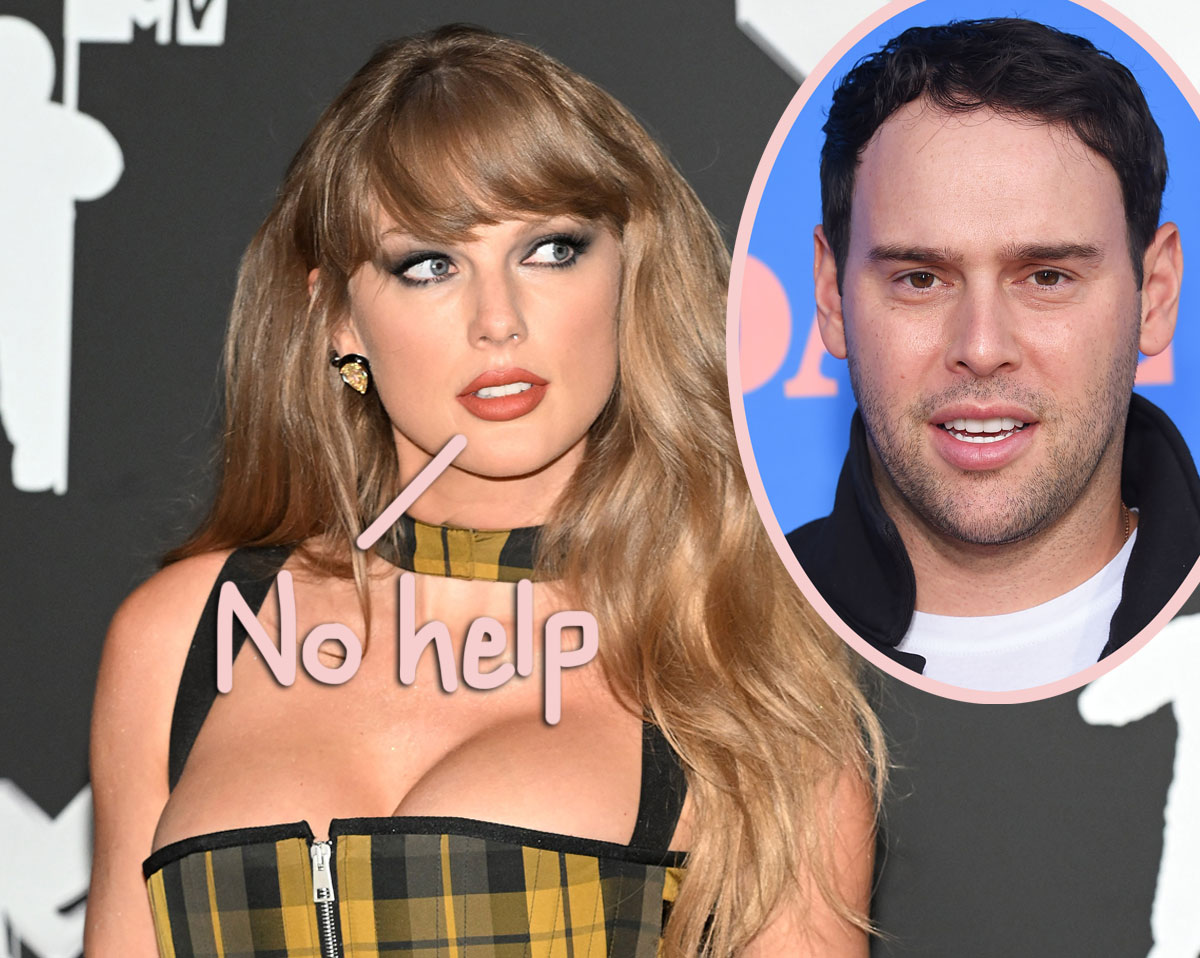
The core of the dispute was not merely the sale itself, but the identity of the buyer and the terms under which Swift was allegedly offered the chance to reclaim her work. Swift claimed she was offered a "one-for-one" deal: for every new album she delivered to Big Machine, she would "earn" back one of her old ones. This structure would have kept her tied to the label indefinitely. When she chose to sign with Universal Music Group (UMG) in 2018 instead, she did so knowing she was leaving her past work behind, but she did not expect it to be sold to Braun, an individual she publicly described as a "bully."
This event catalyzed a public discourse on legal equity versus moral equity. While Borchetta and Braun were within their legal rights to execute a private business transaction, the music industry faced a reckoning regarding whether artists should have a "right of first refusal" when their life’s work is sold to third parties.
Defining the Asset: Masters vs. Publishing Rights
To understand why this sale created such high tension, one must distinguish between the two primary types of music copyrights. The "Taylor Swift masters" refers specifically to the Sound Recording copyright (often denoted by the ℗ symbol). These are the actual files or tapes of the recorded performance.
The Sound Recording (The Master)
The owner of the master recording controls how the music is used in streaming, physical sales, and certain types of broadcasts. Historically, record labels have owned the masters in exchange for providing the artist with an upfront signing bonus (advance), marketing, and distribution.
The Composition (The Publishing)
The composition copyright (denoted by the © symbol) covers the underlying lyrics and melody. Because Swift is the primary songwriter on all her tracks, she retained significant control over the publishing rights, even though she did not own the masters.
The Licensing Deadlock
The "tension over ownership" manifested most clearly in synchronization (sync) rights. To use a song in a movie, commercial, or TV show, a licensee needs permission from both the owner of the master and the owner of the composition. By 2020, Swift began using her veto power as the songwriter to block any licensing of her original masters. This effectively "frozen" the commercial value of the assets Braun had purchased, demonstrating that a master recording is significantly less valuable if the songwriter refuses to cooperate.
The Secondary Sale: Shamrock Holdings and the Persistence of Conflict
In November 2020, Scooter Braun sold the master rights to Swift’s first six albums to Shamrock Holdings, a private equity firm, for an estimated $300 million to $400 million. While this move was seen as an attempt to de-escalate the public feud, it failed to resolve the tension.
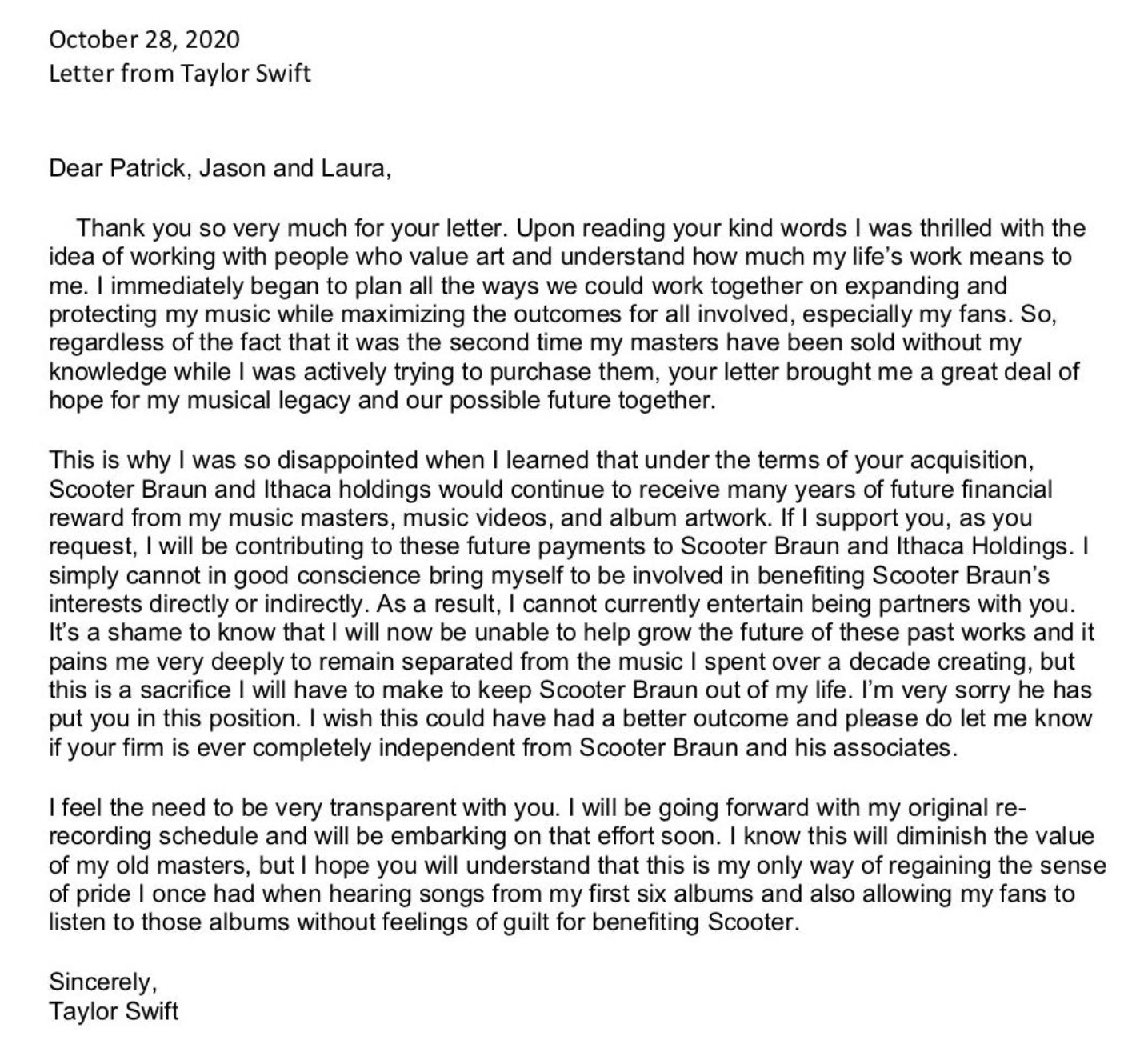
Swift released a statement explaining that she had attempted to negotiate with Shamrock but discovered that under the terms of the sale, Scooter Braun would continue to profit from her old music for many years. Because of this ongoing financial link, Swift refused to partner with Shamrock.
This secondary sale highlighted the commodification of music. For Shamrock, the masters were a "boring" but stable yield-producing asset, similar to real estate. For Swift, they were her "artistic legacy." The clash between financial investment strategies and artist sentiment became a defining feature of the music business in the early 2020s, leading into the current 2026 market where catalogs are treated as premier alternative assets.
The Re-Recording Strategy: Legal Mechanisms of "Taylor's Version"
Swift’s response to the sale was to utilize a standard clause found in most recording contracts: the re-recording restriction. Most contracts state that an artist cannot re-record their songs for a certain period—typically five years after the end of the contract or two years after the release of the last covered recording.
By 2020, Swift’s restrictions for her early albums began to expire. She embarked on a project to create "Taylor’s Versions" of her catalog, which served several strategic purposes:
- Ownership Acquisition: Swift owns the new master recordings 100%, giving her full control over their use.
- Market Dilution: By encouraging fans to stream and buy the "Taylor’s Version" (TV) editions, she successfully diverted royalty revenue away from the original masters owned by Shamrock.
- Sync Dominance: Swift can now license her "Taylor’s Version" tracks for films and advertisements without needing permission from the owners of the original masters. Conversely, she continues to block the original masters from being used.
As of 2026, the "Taylor’s Version" project is regarded as the most successful act of IP reclamation in entertainment history. It proved that an artist with a sufficiently loyal fanbase could effectively render original masters "obsolete" in the commercial marketplace.
Industry Impact: Changes in Record Label Contracts
The tension over Swift’s masters led to immediate and lasting changes in how major labels like Universal Music Group, Sony Music, and Warner Music Group draft their agreements. Labels recognized that if every artist followed Swift’s blueprint, the long-term value of label-owned masters would plummet.
Extended Re-Recording Restrictions
In the years following the dispute, labels began doubling the length of re-recording bans. Where a five-year restriction was once standard, many 2026-era contracts now stipulate that artists cannot re-record their work for 10 to 20 years after leaving a label. This is a direct defensive maneuver against the "Swift effect."
Transparency and Disclosure
On the artist-friendly side, the dispute led to a push for greater transparency. New York and California have seen legislative discussions regarding "The Help Artists Own Their Own Works Act," which aims to limit the duration of master ownership or provide clearer pathways for artists to buy back their catalogs during corporate acquisitions.
| Feature | Original Big Machine Masters | Taylor’s Version (Re-recordings) |
|---|---|---|
| Owner (2026) | Shamrock Holdings | Taylor Swift |
| Publishing Control | Taylor Swift (Veto Power) | Taylor Swift (Full Control) |
| Streaming Performance | Significant decline since 2021 | Dominant market share |
| Licensing Status | Blocked by Swift | Actively licensed (Movies/TV) |
| Commercial Value | Depreciated | High / Appreciating |
| Fan Sentiment | Boycotted by "Swifties" | Enthusiastically supported |
The 2026 Landscape: Results of the Ownership Battle
By 2026, the music industry has bifurcated. On one hand, private equity firms continue to pour billions into music catalogs, viewing them as "green" assets that produce consistent returns regardless of the global economy. On the other hand, the "Swift model" has empowered top-tier artists to demand master ownership upfront as a condition of signing.
High-profile artists now frequently negotiate "License Deals" rather than "Assignment Deals." In a license deal, the label is granted the right to distribute and profit from the music for a fixed term (e.g., 10-15 years), after which ownership reverts to the artist. This shift has largely been driven by the "industry tension" Swift highlighted: the idea that an artist’s work should not be treated as a permanent corporate asset to be traded without their consent.
The tension has also birthed a new sector of legal consultancy specifically for "legacy protection," helping artists navigate the complexities of "Right of First Refusal" (ROFR) clauses, ensuring they have the first opportunity to buy their work if their label is sold or if the catalog is put up for auction.
Frequently Asked Questions
Why couldn't Taylor Swift just buy her masters back from Scooter Braun?
Swift claimed that Braun’s team required her to sign a "strictly ironclad" non-disclosure agreement (NDA) stating she would never say another word about Scooter Braun unless it was positive, before she could even see the financial records of the label. Swift viewed this as an attempt to silence her, making a fair negotiation impossible from her perspective.
Is it legal for an artist to re-record their old songs?
Yes, provided they wait until the re-recording restriction period in their original contract has expired. These clauses are standard in the music industry to prevent an artist from immediately competing with their former label by releasing the same songs under a different banner. Swift waited until her legal windows opened before releasing the "Taylor's Version" albums.
How did the sale affect other artists in the industry?
The sale served as a "cautionary tale." Many artists, such as Olivia Rodrigo and Joe Jonas, have since spoken about the importance of owning their masters from the start of their careers. It also led to "The Taylor Swift Clause" in new contracts, where labels attempt to prevent artists from ever using the "re-recording" strategy by extending restriction periods indefinitely.
What is the difference between "Master Rights" and "Publishing Rights"?
Master rights (℗) belong to the owner of the specific audio recording of a song. Publishing rights (©) belong to the songwriters and composers who wrote the lyrics and melody. If you own the publishing but not the masters (like Swift did initially), you can prevent the music from being used in films, but you don't receive the royalties from people playing the original recordings on Spotify or radio.
Has Shamrock Holdings lost money on the Taylor Swift deal?
While Shamrock does not release internal financials, the "Taylor's Version" project has successfully diverted a massive portion of streaming traffic away from the original recordings. However, because Swift’s overall popularity has exploded since 2019, even a smaller "slice" of her total streaming pie remains a significant source of revenue, though likely much lower than Shamrock's original projections.
Practical Recommendation for Emerging Artists
For artists entering the industry in 2026, the primary goal should be reversion of rights. If a label refuses to grant you ownership of your masters upfront, negotiate for a "reversion clause" that returns ownership to you after a set period (e.g., 7-12 years) or once the label has recouped a specific percentage of their initial investment. Ensure your contract includes a Right of First Refusal clause, which mandates that the label must offer the catalog to you at market price before selling it to any third-party entity or private equity firm.
Image Gallery